
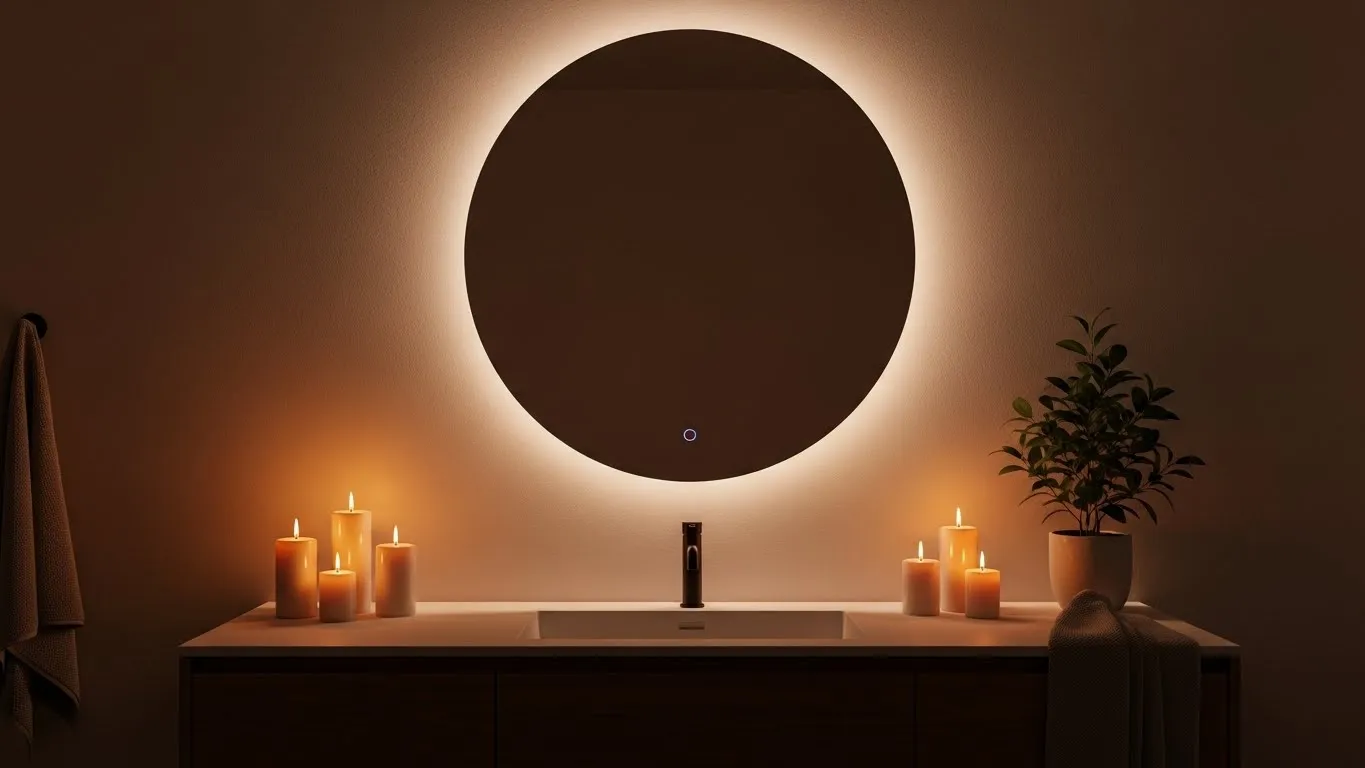
Creating a sanctuary within your own home is essential for relaxation, and incorporating Zen Bathroom Decor Ideas is the perfect way to achieve that balance. By focusing on natural elements, minimalist design, and soothing textures, you can transform a standard washroom into a private spa retreat. This guide explores nineteen specific ways to bring harmony and peace to your bathroom space.
Natural Bamboo Accents
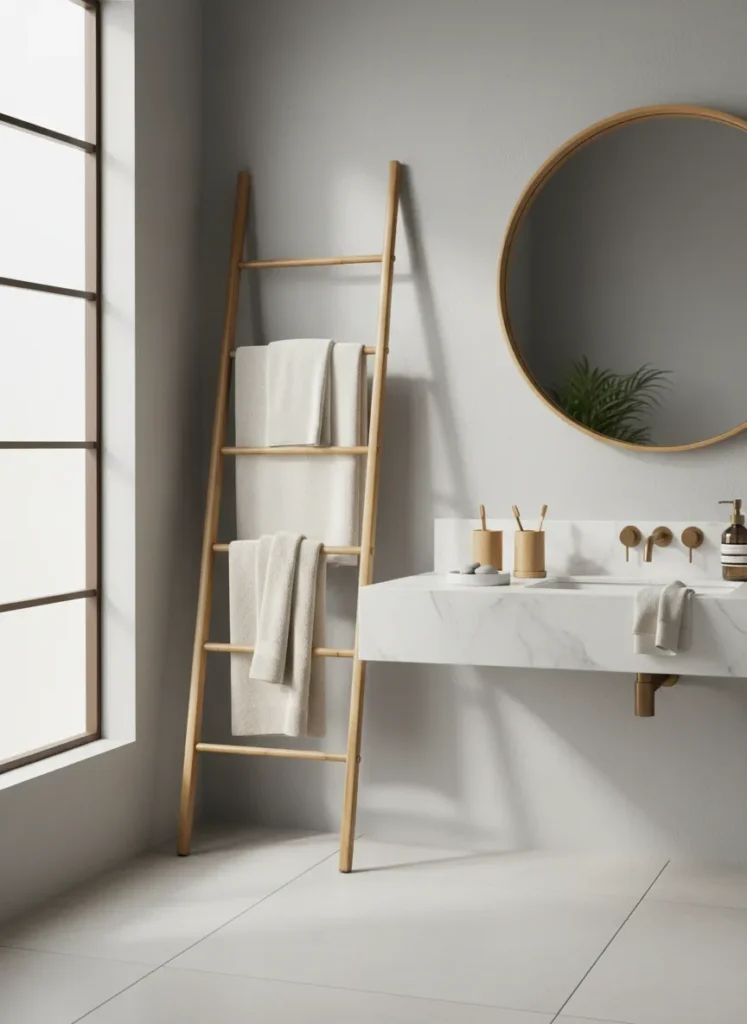
Bamboo is a staple material in Zen design because it represents flexibility and resilience while adding warmth to a room. You can introduce this element through small accessories like soap dishes, a bath bridge, or a ladder for hanging towels. The light wood tone contrasts beautifully with white ceramics and brings a touch of nature indoors without overwhelming the space.
Using bamboo also adds an eco-friendly aspect to your decor, which aligns well with the mindful philosophy of Zen living. It is moisture-resistant and durable, making it a practical choice for humid bathroom environments. A few carefully placed bamboo items can instantly soften the look of cold tiles and make the room feel more organic and inviting.
River Rock Flooring
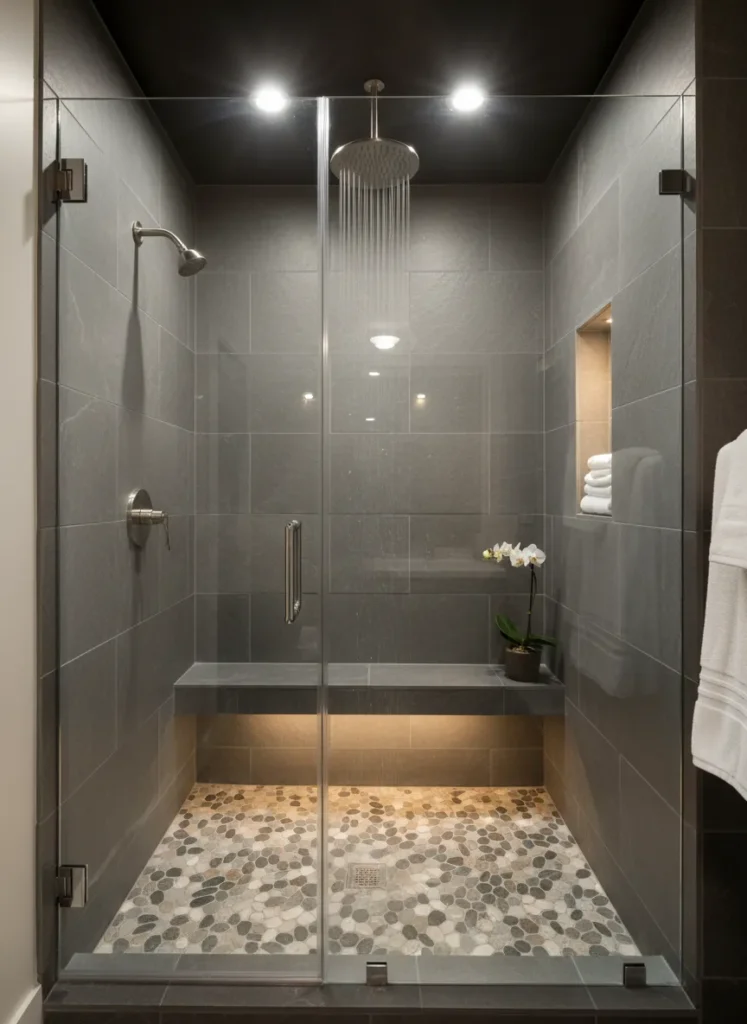
Incorporating river rocks into your flooring, particularly in the shower area, provides a tactile experience that grounds you immediately. The sensation of smooth stones under your feet mimics the feeling of standing in a natural stream, promoting a deep sense of connection to the earth. Visually, the texture breaks up the monotony of flat tiles and adds depth to the design.
If redoing the entire floor is not an option, you can achieve a similar effect with a pebble bath mat. This simple addition creates a focal point and serves as a natural massager for tired feet. The variety of colors in the stones, from greys to browns, introduces a neutral palette that is essential for a calming environment.
Freestanding Soaking Tub
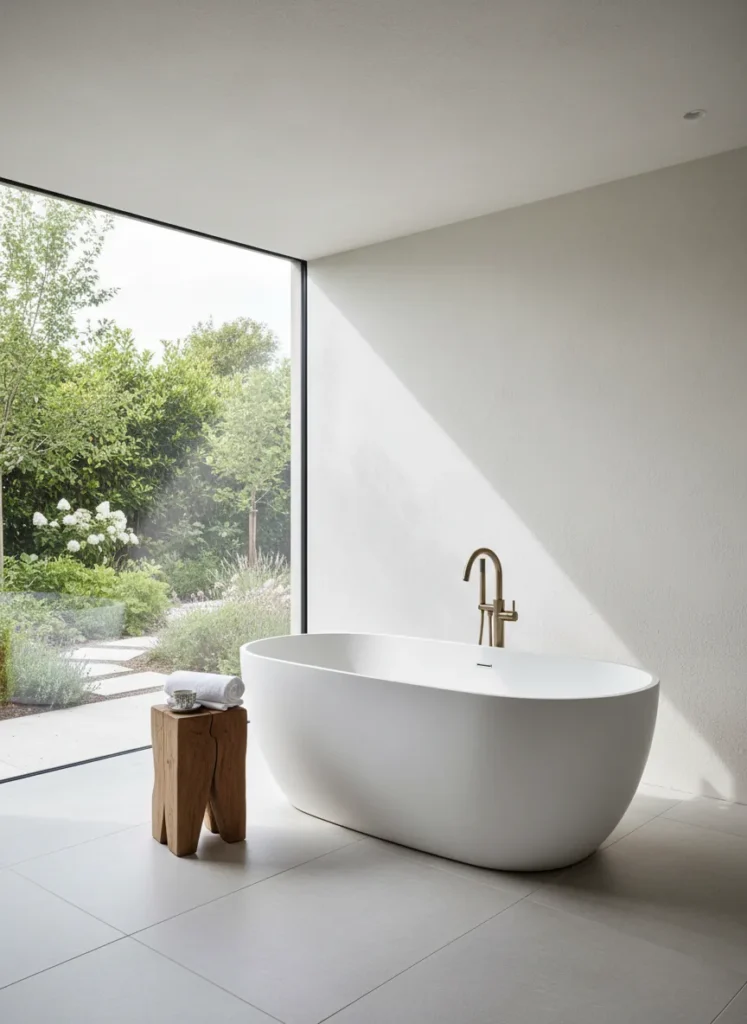
A deep, freestanding tub is often the centerpiece of a spa-style bathroom, inviting you to slow down and soak away stress. Unlike built-in tubs, a freestanding model creates a sense of openness and airiness around the fixture. Its curves and clean lines contribute to a visual flow that is uninterrupted and peaceful.
Positioning the tub near a window or in a central spot emphasizes its importance as a place for healing and rest. Even if you have a smaller space, compact Japanese soaking tubs are available that allow for a full-body immersion. Pairing the tub with a simple floor-mounted filler keeps the look uncluttered and elegant.
Hanging Eucalyptus Bundles
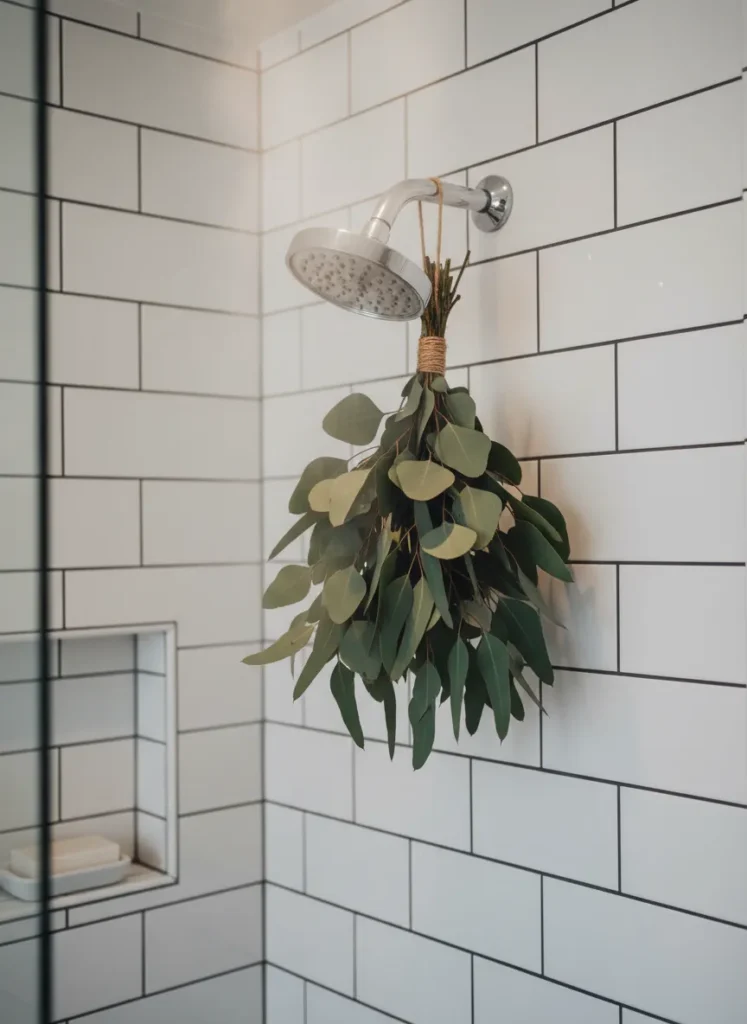
Hanging fresh eucalyptus in your shower is a sensory way to enhance your daily routine with natural aromatherapy. As the steam from the hot water rises, it releases the essential oils from the leaves, filling the room with a refreshing and clearing scent. This adds a layer of sensory relaxation that goes beyond just visual decor.
Visually, the muted green leaves add a splash of color that is not too vibrant, fitting perfectly within a Zen color scheme. It is an inexpensive and temporary way to update your space and bring nature directly into the shower enclosure. Replacing the bundle every few weeks keeps the greenery fresh and the scent potent.
Soft Neutral Palette
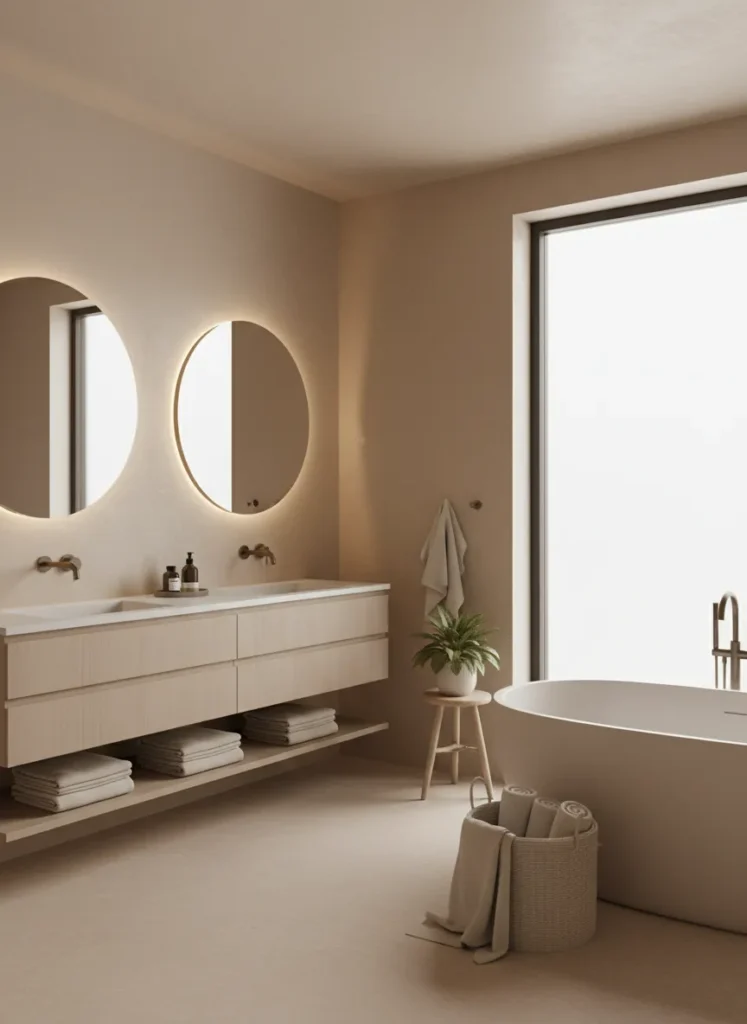
A Zen bathroom relies heavily on a color palette that soothes the eyes and calms the mind. Shades of beige, cream, soft white, and pale grey reflect light and create a sense of expansion and cleanliness. By avoiding harsh, bright colors, you allow the mind to rest rather than be stimulated by visual noise.
To keep the space from looking flat, you can layer different shades of the same neutral color. For example, use a warm oatmeal color for the walls and a lighter cream for the textiles. This monochromatic approach creates a cohesive and harmonious environment where every element feels like it belongs together.
Floating Wood Vanity
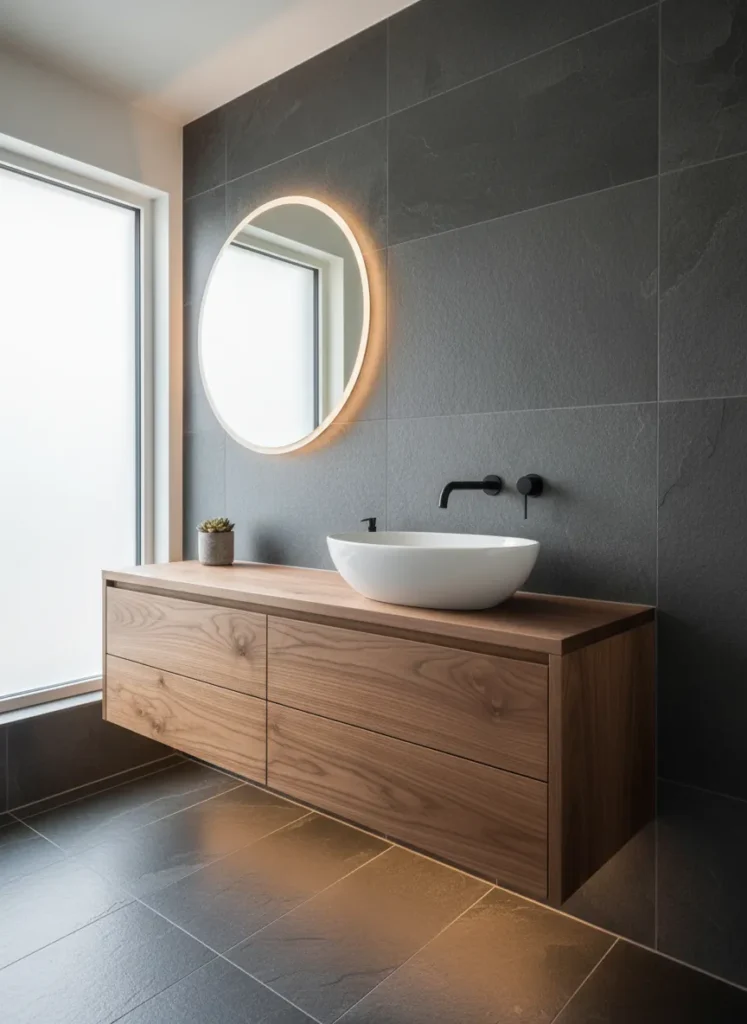
A floating vanity creates an illusion of more floor space, making the bathroom feel larger and less cluttered. The open area beneath the cabinet contributes to a minimalist aesthetic that is key to Zen design. Choosing a vanity with a natural wood grain adds warmth and texture to balance the smooth surfaces of mirrors and sinks.
Functionally, a floating vanity allows for easy cleaning of the floor, maintaining the hygiene of the space. You can also install soft motion-sensor lighting underneath for a gentle glow at night. This architectural element serves as a modern anchor for the room while keeping the overall vibe light and airy.
Rainfall Shower Head
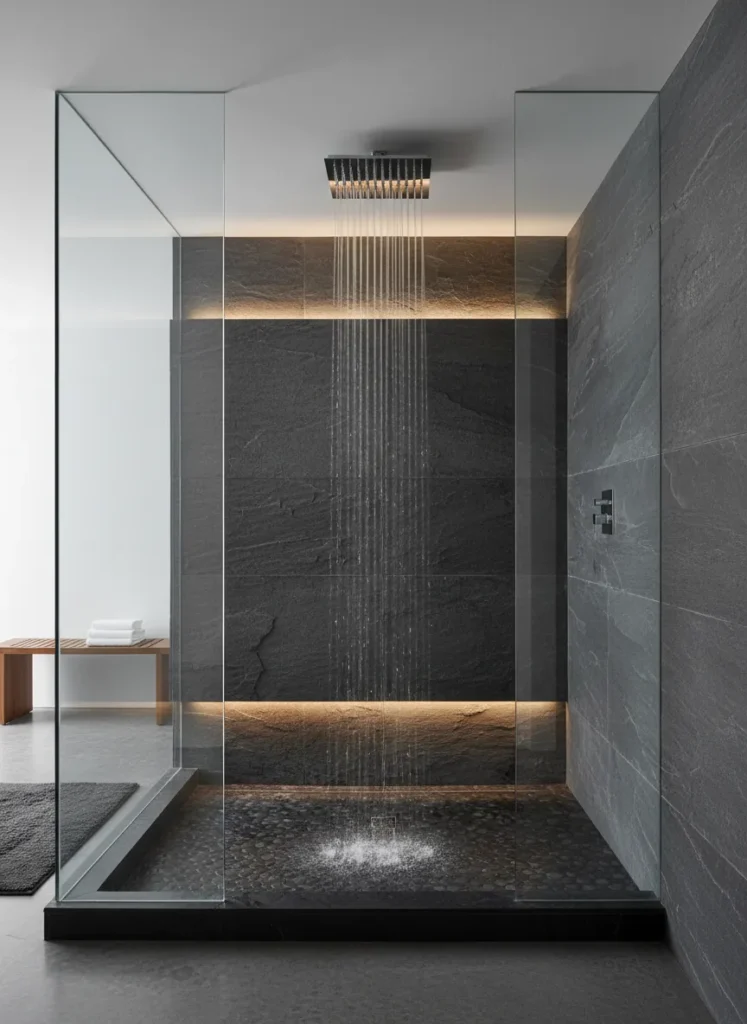
Installing a rainfall shower head changes the showering experience from a routine task to a gentle, nature-inspired event. The water falls directly from above, mimicking the sensation of standing in a warm summer rain. This type of water flow is softer and more enveloping than a traditional angled spray.
Visually, a ceiling-mounted or high-mounted rain head looks sleek and modern, reducing visual clutter on the walls. It encourages a slower pace, as the gentle pressure is designed for relaxation rather than a rushed wash. This simple hardware upgrade can significantly shift the mood of the entire bathroom.
Teak Bath Mat
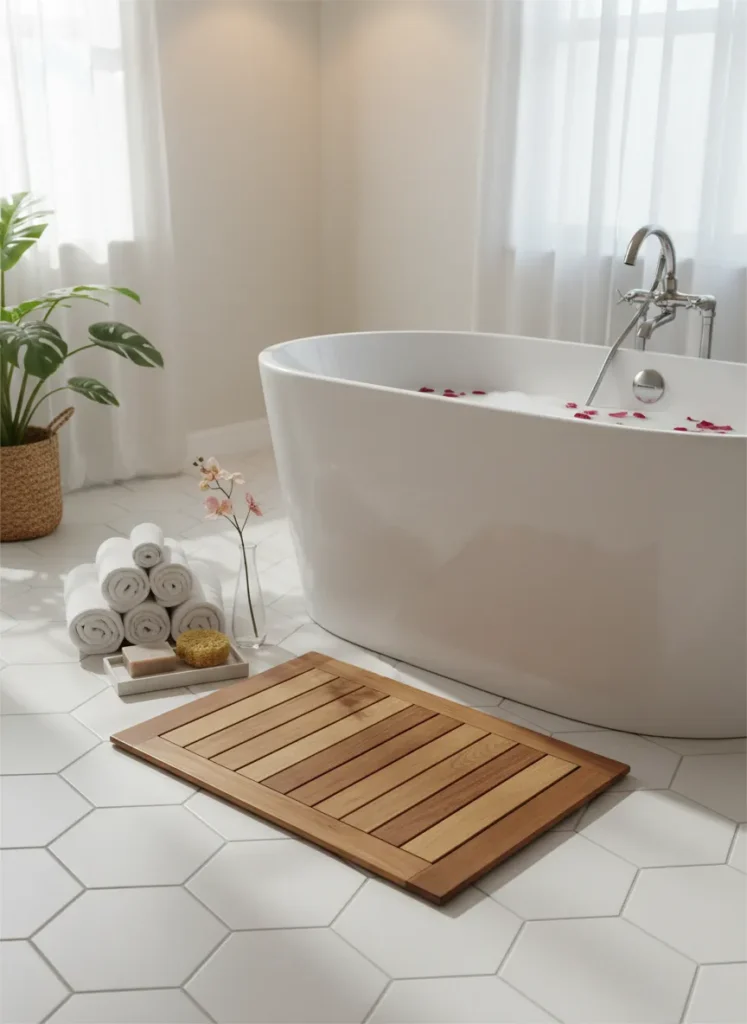
Replacing a fabric rug with a teak wood mat is an instant upgrade that screams luxury spa. Teak is naturally water-resistant and durable, making it perfect for wet areas outside the tub or shower. The slats allow water to drain through and air to circulate, preventing the dampness often associated with cloth mats.
The warm, reddish-brown tone of the wood provides a beautiful contrast against cool tile floors. It adds a firm, structured element to the room that feels cleaner and more intentional than a ruffled rug. Stepping onto smooth wood after a bath keeps you connected to natural materials.
Minimalist Open Shelving
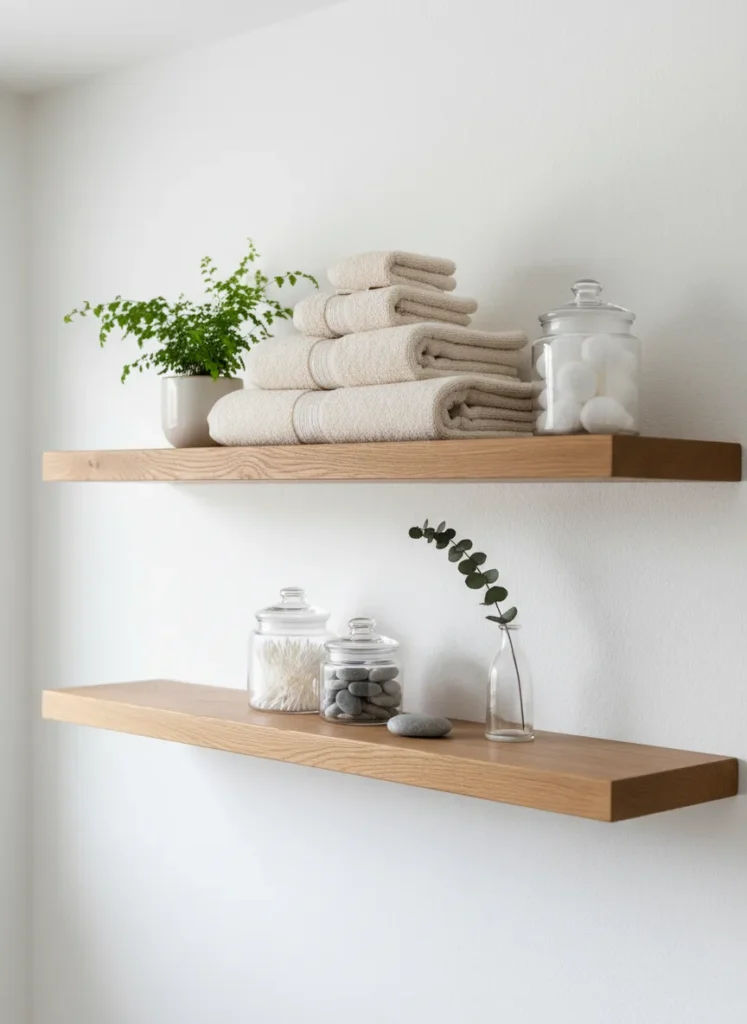
Open shelving encourages you to keep only the essentials, which is a core principle of Zen philosophy. By displaying neatly folded towels and glass jars, you turn everyday items into part of the decor. This forces a decluttered habit, as everything on the shelf must be visually pleasing and tidy.
Use natural wood or simple metal brackets to keep the look unobtrusive and light. The negative space on the wall around the items is just as important as the items themselves, allowing the room to breathe. This approach replaces bulky cabinets that can make a small bathroom feel closed in.
Soft Ambient Lighting
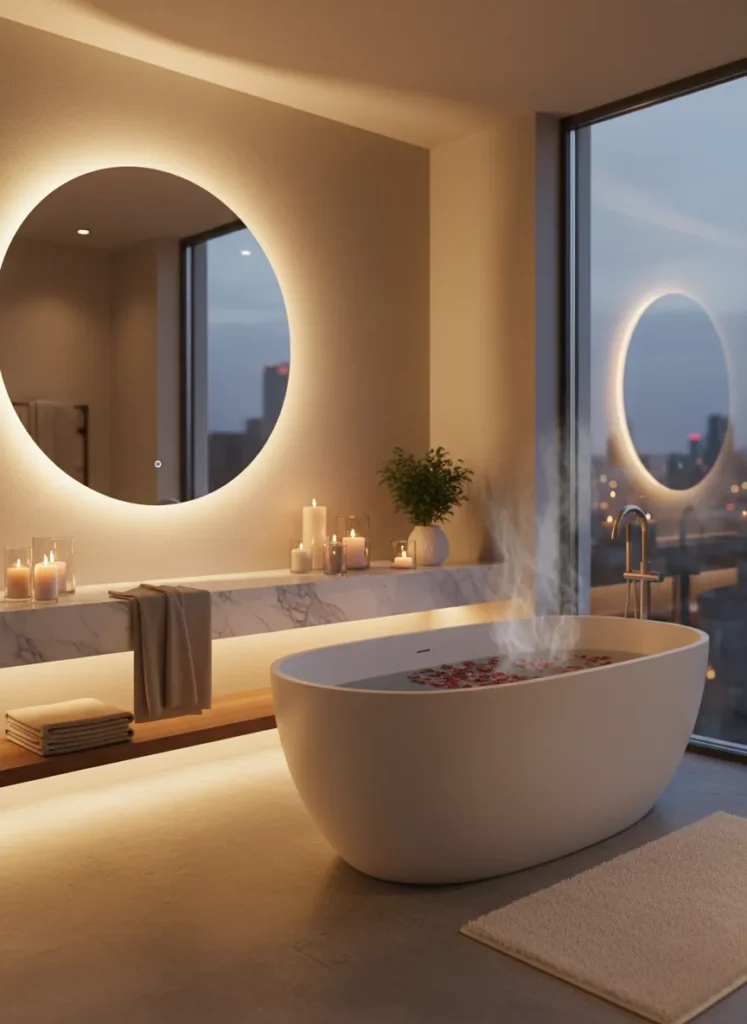
Harsh, bright fluorescent lights are the enemy of relaxation, so layering soft lighting is crucial. Install dimmer switches to control the intensity of the light depending on the time of day and your mood. Backlit mirrors or under-cabinet strip lights provide a gentle glow that illuminates the space without casting sharp shadows.
The goal is to create a warm, inviting atmosphere that signals the brain it is time to wind down. During a bath, you might turn off the overhead lights entirely and rely on the soft amber glow of wall sconces. This lighting strategy transforms the bathroom from a utility room into a sanctuary.
Stone Vessel Sink
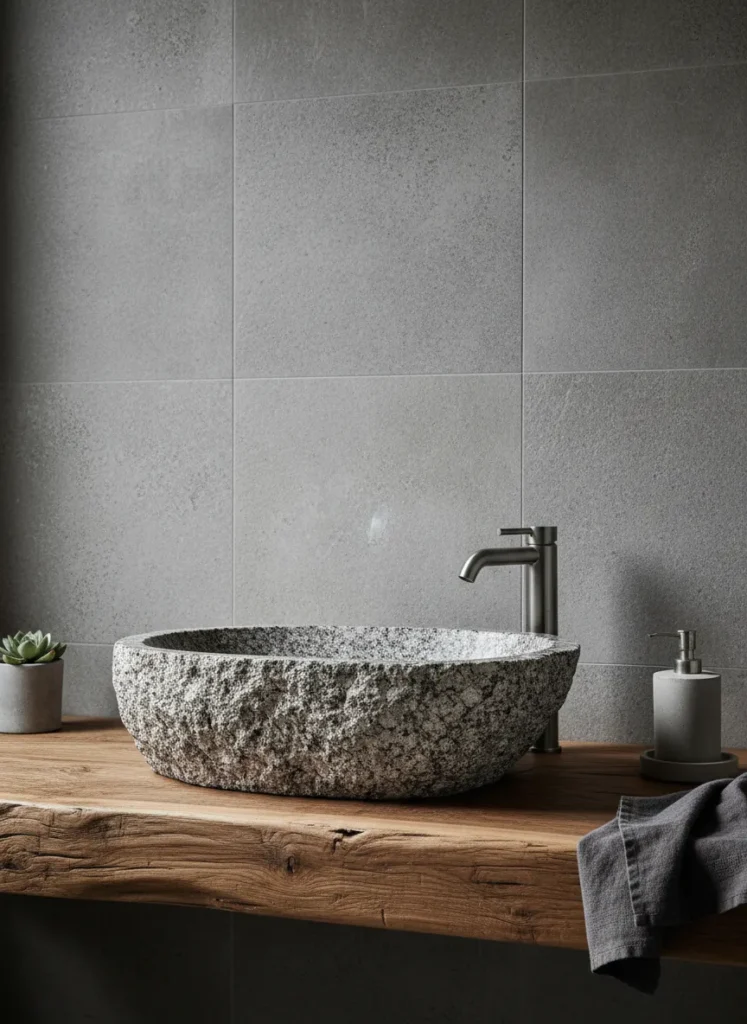
A stone vessel sink acts as a functional piece of art that brings the raw beauty of nature into your bathroom. Whether made from granite, river stone, or marble, the organic shape and texture serve as a grounding focal point. Unlike standard white ceramic sinks, a stone basin has unique variations and imperfections that add character.
The height of a vessel sink also changes the way you interact with the water, often requiring a slower, more deliberate washing of hands. It pairs beautifully with wood countertops and wall-mounted faucets. This element emphasizes the connection between water and earth, a fundamental concept in Zen design.
Large Potted Greenery

Introducing a large, leafy plant like a Monstera or a Fiddle Leaf Fig breathes life into the sterile environment of a bathroom. Plants improve air quality and add a vibrant pop of green that energizes the space in a natural way. The humidity of the bathroom often helps tropical plants thrive with minimal extra care.
Place the plant in a simple white or woven pot to maintain the neutral color scheme. If you have limited floor space, a tall, slender plant can fill a dead corner without obstructing movement. The presence of living energy is essential for a balanced and harmonious Zen interior.
Woven Storage Baskets
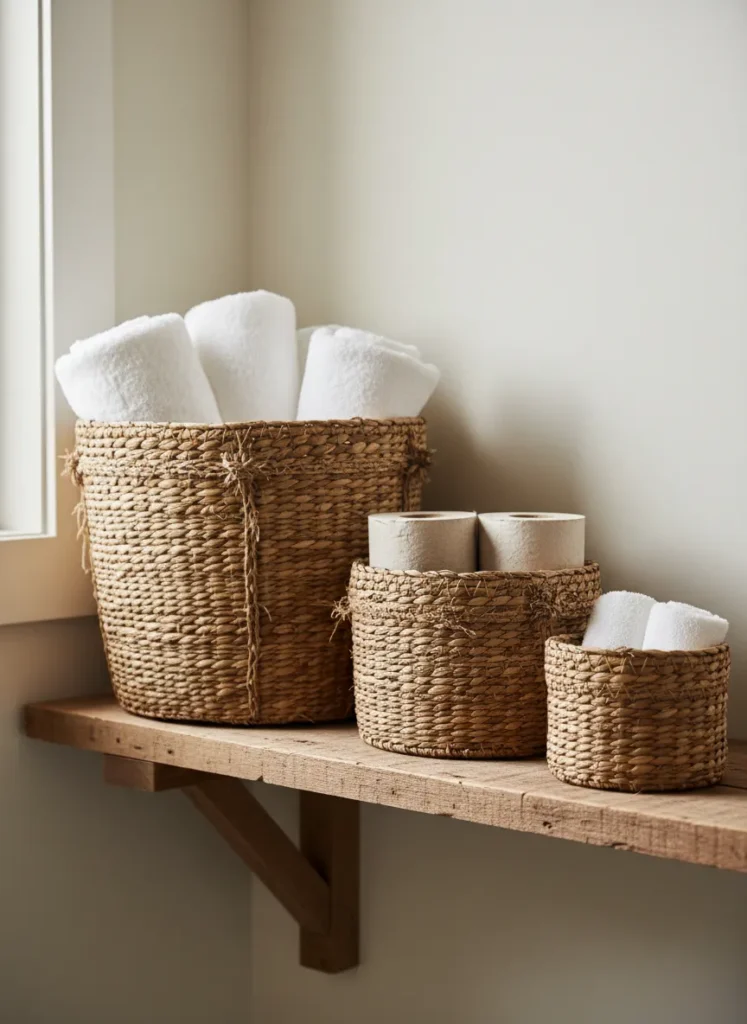
Woven baskets made from seagrass, wicker, or rattan add necessary texture to a room often dominated by hard, shiny surfaces. They provide a practical solution for hiding clutter like extra toilet paper, hair dryers, or cleaning supplies. Keeping clutter out of sight is vital for maintaining a clear and peaceful mind.
The natural fibers of the baskets bring warmth and an artisanal touch to the decor. You can place them on open shelves or under a floating vanity to keep things organized but accessible. Their organic, imperfect shapes contrast well with the straight lines of tiles and mirrors.
Frameless Round Mirror
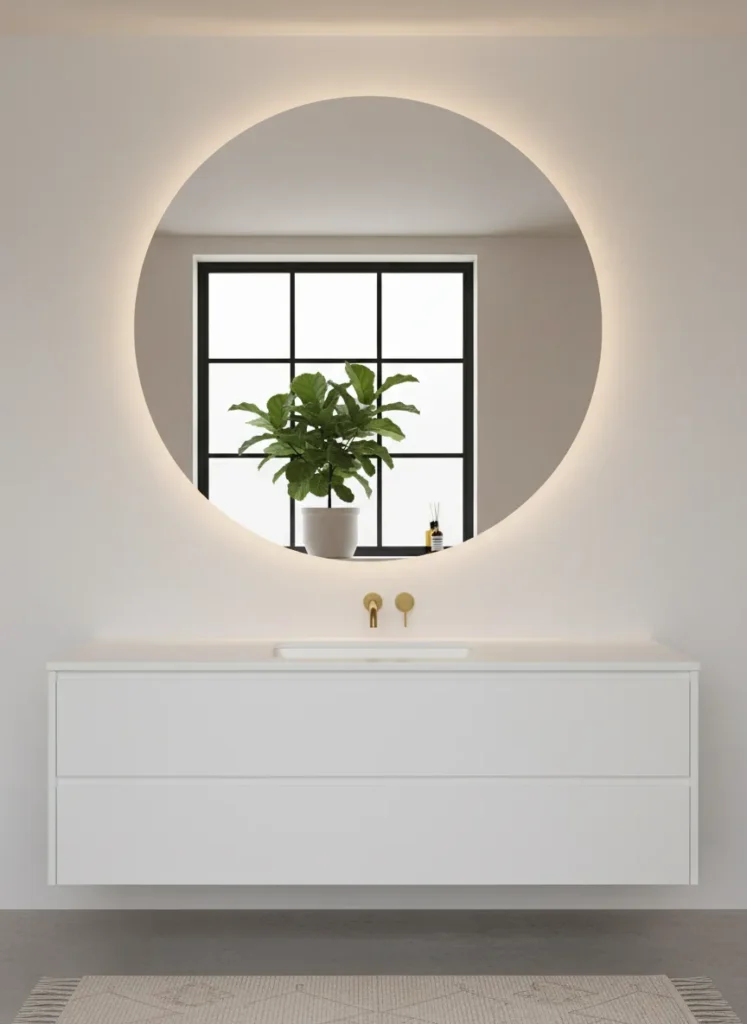
A frameless round mirror softens the hard angles and straight lines typically found in bathroom architecture. The circle is a symbol of wholeness and infinity in Zen philosophy, contributing to a sense of harmony. Without a heavy frame, the mirror feels lighter and blends seamlessly into the wall.
The reflection helps to bounce natural light around the room, making the space feel brighter and more open. It serves its function without demanding attention or adding visual weight. This simple geometric choice is a subtle way to introduce softness and flow to the vanity area.
Essential Oil Diffuser
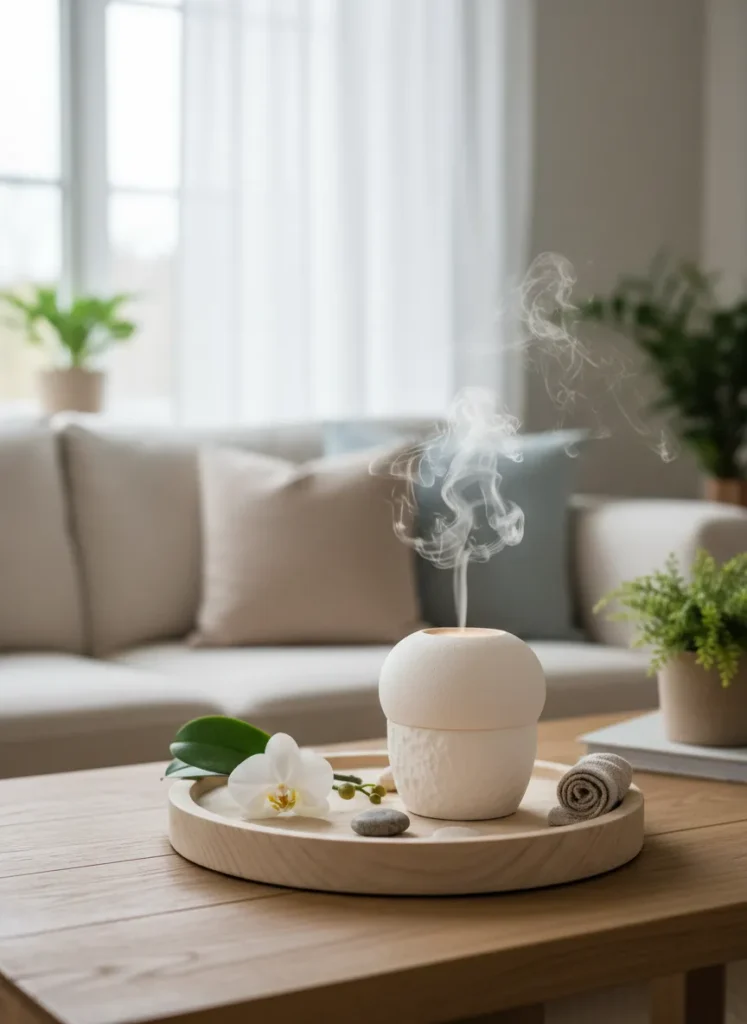
Scent is a powerful tool for setting a mood, and an essential oil diffuser is a modern, safe way to incorporate it. Choose oils like lavender, chamomile, or sandalwood to promote relaxation and stress relief. The gentle stream of mist also adds a visual element of movement and moisture to the air.
Select a diffuser with a design that mimics natural materials like wood or ceramic to match your decor. Placing it on a small tray or the edge of the tub creates a dedicated wellness station. This small addition engages the sense of smell, ensuring the bathroom experience is immersive and multisensory.
Shoji Screen Elements
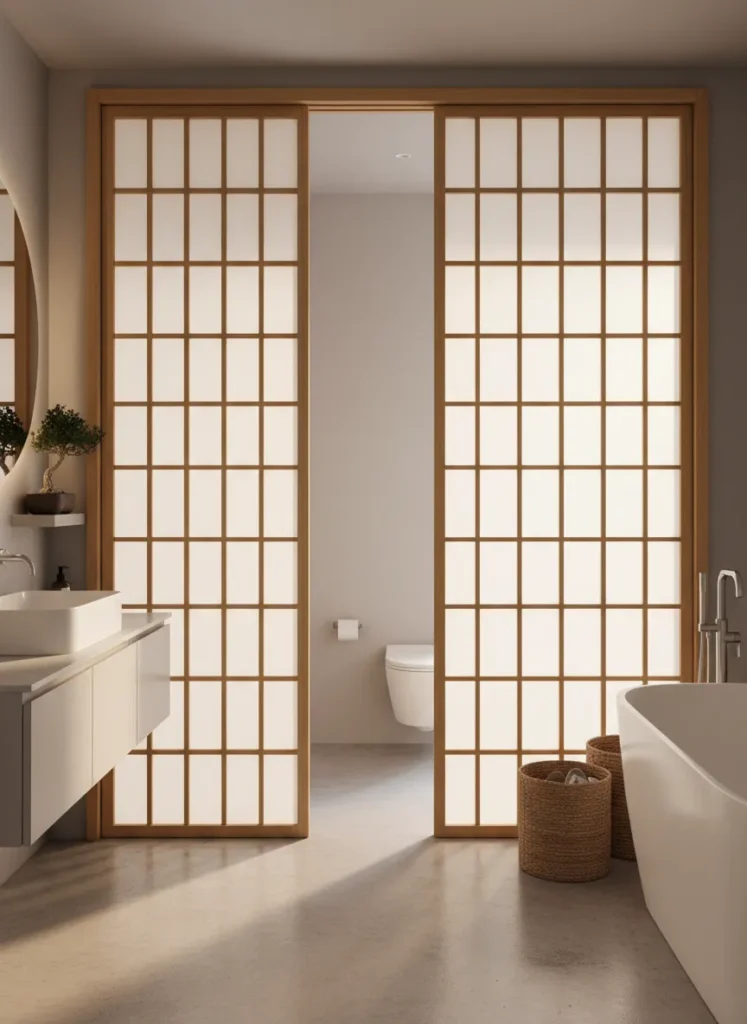
Incorporating Shoji screen elements, such as a sliding door or a window covering, adds an authentic Japanese Zen touch. The combination of wood frames and translucent paper allows light to filter through while maintaining privacy. This diffused light creates a soft, ethereal glow that is very calming.
Shoji screens are also excellent space savers compared to swinging doors, making them practical for smaller bathrooms. They act as a lightweight divider that defines spaces without building solid, blocking walls. The geometric grid pattern adds a sense of order and structure to the design.
White Linen Towels
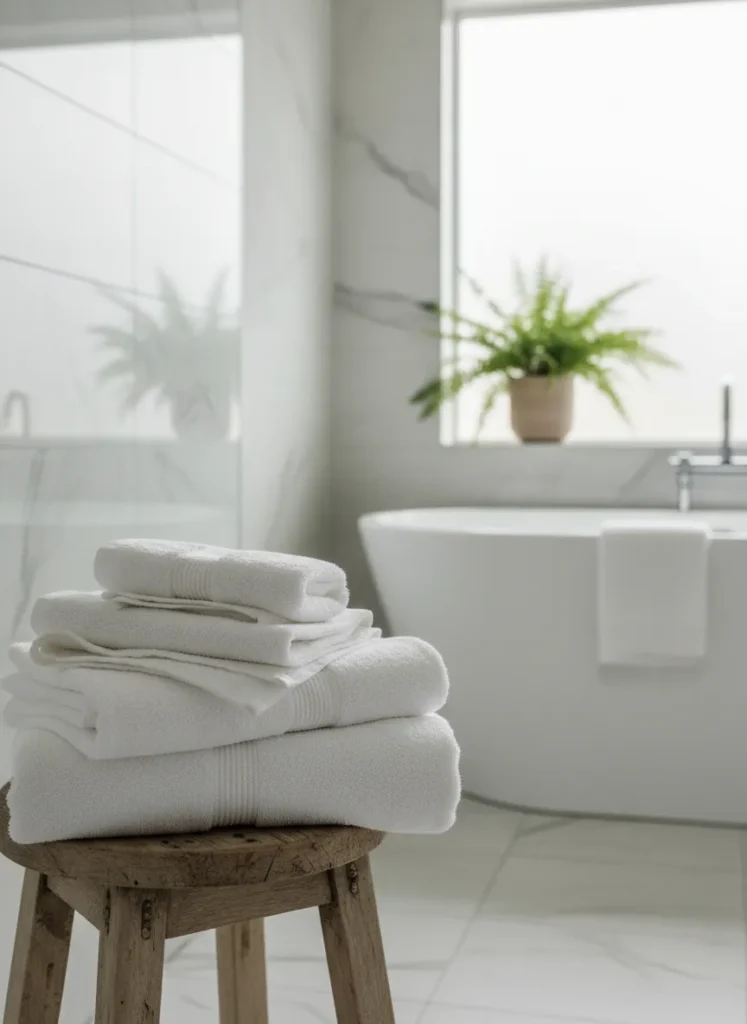
Invest in high-quality white linen or waffle-weave towels to elevate the tactile experience of drying off. White represents purity and cleanliness, reinforcing the spa-like atmosphere. Linen dries faster than heavy cotton terry and has a natural, slightly rumpled look that fits the wabi-sabi aesthetic of finding beauty in imperfection.
Displaying these towels openly adds to the softness of the room. Rolling them instead of folding them is a classic spa technique that looks elegant and saves space. The uniformity of all-white textiles reduces visual noise and makes the room feel cohesive and serene.
Wooden Bath Tray
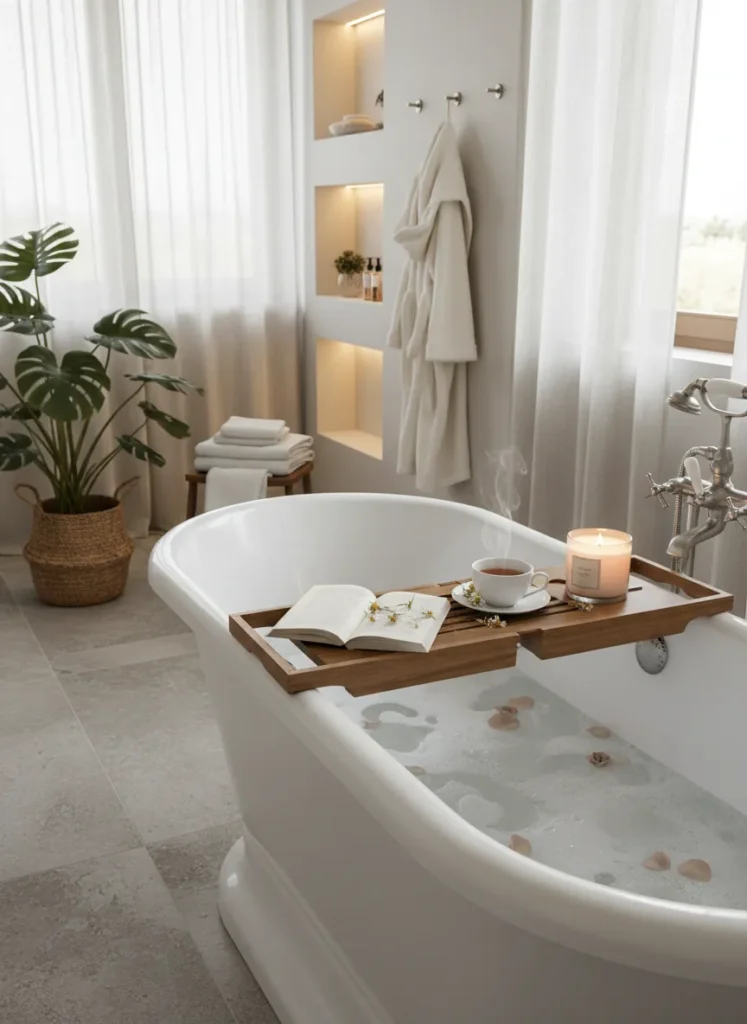
A wooden bath tray bridges the gap between the sides of your tub, offering a surface for your relaxation essentials. It allows you to keep a book, a cup of tea, or a candle within arm’s reach while you soak. This accessory signals that the bathtub is a place for lingering and leisure, not just washing.
Choose a wood that matches your other accents, such as bamboo or teak, for continuity. The tray adds a layer of styling to the tub even when it is not in use. It is a functional piece that invites you to take time for yourself and prioritize self-care.
Slate Wall Tiles
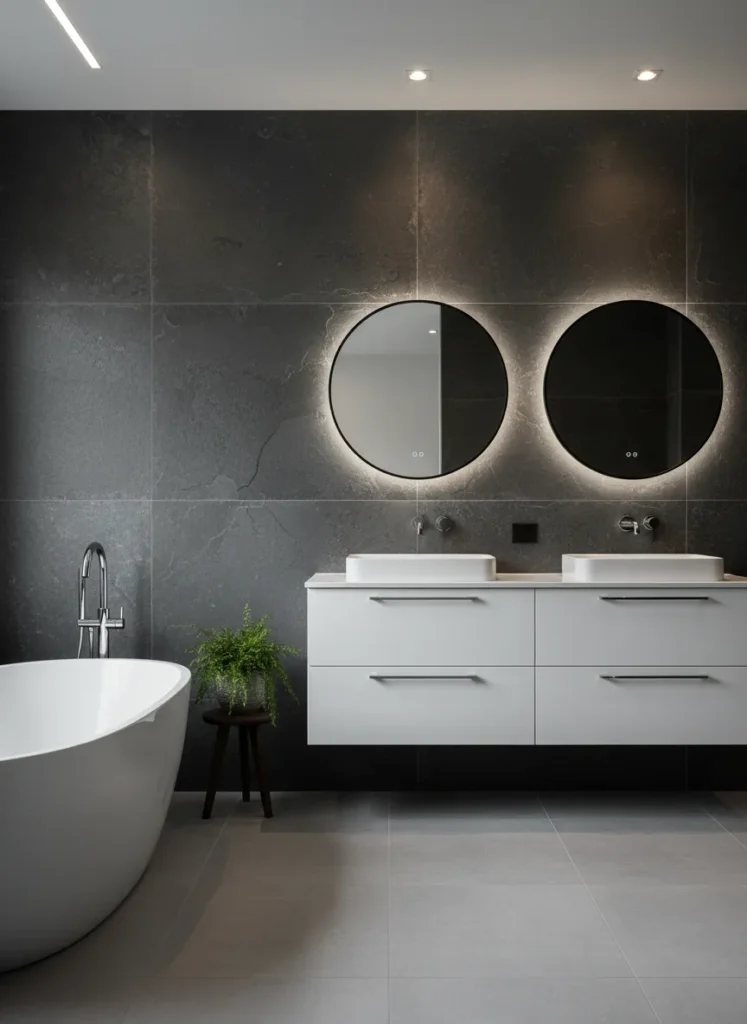
Using slate tiles on a feature wall creates a dramatic, cave-like atmosphere that feels protective and enclosed. The dark grey or black tones of slate are grounding and offer a stunning contrast to white porcelain fixtures. This natural stone has a texture that feels ancient and permanent.
A slate wall works particularly well in the shower area or behind the vanity as a backdrop. It absorbs light rather than reflecting it, which helps to create a moodier, more subdued environment suitable for relaxation. The organic variation in each tile ensures the wall looks natural rather than manufactured.
Conclusion
Transforming your bathroom into a Zen-inspired retreat does not require a complete renovation, but rather a thoughtful curation of elements that promote peace. By integrating these nineteen Zen Bathroom Decor Ideas, from natural materials like bamboo and stone to sensory details like lighting and scent, you can build a space that rejuvenates the spirit. Start with a few small changes, and gradually layer in more textures and calmness until your bathroom becomes the ultimate escape from the outside world.