
Transforming a small eating area into a spacious-feeling sanctuary is easier than you might think with the right design tricks. Many homeowners struggle with cramped layouts, but clever furniture choices and strategic lighting can completely change the perception of space. By focusing on smart layouts and visual illusions, you can create a stylish and functional spot for meals without knocking down walls. This guide explores twenty specific tiny dining room ideas that maximize every square inch while ensuring your home looks bright, welcoming, and beautifully curated.
Round Pedestal Tables
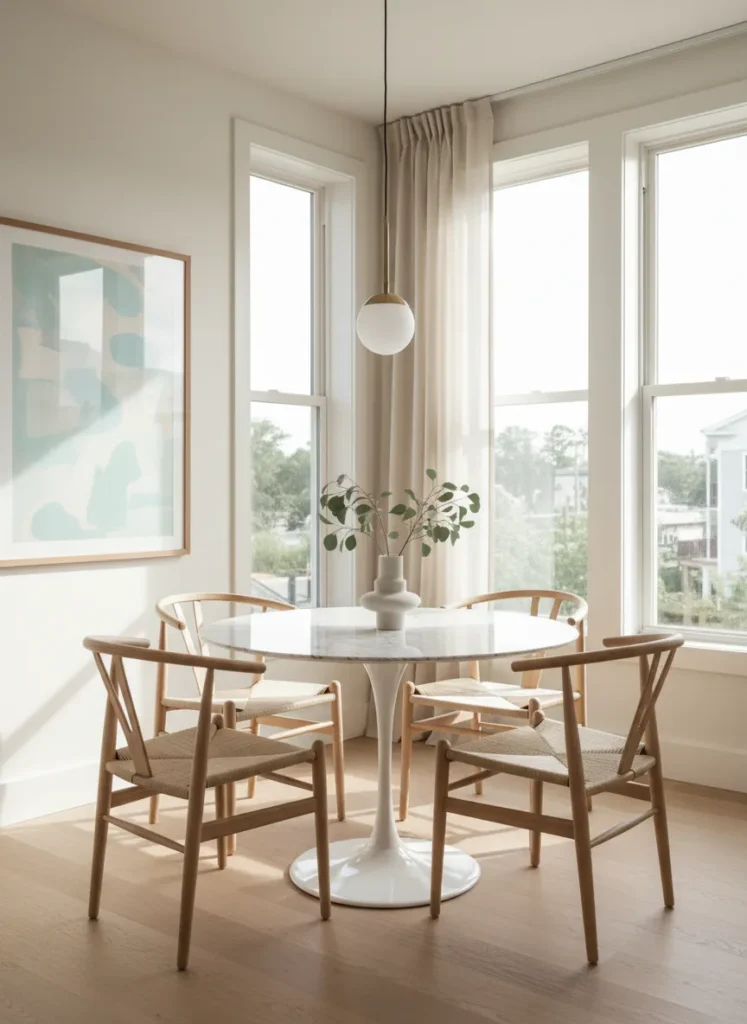
Choosing a round table is one of the most effective ways to improve flow in a small dining room. Without sharp corners to bump into, you can move around the space more freely, and the lack of edges makes the room feel less rigid and boxy. A pedestal base is particularly useful because it eliminates the visual clutter of four table legs, allowing you to tuck chairs in completely when they are not in use.
This shape also encourages better conversation and creates a cozy, intimate atmosphere that feels intentional rather than cramped. By centering a round table in the room, you create a focal point that draws the eye away from the walls, giving the illusion that there is more floor space available than there actually is.
Oversized Wall Mirrors
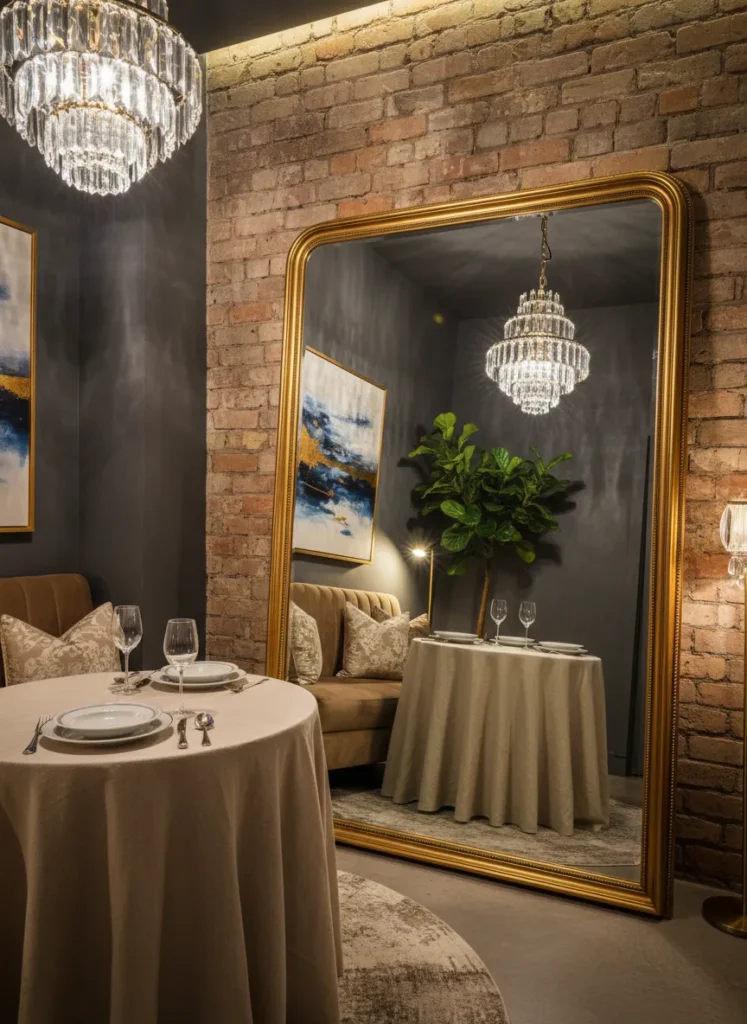
Placing a large mirror in your dining area is a classic interior design trick that instantly doubles the perceived size of the room. The reflection creates depth, tricking the eye into thinking the space extends far beyond the wall. For the best effect, position the mirror opposite a window or a doorway to reflect the most open parts of your home.
Beyond just adding depth, mirrors are excellent for bouncing light around a tiny room. They capture natural sunlight and artificial glow from lamps, dispersing it into dark corners that might otherwise feel closing in. This added brightness makes the entire dining area feel airy and much more open.
Transparent Ghost Chairs
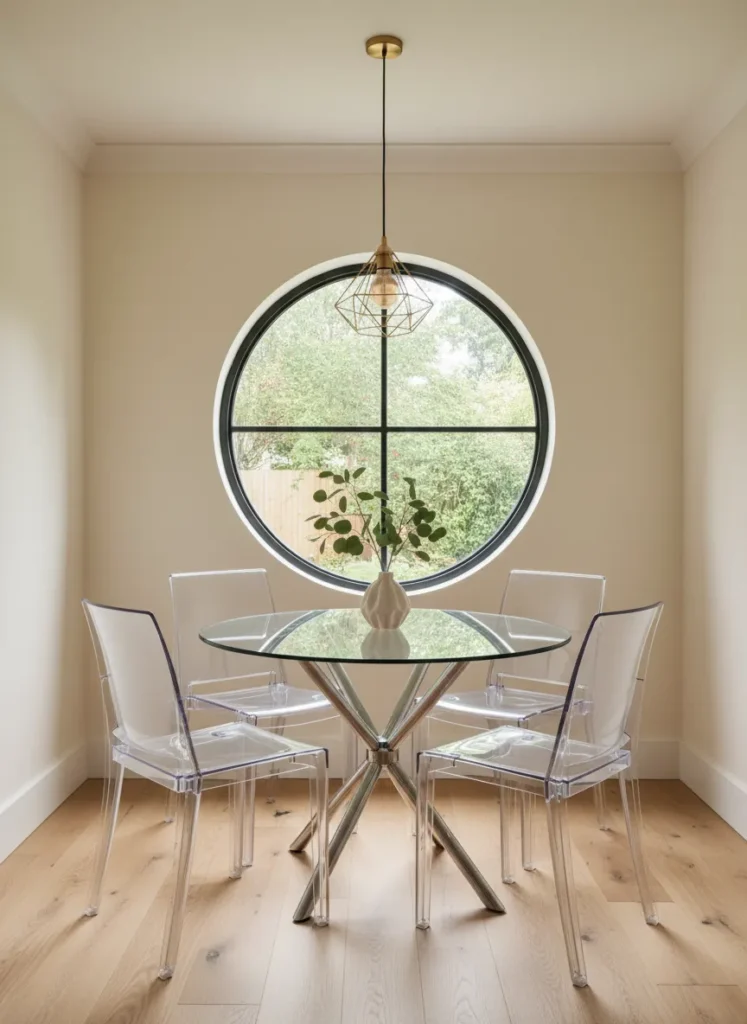
Acrylic or ghost chairs are a perfect solution for tight spaces because they take up zero visual weight. Since you can see right through them, they do not block the view of the floor or the table, which helps maintain an unbroken line of sight throughout the room. This transparency prevents the space from looking cluttered with heavy furniture shapes.
Despite their delicate appearance, these chairs are durable and surprisingly comfortable. They add a touch of modern elegance to the dining room while ensuring that the furniture does not dominate the small footprint. This allows the architecture of the room and your table setting to take center stage.
Corner Banquette Seating
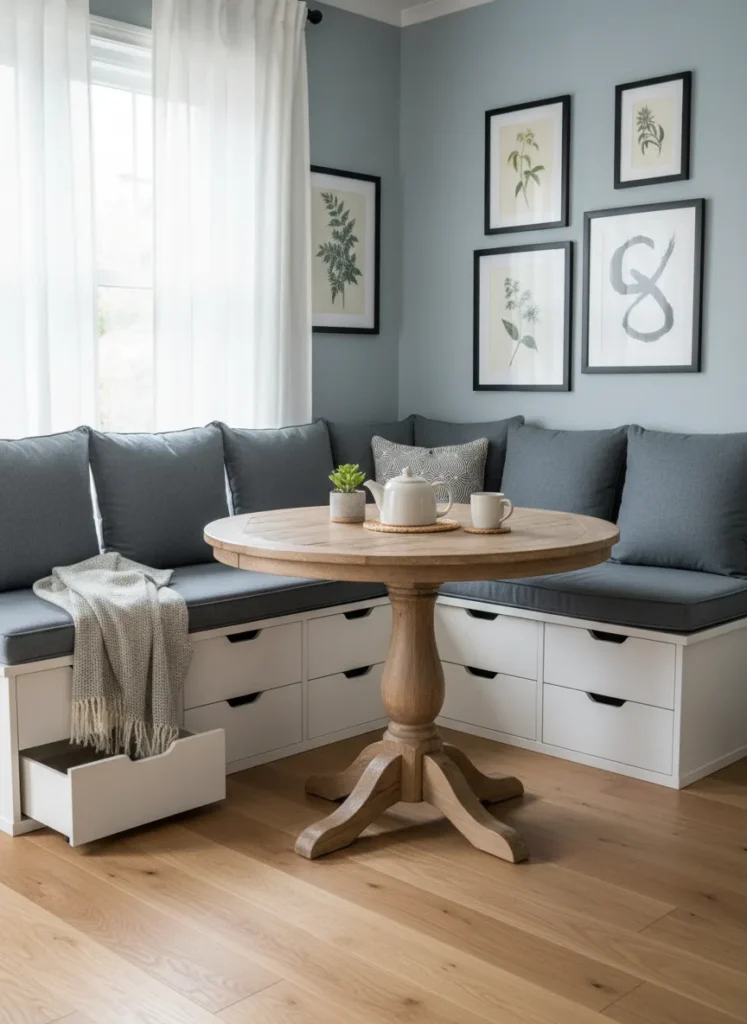
Utilizing a corner with built-in banquette seating is a brilliant way to save floor space while maximizing capacity. Traditional chairs require room to be pulled out, but a bench sits flush against the wall, freeing up valuable inches in the center of the room. This setup creates a cozy restaurant-booth vibe that feels luxurious and custom-made.
Banquettes often offer the hidden bonus of storage underneath the seats. You can use this space to store table linens, holiday decor, or kitchen gadgets that do not fit in your cabinets. This dual functionality helps keep the rest of the tiny dining room clutter-free, contributing to a cleaner and larger look.
Vertical Wall Paneling
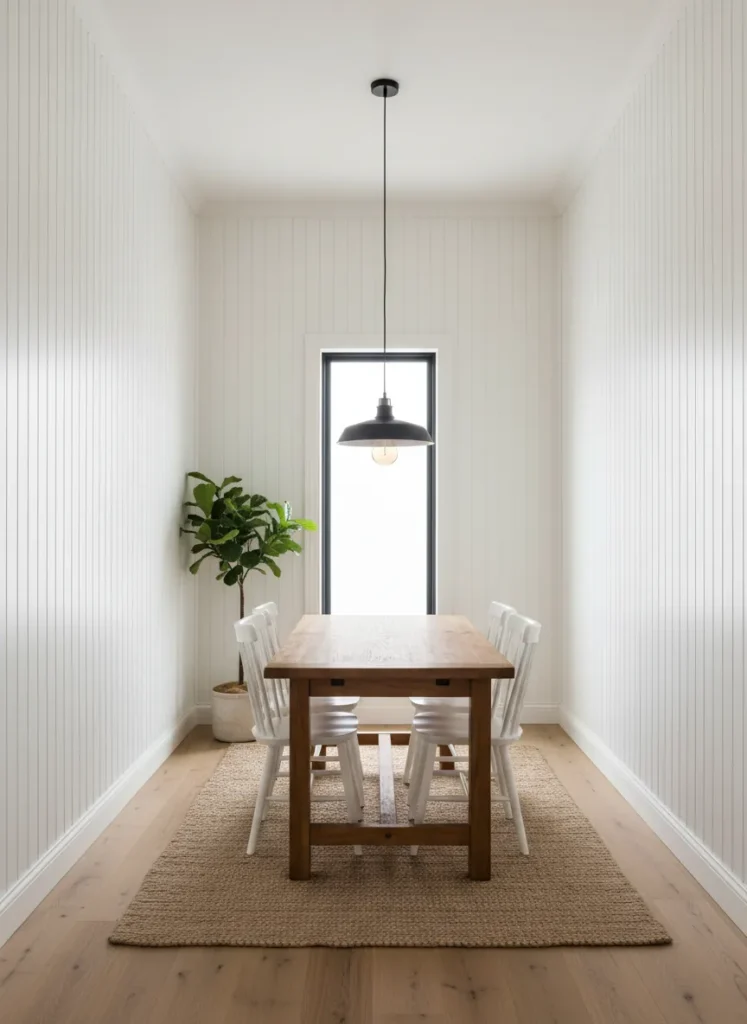
Installing vertical paneling or beadboard draws the eye upward, emphasizing the height of the ceiling rather than the narrowness of the floor. This vertical movement creates an optical illusion that makes the room feel taller and grander. It adds architectural interest and texture without encroaching on the physical space of the dining area.
You can paint the paneling in a light, neutral color to keep the feeling bright and airy. The linear pattern provides a subtle rhythm to the design, making the walls feel organized and structured. This simple addition transforms a plain, small box into a sophisticated dining space with character.
All-White Color Palette
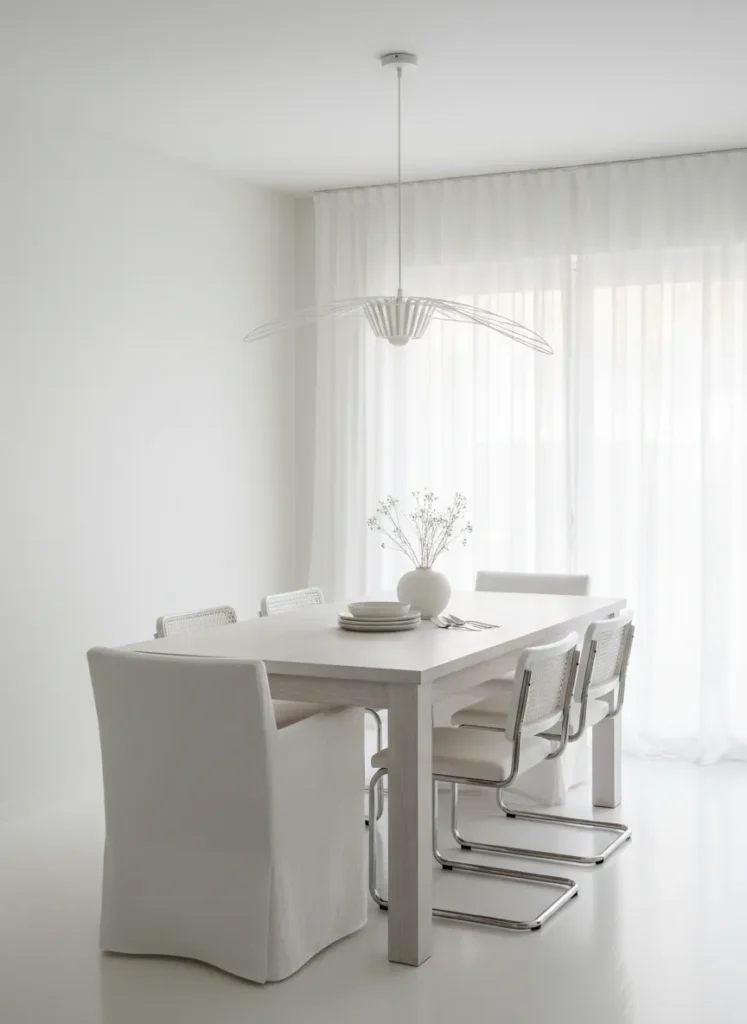
An all-white color scheme is the ultimate reflector of light, blurring the boundaries between walls and ceiling. When the corners of the room are harder to define, the space feels expansive and open. This monochromatic approach eliminates visual noise, creating a serene and calm environment for dining.
To prevent the room from feeling clinical, layer different textures in shades of white and cream. Mix smooth lacquered surfaces with soft linen curtains and a whitewashed wooden table. These subtle variations add depth and warmth while maintaining the space-enhancing benefits of a light palette.
Clear Glass Pendant Lights
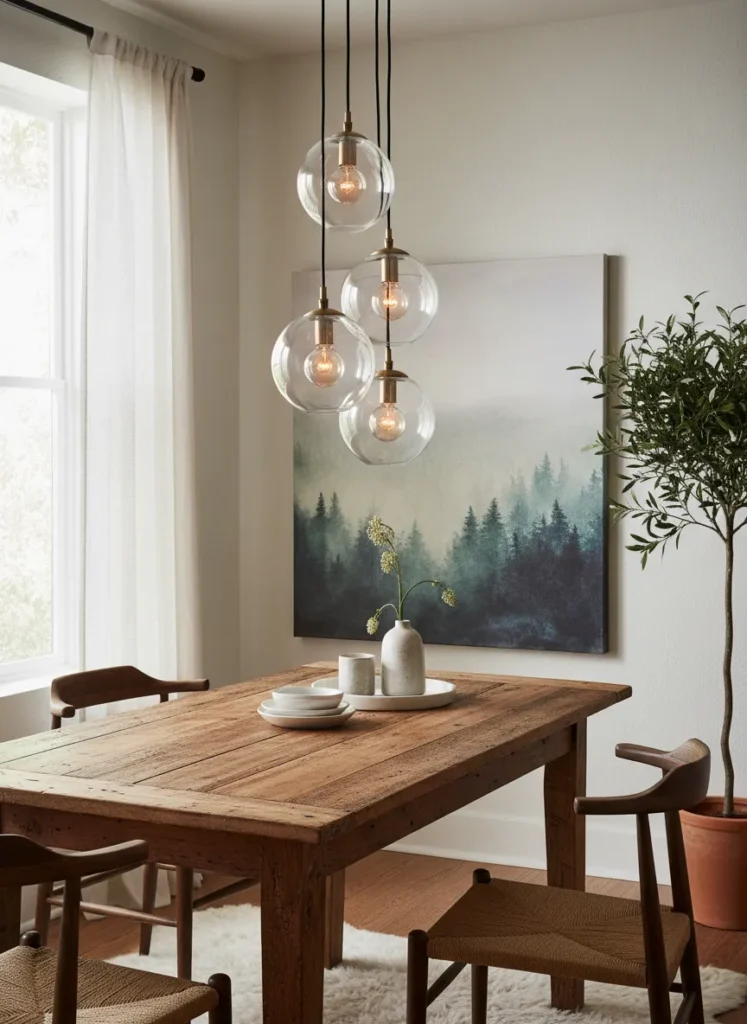
Lighting fixtures can sometimes feel heavy and imposing in a low or small room, but clear glass pendants solve this problem. Because they are transparent, they provide necessary illumination without acting as a visual barrier. They allow your line of sight to travel through them, keeping the upper portion of the room feeling open.
Glass shades also maximize the output of light, casting a bright and unobstructed glow over the entire table. Whether you choose a modern globe or a vintage jar style, the airy quality of glass fixtures complements a tiny dining room perfectly by adding style without bulk.
Convertible Drop-Leaf Tables
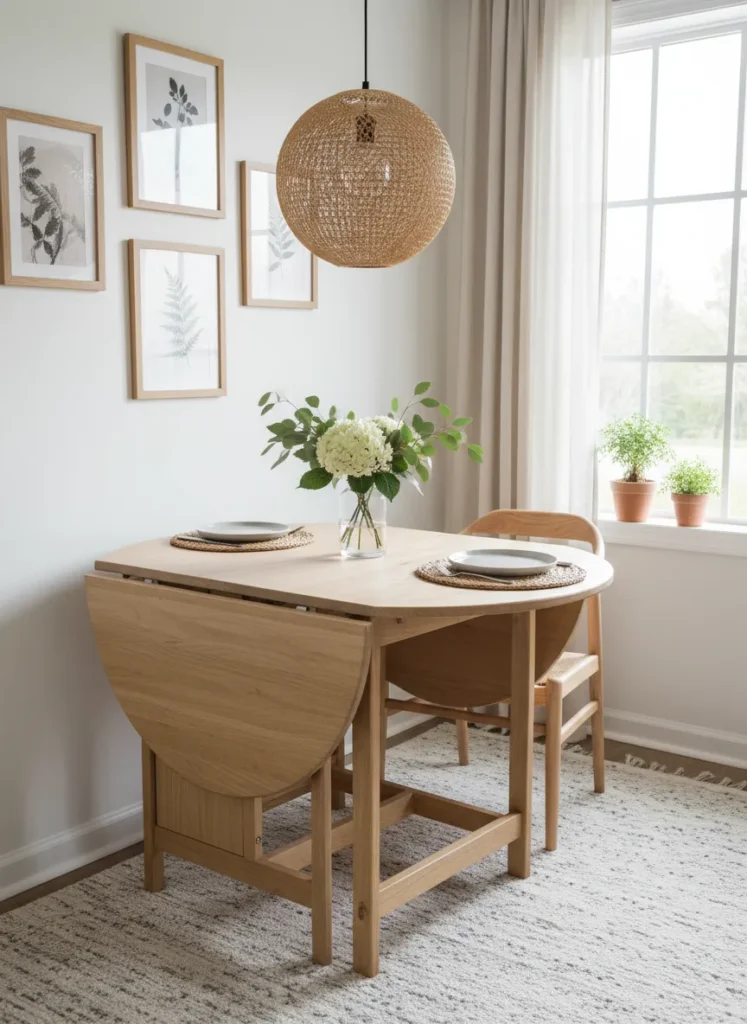
Flexibility is key in a small home, and a drop-leaf table is the champion of adaptable furniture. When not in use, you can fold the sides down and push it against a wall to function as a console or desk. This frees up the center of the room for traffic flow or other daily activities.
When guests arrive, you can easily lift the leaves to accommodate a full dinner party. This ability to change the footprint of your furniture based on your immediate needs ensures that your dining room is never more crowded than it needs to be. It is a practical solution that does not sacrifice style.
High-Gloss Paint Finishes
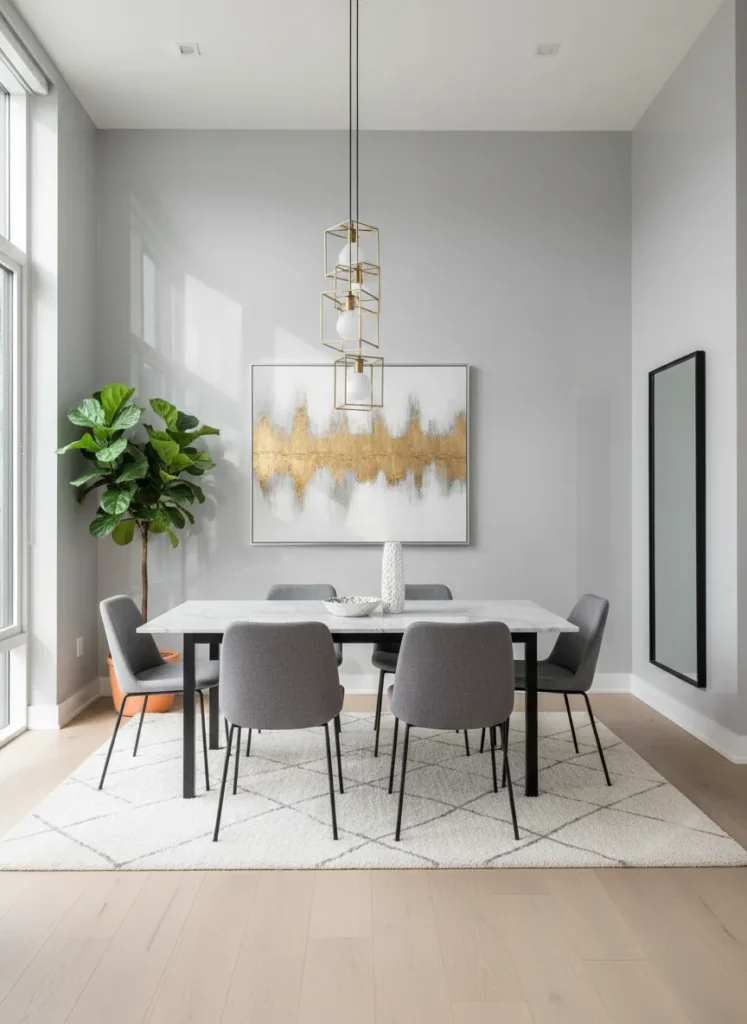
Using high-gloss paint on your walls or ceiling is a bold move that pays off in small spaces. The shiny finish acts similarly to a mirror, reflecting light and surroundings to create a sense of movement and depth. This sheen makes the walls recede, reducing the feeling of being boxed in.
This finish works particularly well in darker or dimmer rooms where you want to maximize every bit of available light. It adds a touch of glamour and polish to the dining area, making it feel like a designed jewel box rather than just a small room. Pair it with matte furniture for a sophisticated contrast.
Minimalist Wall Art
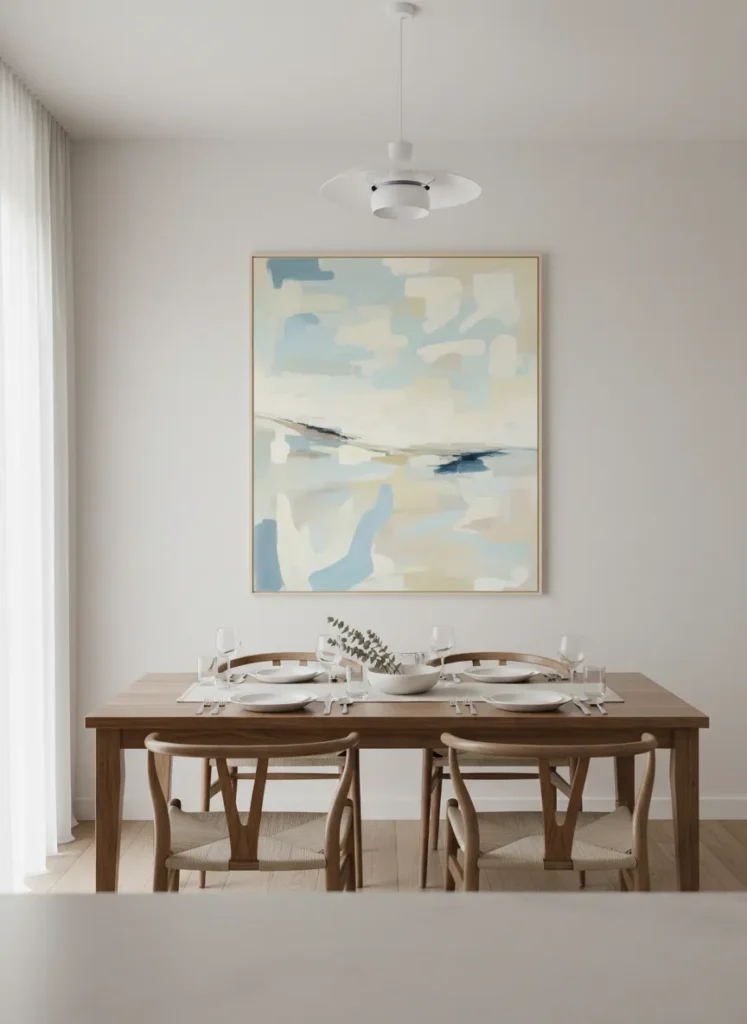
In a tiny dining room, a gallery wall with many small frames can sometimes feel chaotic and cluttering. Instead, opting for one large piece of minimalist art creates a calm focal point that anchors the room. A single, substantial canvas draws the eye and makes a statement without overwhelming the visual field.
Choose art with light colors or soothing landscapes to maintain the open feeling of the space. By keeping the walls relatively clear around this main piece, you allow for ‘negative space’ which gives the eyes a place to rest. This simplicity contributes significantly to a perception of spaciousness.
Backless Bench Seating
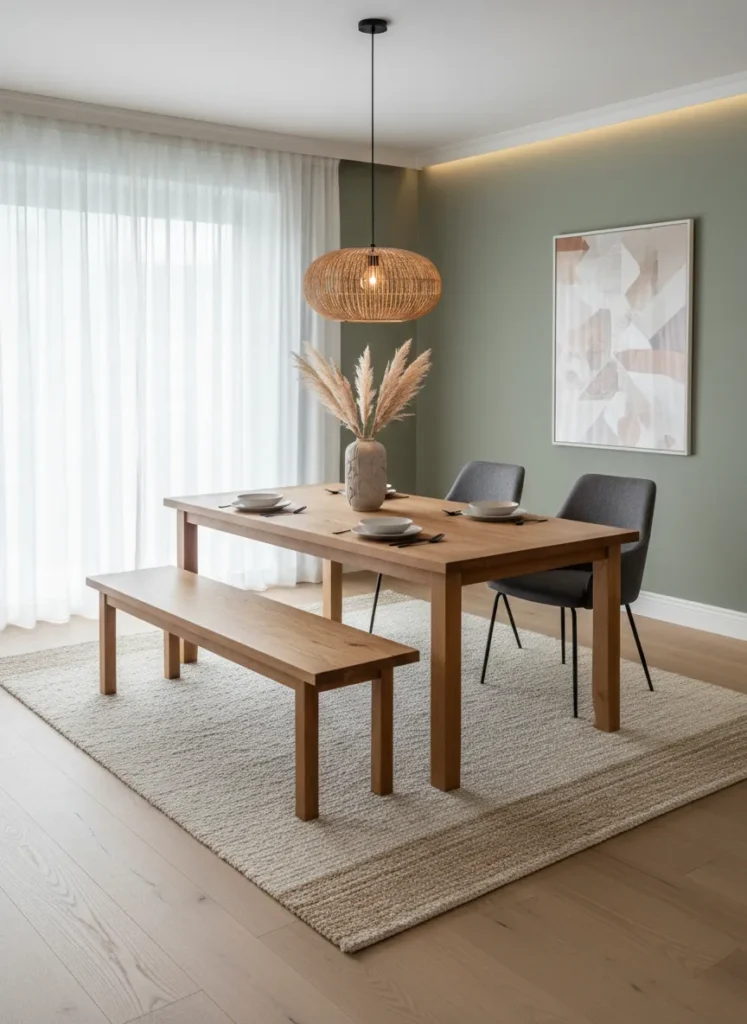
Replacing chairs with a backless bench on one or both sides of your table creates a cleaner visual line. Without the vertical backs of chairs breaking up the space, the room looks less crowded and the view across the table remains unobstructed. This is especially helpful if your dining area is part of an open-concept living space.
Functionally, benches allow you to squeeze in an extra person when necessary, offering more seating flexibility than individual chairs. When the meal is over, the bench can be tucked completely under the table, removing trip hazards and opening up the floor area for walkability.
Floor-to-Ceiling Curtains
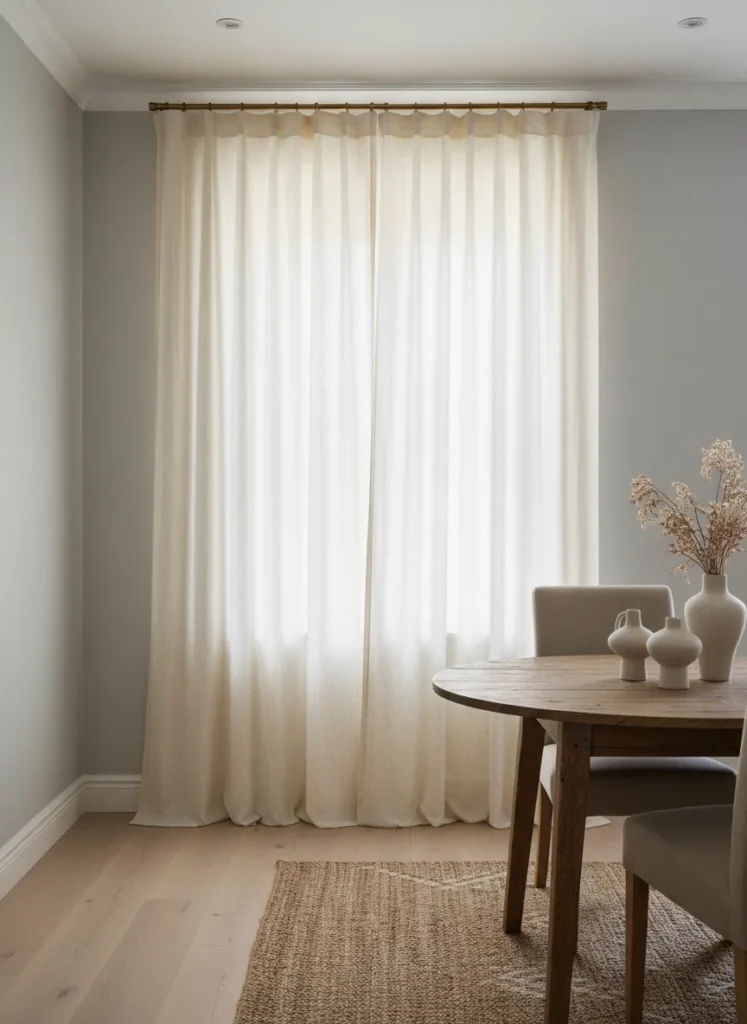
Hanging your curtains from the ceiling line down to the floor is a designer trick to exaggerate room height. This long vertical line draws the eye upward, making low ceilings feel loftier and the room feel grander. It frames the window without cutting the wall in half visually.
Ensure the curtain rod extends wider than the window frame so that when the curtains are open, they do not block the glass. This allows the maximum amount of natural light to flood the room, which is essential for making a tiny dining area feel bright and welcoming.
Floating Wall Shelves
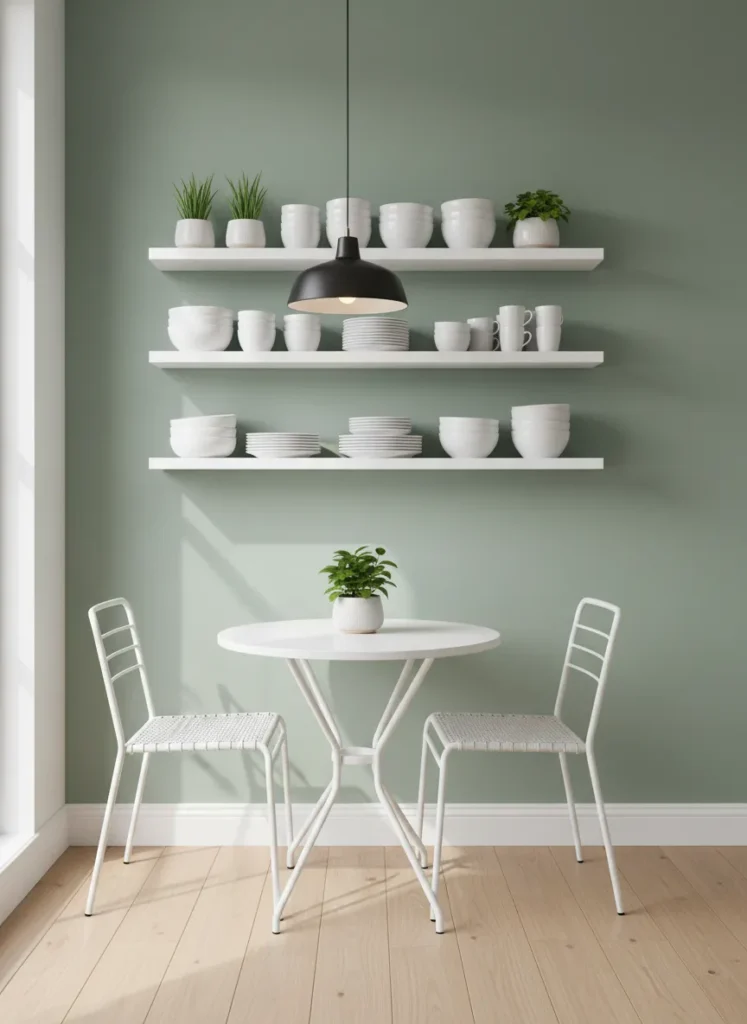
Floating shelves provide essential storage and display space without the heavy footprint of a china cabinet or buffet. By mounting storage on the walls, you keep the floor clear, which is vital for maintaining a sense of openness in a small room. The open nature of the shelves keeps items accessible and decorative.
Style these shelves with cohesive items like matching glassware or white ceramics to avoid a cluttered look. The horizontal lines of the shelves can also help widen the look of a narrow wall. This solution combines practicality with modern aesthetics, perfect for a tiny dining room.
Rugs to Define Zones
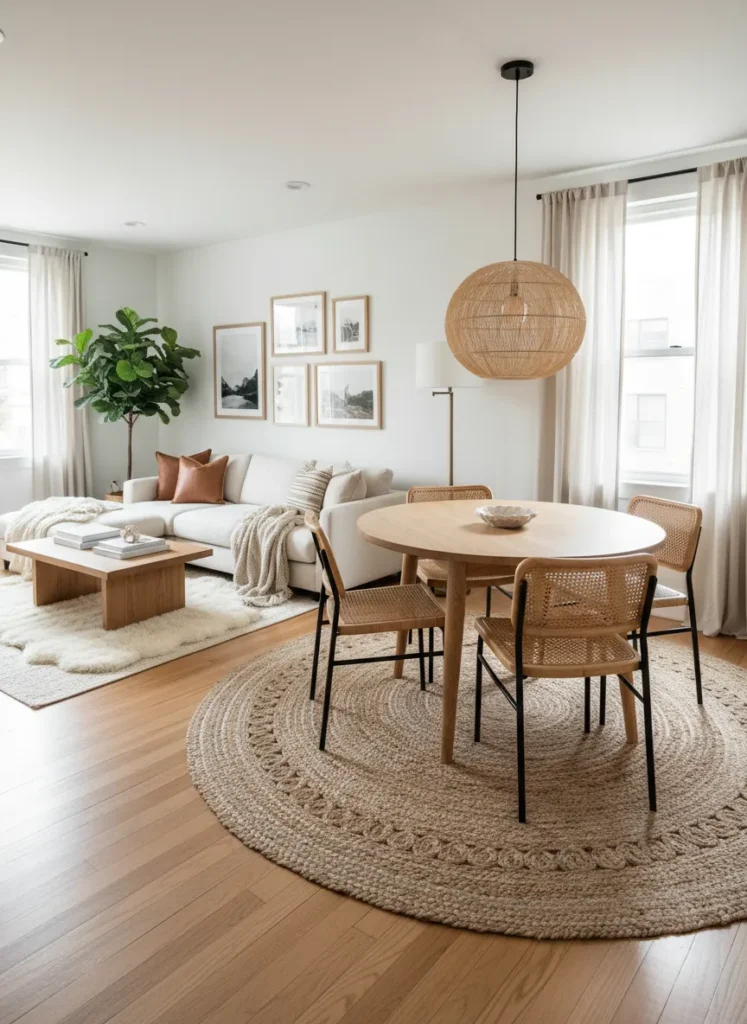
In small open-plan homes, a rug is a powerful tool to carve out a distinct dining zone without using physical dividers. The rug acts as a visual boundary that grounds the table and chairs, giving the dining area its own identity. This separation helps the space feel organized rather than like a random assortment of furniture.
Choose a rug that is large enough for the chairs to remain on it even when pulled out. A light-colored or neutral rug will reflect light upwards and keep the floor looking expansive. This simple addition adds texture and warmth, making the tiny dining spot feel finished and intentional.
Statement Ceiling Fixtures
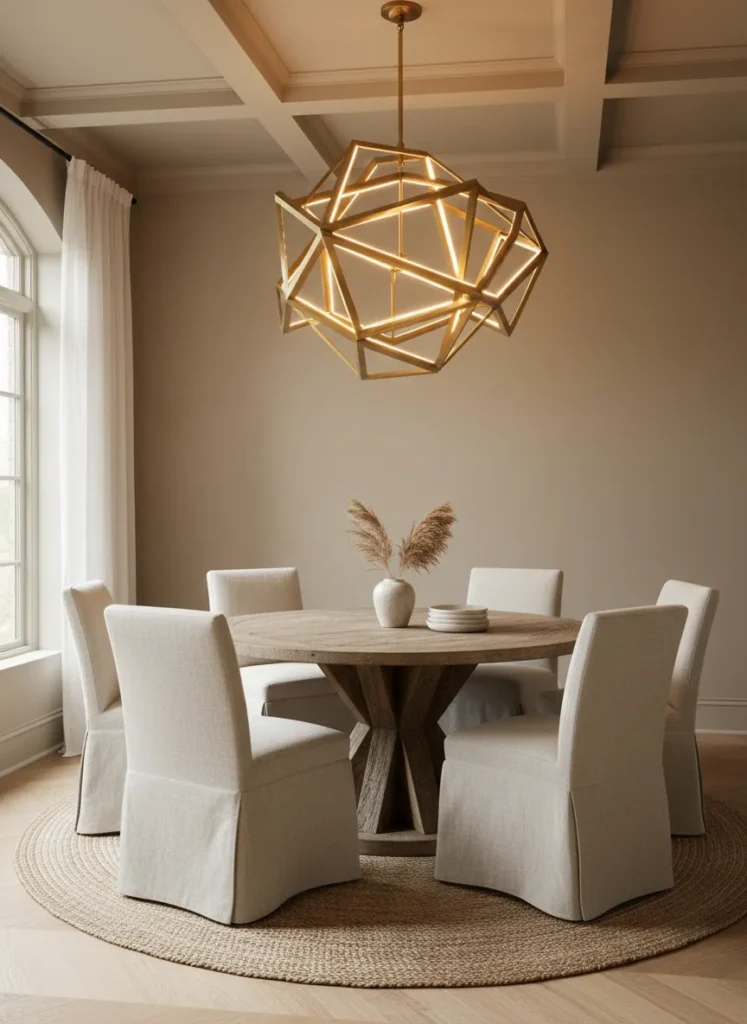
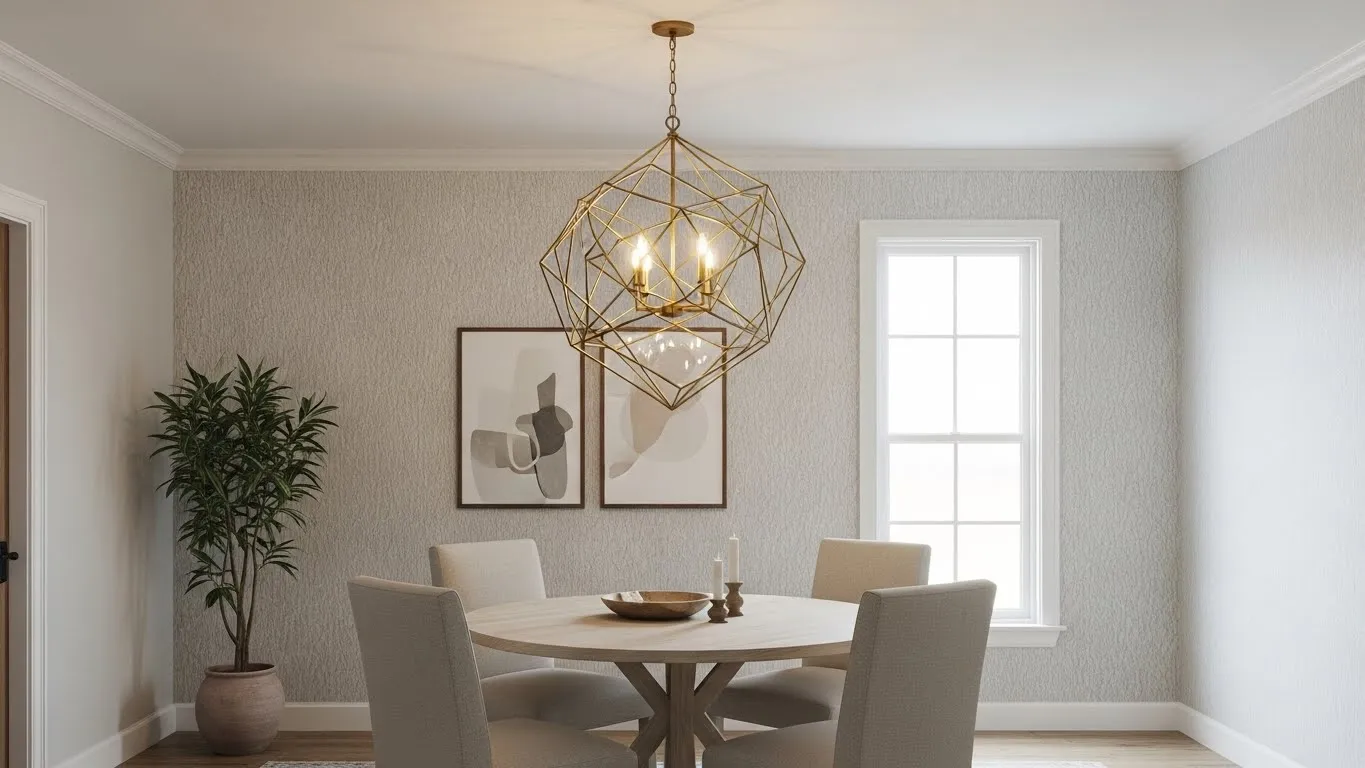
Installing a bold, eye-catching light fixture draws attention upward, distracting the eye from the small footprint of the room. A statement chandelier acts as the jewelry of the space, adding personality and drama. It creates a focal point high in the room, which emphasizes volume rather than floor area.
Even in a tiny room, you can go big with lighting as long as the fixture isn’t visually heavy or solid. Choose open geometric shapes or radiating arms that spread light towards the walls. This wash of light eliminates shadows in the corners, further enhancing the feeling of spaciousness.
Neutral Monochromatic Tones
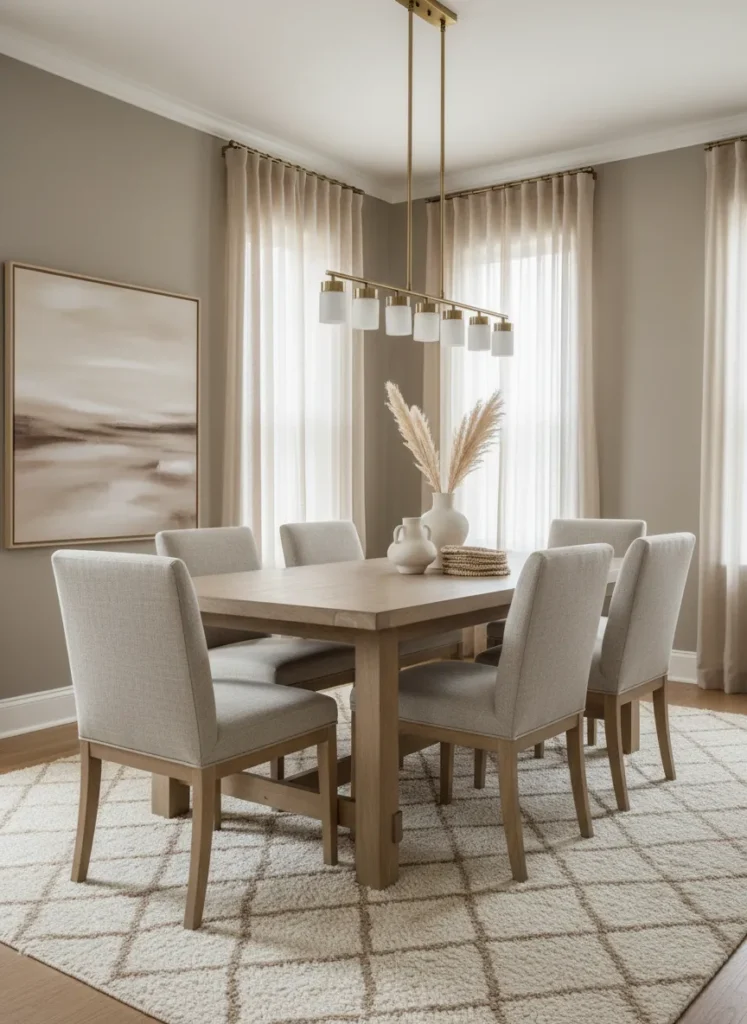
Using a monochromatic color scheme in neutral tones creates a seamless look that tricks the eye into seeing a larger space. When furniture matches the walls or floor, it blends in rather than standing out as a separate block. This lack of contrast reduces visual clutter and makes the room feel unified.
Warm neutrals like beige, sand, and taupe reflect light softly, creating a cozy and inviting atmosphere. Unlike stark white, these tones offer warmth while still keeping the room bright. The continuity of color allows the eye to travel smoothly across the room without interruption.
Window Seat Dining
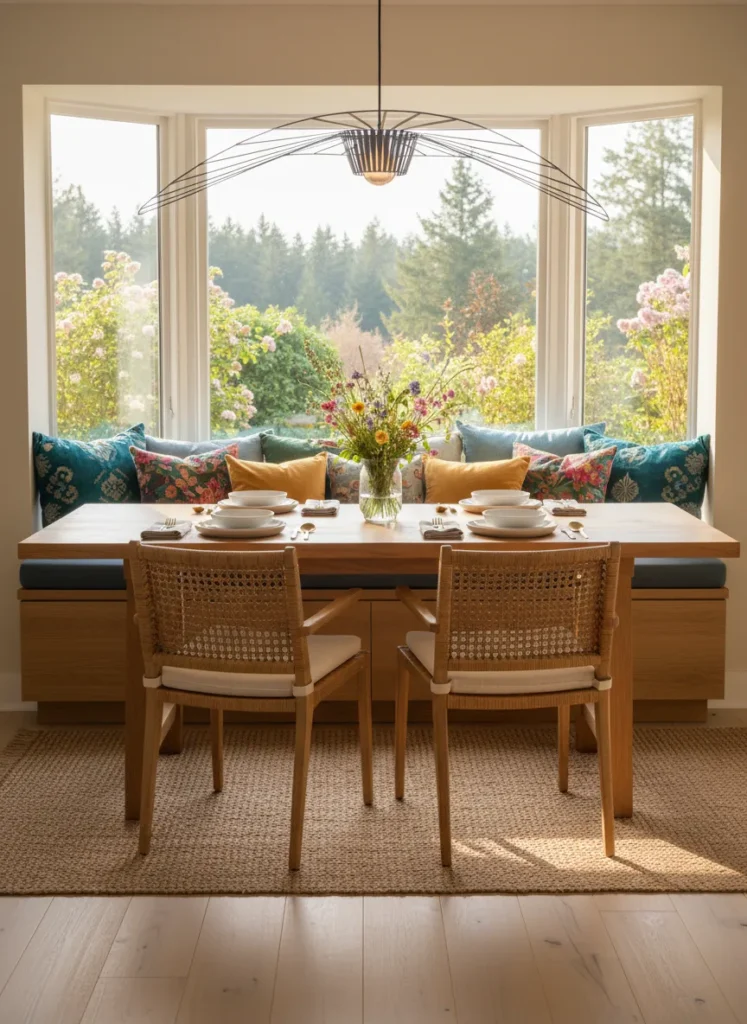
If your layout allows, placing your dining table next to a window seat is a fantastic space-saver. The window seat acts as a built-in bench, eliminating the need for a row of chairs and the space behind them. This setup also takes advantage of the brightest spot in the room.
Dining by the window connects the interior space with the outdoors, extending the view and making the room feel larger. The natural light highlights the food and decor, creating a cheerful morning vibe. It transforms a simple architectural feature into a highly functional dining nook.
Slim Console Tables
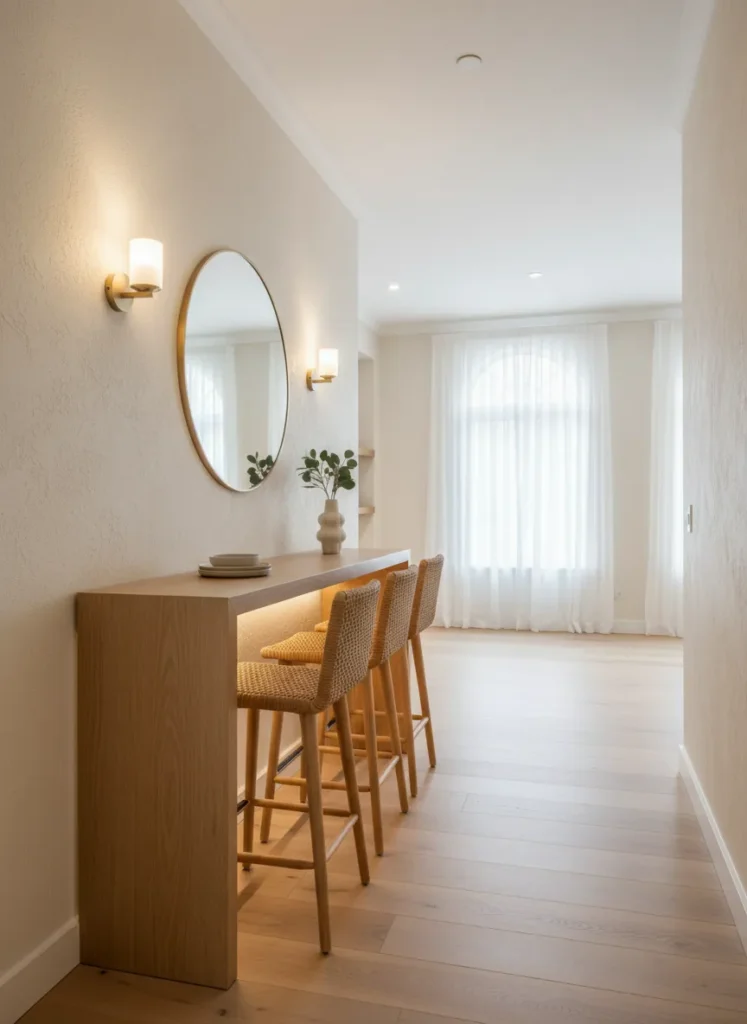
For extremely narrow rooms, a slim console table can serve as a dining surface without blocking the walkway. This bar-style setup is perfect for casual meals and can be pushed flush against a wall or sofa back. It utilizes vertical space with taller stools, keeping the footprint minimal.
This arrangement works particularly well for singles or couples who do not need a massive table for daily use. It creates a cafe-like atmosphere that is modern and efficient. By keeping the center of the room open, the space retains a breathable and uncluttered feel.
Bistro Style Sets
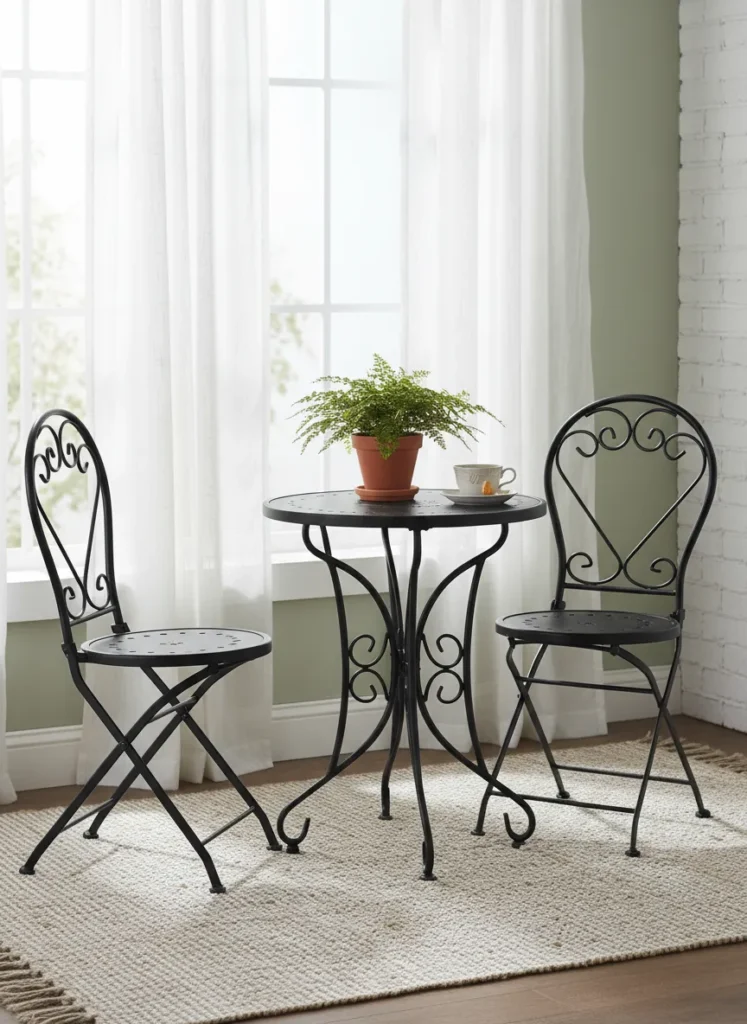
Sometimes the best way to handle a tiny dining room is to embrace the scale with a bistro set. These petite tables and chairs are designed for small footprints, often mimicking the charm of a Parisian cafe. Because they are physically smaller, they leave more negative space around them, making the room appear larger.
Bistro sets are often lightweight and easy to move, allowing you to reconfigure the room whenever needed. They add a touch of romance and character without overwhelming the square footage. This choice is ideal for creating an intimate dining corner in a studio apartment or kitchen nook.
Exposed Leg Furniture
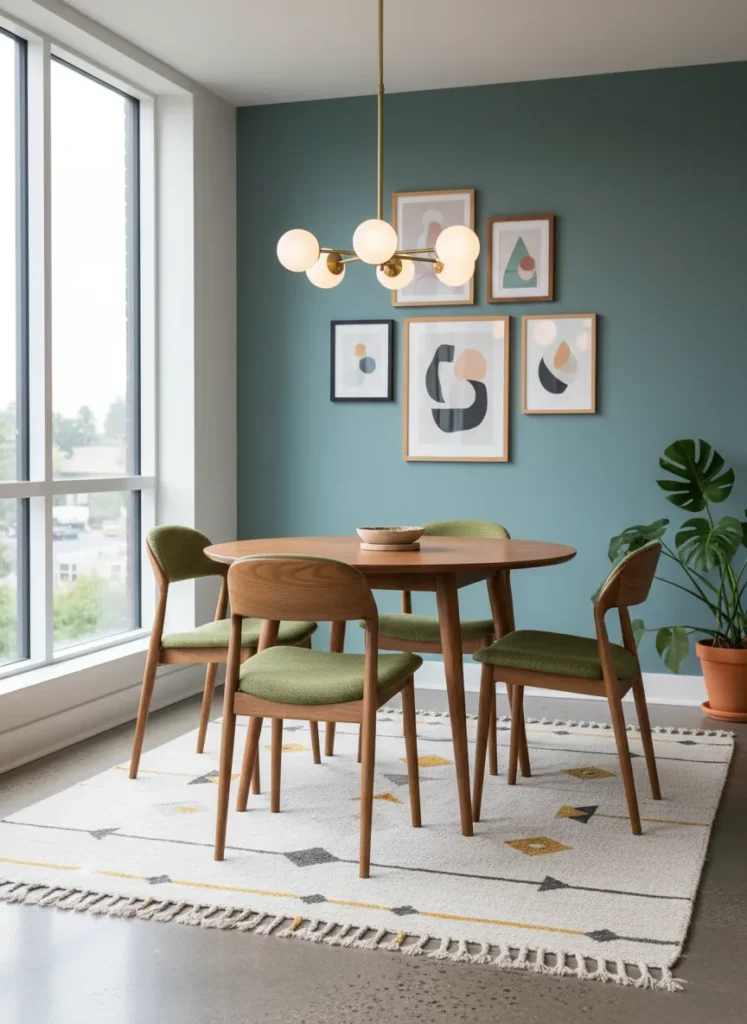
Furniture with exposed, slender legs creates a sense of openness by allowing light and air to flow underneath. Unlike solid bases or skirted chairs which create visual blocks, legged furniture reveals more of the floor. Seeing the floor continue under the furniture tricks the brain into perceiving more ground area.
Mid-century modern styles often feature these tapered legs and slim profiles, making them excellent choices for small dining rooms. This style keeps the visual weight of the furniture low while maintaining functionality. The result is a room that feels lifted, lighter, and much more spacious.
Conclusion
Creating a beautiful dining experience in a small home does not require a massive renovation, just a shift in perspective. By implementing these tiny dining room ideas, from choosing transparent furniture to utilizing vertical space, you can craft a room that feels open and airy. Remember that the goal is to trick the eye and maximize light, turning tight corners into cozy, functional retreats. With a few thoughtful changes, your compact dining area will become one of the most inviting and stylish spots in your home.