

Designing a compact home requires creativity, especially when trying to integrate two functional zones into one seamless space. Finding the perfect small living room with dining area layouts can transform a cramped apartment into a cozy and functional haven for relaxation and meals. By strategically placing furniture and utilizing smart design tricks, you can enjoy the best of both worlds without sacrificing style or comfort.
The Sofa Back Divider
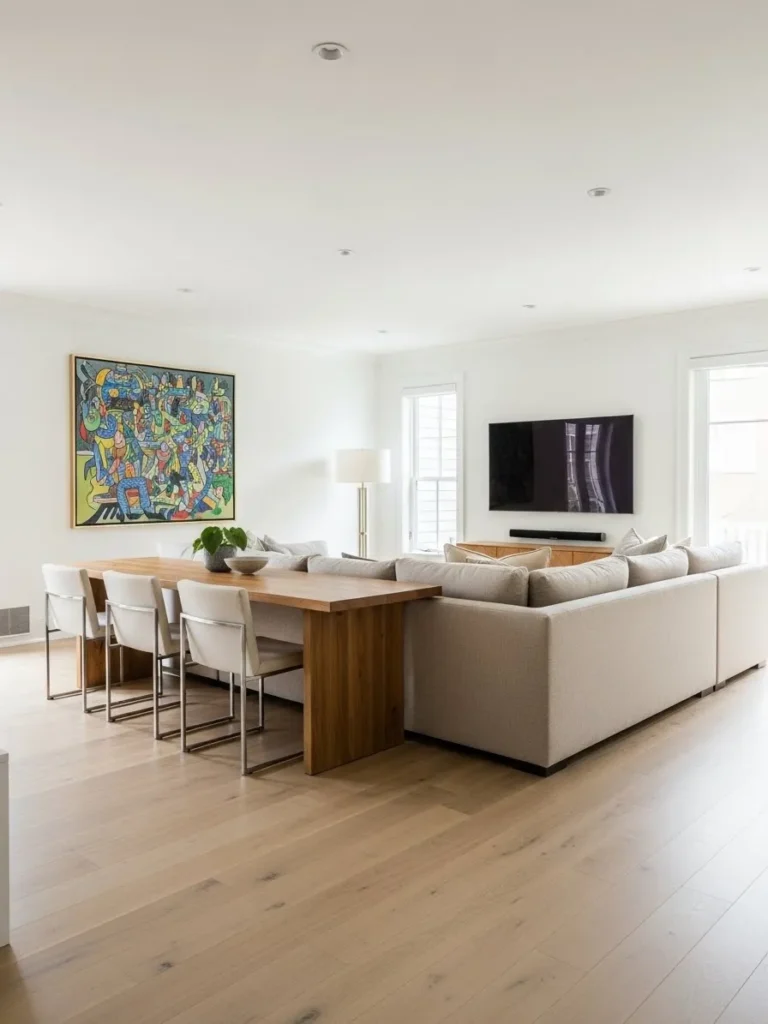
Placing your sofa with its back facing the dining table is one of the most effective ways to define separate zones in an open concept room. This layout creates a natural barrier that visually signals where the lounge area ends and the eating space begins without closing off the room with walls. It keeps the conversation flowing between guests sitting on the couch and those at the table while maintaining distinct functions for each area.
This arrangement works particularly well in square or rectangular rooms where you want to maximize the central floor space. By anchoring the furniture in the middle, you leave the perimeter clear for walking paths, making the room feel larger and less cluttered. You can enhance this division by placing a slim console table between the sofa back and the dining table for added storage and style.
Round Table Corner Nook
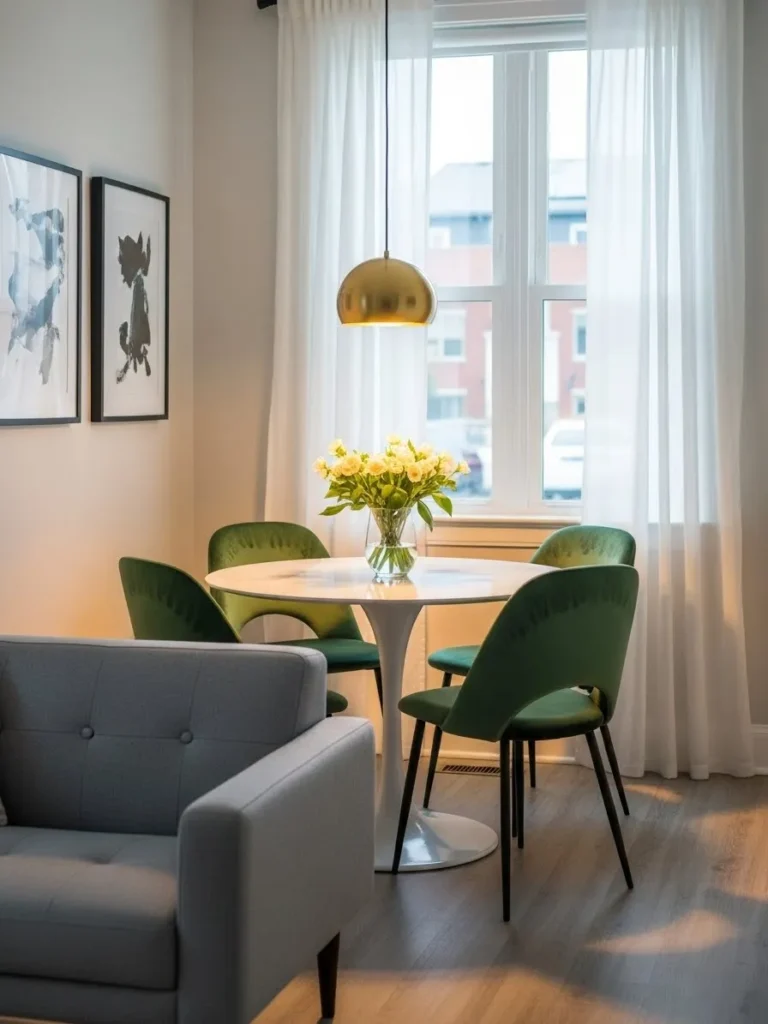
Using a round dining table is a brilliant strategy for tight spaces because the curved edges allow for better traffic flow than sharp rectangular corners. Tucking a round table into an unused corner instantly creates a dedicated dining nook that feels intimate and separate from the main living area. This shape also allows you to squeeze in an extra chair when guests arrive without the arrangement looking awkward or forced.
The visual softness of a round table contrasts beautifully with the typically boxy shapes of sofas and TV stands, adding variety to the room’s design. This layout encourages a cozy atmosphere where the dining area feels like a destination rather than an afterthought. It frees up the center of the room for your living area furniture, ensuring the main traffic zones remain open and airy.
The Rug Zoning Technique
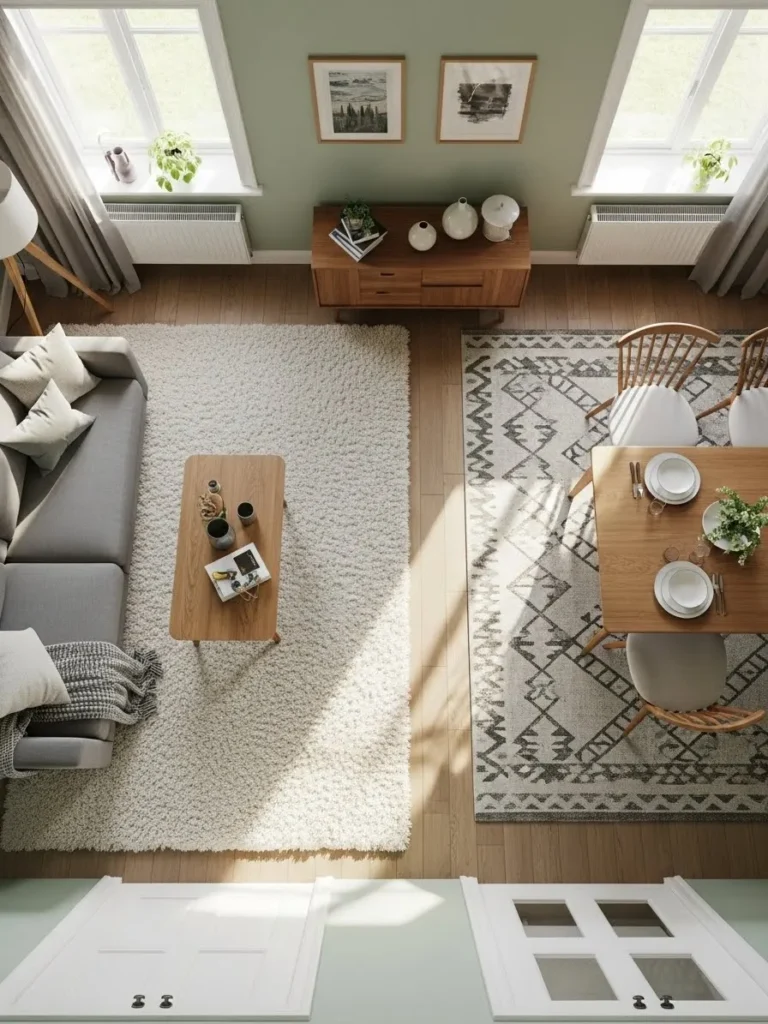
Area rugs are powerful tools for visual storytelling in a small room because they ground furniture groups without taking up vertical space. By placing a large rug under your sofa and coffee table and a different, complementary rug under your dining set, you create two psychological islands within one room. This helps the eye distinguish the living room from the dining area immediately upon entering the space.
When using this layout, it is important to choose rugs that coordinate in color or style but have enough contrast to establish separation. This technique allows you to keep the furniture layout fluid and open while still maintaining structure. It effectively prevents the “furniture showroom” look where pieces seem to float aimlessly in a small room.
Bench Seating Against the Wall
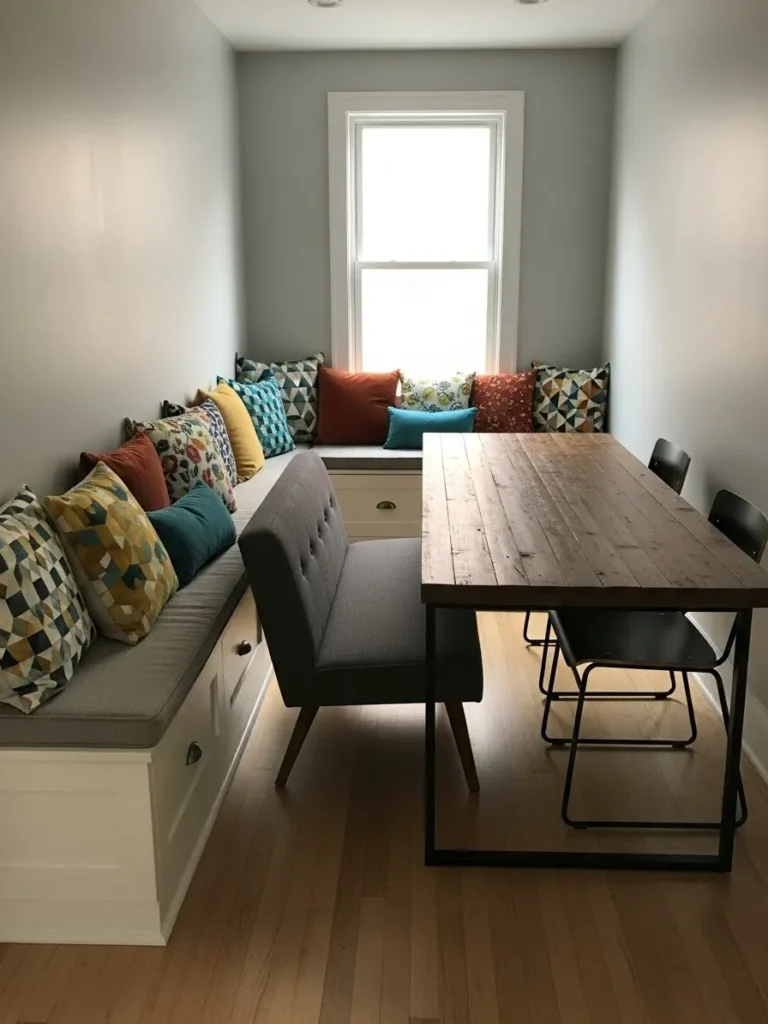
Pushing your dining table against a wall and using a bench is a massive space-saver that eliminates the need for a walkway behind one side of the table. A bench can be tucked completely under the table when not in use, or it can serve as a permanent architectural feature if built into the wall. This setup creates a streamlined look that keeps the floor plan open for the living room furniture.
This layout is ideal for narrow rooms where width is a luxury you cannot afford to waste. The bench can also double as extra seating for the living room when you have a large gathering, bridging the gap between the two zones. It creates a casual, bistro-like vibe that is perfect for relaxed meals and morning coffee.
The Floating Console Bar
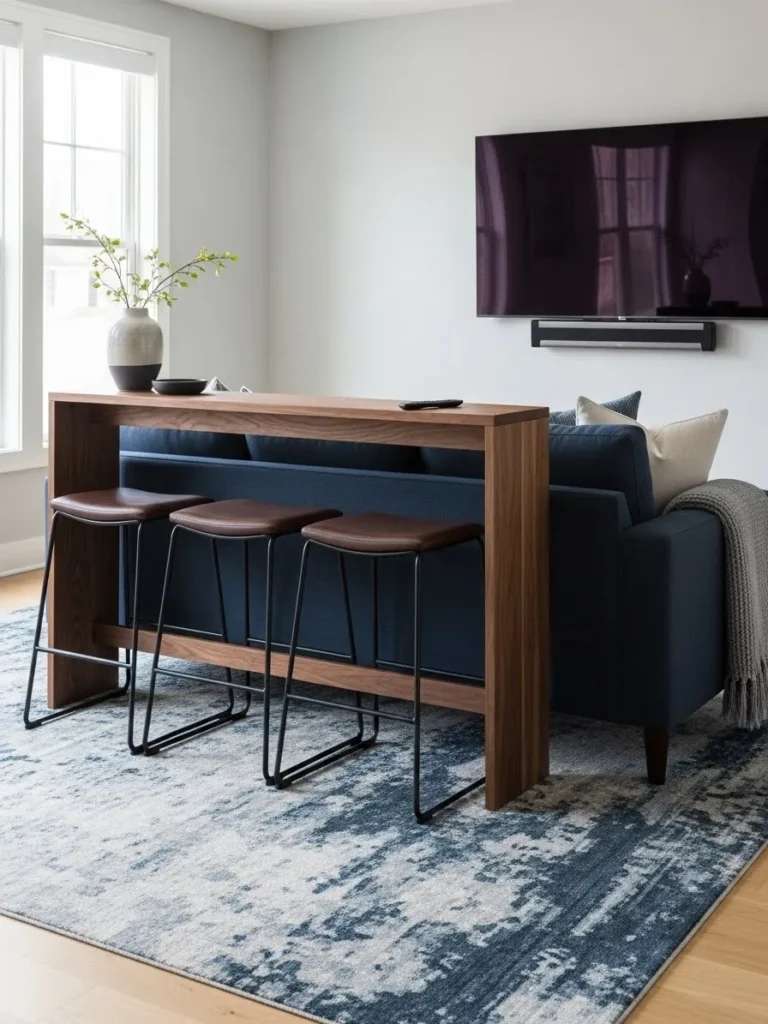
If you are extremely short on space, replacing a traditional dining table with a bar-height console behind the sofa is a clever solution. This layout serves multiple purposes, acting as a dining spot, a workspace, and a place to set drinks while watching movies. It occupies a minimal footprint and utilizes the often-wasted space directly behind the couch.
This design choice creates a tiered theater effect for viewing the television, allowing those eating to see over the heads of those lounging on the sofa. It keeps the room feeling open and modern, perfect for a bachelor pad or a young couple’s first apartment. The verticality of the bar stools adds height and interest to the room’s profile.
Check out Best Home Decor Finds You’ll Actually Love for Every Room
L-Shaped Sofa Integration
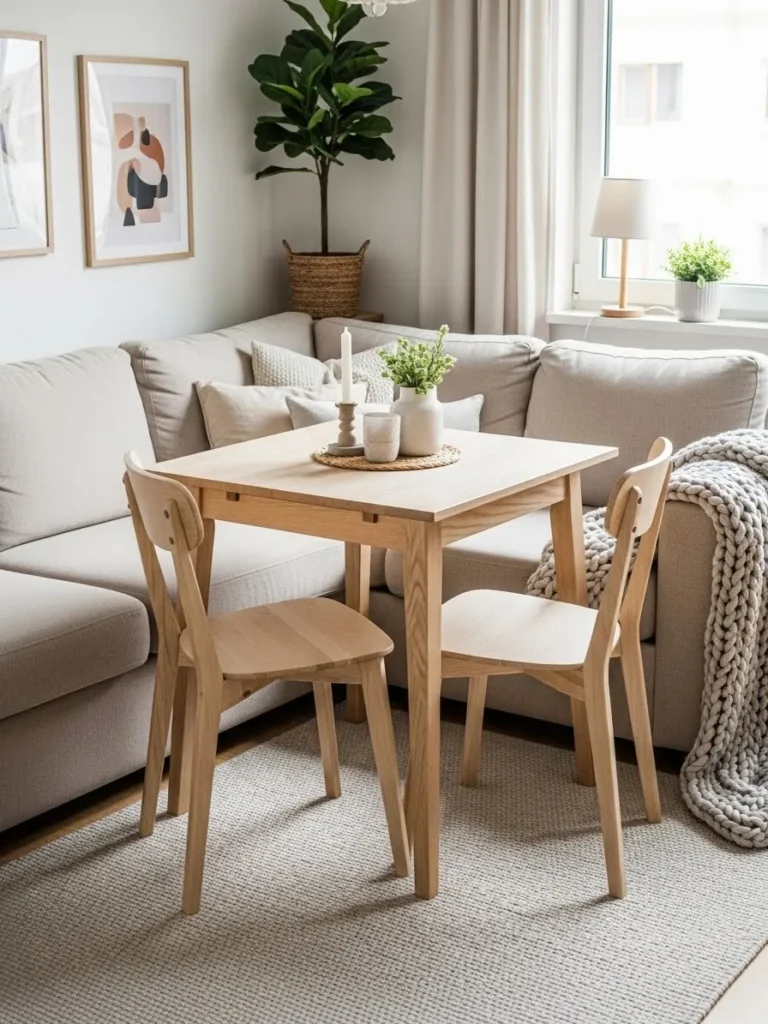
An L-shaped sofa can actually help define a dining area by creating a physical boundary with its chaise section. By placing a small dining table in the open square space formed by the sectional, you create a cohesive and compact living arrangement. This layout maximizes corner space and keeps all the heavy furniture grouped together, leaving the rest of the room clear.
This approach creates a very cozy and communal environment where the dining and living experiences are closely linked. It is perfect for families who want to stay connected while engaging in different activities. The solid back of the sectional provides a sturdy anchor for the dining area, making the placement feel intentional rather than accidental.
Window Seat Dining Layout
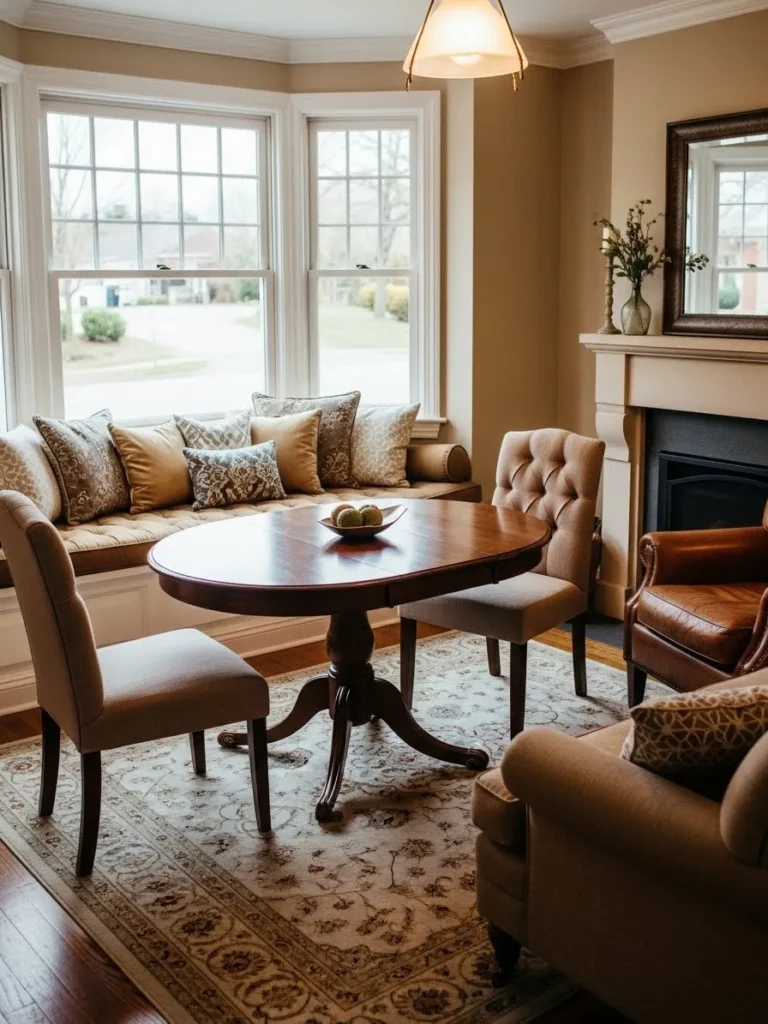
Utilizing a window bay or a view-facing wall for your dining area creates a scenic and bright spot for meals. If you have a bay window, adding a cushion transforms the ledge into banquette seating, which saves floor space by eliminating the need for chairs on that side. This draws the eye toward the natural light and makes the dining area the focal point of the room during the day.
This layout pulls the dining function to the perimeter of the room, leaving the central area open for your living room furniture. It creates a cafe-style ambiance that feels luxurious and custom-designed. Eating by the window also makes a small room feel less confining because your view is extended to the outdoors.
The Glass Partition
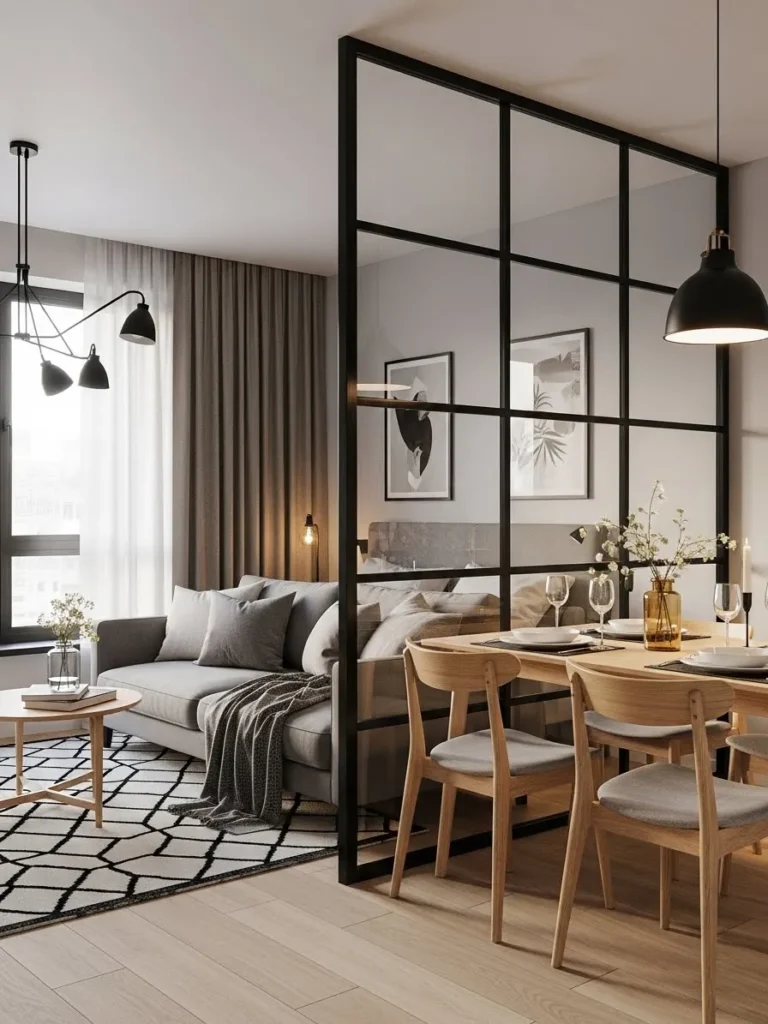
Installing a glass partition or using a large folding glass screen is a sophisticated way to separate a small living room from a dining area without blocking light. The transparency of the glass maintains the visual depth of the room, making it appear larger than it is. However, the physical barrier helps reduce noise and cooking smells from traveling directly to the sofa.
This layout adds a touch of industrial or modern elegance to the home and clearly delineates the function of each zone. It allows you to have a dedicated dining room experience within a small footprint. The partition also offers a vertical surface to place furniture against, giving you more layout options for both the sofa and the table.
Ghost Furniture for Visual Space
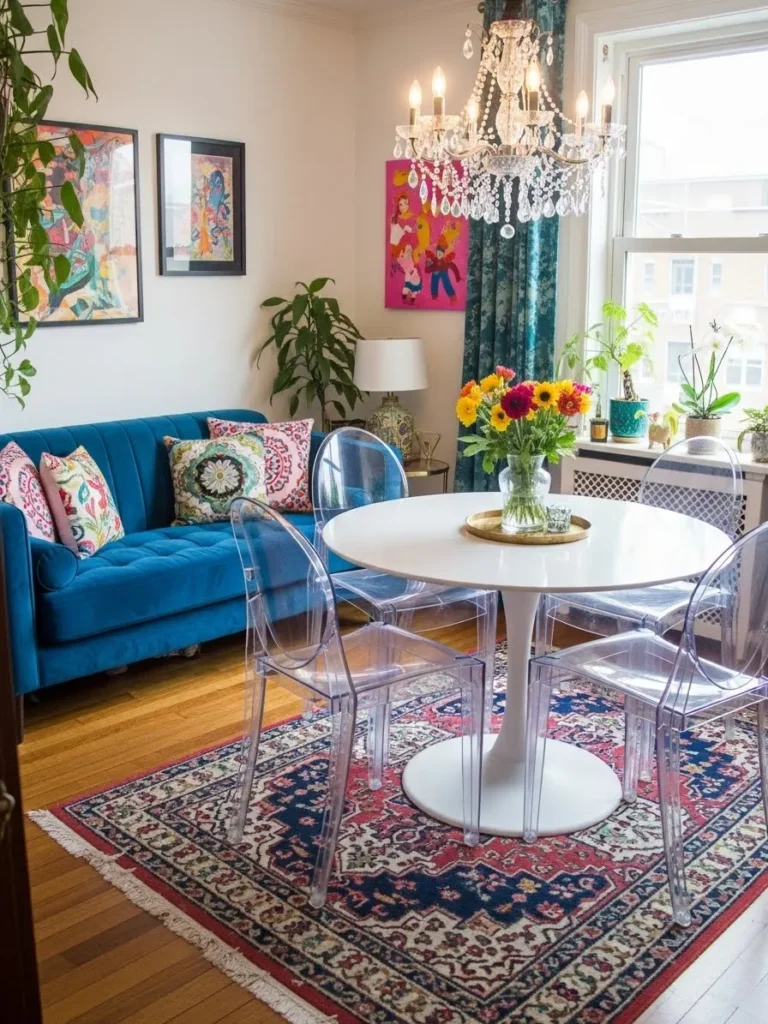
When dealing with a small living room with dining area layouts, visual weight is just as important as physical size. Using transparent acrylic chairs, often called ghost chairs, or a glass-topped dining table can make the furniture seem to disappear. This trick prevents the room from looking overcrowded with legs and heavy materials.
This style allows the eye to travel through the furniture to the walls and floor, creating an illusion of more space. It is a perfect choice for modern or eclectic interiors where you want the functionality of a full dining set without the heavy look of wood or upholstered chairs. The sleek, reflective surfaces also bounce light around the room, brightening the space.
The Drop-Leaf Table Solution
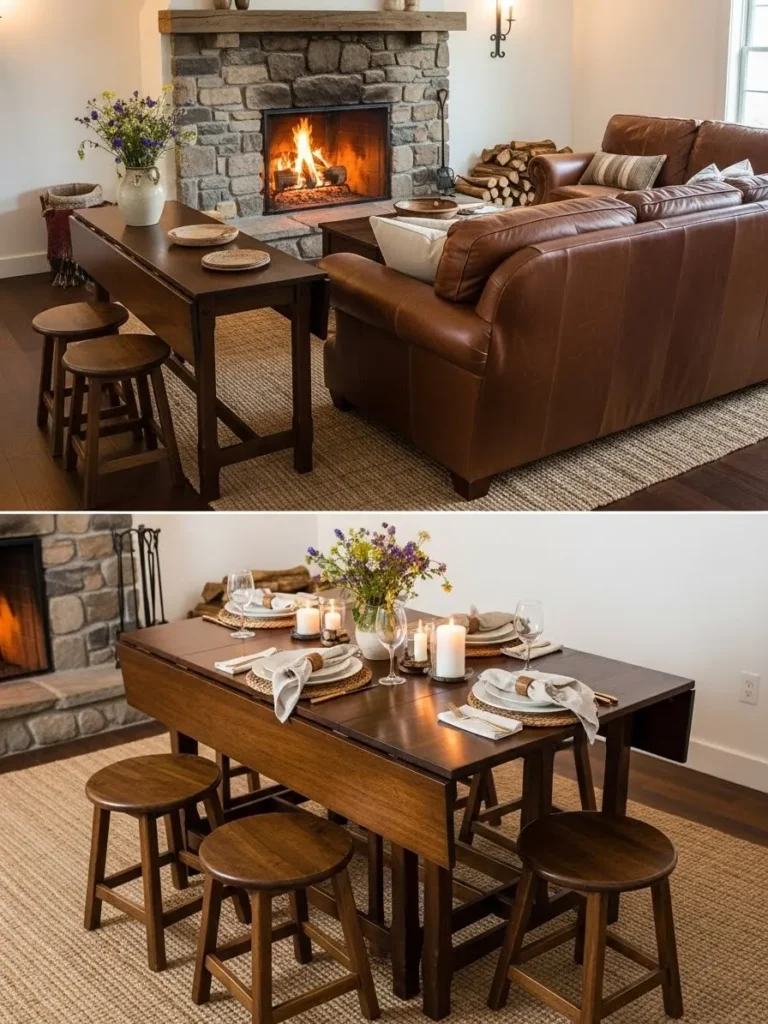
Flexibility is key in small spaces, and a drop-leaf or gate-leg table is the ultimate convertible furniture piece. When not in use for meals, the leaves can be folded down, transforming the table into a slim console or desk that sits unobtrusively against a wall. This frees up valuable floor space for daily living and movement.
This layout allows you to prioritize the living room aspect of the space for the majority of the time. When you do have guests or sit down for a meal, the table expands to accommodate the need. It is a practical approach that acknowledges that in many modern homes, a large dining table is not used 24/7.
Vertical Shelving Divider
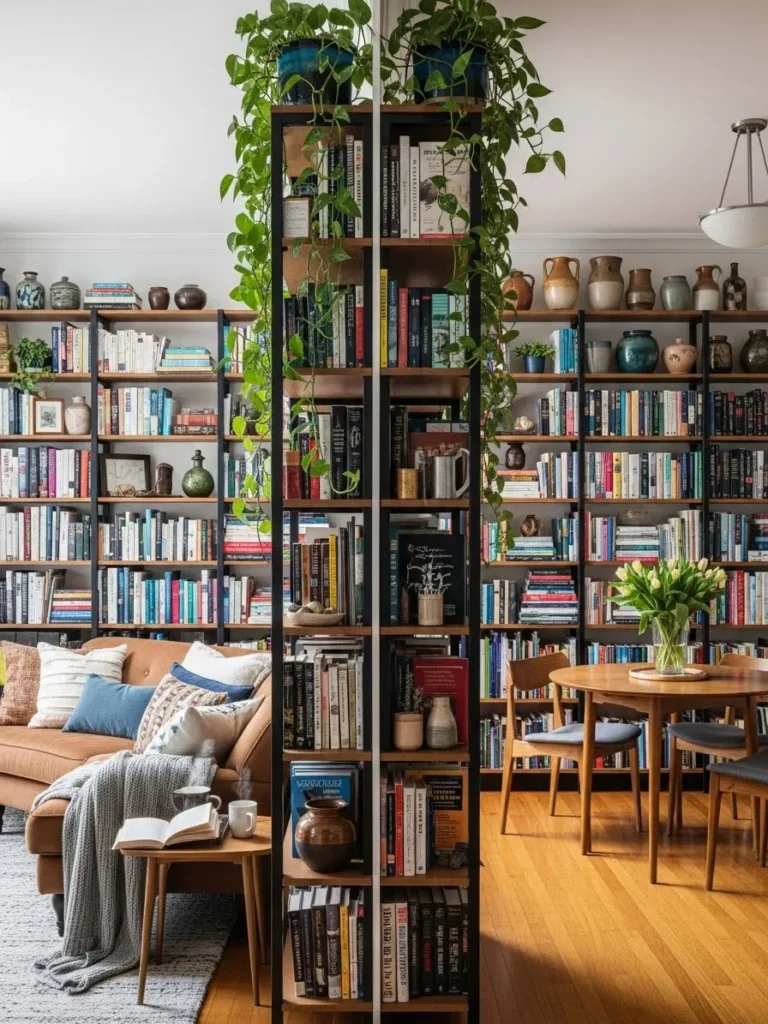
An open shelving unit acts as a functional room divider that offers storage while separating the living and dining zones. Because the shelves are open, light and air can still circulate between the spaces, preventing the room from feeling dark or boxy. You can use the shelves to display decor that ties the color schemes of both areas together.
This layout is excellent for renters who cannot build permanent walls but want a clear distinction between eating and relaxing. The height of the shelving draws the eye upward, making low ceilings feel higher. It also provides a place to store dinnerware on the dining side and books or media on the living room side.
Monochromatic Color Flow Layout
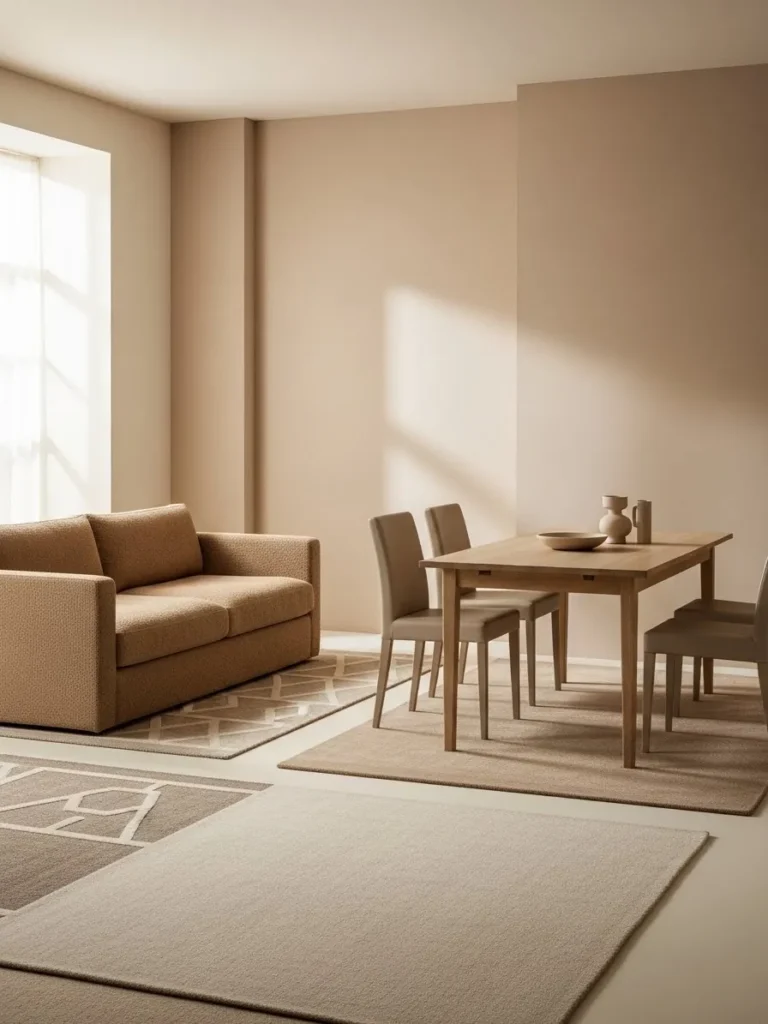
Using a monochromatic color scheme unifies a small living room and dining area, making the boundary between them feel fluid and expansive. When walls, furniture, and textiles share the same tonal family, the eye moves smoothly across the room without being stopped by jarring contrasts. This lack of visual interruption makes the entire space perceive as one large, cohesive area.
To make this layout work, rely on texture rather than color to distinguish the zones. You might use a velvet sofa in the living area and smooth wooden chairs in the dining section. This approach creates a serene, spa-like atmosphere that feels organized and intentional, masking the fact that the square footage is limited.
The Galley Layout
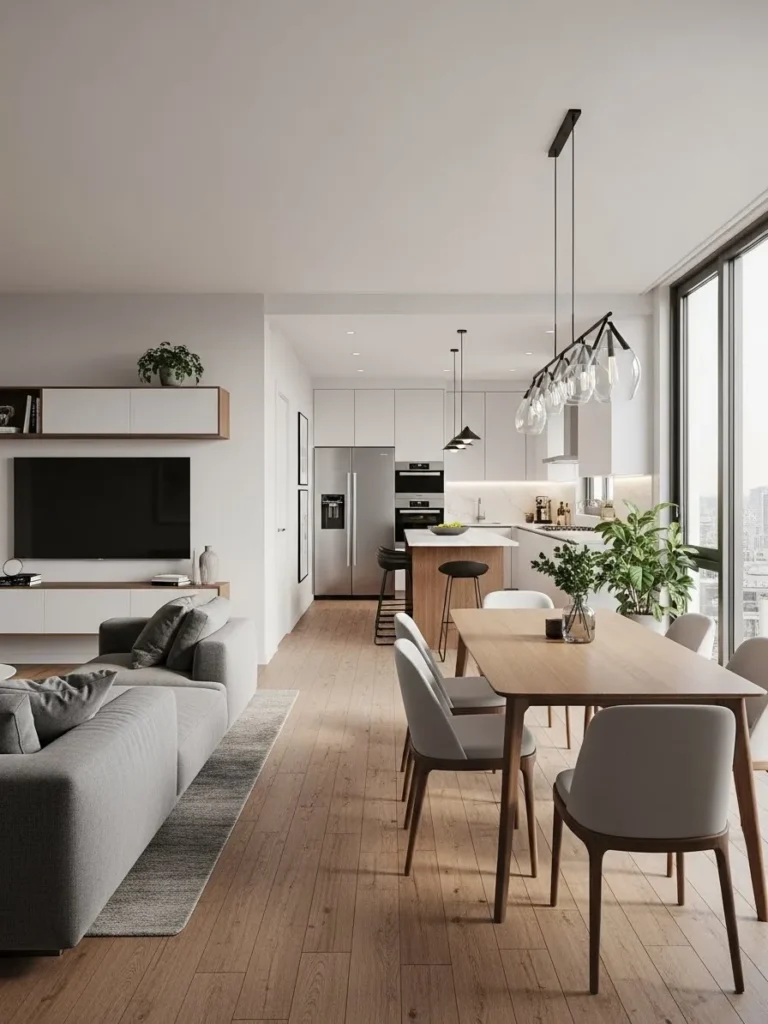
In long, narrow rooms, a galley layout is often the most logical choice to maintain flow. By aligning the sofa and the dining table along the same axis or parallel to the long walls, you create a clear traffic path on one side of the room. This linear arrangement prevents the “obstacle course” feel that happens when furniture blocks the natural walkway.
This design mimics the efficiency of a galley kitchen, ensuring that movement from the entrance to the living area is unobstructed. It emphasizes the length of the room, which can make it feel spacious in a different way. Keeping the furniture profile low helps to maintain sightlines from one end of the room to the other.
Mirror Wall Expansion
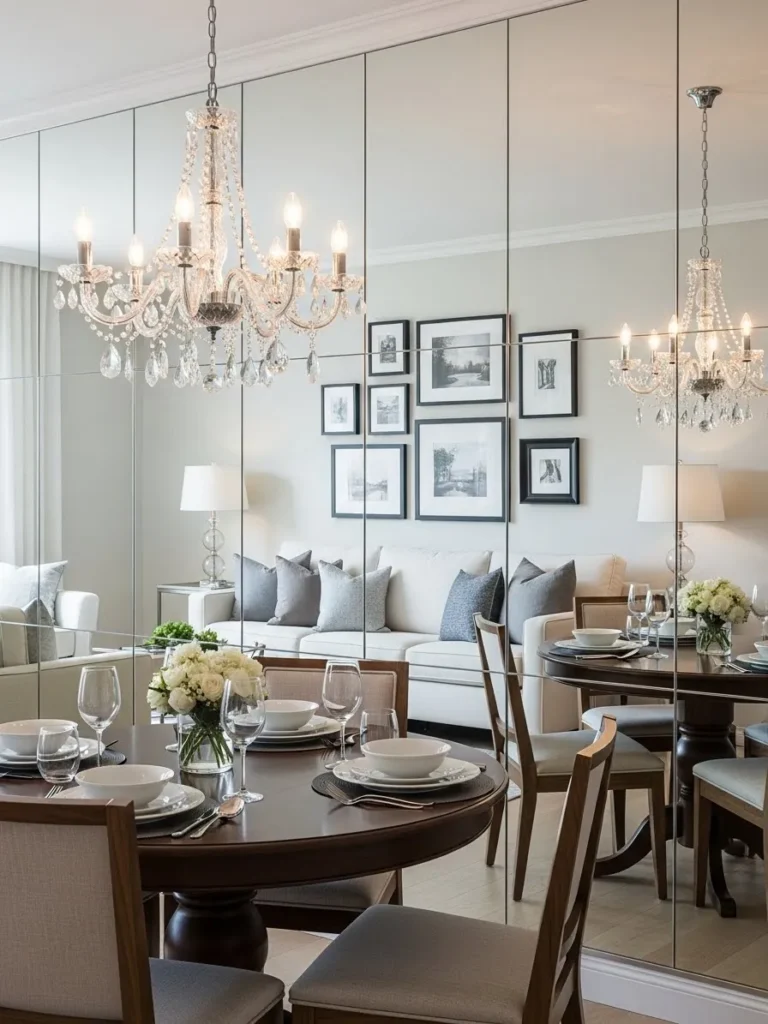
Installing a large mirror or a wall of mirrors in the dining section of a combined room instantly doubles the perceived space. Mirrors reflect light and the view of the living area, tricking the brain into thinking the room continues beyond the wall. This is a classic design trick that adds glamour and brightness to small interiors.
Positioning the dining table next to a mirrored wall also makes the dining experience feel grander and less claustrophobic. It reflects the activity in the living room, connecting the two spaces visually even if they are physically apart. This layout is particularly effective in rooms with limited natural light.
Pendant Light Zoning
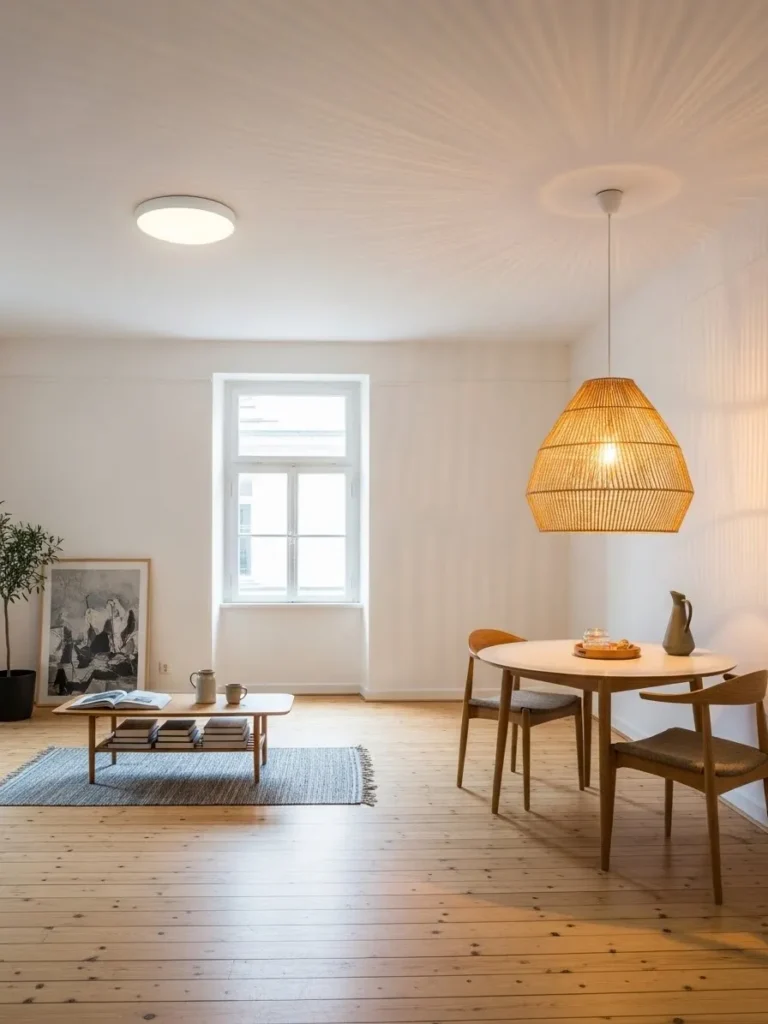
Lighting is a subtle but powerful way to define zones without using any floor space. By hanging a statement pendant light or chandelier directly over the dining table, you create a focal point that declares that specific area as the “dining room.” The pool of light creates a virtual boundary around the table.
This layout works best when the living area relies on recessed lighting, floor lamps, or a different style of ceiling fixture. The contrast in lighting heights and styles helps the brain categorize the functions of the room. It adds vertical interest and ensures the dining table doesn’t look like it is floating aimlessly in the living room.
The Diagonal Placement
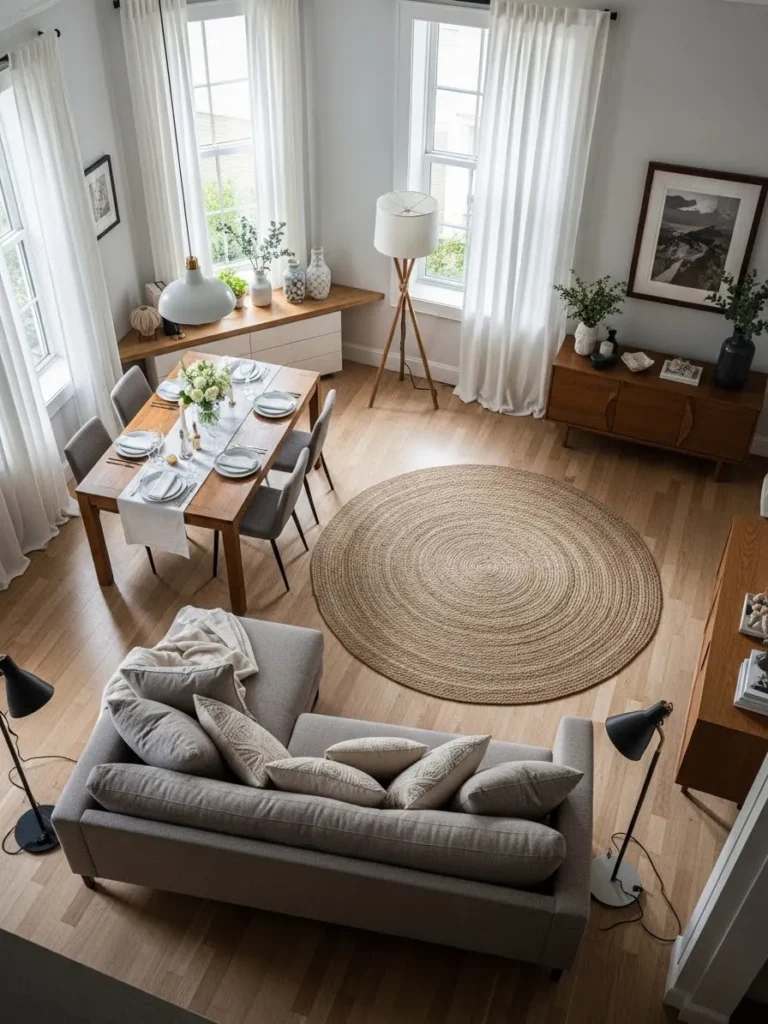
Sometimes, placing furniture parallel to the walls emphasizes the small dimensions of a boxy room. Placing your dining table on a diagonal can disrupt this boxiness and create a sense of dynamic flow. It often opens up new pathways for walking and can make a tight corner usable for dining where a straight placement wouldn’t fit.
This layout adds an element of surprise and design flair, making the room feel styled rather than just furnished. It directs the eye toward the longest sightlines in the room, which are the diagonals from corner to corner. It requires less furniture to fill the space effectively, allowing the room to breathe.
Nested Stool Tables
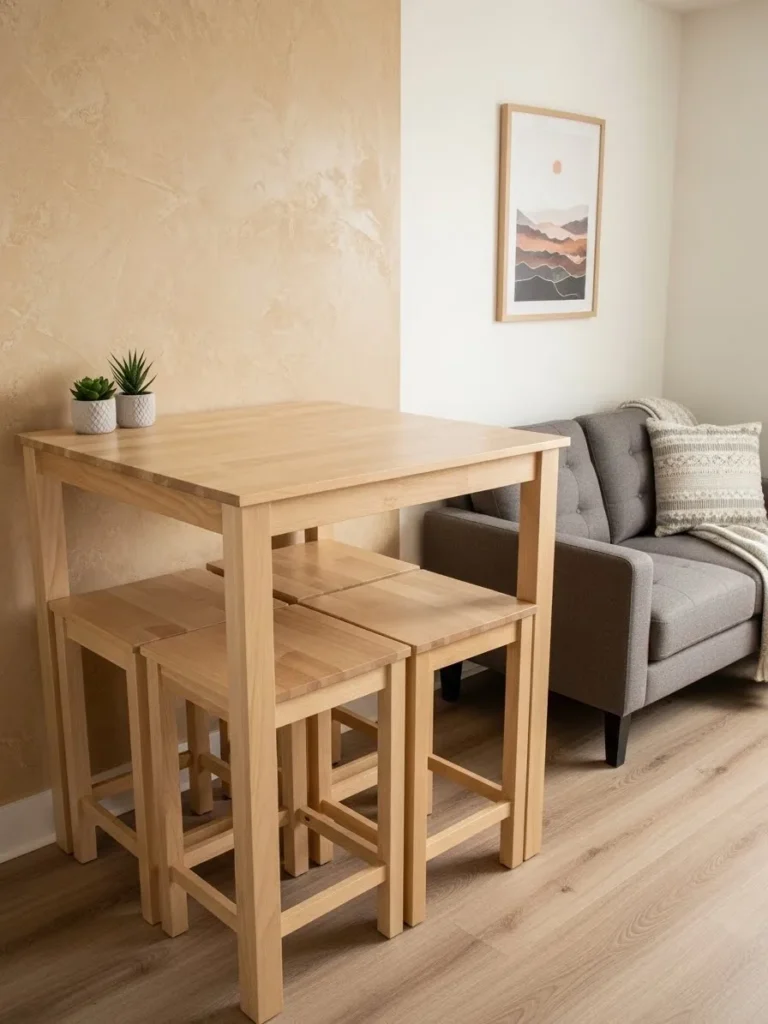
For the ultimate space-saving solution, choose a dining table set where the seating nests completely underneath the table. When the stools are tucked away, the unit takes up only the footprint of the table itself, removing visual clutter and tripping hazards. This turns the dining set into a compact console when meals aren’t being served.
This layout is perfect for micro-apartments or studios where every inch counts. It allows the living room function to dominate the space, with the dining capability expanding only when needed. The clean lines of a nested set also contribute to a tidy, minimalist aesthetic that helps small rooms feel larger.
Outdoor Flow Integration
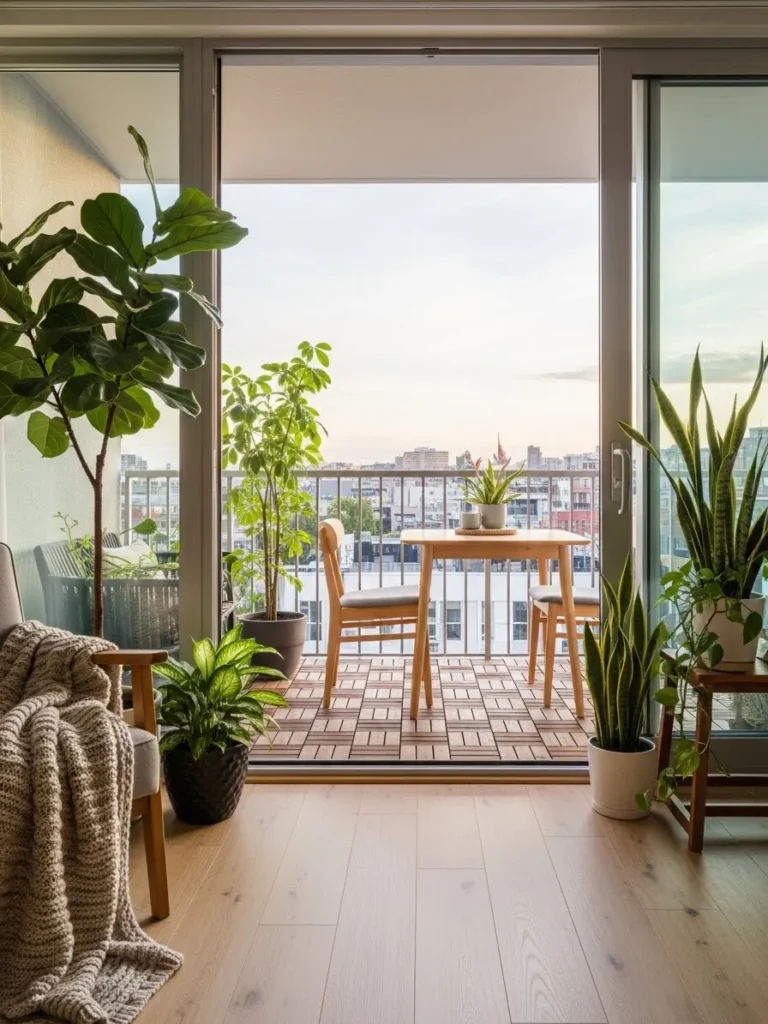
If your small living room connects to a patio or balcony, place your dining area right next to the glass doors. This draws the eye outside, borrowing the visual space of the outdoors to make the interior feel bigger. In warmer weather, you can open the doors to effectively extend your dining room into the open air.
This layout capitalizes on natural light and views, making the dining experience more enjoyable. It also keeps the heaviest furniture away from the darker corners of the room, ensuring the space feels bright and airy. It blurs the lines between indoor and outdoor living, which is a hallmark of spacious design.
Conclusion
Creating a harmonious home with limited square footage is all about smart choices and visual balance. By selecting one of these 18 small living room with dining area layouts, you can maximize your available space while ensuring distinct zones for eating and relaxing. Whether you choose to use rugs for zoning, transparent furniture for lightness, or clever lighting to define areas, the right design will make your small room feel spacious and welcoming.