
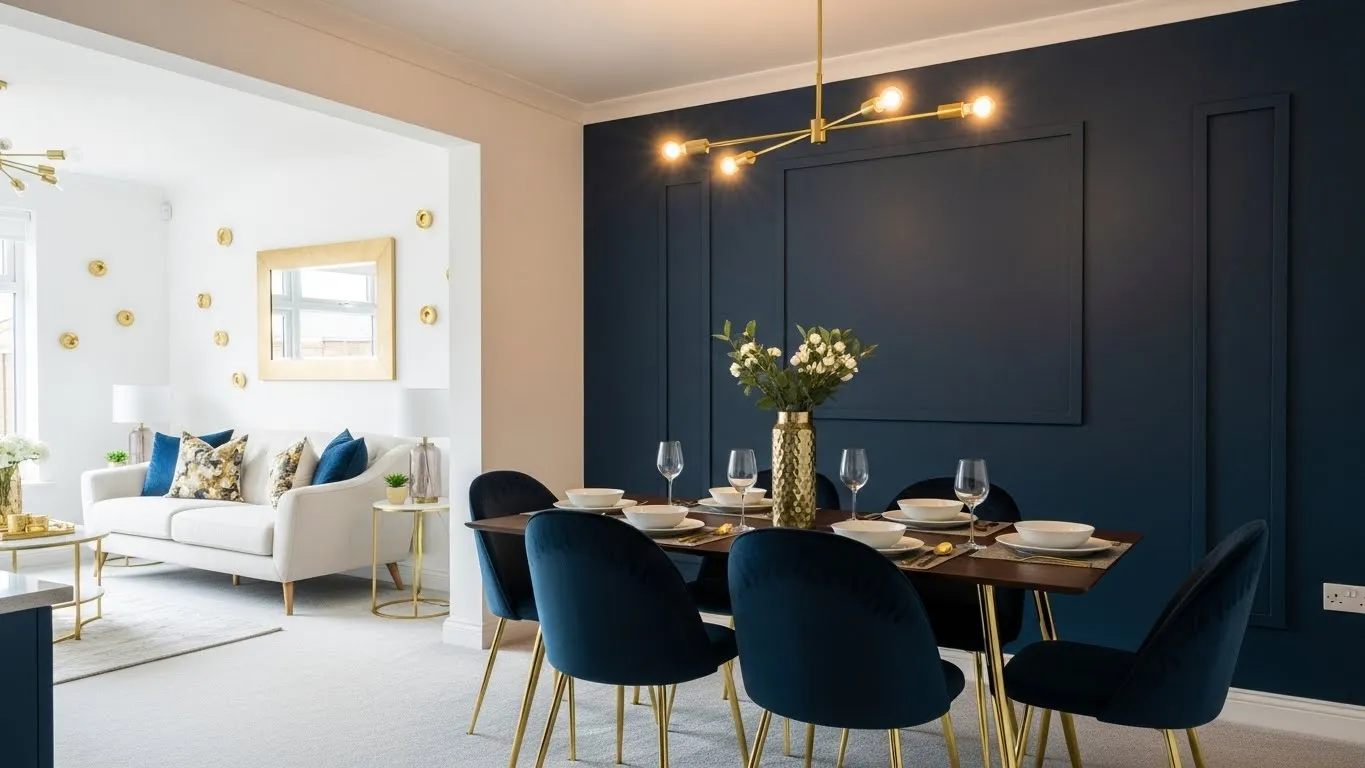
Designing a small living dining combo layout can feel like a puzzle, but with the right strategy, you can create a functional and stylish home. By focusing on flow and clever furniture placement, even compact spaces can serve double duty without feeling crowded. These ideas will help you maximize every square inch while maintaining a beautiful aesthetic.
The Sofa Back Divider
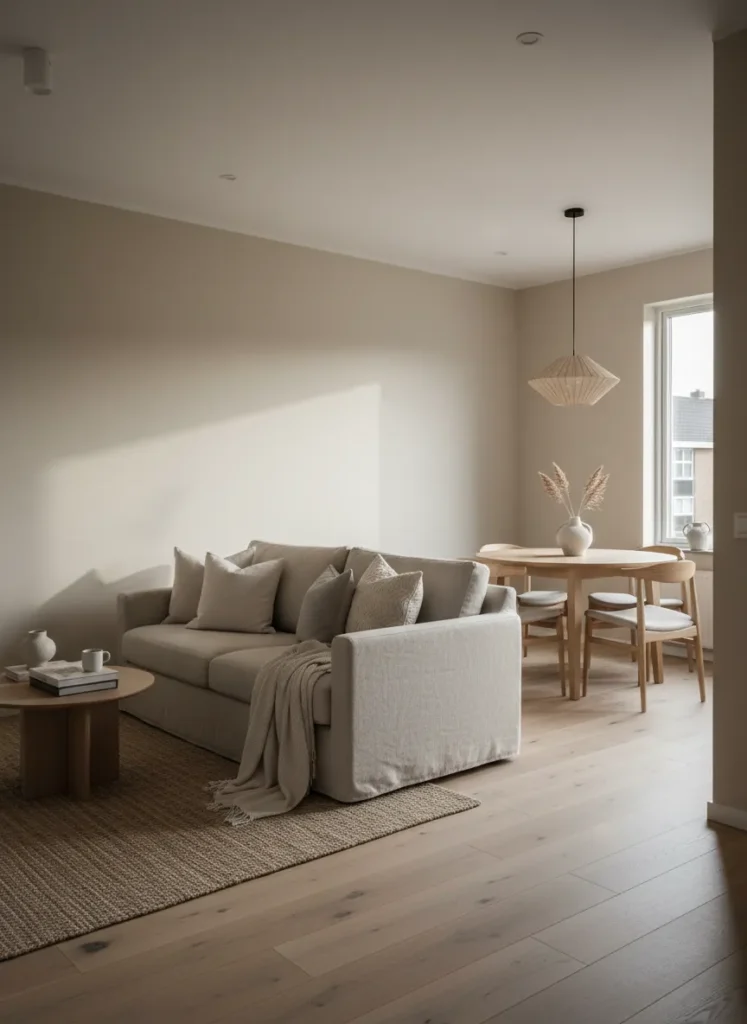
One of the easiest ways to define separate zones is by using the back of your sofa as a natural wall. By facing the sofa away from the dining table, you instantly create a clear distinction between the relaxation area and the eating space.
This layout keeps the room open while establishing boundaries. It allows you to watch television or chat with guests in the living area without feeling like you are sitting in the kitchen.
Round Table Efficiency
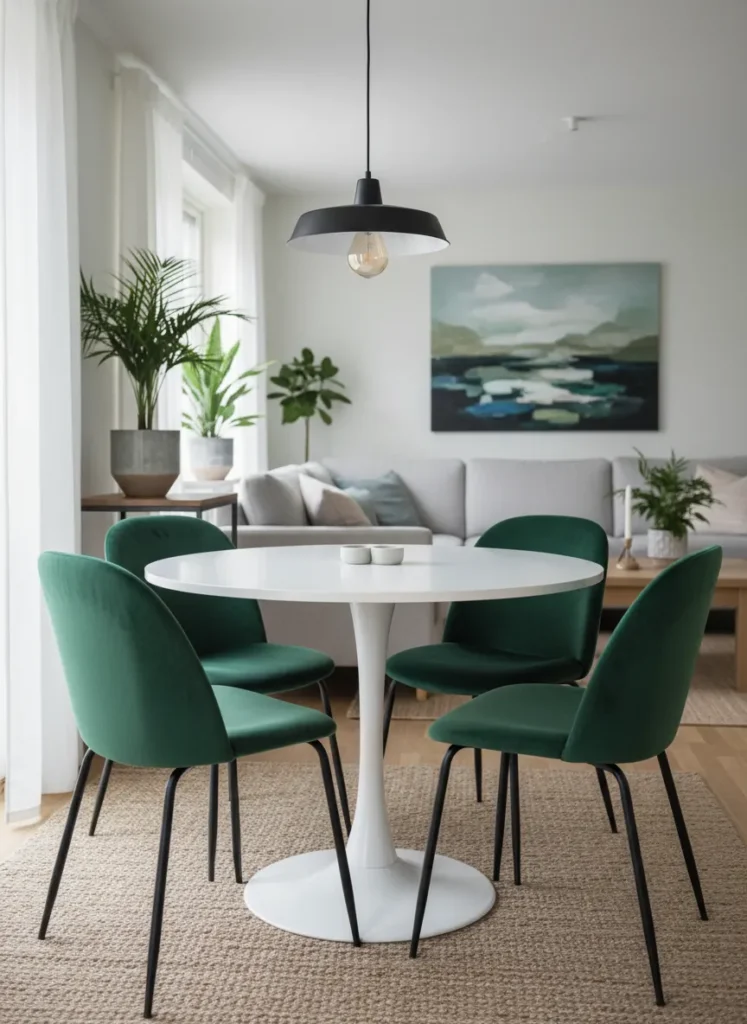
Rectangular tables can take up valuable walking space in a tight room. A round dining table is a perfect solution because it eliminates sharp corners and improves the flow of traffic around the furniture. The curved lines of a round table also soften the look of a boxy room. This shape invites intimate conversation and allows you to tuck chairs all the way in when they are not in use.
Define Zones with Rugs

Visual boundaries are just as effective as physical ones when organizing a multipurpose room. Placing a large area rug under your seating arrangement anchors the living space and separates it from the dining area.
Keep the dining section floor bare or use a different texture to enhance the distinction. This trick draws the eye to specific areas and prevents the furniture from looking like it is floating aimlessly.
The Window Dining Nook
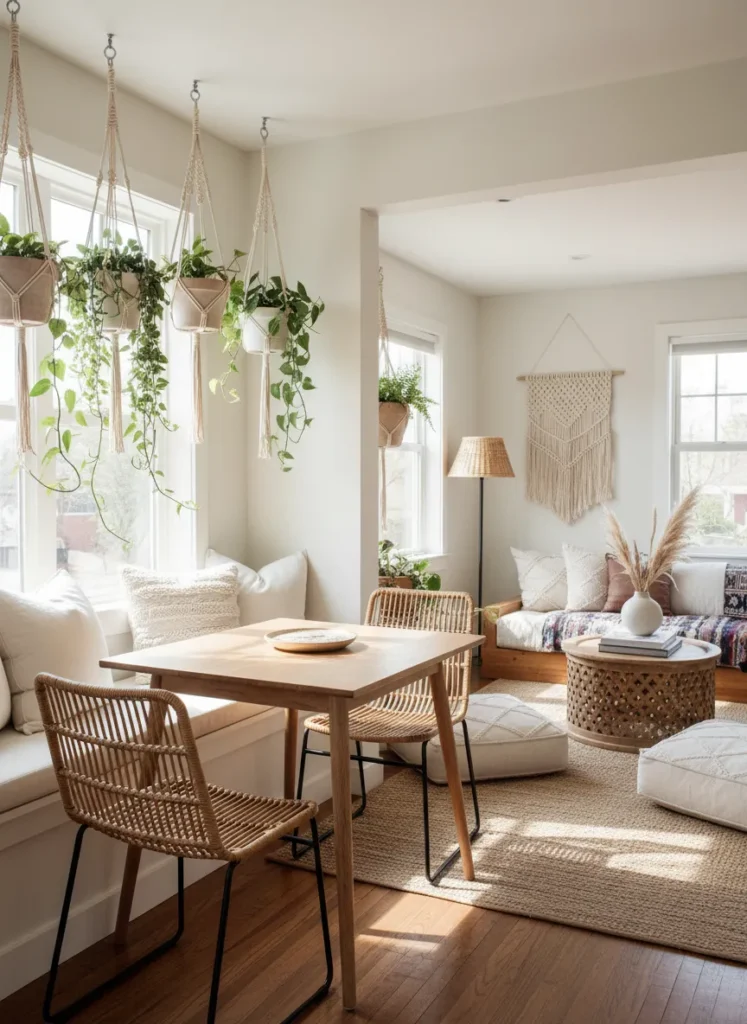
Utilize the natural light by placing your dining setup right next to a window. This draws attention to the view and creates a bright, cheerful spot for morning coffee or family meals.
If space allows, you can build a window seat or bench to save even more floor area. This arrangement leaves the darker or interior part of the room available for a cozy sofa setup.
Glass Partition Walls
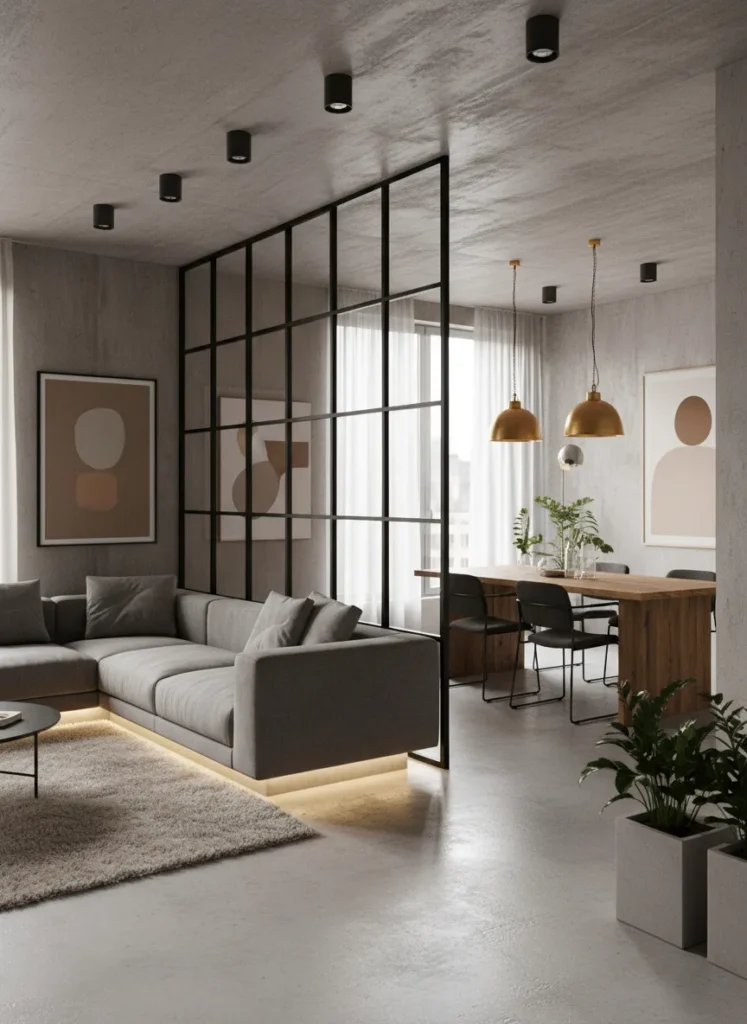
Installing a glass partition is a sophisticated way to divide a room without blocking light. It creates a physical barrier that reduces noise slightly while maintaining a visual connection between the two zones.
This works exceptionally well in modern or industrial spaces. You get the structure of a wall without the closed-off feeling, making the entire apartment feel larger and brighter.
Open Shelving Unit
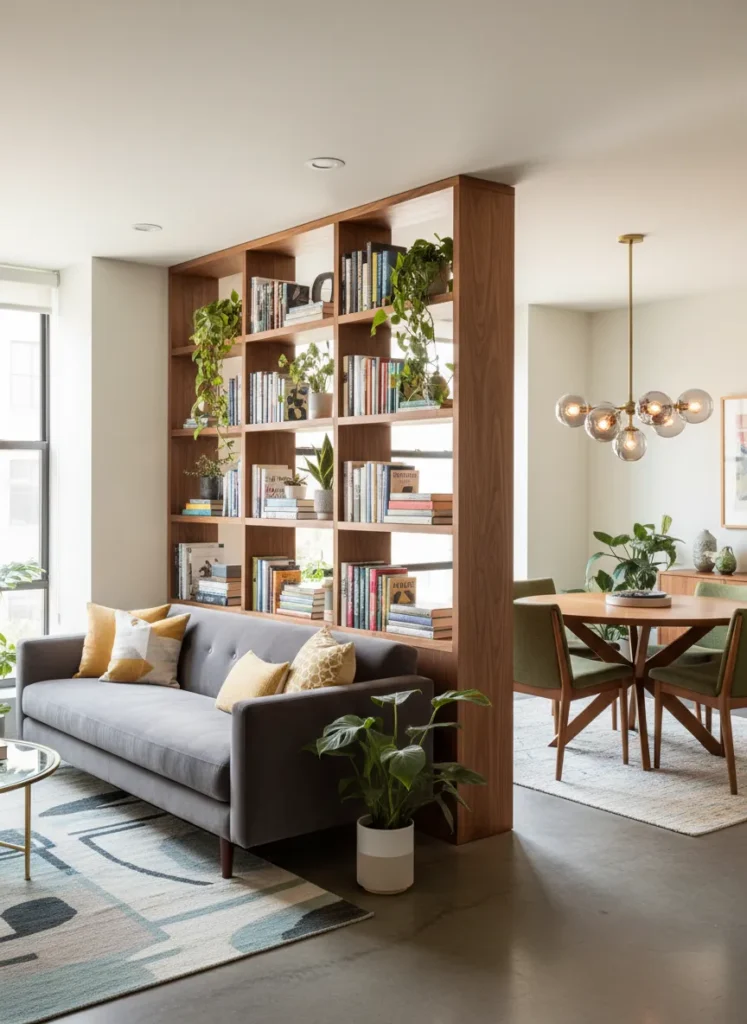
An open shelving unit acts as a functional screen between your lounge and eating area. It provides essential storage for books and decor while allowing light to filter through the open gaps. Style the shelves with plants and artifacts to create a beautiful backdrop for both the living and dining sides. This adds height to the room and draws the eye upward.
The Corner Sectional Anchor
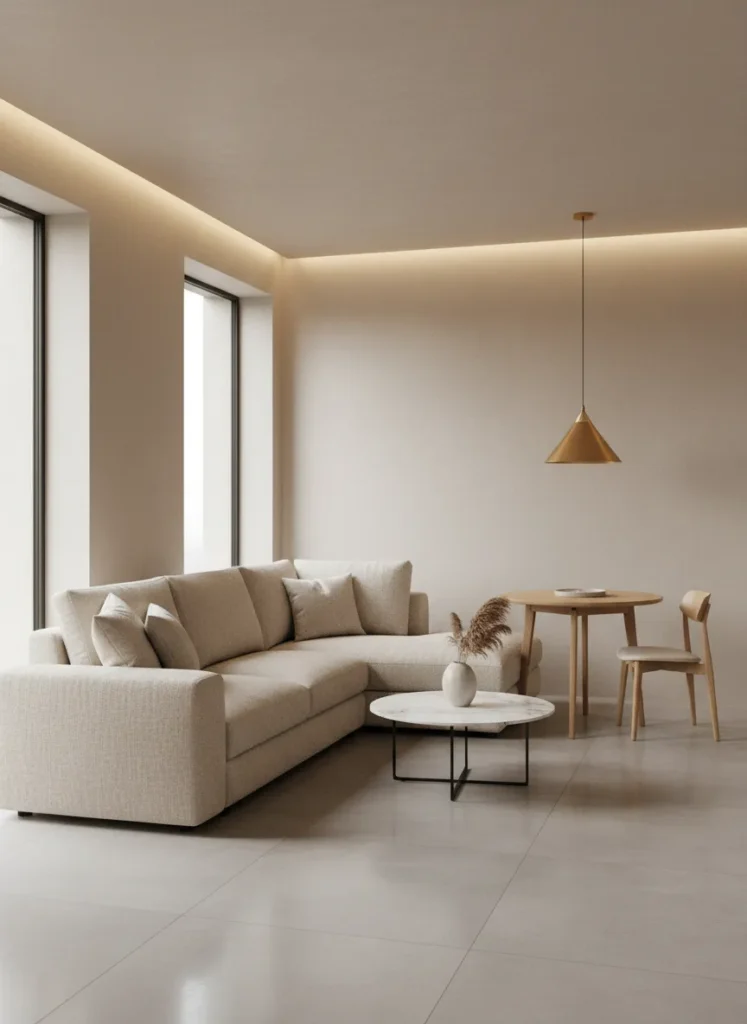
An L-shaped sectional sofa is a powerhouse for small layouts because it maximizes corner space. By pushing the sectional into a corner, you open up the center of the room for traffic flow. This arrangement clearly designates the lounging corner. It leaves the remaining open square footage available for a dining table without the two areas clashing.
Wall Bench Dining
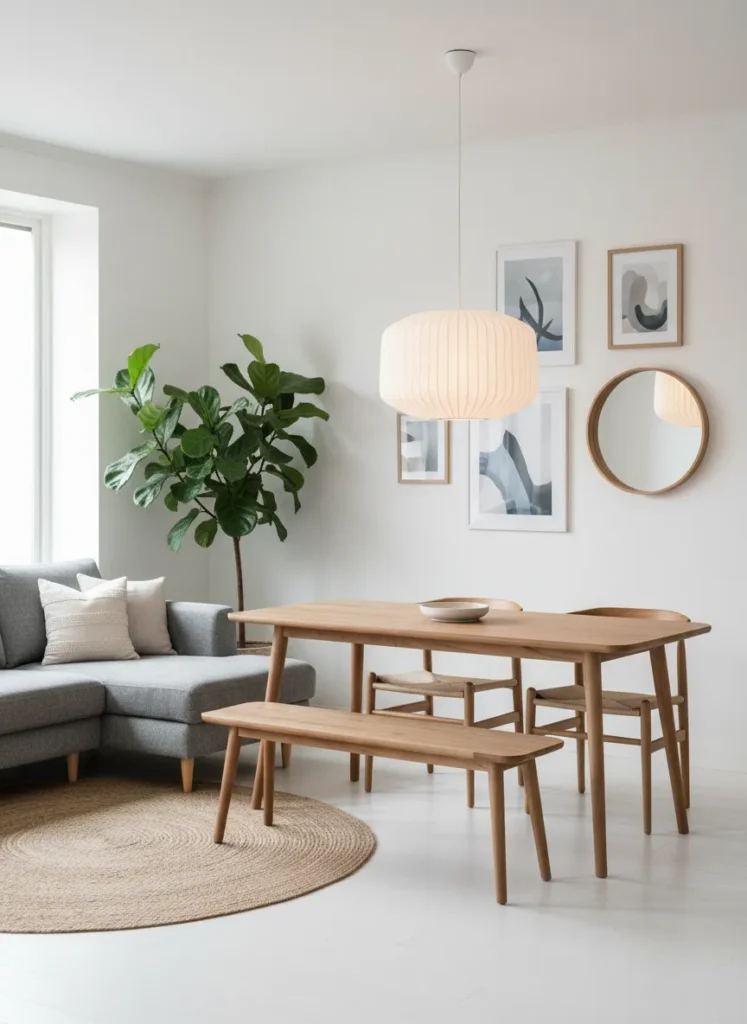
Pushing your dining table against a wall and using a bench is a smart space-saving move. Benches can be tucked under the table when not in use, clearing the walkway for daily movement. This setup creates a bistro-style vibe that is both casual and chic. It eliminates the need for clearance space behind chairs on the wall side, saving precious inches.
Console Table Buffer
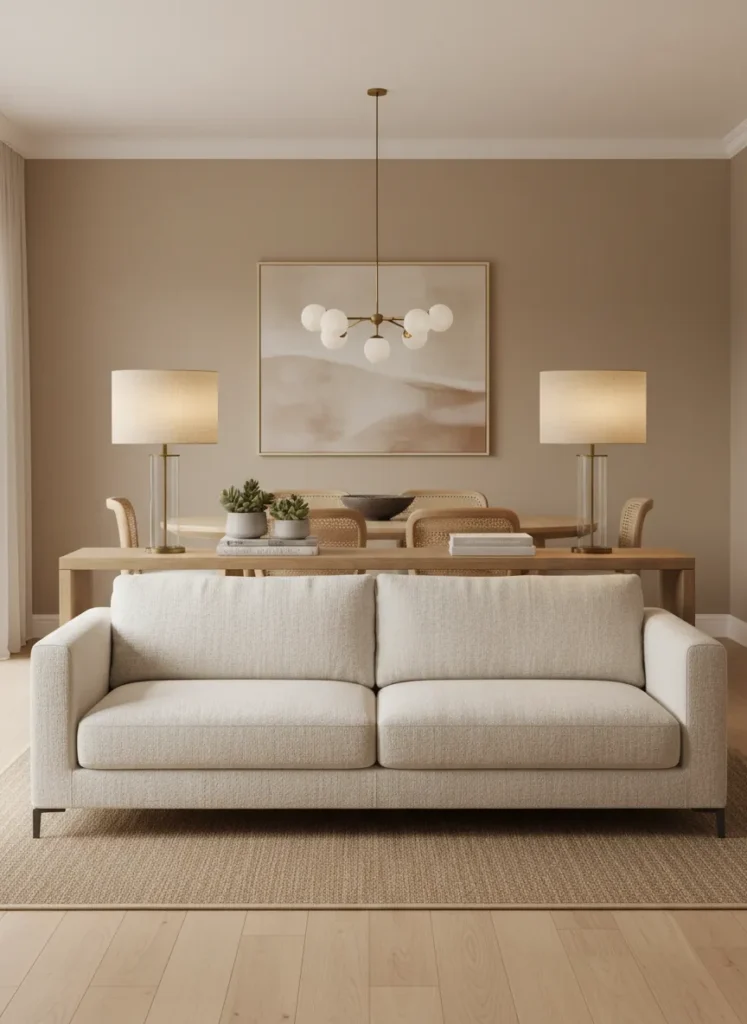
Placing a console table directly behind your floating sofa creates a deliberate buffer zone. It acts as a bridge between the living furniture and the dining set, preventing them from looking jammed together.
You can use the console to display lamps or decorative items that tie the two spaces together. It adds a layer of sophistication and finishes the look of the sofa back.
Distinct Lighting Zones
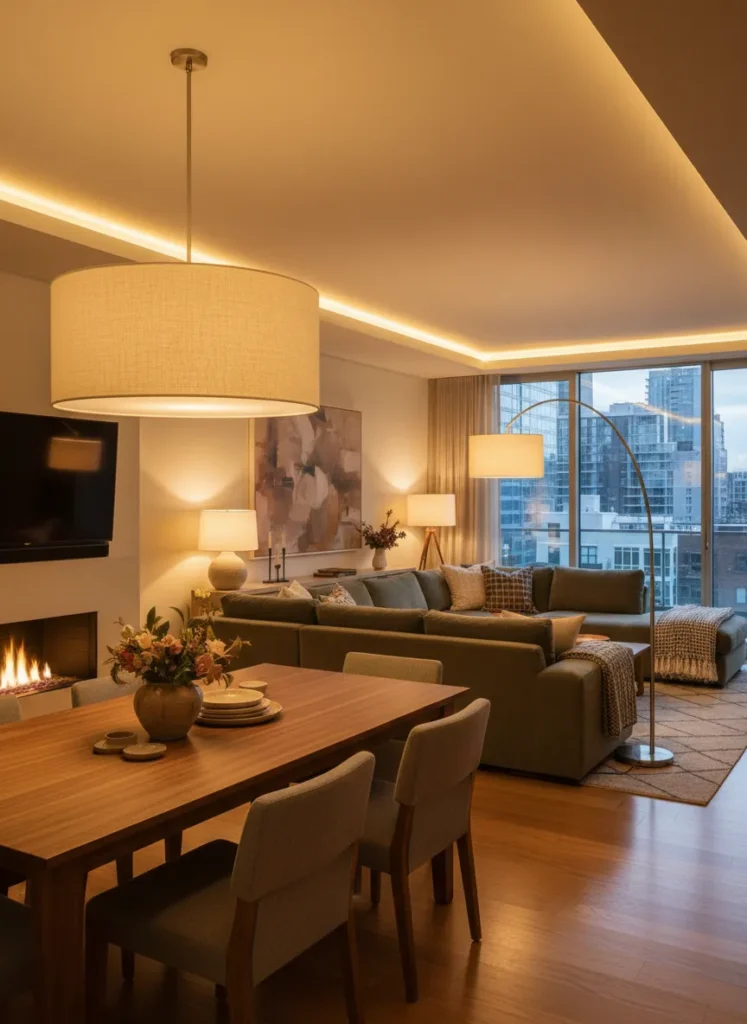
Lighting is a powerful tool for defining spaces without taking up any floor area. Install a statement pendant light directly above the dining table to create a focal point for meals. In the living area, use floor lamps or table lamps to create a softer, more relaxed mood. This difference in lighting levels helps the brain register the two areas as separate functions.
Monochromatic Color Flow
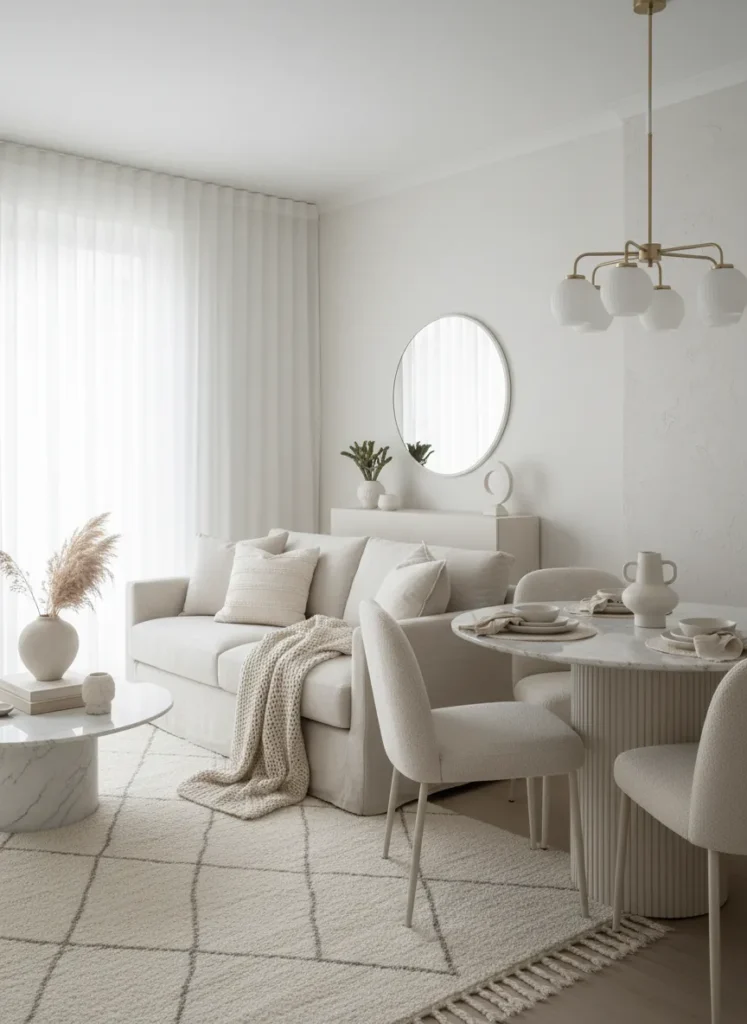
Using a single color palette across both zones makes a small room feel significantly larger. When the walls, furniture, and curtains share similar tones, the eye moves seamlessly through the space. Add interest through textures rather than contrasting colors. A monochromatic scheme reduces visual clutter, making the layout feel calm and organized rather than chaotic.
Furniture with Legs
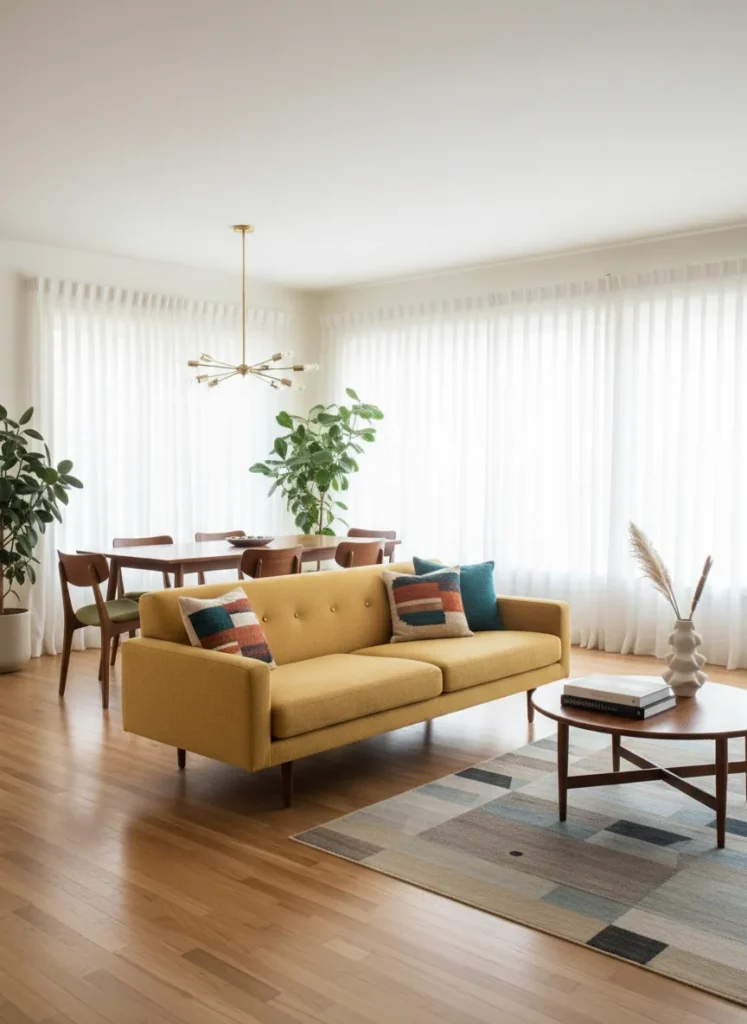
Choose sofas and chairs that are raised on legs rather than blocky pieces that sit directly on the floor. Seeing the floor continue underneath the furniture tricks the eye into thinking the room is bigger. This sense of airiness prevents the combo room from feeling heavy or overstuffed. It promotes better light flow and makes cleaning easier as well.
Drop-Leaf Flexibility
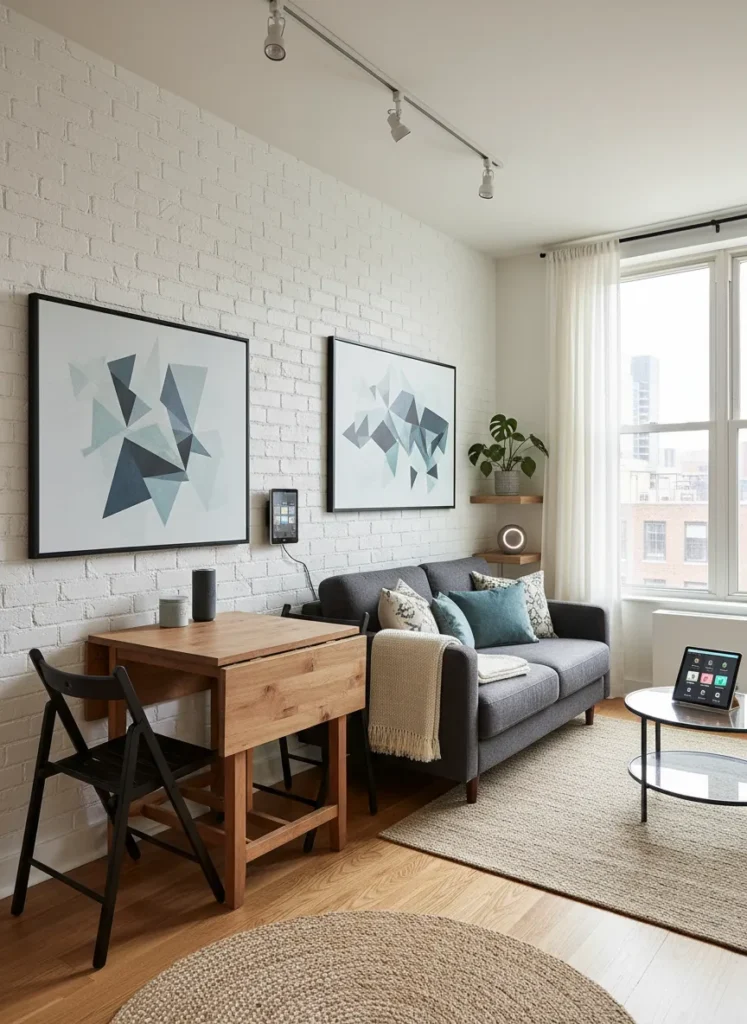
A drop-leaf or extendable dining table is the ultimate space-saver for combo rooms. Keep the leaves down for everyday use to maximize living space, and lift them only when you have guests. This flexibility allows your living area to expand when you are not eating. It ensures that your dining furniture does not dominate the room unnecessarily.
Strategic Mirror Placement
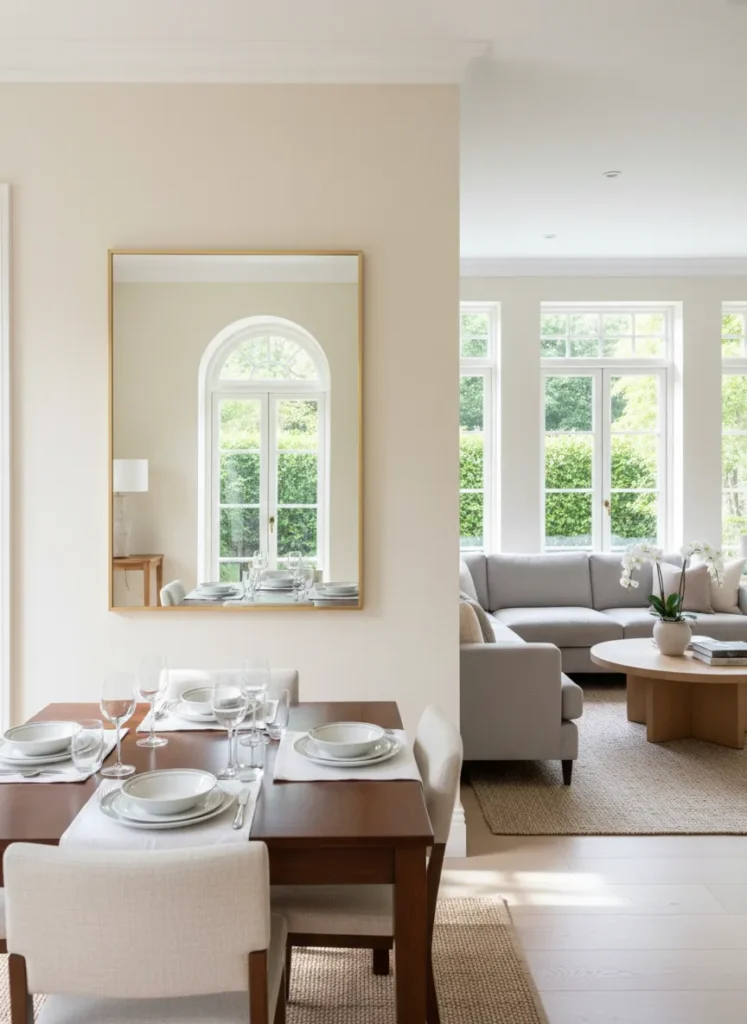
Hanging a large mirror on the wall is a classic trick to double the visual space. Position it to reflect a window or a beautiful piece of art to enhance the depth of the room. In a combo layout, a mirror can reflect light into darker corners. It blurs the boundaries of the walls, making the tight squeeze between living and dining areas feel much more spacious.
The Dining Accent Wall
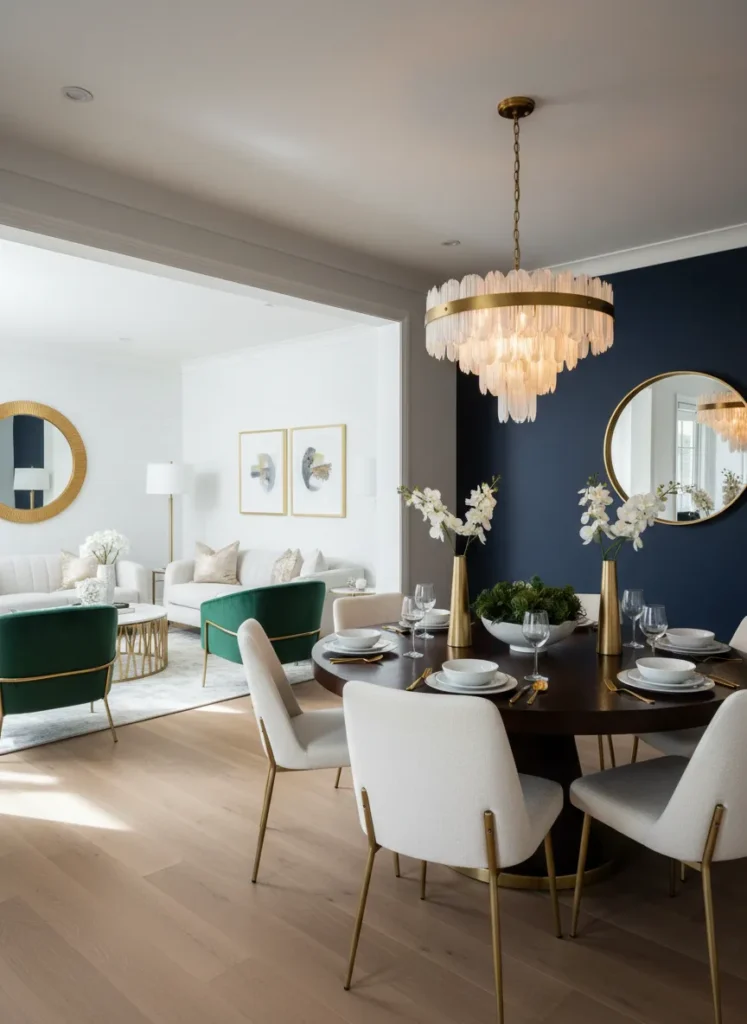
Paint the wall behind your dining table a different color to create a ‘room within a room.’ This visual cue instantly tells guests that this specific area is designated for eating. You can also use wallpaper or wood paneling for the same effect. It adds personality and depth without requiring any physical dividers that would shrink the space.
Low-Profile Furnishings
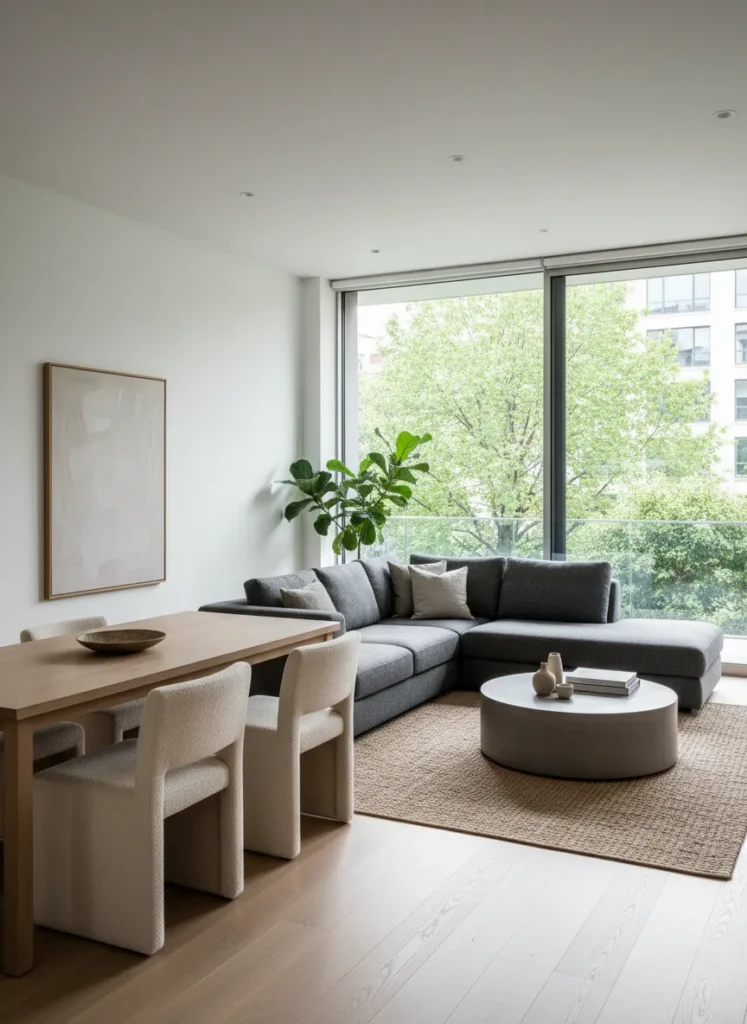
Keeping your furniture height low maintains clear sightlines throughout the entire room. Low-back sofas and chairs ensure that light from windows travels all the way to the back of the space. This approach makes the ceiling feel higher and the room more expansive. It creates a relaxed, lounge-like atmosphere that blends the two functions smoothly.
Acrylic Ghost Chairs
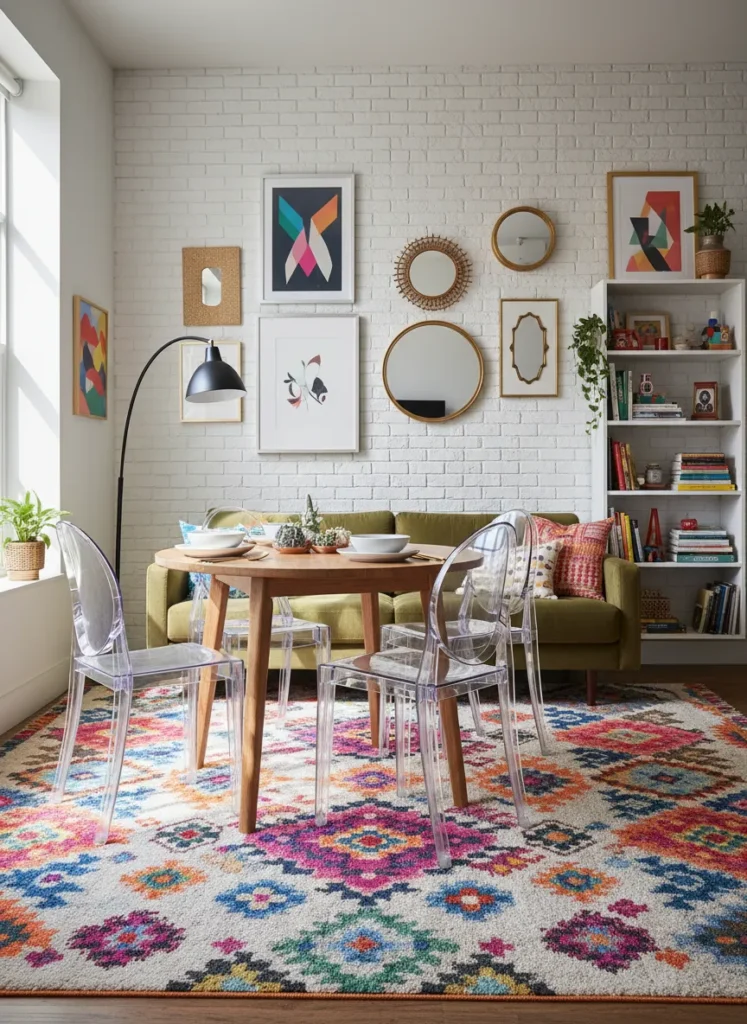
Acrylic or ‘ghost’ chairs are practically invisible, making them ideal for tight quarters. They provide necessary seating without adding visual bulk or blocking views of the living area. Because they are transparent, they allow the textures of the table and floor to shine through. This keeps the room feeling light, open, and uncluttered.
Conclusion
Creating a harmonious small living dining combo layout is all about balance and smart choices. Whether you use rugs to zone the space or furniture to guide the flow, these ideas prove that you do not need a huge house to have a stylish and functional home. Experiment with these layouts to find the one that fits your lifestyle best.