
This post may contain affiliate links. If you make a purchase, we may earn a small commission at no extra cost to you.
Creating a functional eating space in a tiny home requires creativity and strategic planning. By exploring various small dining area ideas for compact living, you can transform tight corners and unused nooks into stylish spots for meals and gathering. The following guide offers practical solutions that maximize square footage without sacrificing comfort or design aesthetic.
Round Pedestal Tables for Compact Dining Spaces
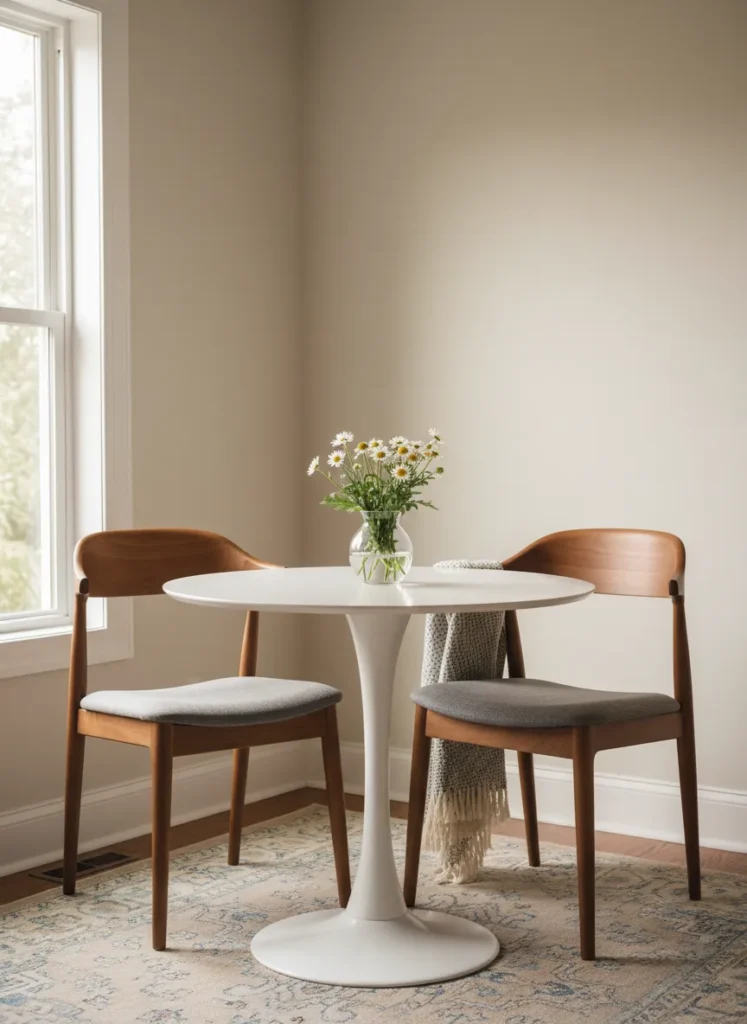
Round tables are excellent for small spaces because they lack sharp corners, allowing for better traffic flow around the room. A pedestal base eliminates the visual clutter of four legs and provides more legroom for diners in a tight spot. This shape encourages conversation and makes the dining experience feel intimate rather than cramped.
When choosing a round table, opt for a size that fits your specific nook while leaving enough clearance for pulling out chairs. Materials like light wood or marble can brighten the area, contributing to an open and airy feel that is essential for compact living environments.
Built-in Banquette Seating
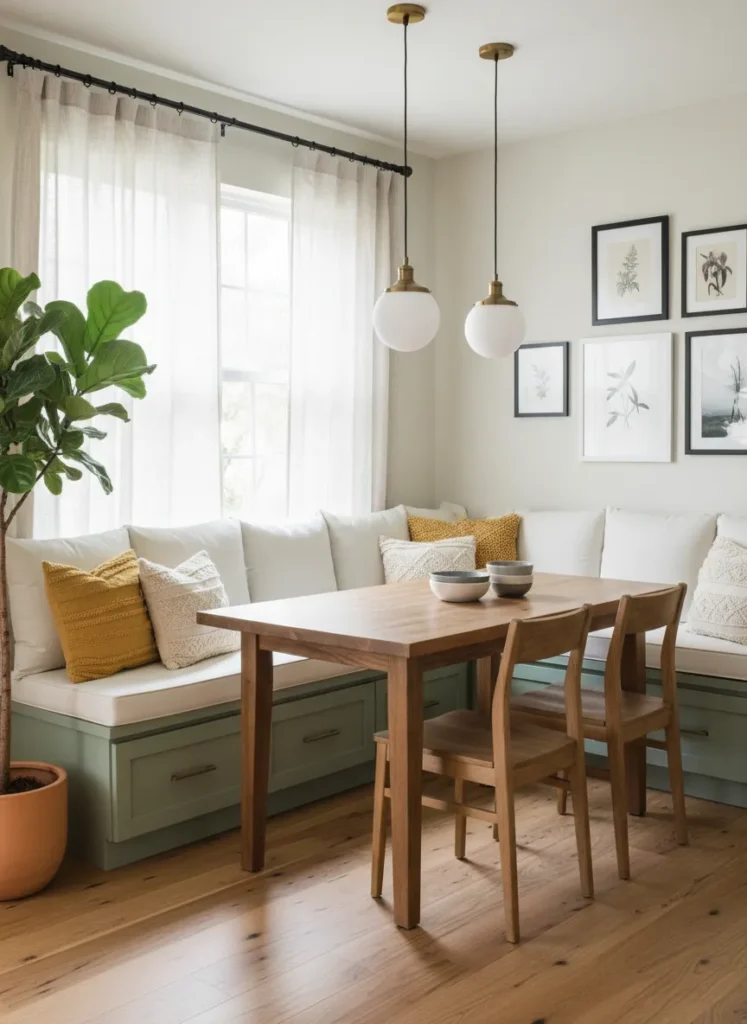
Banquette seating is a space-saving powerhouse because it pushes the dining area right up against the wall. This eliminates the need for clearance space behind chairs on one or two sides of the table. It turns an awkward corner into a dedicated dining zone that feels custom-made and luxurious.
Another advantage of built-in benches is the opportunity for hidden storage underneath the seats. You can use drawers or a lift-top mechanism to store kitchen linens, seasonal decorations, or small appliances, keeping the rest of your compact home clutter-free.
Wall-Mounted Drop Leaf Tables
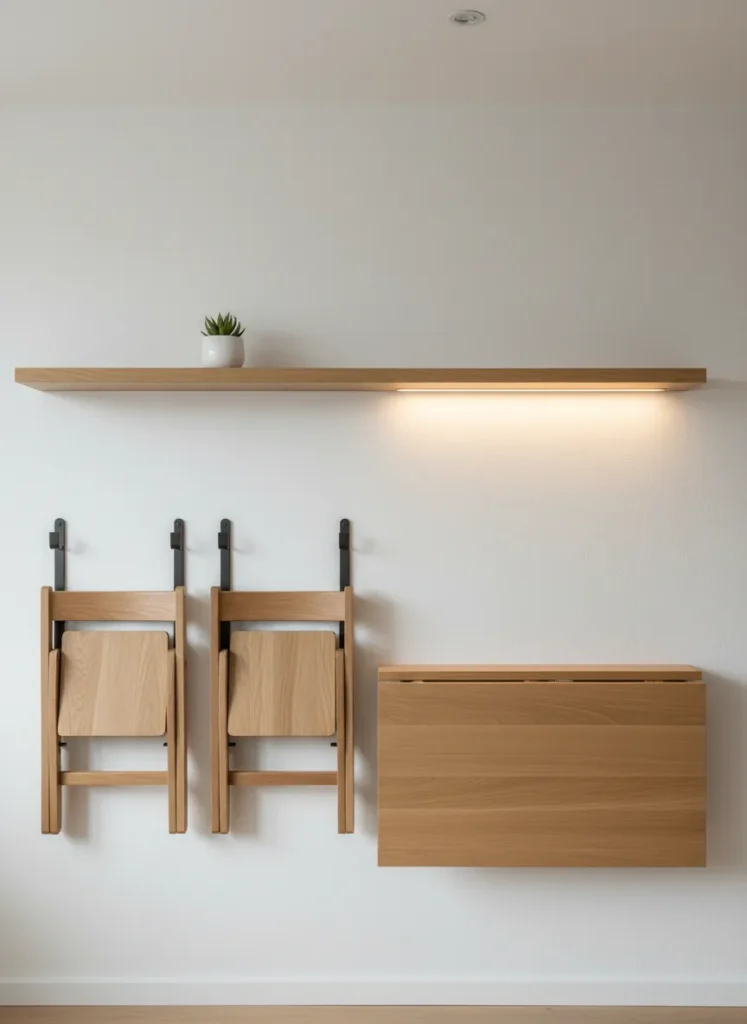
For extremely tight quarters, a wall-mounted drop-leaf table is the ultimate solution. When not in use, the table folds flat against the wall, freeing up floor space for other activities like yoga or simply walking through the room. It is perfect for studio apartments where every inch counts.
These tables can double as a workspace during the day and a dining spot at night. By adding a couple of folding chairs that can be tucked away, you maintain a flexible environment that adapts to your immediate needs without permanent furniture blocking the way.
Acrylic Ghost Chairs
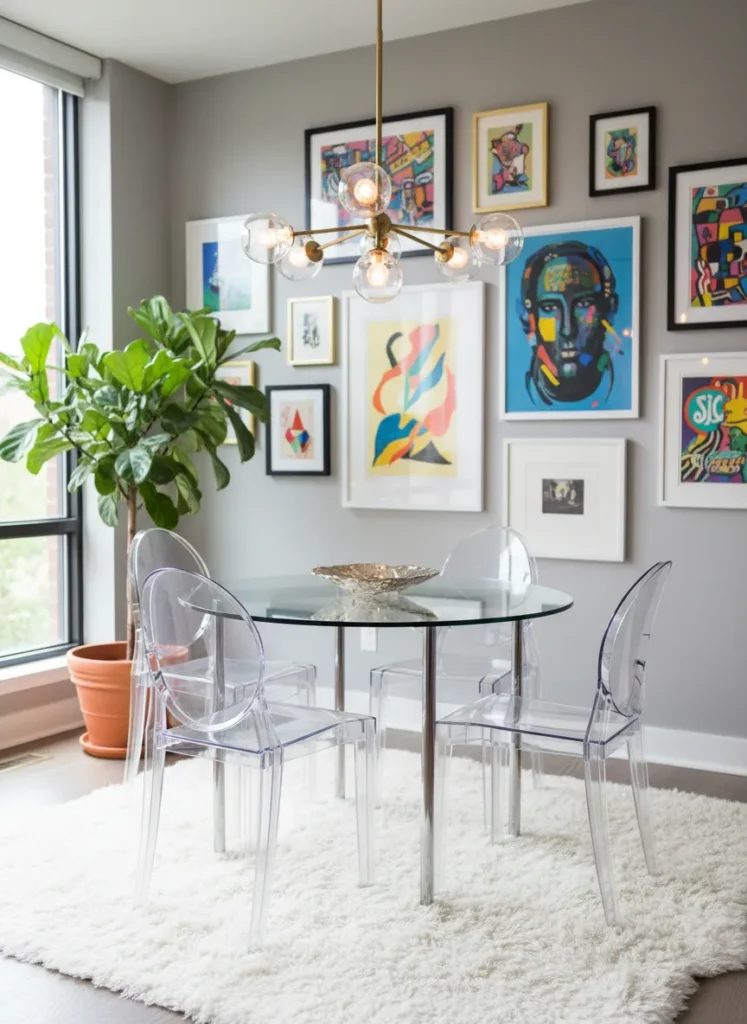
Visual weight is just as important as physical size when dealing with small interiors. Acrylic ghost chairs are transparent, allowing the eye to travel right through them, which makes the room appear larger and less cluttered. They provide necessary seating without blocking sightlines.
Despite their delicate appearance, these chairs are durable and easy to clean. They add a touch of modern elegance to any dining setup and pair well with various table styles, from rustic wood to sleek metal, blending seamless functionality with high design.
Top Recommended Space-Saving Dining Tables

Foldable dining table

Small round table
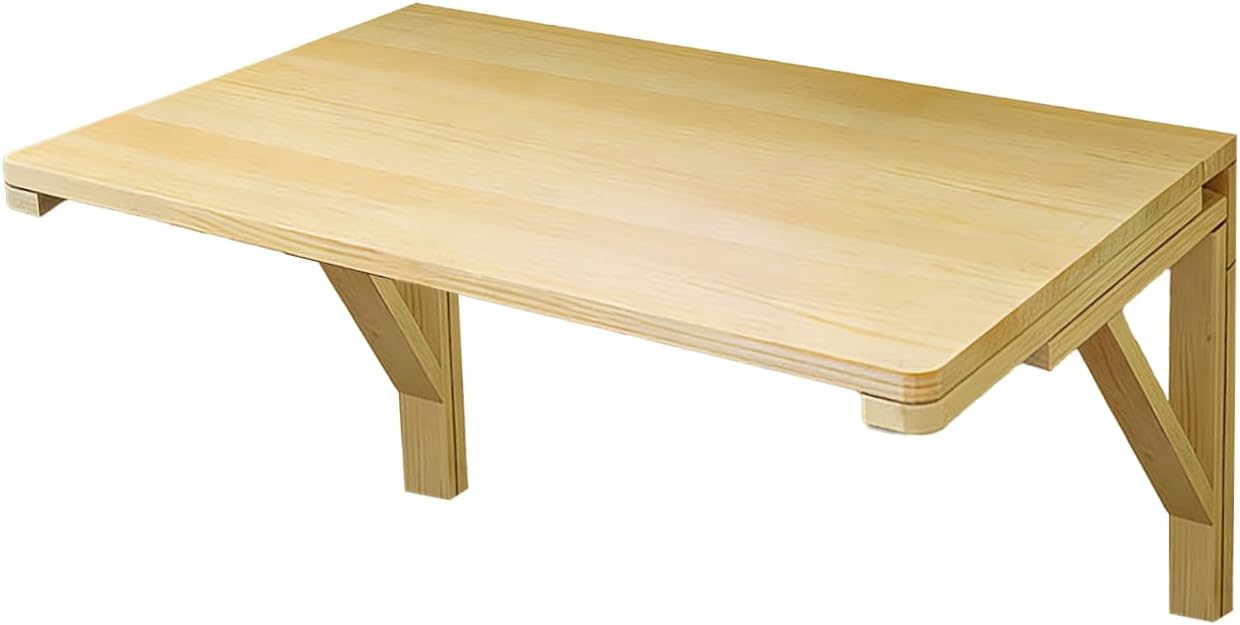
Wall-mounted table
Large Mirrors for Depth in Small Dining Areas

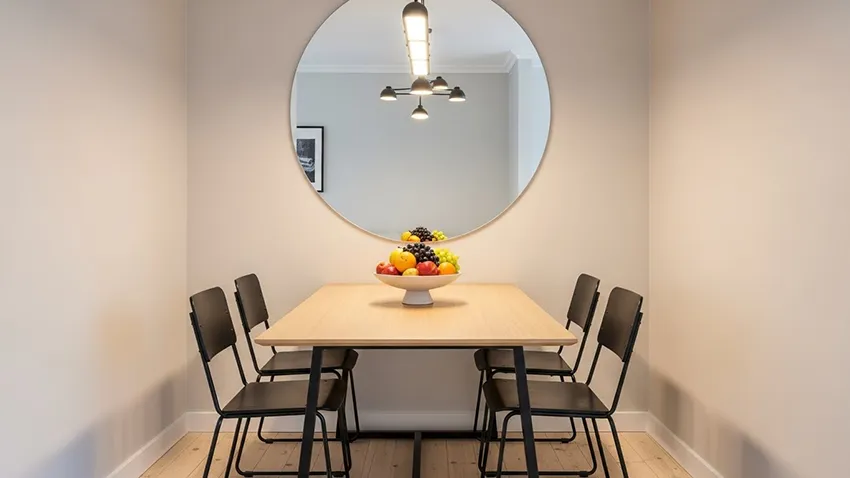
Hanging a large mirror on the wall next to your dining table is a classic trick to expand visual space. The reflection bounces light around the room and creates the illusion that the dining area is twice as big as it actually is. This adds depth and brightness to even the dimmest corners.
Choose a mirror frame that complements your decor style, whether it is a sleek metal rim for a modern look or a distressed wood frame for a farmhouse vibe. Placing the mirror opposite a window maximizes the effect by reflecting the outdoors and natural sunlight into the room.
Bench Seating
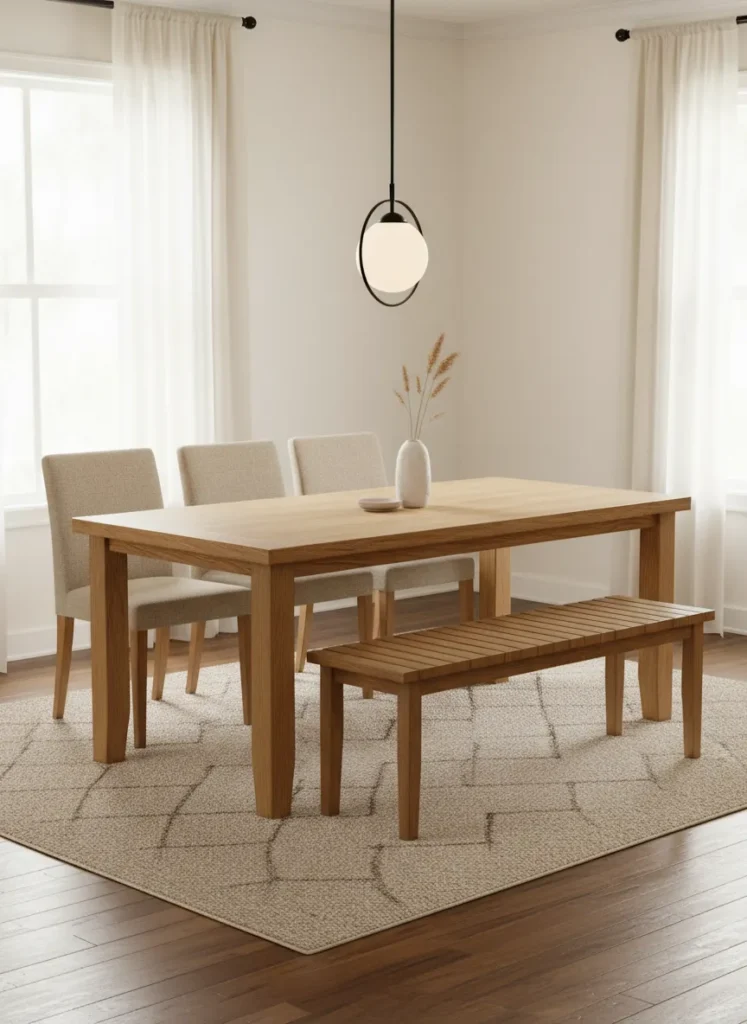
Using a bench on one side of a rectangular table allows you to seat more people than individual chairs would permit. When the meal is over, the bench can be tucked completely under the table, opening up the walkway and reducing the visual footprint of the furniture set.
Benches also add a casual and communal feel to dining, making it perfect for families or gathering with friends. You can add comfort and style by placing seat cushions or a sheepskin throw over the bench, softening the look of the hard wood.
Bar Cart Dining
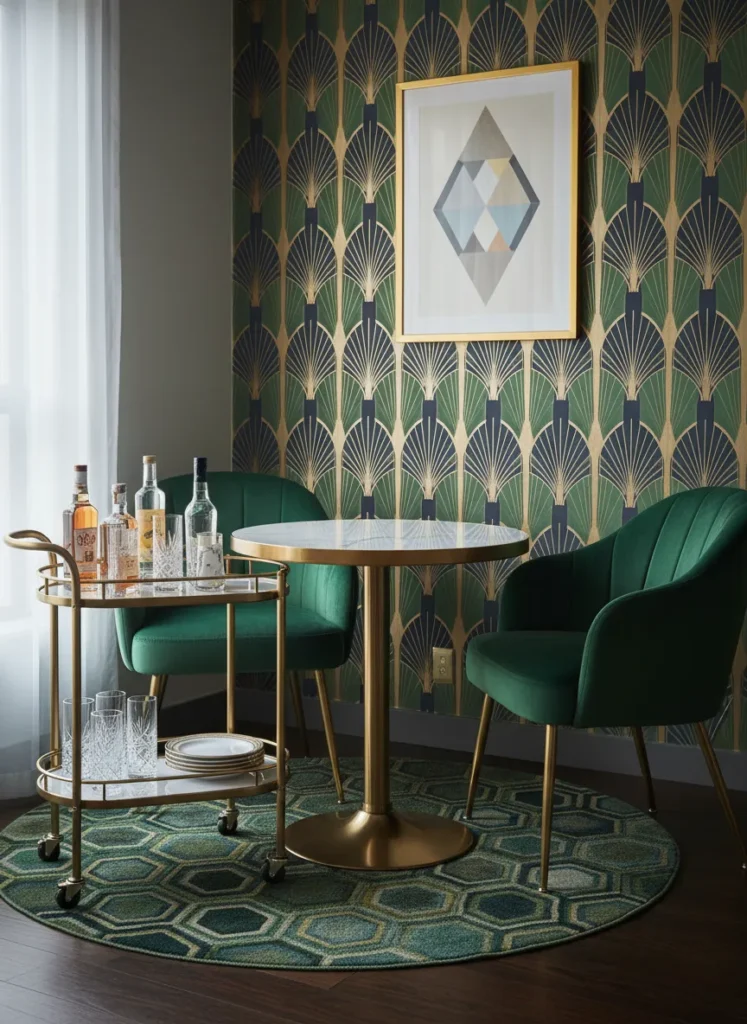
If you lack space for a sideboard or buffet, a bar cart can serve as a mobile storage unit for your dining essentials. It holds napkins, cutlery, and glassware within arm’s reach, keeping the main table clear for food. Its mobility allows you to move it out of the way when not in use.
Styling a bar cart also adds a decorative element to your small dining area. It introduces vertical interest and can be a place to display pretty bottles or a vase of flowers, proving that practical storage solutions can also be beautiful focal points.
Use Rugs to Define Zones
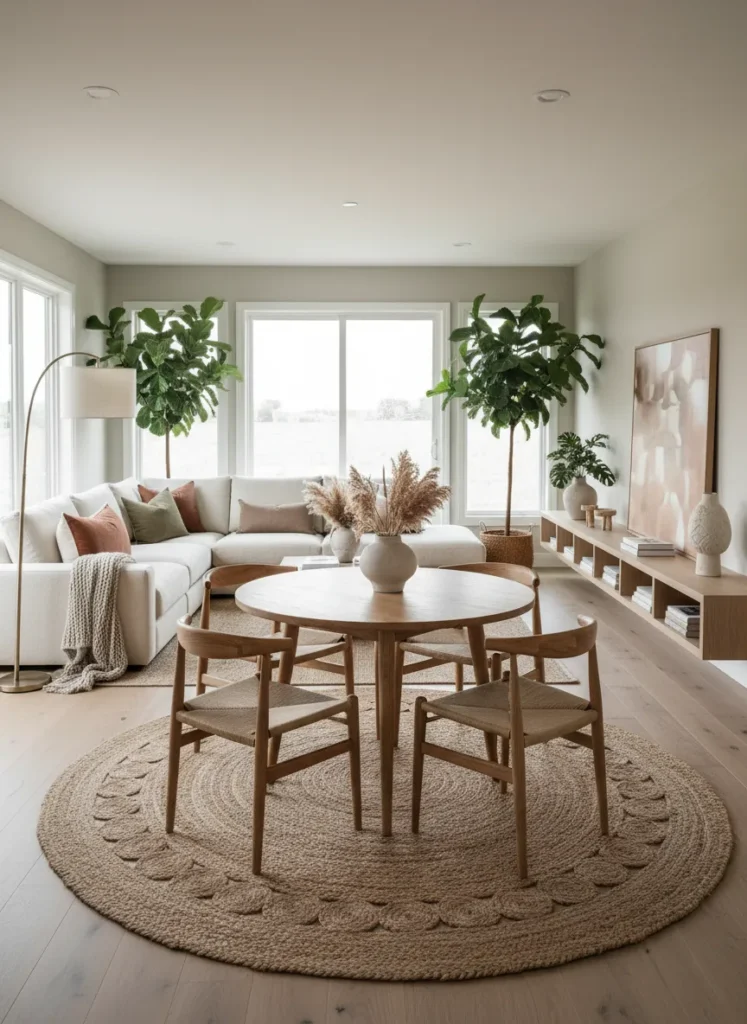
In open-concept apartments, it can be difficult to distinguish the dining area from the living room or kitchen. Placing a rug under your table and chairs visually anchors the furniture and defines the specific zone for eating. This creates a sense of structure in a small, undefined room.
Select a flat-weave rug that allows chairs to slide easily in and out. The rug should be large enough that the chairs remain on it even when pulled out, ensuring the space feels grounded and intentional rather than haphazardly placed.
Top Lighting Picks for Small Dining Areas

Mini pendant lights

Chandelier for Dining Room

Battery-powered wall sconces
Vertical Shelving Storage for Compact Living
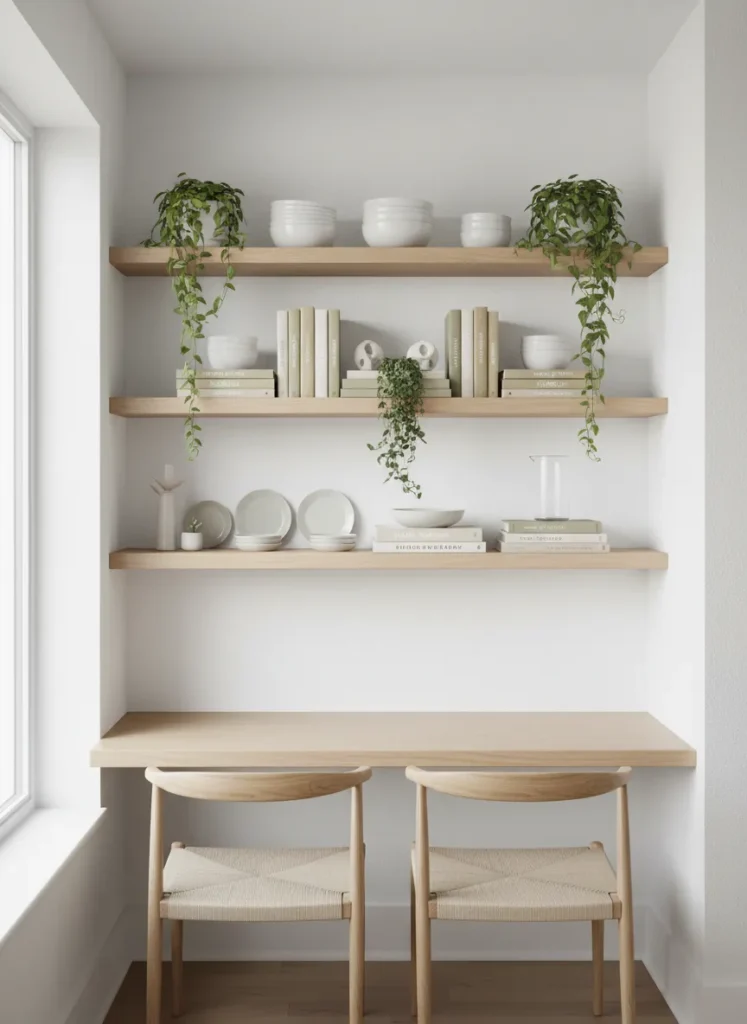
When floor space is limited, look up. Installing floating shelves above your dining table utilizes vertical wall space for storage and display. You can keep dinnerware, glasses, or cookbooks handy without needing a bulky cabinet that takes up precious square footage.
Decorating these shelves with plants and art integrates the storage into the room’s design. It draws the eye upward, making the ceiling feel higher and the room feel less confined, while keeping your dining surface clutter-free.
Window Nook Utilization
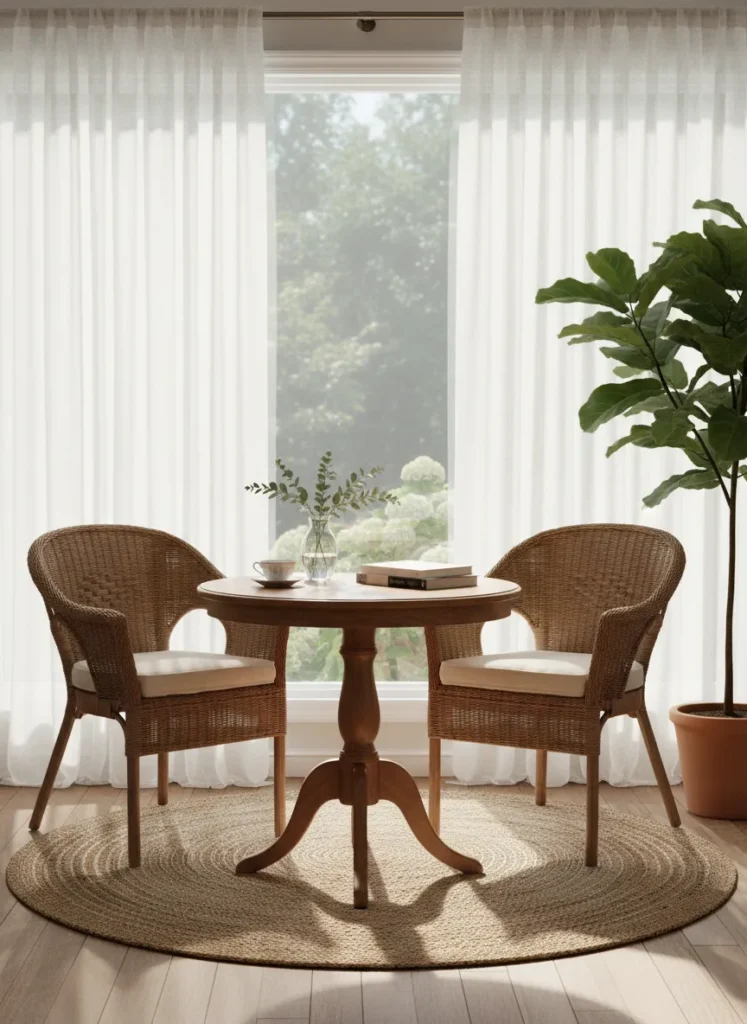
Placing your small dining setup near a window takes advantage of natural light and views, which distracts from the small size of the room. The brightness makes the area feel cheerful and open, creating a pleasant atmosphere for morning coffee or lunch.
This placement often utilizes dead space that might otherwise go unused. By orienting the table toward the view, you create a destination within your home that feels expansive because it visually connects with the outdoors.
Multifunctional Console Tables
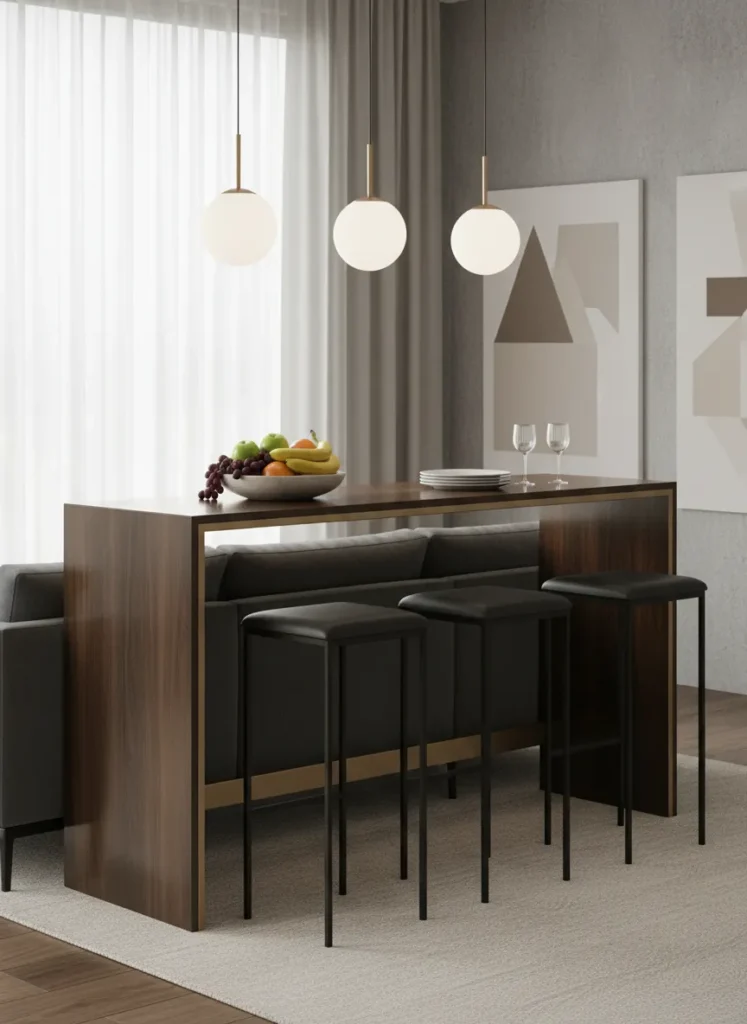
A console table placed behind a sofa can double as a dining bar. This is an excellent way to bridge the gap between a living area and a kitchen without needing a separate dining room. It provides a surface for eating while watching TV or working on a laptop.
This arrangement saves space by utilizing the footprint of the sofa. Stools can be tucked underneath the console when not in use, keeping the walkway clear. It is a smart, modern approach to compact living that prioritizes multi-use furniture.
Statement Pendant Lighting
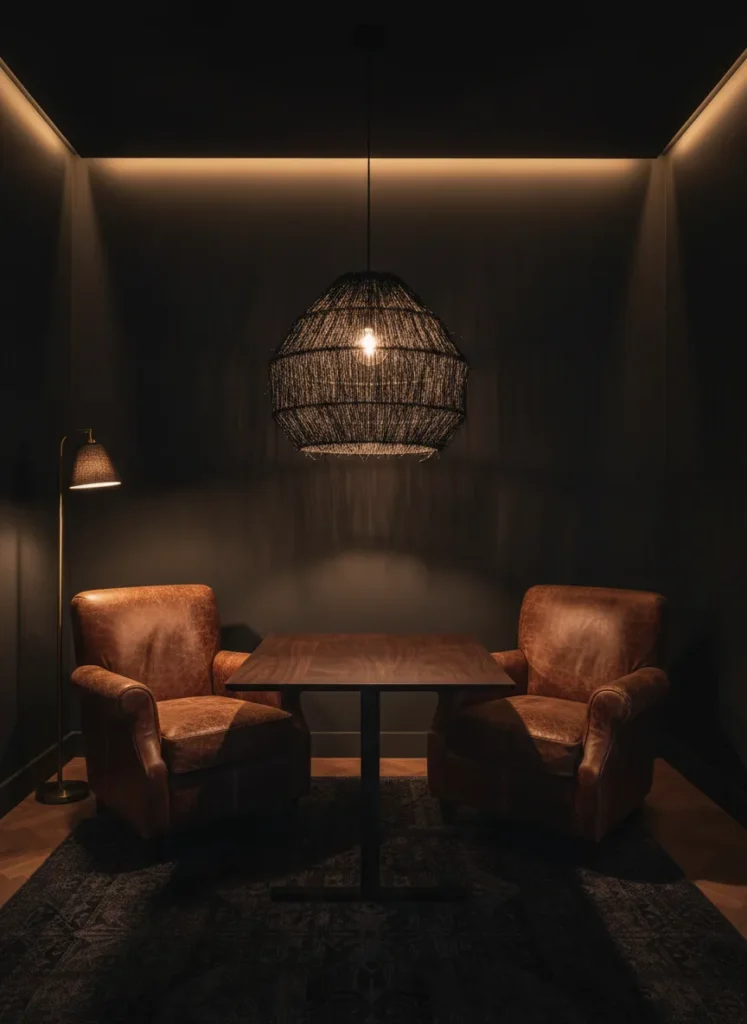
A bold light fixture hanging low over a small table creates an instant focal point. It defines the dining space from the ceiling down, giving it importance and grandeur despite the small footprint. The light acts as an anchor for the floating furniture below.
Choose a pendant that contrasts with your table for added drama, or one that matches the room’s palette for a cohesive look. Good lighting sets the mood and makes the dining experience feel special, turning a tiny corner into a designed vignette.
Light Color Palettes
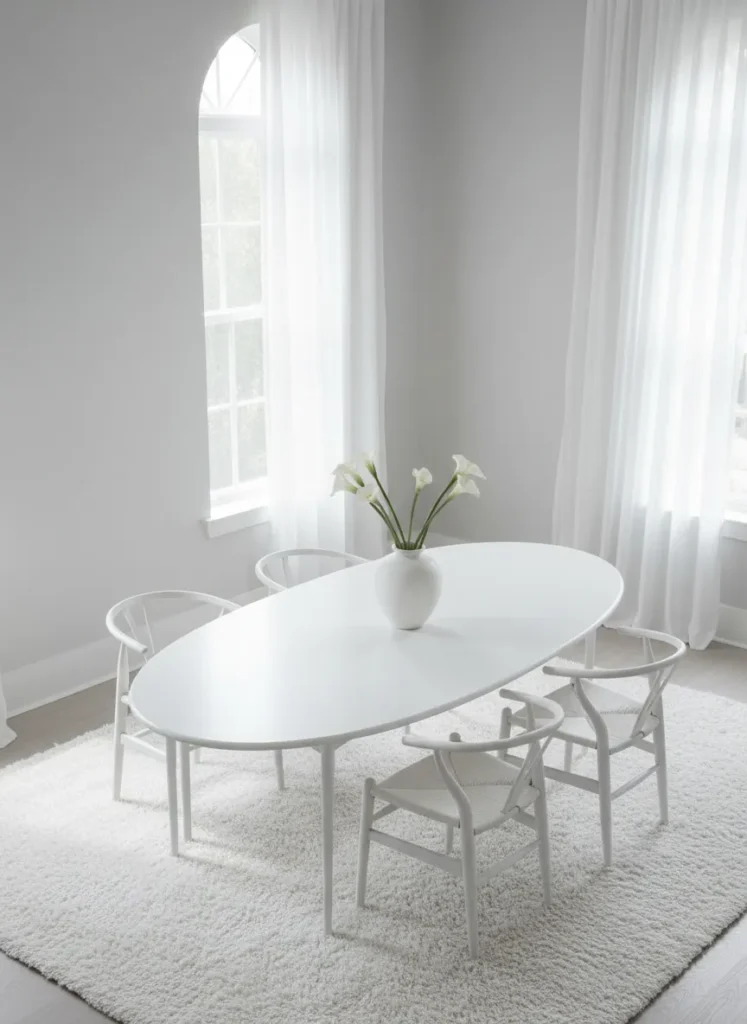
Using a light, monochromatic color palette helps to blur the boundaries of the room. White, cream, and pale grey reflect light and make walls recede, creating a sense of airiness and space. This approach prevents a small dining area from feeling cave-like or oppressive.
You can add texture through fabrics and materials to prevent the space from looking flat. A linen tablecloth, a woven rug, or wood grain on the chairs adds warmth and interest without visually shrinking the room with dark, heavy colors.
Folding Bistro Sets
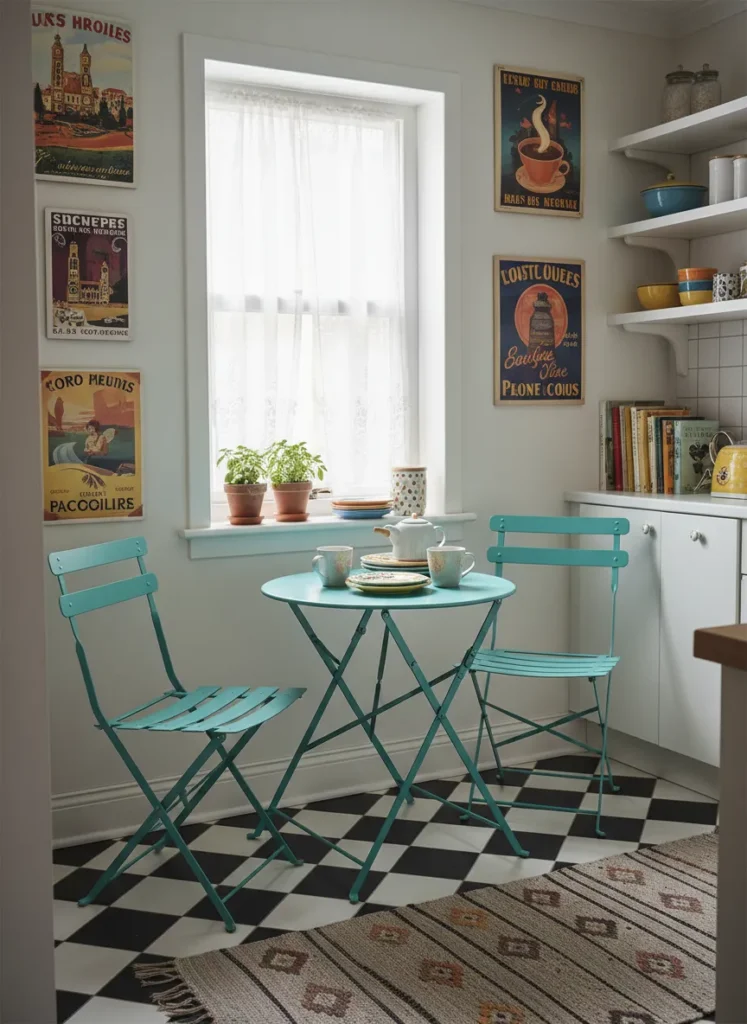
Bistro sets are designed for small cafes and sidewalks, making them perfect for compact home dining. They are typically lightweight and have a tiny footprint, fitting easily into kitchens or small living room corners. Their petite size leaves plenty of room for movement.
Many bistro sets are foldable, allowing you to store them in a closet or hang them on a wall when you need the floor space for something else. They bring a charming, European flair to the home, making small-scale dining feel intentional and stylish.
Corner Shelving Units
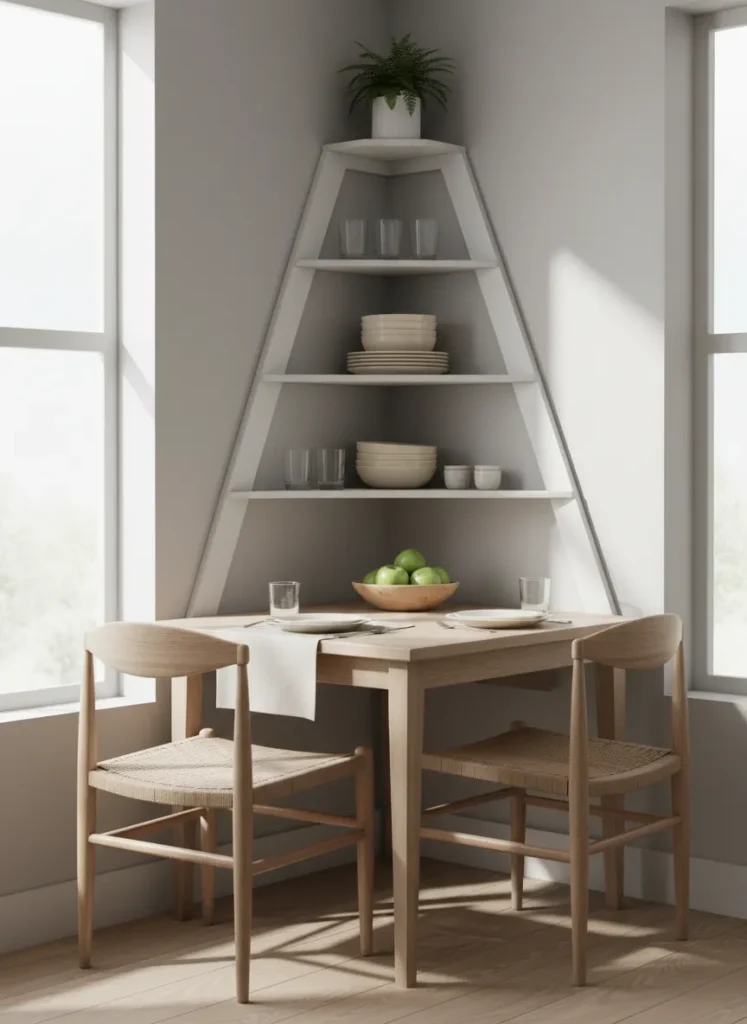
Corners are often wasted space in a room. Installing corner shelving or a corner cabinet near your dining table provides storage without encroaching on the main floor area. It frames the dining zone and keeps necessities close at hand.
You can use these shelves to display beautiful dishware or plants, adding personality to the nook. By filling the corner vertically, you draw the eye up and maximize the utility of every square inch in the room.
Glass Top Tables
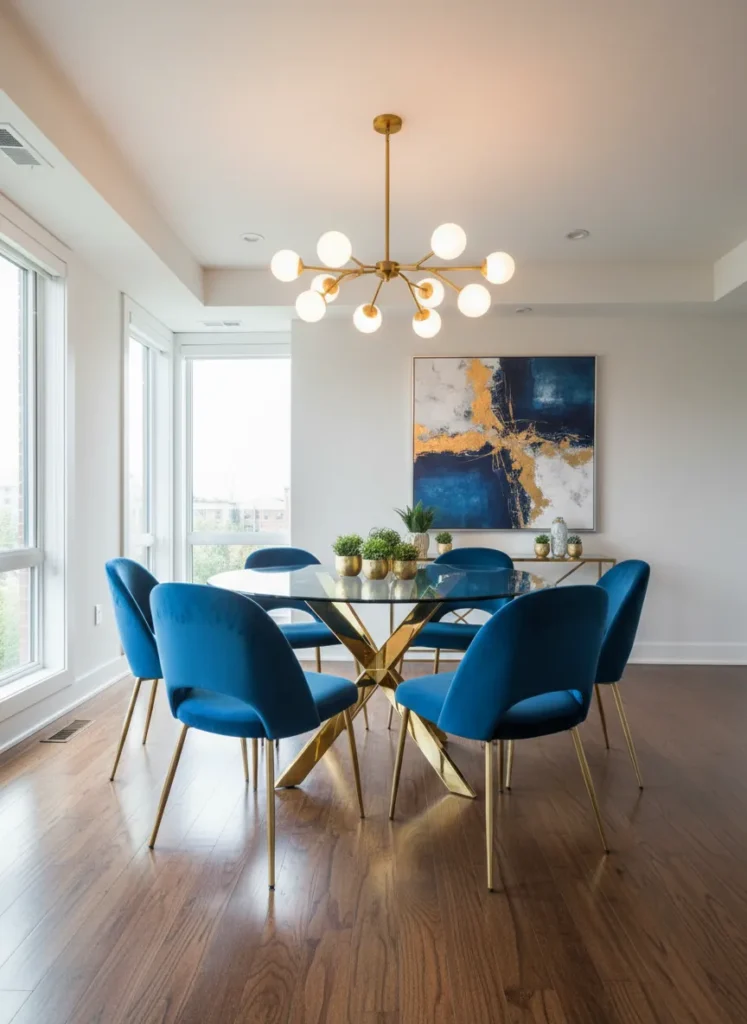
Similar to acrylic chairs, a glass top table offers transparency that reduces visual clutter. Because you can see the floor through the table, the room feels more continuous and open. It provides a solid surface for dining without blocking the view of the room’s architecture.
Glass tables reflect light, adding a sparkle that brightens the area. They work well with almost any decor style, from industrial to glam, and help to keep the focus on your chairs or rug rather than a heavy, solid piece of furniture in the center of the room.
Extendable Tables for Flexible Dining
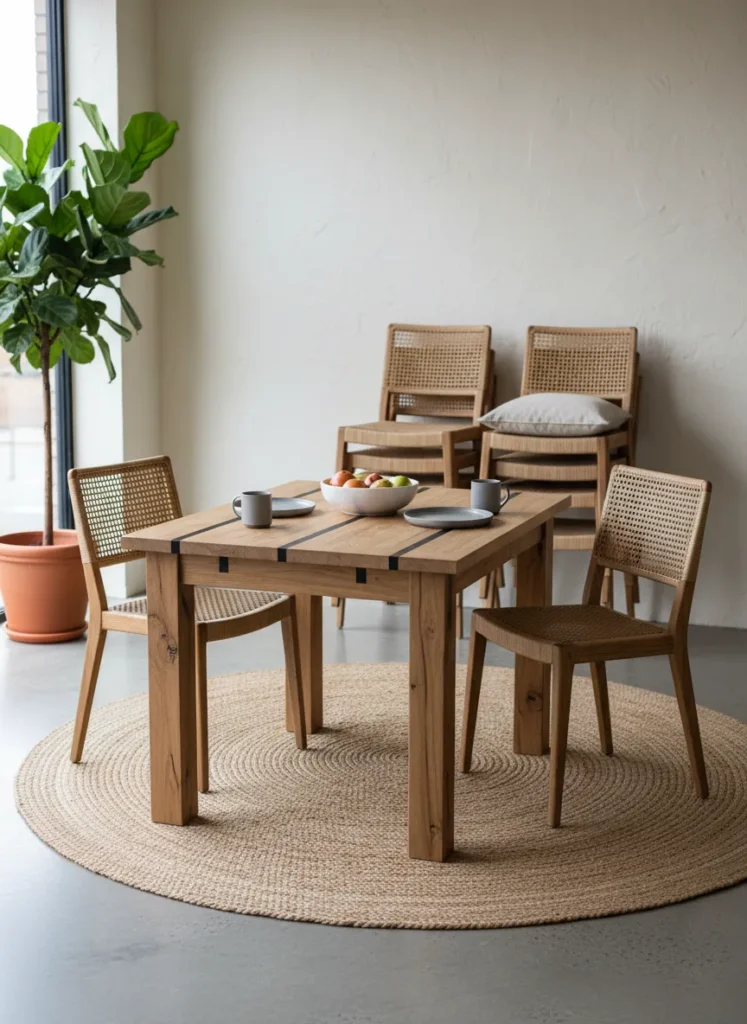
An extendable table offers the best of both worlds: a compact size for daily use and a larger surface for hosting guests. You can keep the table small to preserve flow in your apartment and only expand it when absolutely necessary.
Look for tables with internal storage for the leaves so you do not have to find closet space for them. This flexibility allows you to host dinner parties without permanently sacrificing your living space to a large dining table.
Mismatched Chairs
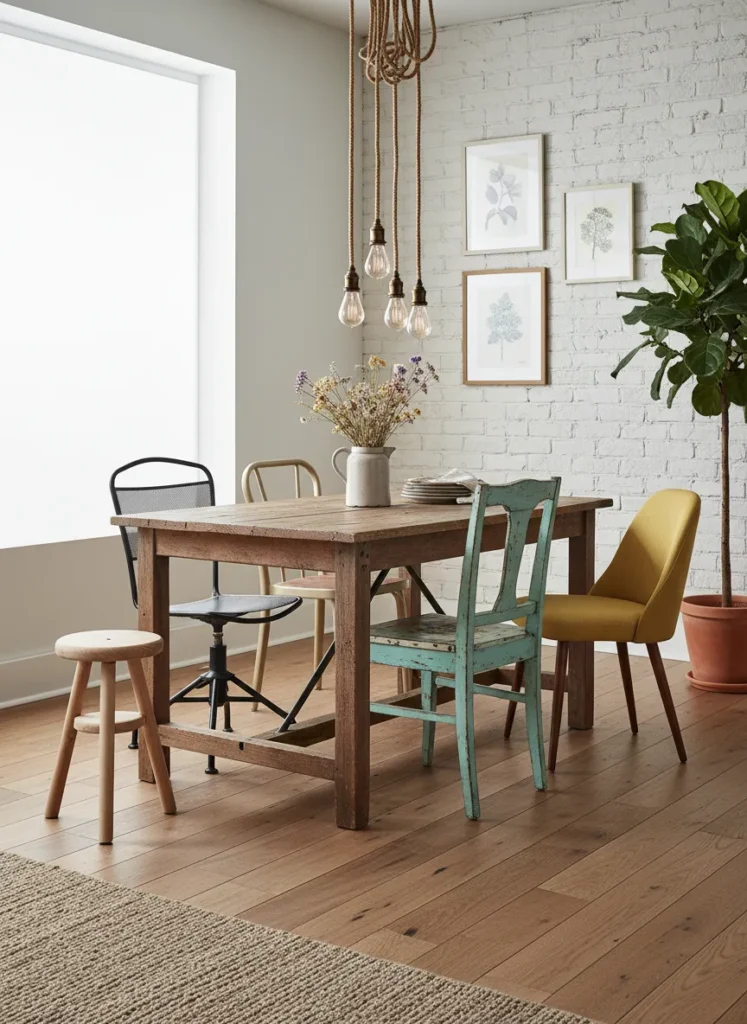
Using mismatched chairs can actually help in a small space by allowing you to collect smaller, more varied pieces that fit the scale of the room. It creates an eclectic, curated look that feels personal and unique, rather than a bulky matching set that might overwhelm the area.
This style allows you to incorporate folding chairs or stools into the mix seamlessly. If you need to grab a chair from another room for a guest, it fits right in with the aesthetic, making the dining setup versatile and adaptable.
Kitchen Island Extensions
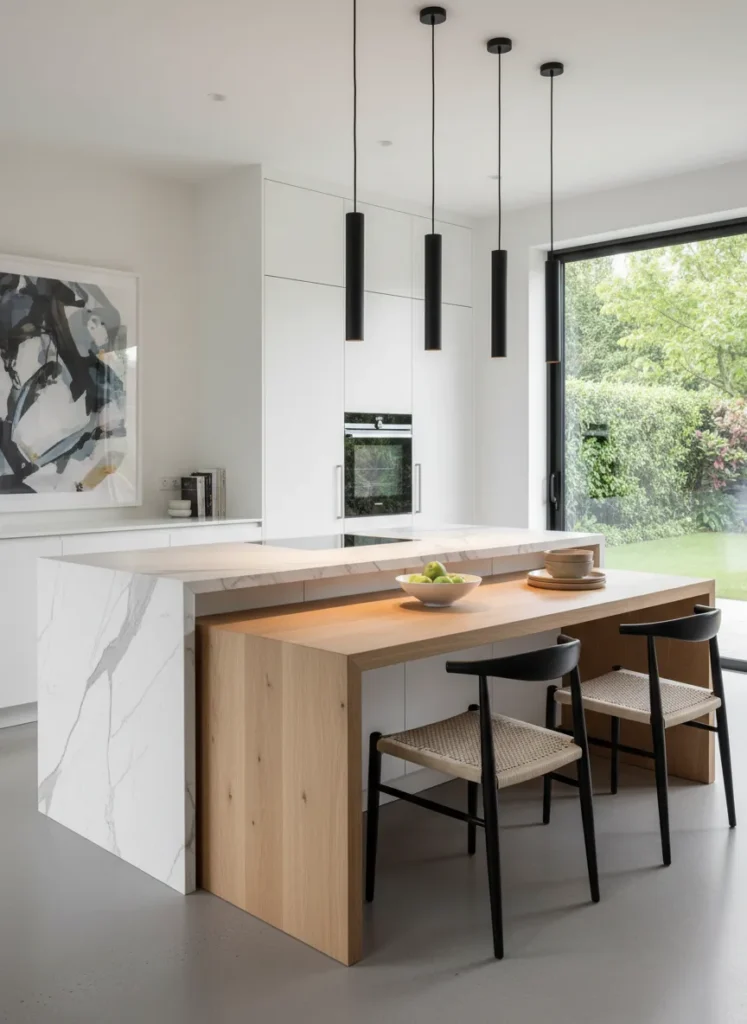
If you have a kitchen island, consider adding a table extension at a lower height. This creates a T-shape or L-shape configuration that serves as a dedicated dining table attached directly to the workspace. It unifies the cooking and eating areas into one central hub.
This design saves space by eliminating the need for a separate table elsewhere in the room. It also encourages social interaction, allowing the cook to chat comfortably with diners who are seated at regular table height rather than on high bar stools.
Square Tables in Corners
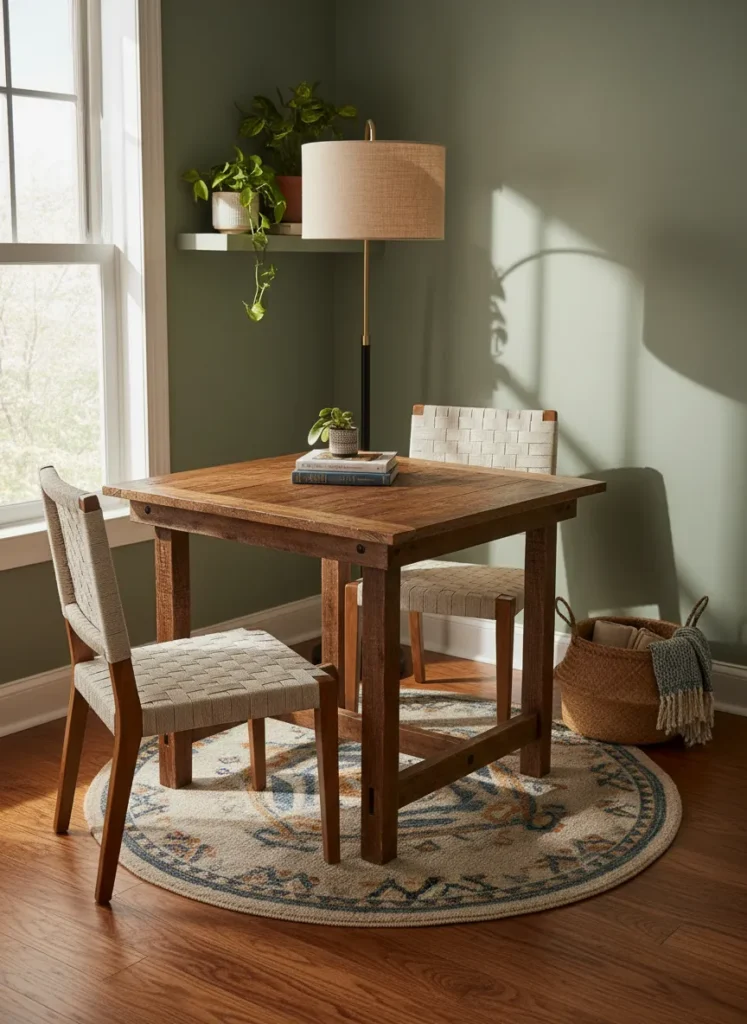
While round tables are great for flow, a square table can be pushed flush into a corner to maximize floor space. This setup works well for one or two people and anchors the dining spot firmly in the room. It is a stable and efficient arrangement for very small apartments.
To prevent it from feeling like a ‘time-out’ corner, add artwork on the adjacent walls and a dedicated light fixture. This transforms the corner into a cozy, deliberate niche that feels private and secure.
Minimalist Design

Adopting a minimalist design philosophy is highly effective for compact living. By keeping furniture lines clean and surfaces free of clutter, you reduce visual noise. A simple table and sleek chairs without ornate details make the room feel larger and more serene.
Focus on quality over quantity. A few beautiful, well-designed pieces will make a stronger statement than a room filled with accessories. This approach creates a calming environment where the limited space feels like a design choice rather than a restriction.
Backless Stools
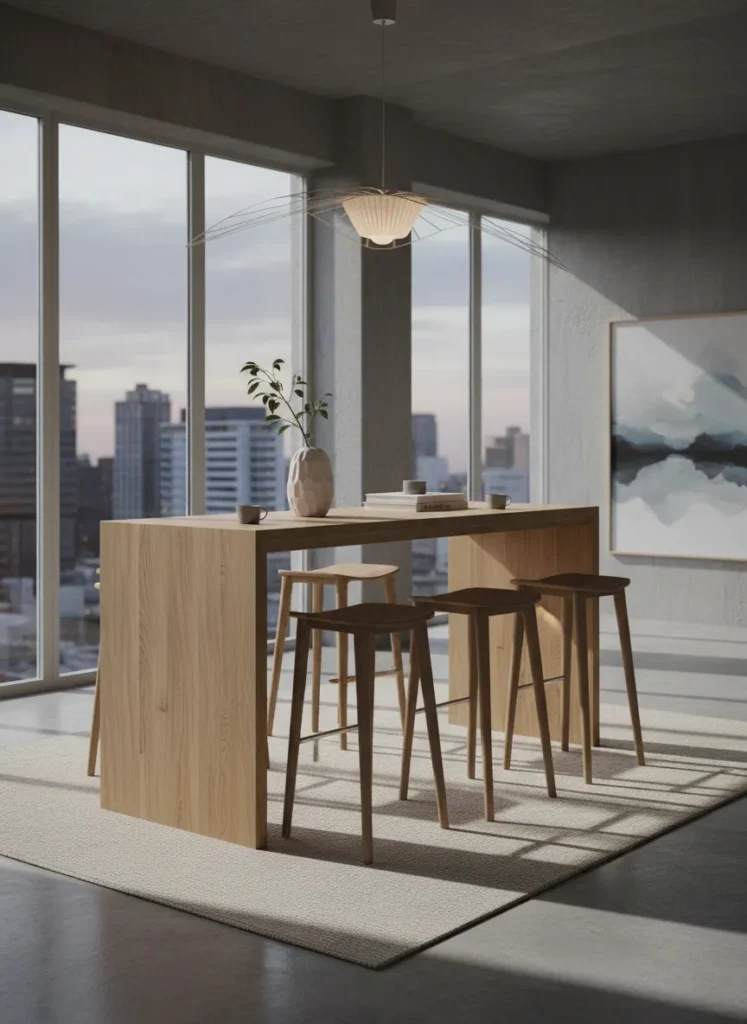
Backless stools are the champions of disappearing furniture. Because they have no backrest, they can slide completely under the table or counter, removing any visual obstruction in the room. This is ideal for narrow walkways or high-traffic areas.
While they offer a streamlined look, ensure they have a footrest for comfort. They are perfect for quick meals and casual dining, and their low profile ensures that the sightlines across your small apartment remain open and uninterrupted.
Living Room Integration

For the ultimate space-saver, integrate dining directly into your living room with a lift-top coffee table. These tables have a mechanism that raises the surface to dining height, allowing you to eat comfortably from your sofa. It eliminates the need for a separate dining table entirely.
This is a fantastic solution for studio apartments where a dedicated dining zone is impossible. When not in use, the table lowers back down to function as a standard coffee table, maintaining the living room aesthetic.
Sliding Room Dividers
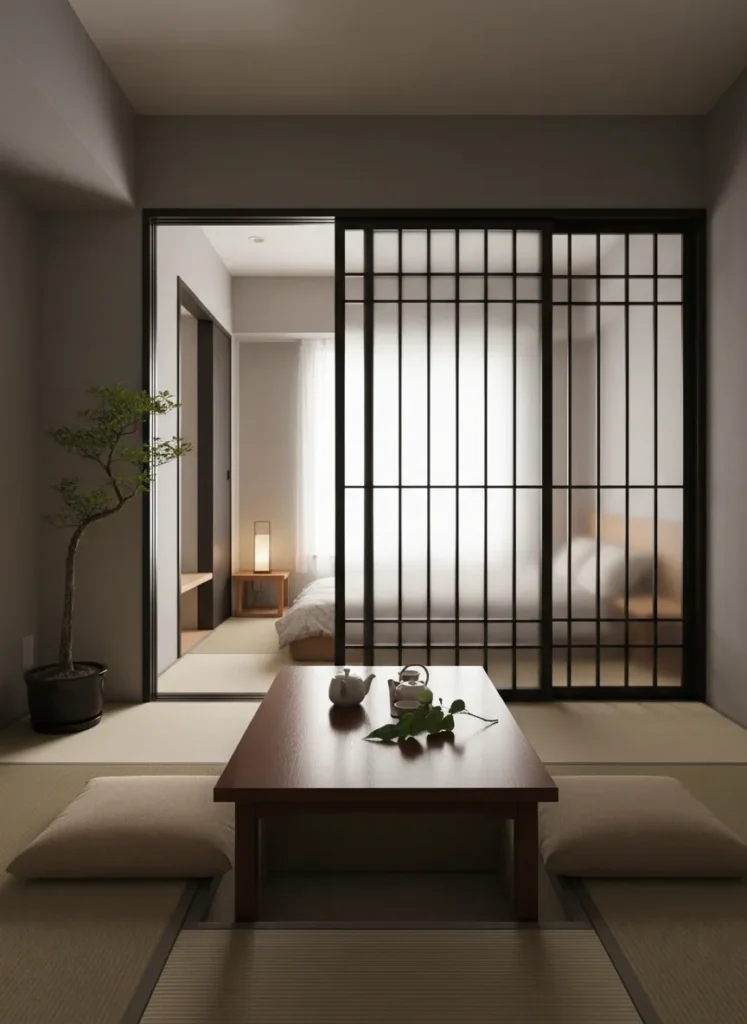
If you want to create a separate dining room feel within a studio, use a sliding room divider or screen. This allows you to close off the space for intimate dinners or hide a messy table after a meal. It adds flexibility to the floor plan.
Translucent materials like frosted glass or rice paper allow light to pass through while still providing visual separation. This defines the dining area without making the overall apartment feel smaller or darker.
Statement Wallpaper
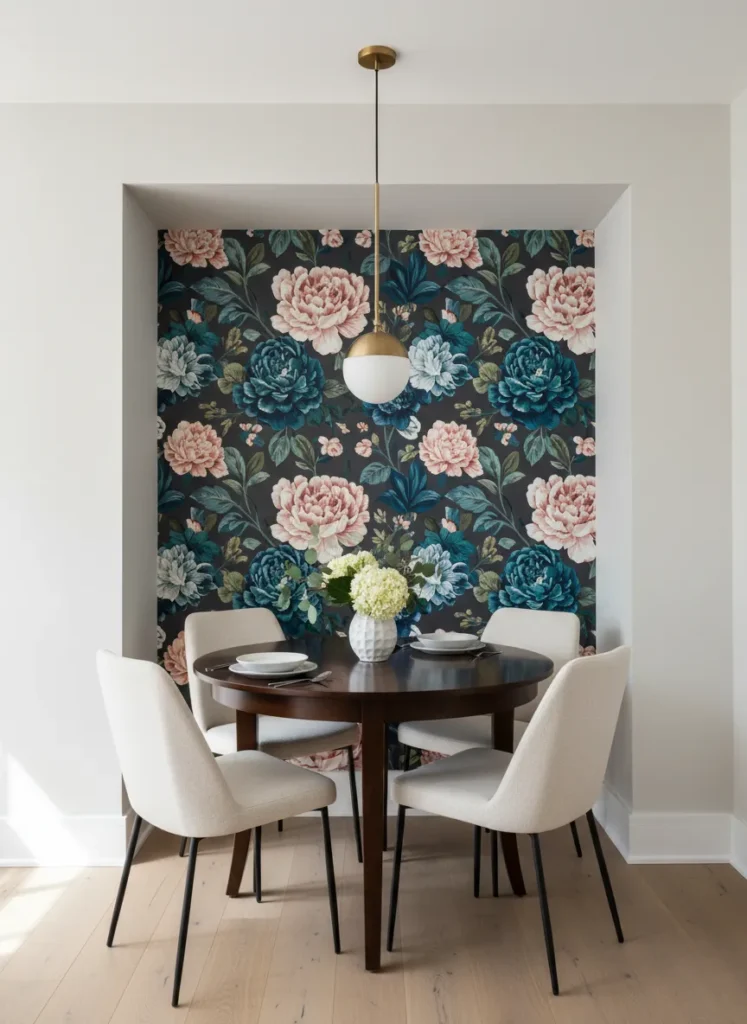
Using bold wallpaper on just one wall behind your dining table can visually carve out a zone in an open plan. The pattern draws the eye and signals that this specific area has a unique function. It adds depth and character to a small space.
Choose a pattern that reflects your personality, whether it is geometric, floral, or abstract. This design trick creates a ‘room within a room’ effect without the need for physical walls or dividers, making the dining experience feel distinct.
Conclusion
Designing a dining area in a small home does not mean you have to compromise on style or functionality. By implementing these small dining area ideas for compact living, such as utilizing vertical space, choosing the right furniture shapes, and embracing multi-functional pieces, you can create a beautiful and efficient space. A thoughtful approach to layout and decor transforms even the tiniest corner into a welcoming place to enjoy your meals.