
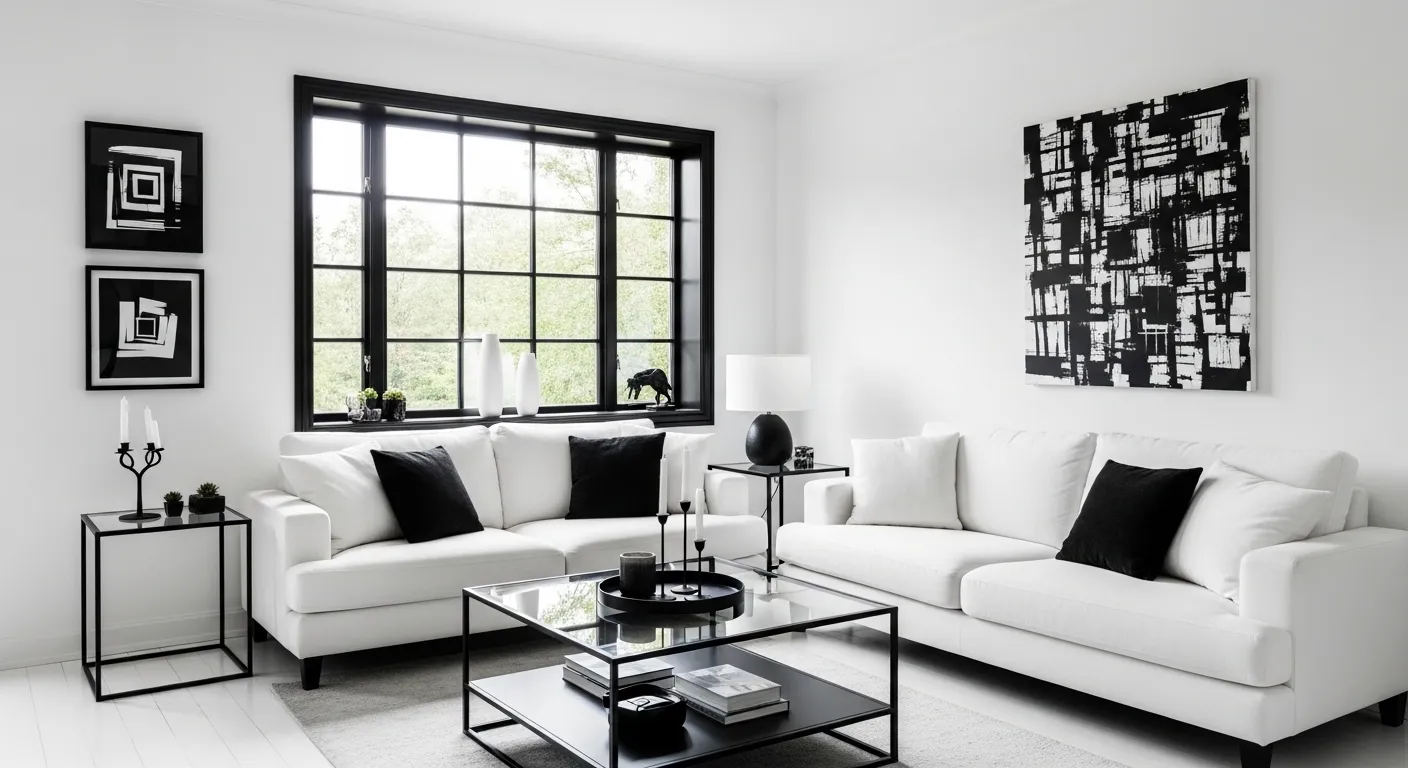
Creating a sanctuary in your home begins with clearing the clutter and focusing on essential design elements that bring peace to your daily life. If you are searching for minimalist living room ideas to transform your space, you have come to the right place to find inspiration that balances functionality with style. A minimalist approach does not mean your home must feel cold or empty, but rather it should highlight quality pieces and open space to let your room breathe. By adopting a less is more philosophy, you can curate a living area that feels modern, sophisticated, and incredibly relaxing for you and your guests.
Monochromatic Warmth
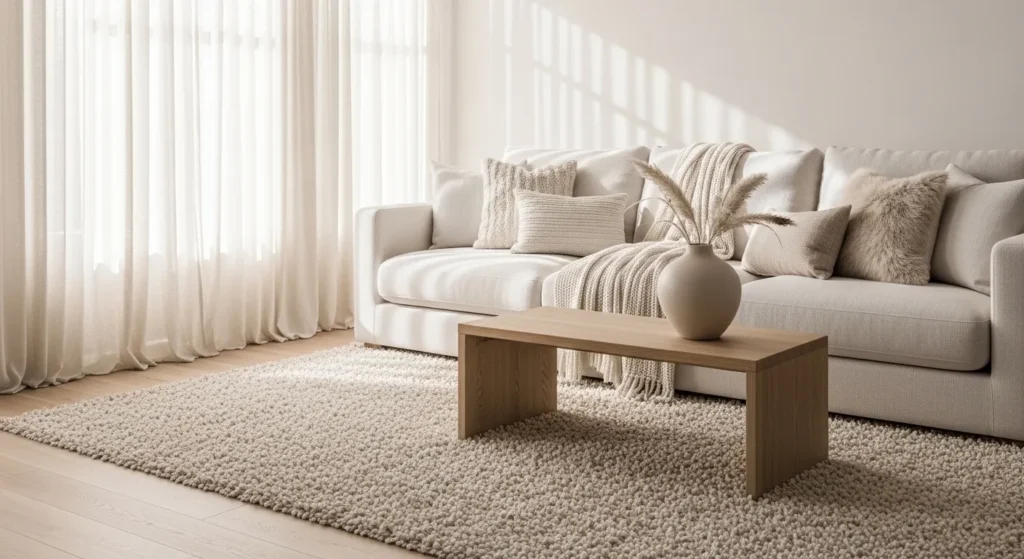
Sticking to a single color palette is one of the most effective ways to achieve a calm atmosphere. By layering different shades of cream, beige, or white, you create a sense of depth without introducing visual chaos. This technique allows the eye to travel smoothly across the room without being distracted by jarring contrasts or bright patterns. It makes the space feel cohesive and intentionally designed.
To keep a monochromatic room from feeling flat, it is important to incorporate various textures. You might pair a smooth leather ottoman with a nubby wool rug or velvet cushions. These subtle differences in material add richness and warmth to the environment. This is one of the best minimalist living room ideas for those who want a space that feels elegant and serene while remaining comfortable for everyday use.
Low Profile Furniture
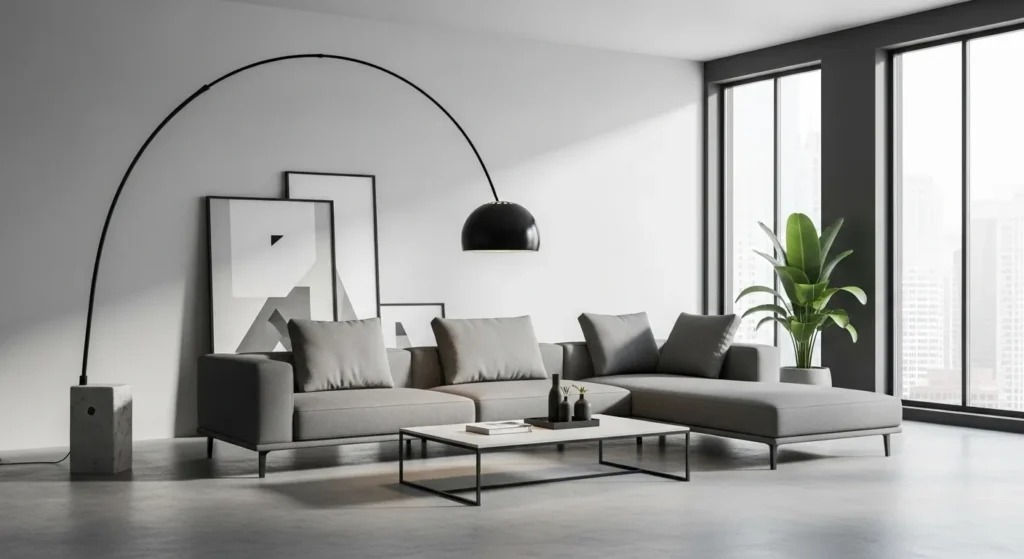
Choosing furniture that sits lower to the ground creates an immediate sense of openness and height in your living room. Low-profile sofas and coffee tables leave more vertical space visible, which makes the ceiling appear higher and the room feel larger. This design choice is deeply rooted in modern aesthetics and contributes significantly to a relaxed and laid-back vibe.
When you select low-profile pieces, you naturally clear the sightlines across the room. This unobstructed view is essential for maintaining a clutter-free look. It allows light to flow more freely and ensures that no single piece of furniture dominates the space. This approach is perfect for smaller homes or apartments where maximizing the feeling of space is a top priority.
The Japandi Fusion
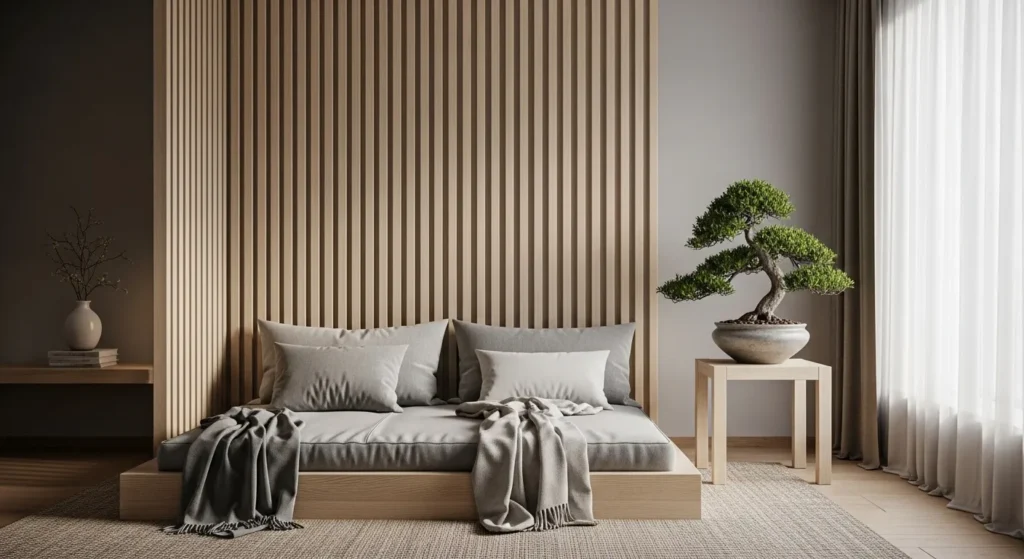
Japandi style is a beautiful hybrid of Japanese rustic minimalism and Scandinavian functionality. This design trend focuses on clean lines, bright spaces, and light colors. It combines the cozy warmth of Nordic design with the artistic simplicity of traditional Japanese aesthetics. The result is a look that feels both curated and incredibly livable.
To achieve this look, focus on natural materials like unfinished woods and bamboo mixed with clean, modern lines. Furniture should be functional but beautiful, with a focus on craftsmanship. By blending these two distinct styles, you create a unique environment that feels grounded and peaceful. It is one of the most popular minimalist living room ideas because it emphasizes nature and simplicity simultaneously.
Texture Over Color
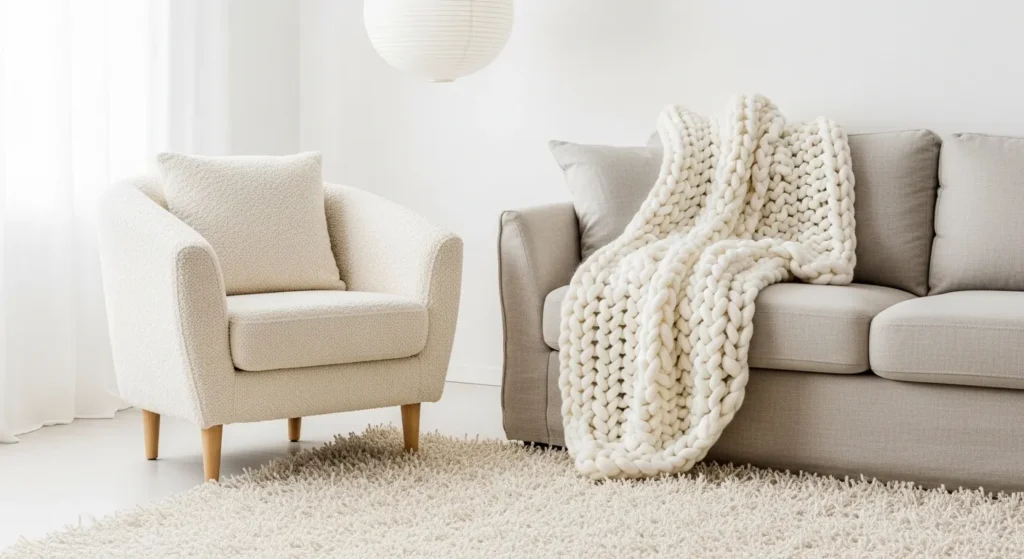
When you remove bright colors from a room, texture becomes the most important tool in your design arsenal. Without texture, a neutral minimalist room can feel sterile or hospital-like. By incorporating materials like boucle, linen, wool, and natural wood, you add visual weight and interest that invites touch and creates a cozy atmosphere.
Focus on layering these different materials to build a comfortable environment. You can place a sheepskin rug over a wooden chair or use linen curtains that pool on the floor. These elements catch the light differently throughout the day, ensuring the room always looks dynamic. This strategy proves that you do not need bold colors to create a space that feels finished and expensive.
Hidden Storage Walls
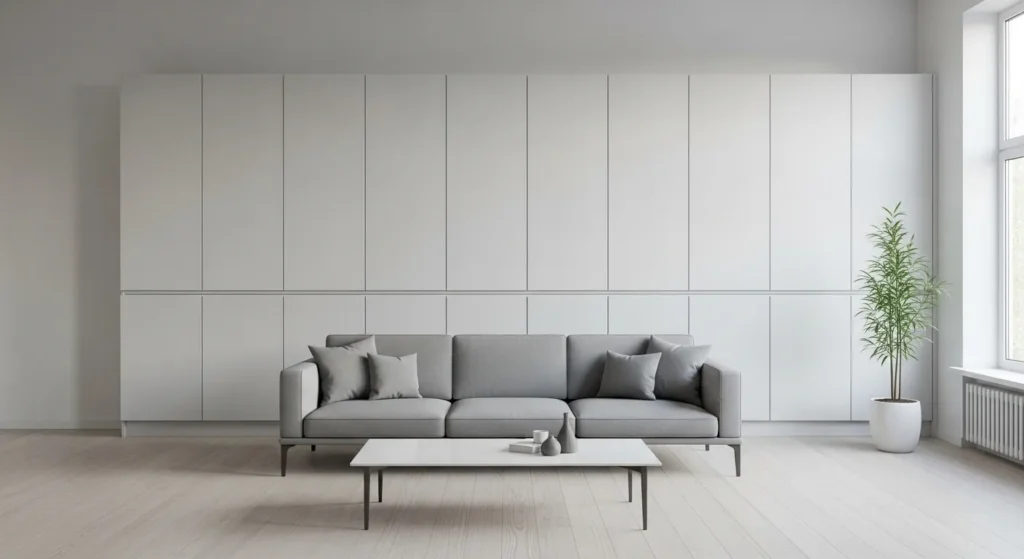
Clutter is the enemy of minimalism, so having adequate storage is non-negotiable. Installing floor-to-ceiling cabinetry that blends into the walls is a brilliant way to hide everyday items while keeping the aesthetic clean. By using push-to-open hardware, you eliminate visual noise from handles and knobs, creating a seamless surface that looks more like a wall than a closet.
This approach allows you to keep books, electronics, and toys easily accessible but completely out of sight when not in use. It helps maintain the meditative quality of the room by reducing the amount of visual information your brain has to process. Integrating hidden storage is one of the most practical minimalist living room ideas for families who want a clean look without sacrificing functionality.
Statement Large Scale Art
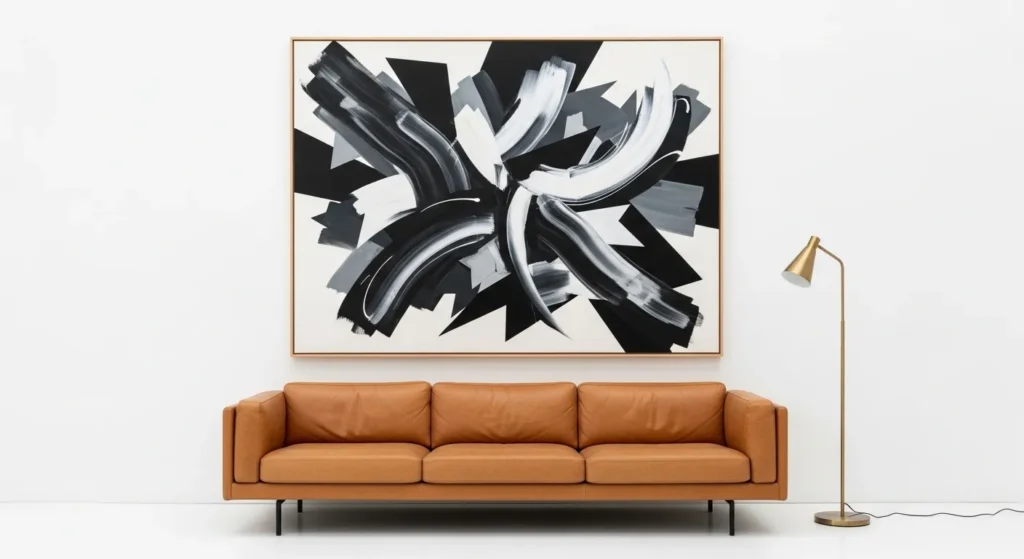
Instead of a gallery wall filled with many small frames, minimalism favors one large, impactful piece of art. A single oversized canvas acts as a focal point that anchors the room and sets the tone for the entire space. This prevents the walls from feeling cluttered and allows the viewer to truly appreciate the artwork.
When choosing a piece for a minimalist room, look for abstract shapes or calming landscapes that complement your color palette. The goal is to add personality and drama without overwhelming the senses. This singular focus creates a confident and sophisticated look that elevates the overall design of your home.
Bringing Nature Indoors
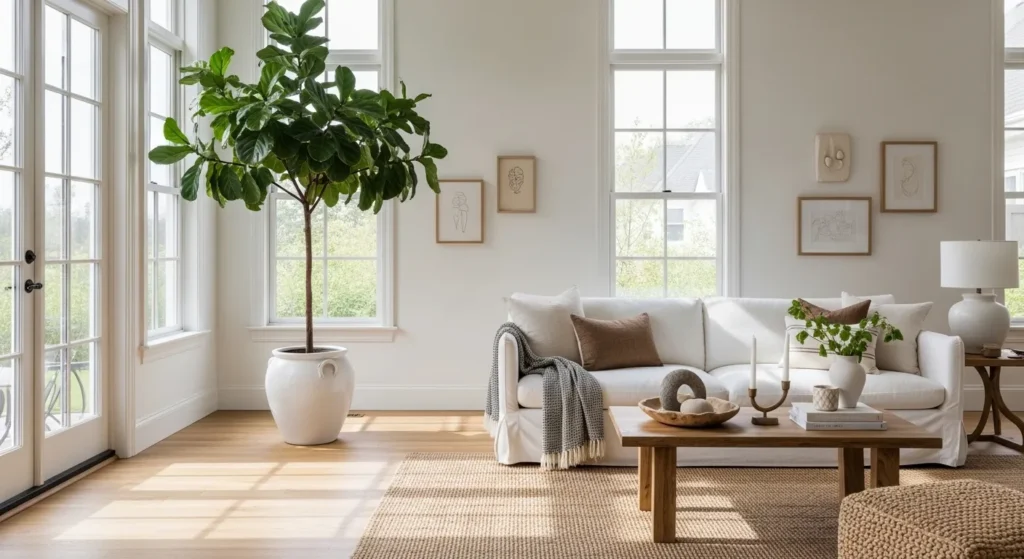
Plants are the perfect accessory for minimalist spaces because they add color and life without feeling like clutter. A large indoor tree or a few carefully placed potted plants can soften the sharp lines of modern furniture and purify the air. The organic shapes of leaves provide a nice contrast to the geometric forms often found in minimalist design.
When styling with plants, choose planters that match your neutral color scheme to keep the look cohesive. Avoid overcrowding the room with too many small pots; instead, opt for one or two substantial plants that make a statement. This connection to nature helps to create a calming and restorative environment in your living room.
Sheer Window Treatments
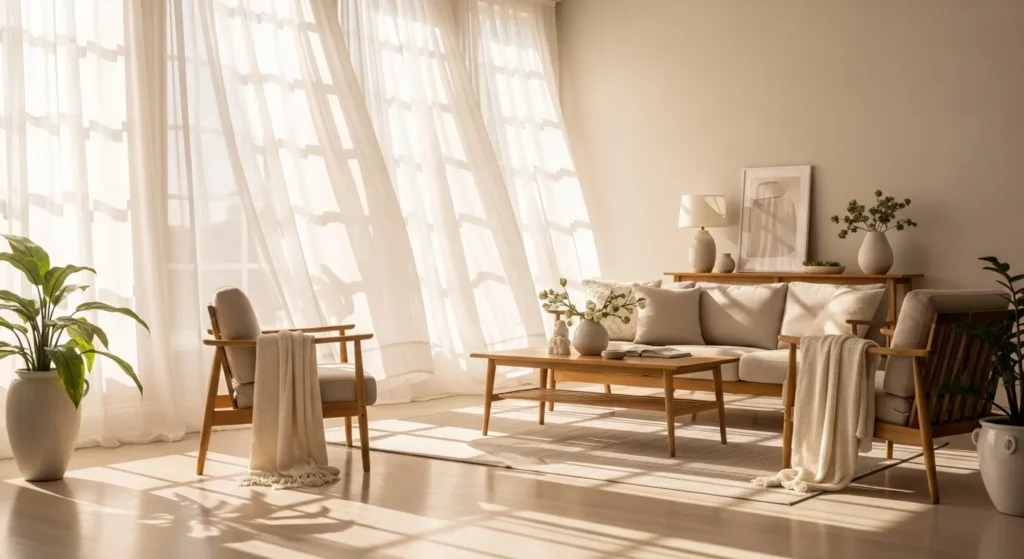
Lighting is a crucial element in minimalist design, and natural light is the best source. Heavy drapes can weigh down a room and make it feel enclosed. Sheer curtains allow sunlight to filter through, filling the room with a soft, diffused glow that makes the space feel larger and more welcoming.
These window treatments offer privacy without blocking the view or the light. They add a layer of softness to the windows and move gently with the breeze, adding a dynamic element to the room. Maximizing natural light is one of the essential minimalist living room ideas for creating an uplifting and airy atmosphere.
Sculptural Lighting Fixtures
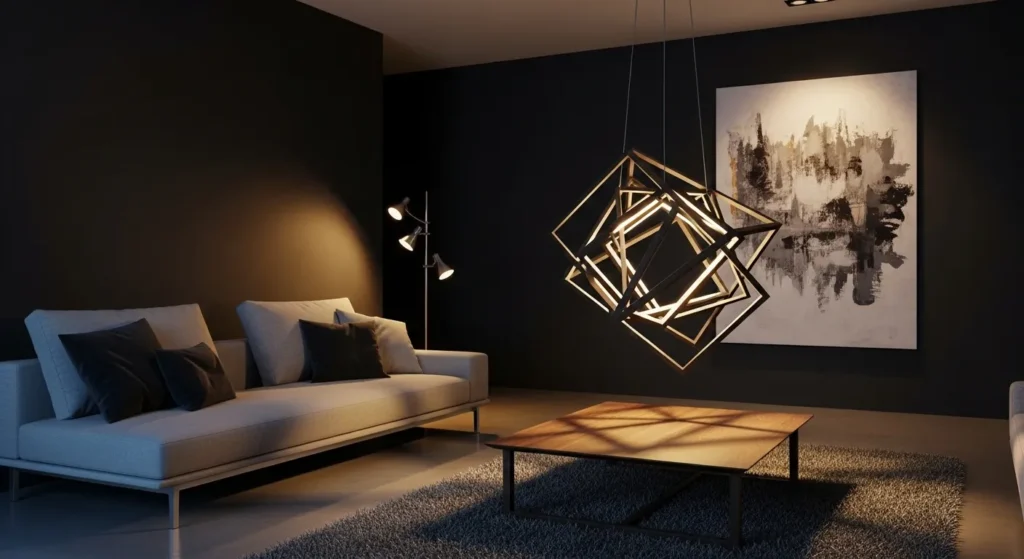
In a room with few decorative objects, your lighting fixtures become the jewelry of the space. Choosing a lamp or pendant with an interesting sculptural shape allows it to double as a piece of art. Whether it is a curved floor lamp or a geometric chandelier, the fixture should have a strong silhouette that draws the eye.
Keep the materials consistent with the rest of your decor, such as matte black metal or brushed brass. The light fixture should provide adequate illumination while also contributing to the overall aesthetic when it is turned off. This dual purpose is a hallmark of minimalist design, where every item must be both beautiful and functional.
Concrete and Industrial Elements
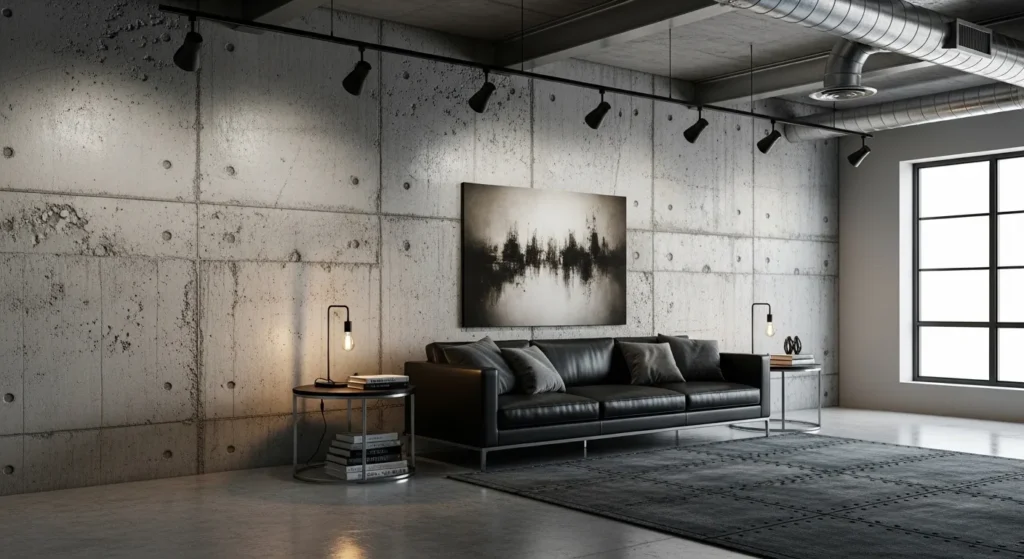
Industrial minimalism embraces raw materials and unfinished surfaces to create a look that is edgy and modern. Concrete floors or walls provide a cool, neutral backdrop that works perfectly with minimalist furniture. The texture of the concrete adds interest without the need for paint or wallpaper.
To balance the coolness of the concrete, incorporate warmer elements like leather or wood. The contrast between the raw industrial shell and the refined furniture creates a sophisticated dynamic. This style is perfect for urban lofts or modern homes looking for a distinctive and durable aesthetic.
The Floating Media Console
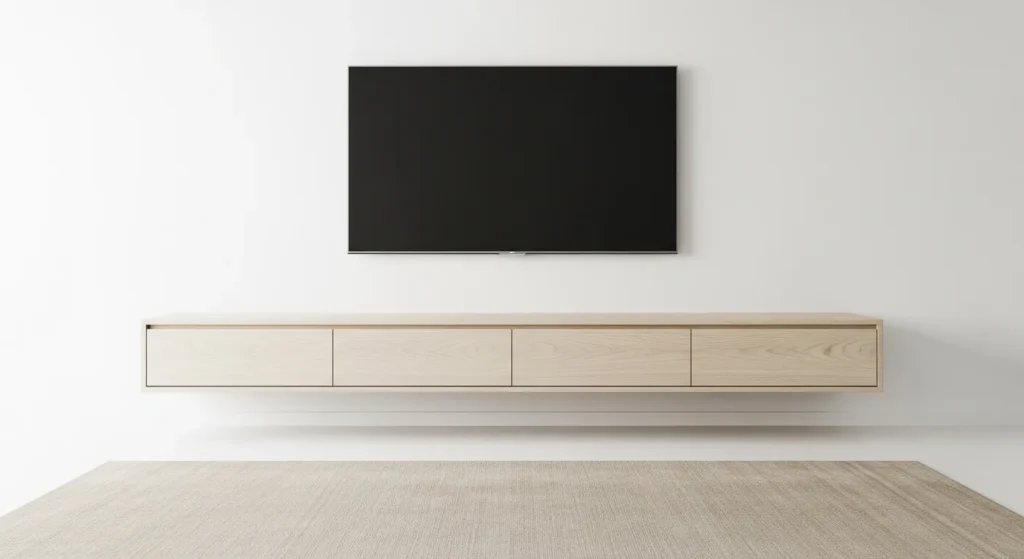
Keeping the floor visible is a classic trick to make a room feel bigger. A floating media console attaches directly to the wall, leaving the space underneath open. This simple change reduces visual bulk and makes cleaning easier, contributing to a sense of order and cleanliness.
Ensure that cords and cables are hidden within the wall or the unit to maintain the minimalist look. The surface of the console should be kept mostly clear, perhaps with just one or two decorative items. This streamlined approach to media storage is one of the most effective minimalist living room ideas for modernizing your entertainment area.
Curved Sofas and Soft Lines
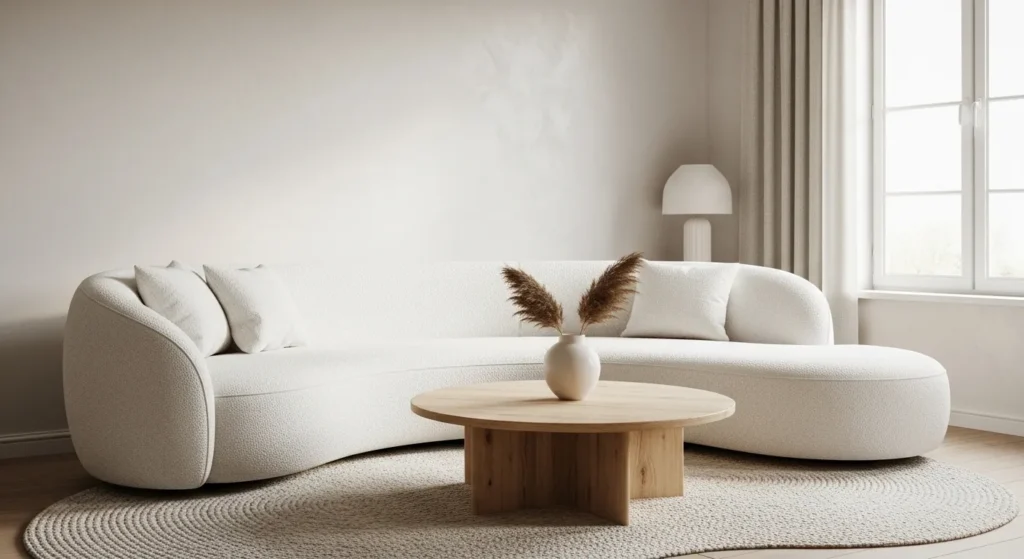
While minimalism often relies on straight lines and sharp angles, introducing curves can make the space feel softer and more inviting. A curved sofa or a round coffee table breaks up the rigidity of a rectangular room and improves the flow of traffic. These organic shapes mimic forms found in nature, promoting a sense of ease.
Curved furniture works particularly well in monochromatic spaces, where the shape of the item becomes its defining feature. It adds a sculptural element that is visually pleasing and comfortable. This trend towards softer minimalism creates a home that feels like a gentle embrace rather than a rigid showroom.
Black Accents for Contrast
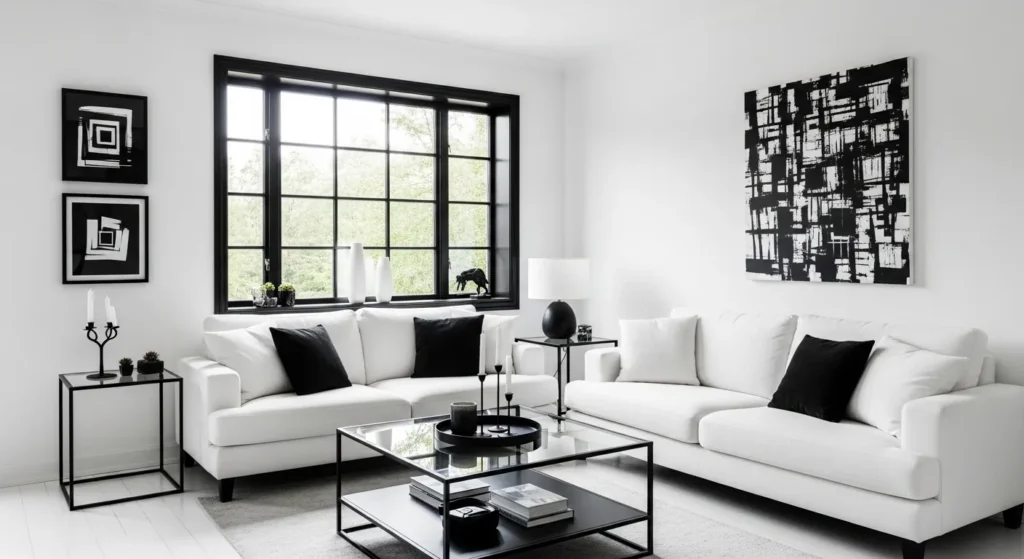
A minimalist room can sometimes feel washed out if there is no contrast. Adding touches of black helps to anchor the space and give the eye a place to rest. Black window frames, picture frames, or furniture legs can define the boundaries of the room and add a touch of sophistication.
Use black sparingly to ensure it remains an accent rather than a dominant color. The goal is to create a graphic pop that highlights the architecture and the furniture. This high-contrast approach is timeless and ensures your minimalist living room looks sharp and intentionally designed.
Minimalist Bookshelf Styling
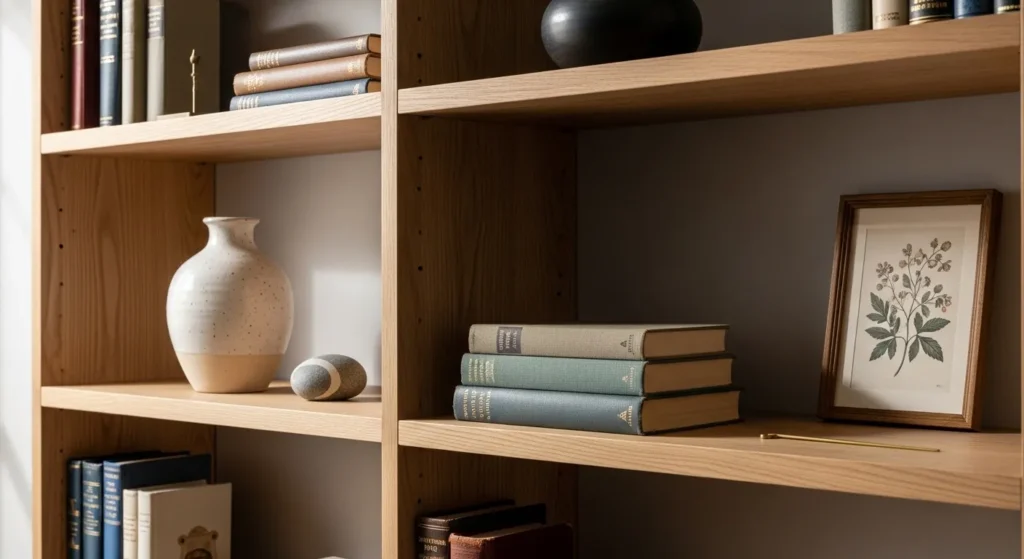
Shelves can easily become clutter magnets, but in a minimalist home, they are an opportunity for curated display. The key is to leave plenty of negative space, or empty space, on the shelves. Do not pack every inch with books; instead, select your favorites and stack them horizontally and vertically for variety.
Intersperse books with a few meaningful decorative objects, such as a sculpture or a vase. This breathing room allows each item to stand out and be appreciated. Proper shelf styling is one of the subtle minimalist living room ideas that can dramatically change the feel of a room from chaotic to composed.
Glass and Transparency
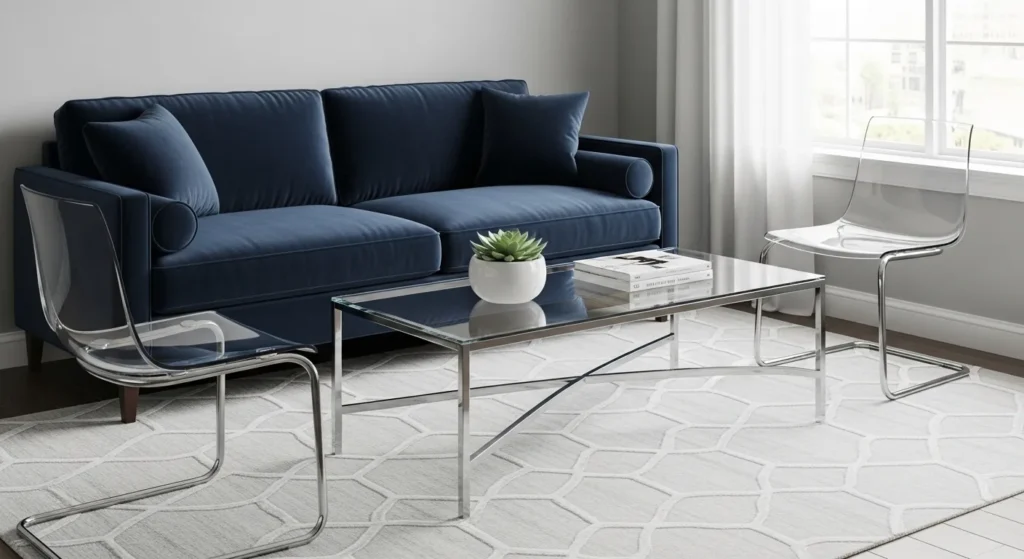
Furniture made from glass or acrylic is excellent for maintaining a sense of openness. Because these pieces are transparent, they take up very little visual weight. A glass coffee table provides a surface for drinks and books without blocking the view of the rug or the flow of the floor.
This trick is especially useful in small living rooms where you need furniture but do not want the space to feel crowded. It allows light to pass through the objects, keeping the room bright and airy. Using transparent materials is a clever way to add function without adding visual bulk.
Earthy Terracotta Tones
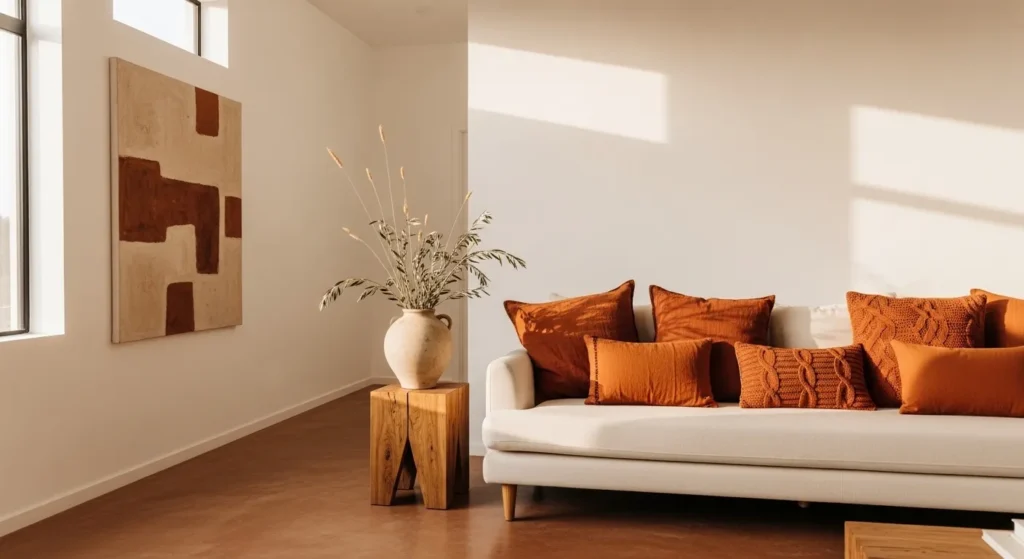
Minimalism does not have to be restricted to cool grays and whites. Introducing earthy tones like terracotta, rust, and warm browns can make the space feel grounded and welcoming. These colors are derived from nature and bring a sense of warmth that is often missing in modern design.
Use these colors in your textiles, ceramics, or even as a subtle wall color. They pair beautifully with natural wood and stone. This warmer take on minimalism creates a cozy sanctuary that feels connected to the earth, perfect for relaxing after a long day.
Large Area Rugs for Zoning
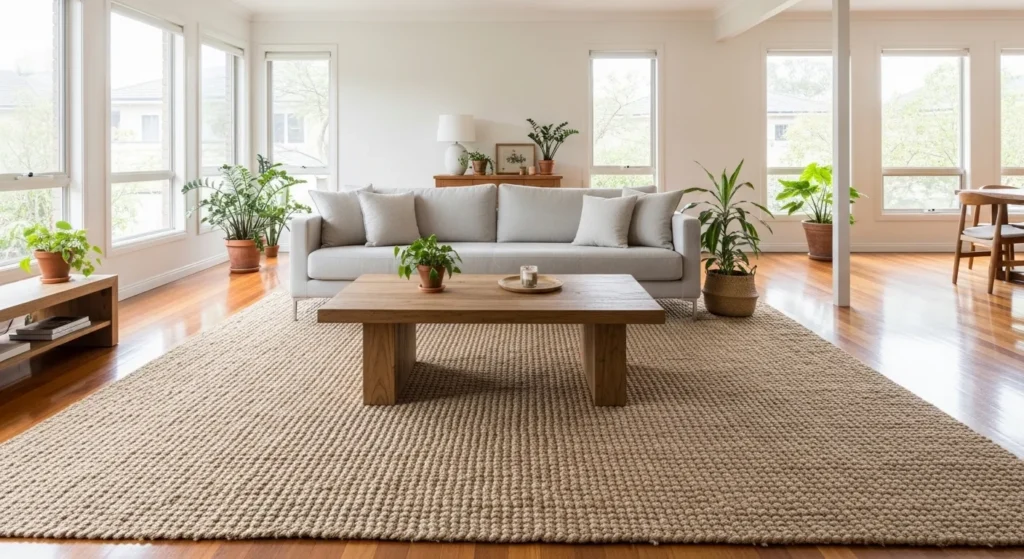
In open-concept homes, a large area rug is essential for defining the living zone without the need for walls. The rug should be large enough that all the main furniture pieces sit comfortably on top of it. This creates a visual island that groups the furniture together and signals the function of that specific area.
Choose a rug with a subtle texture and neutral color to keep the look minimalist. Natural fibers like jute, wool, or sisal are excellent choices because they add warmth and durability. A properly sized rug is one of the foundational minimalist living room ideas that brings structure and comfort to an open space.
Negative Space Appreciation
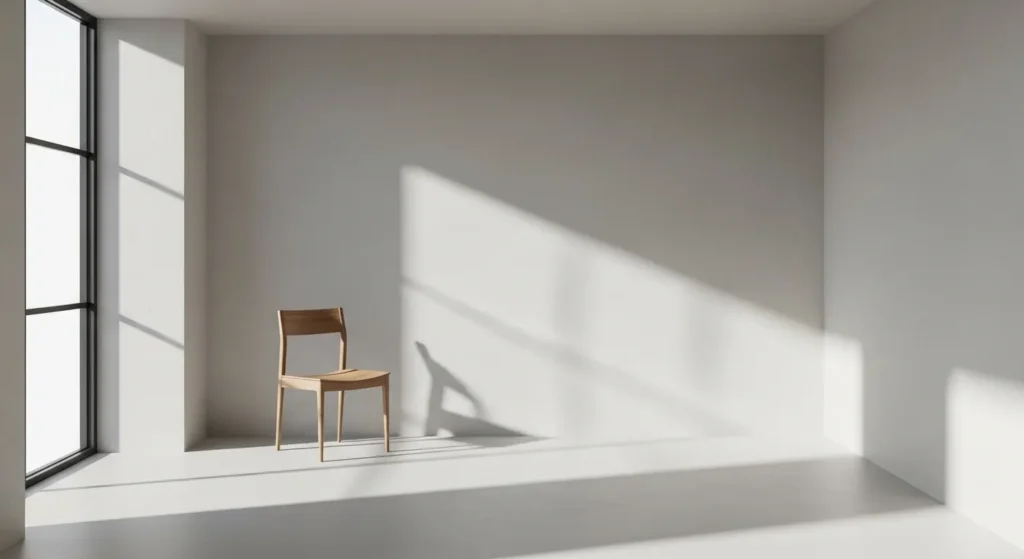
Negative space, or the empty space around objects, is just as important as the objects themselves in minimalist design. It is not about what you add to the room, but what you choose to leave out. allowing corners to remain empty or walls to remain bare highlights the architecture of the home and creates a sense of luxury.
This emptiness allows your mind to rest and reduces visual stress. It emphasizes the quality of the few pieces you do have and lets the light become a major decorative element. embracing negative space is the ultimate commitment to a minimalist lifestyle, proving that space itself is a beautiful feature.
Conclusion
Incorporating these minimalist living room ideas into your home can drastically change how you feel in your space. By focusing on quality, texture, and light, you can build a room that is not only beautiful to look at but also calming to live in. Start with one or two changes, like decluttering surfaces or upgrading your lighting, and watch how your home transforms into a modern sanctuary of peace.