
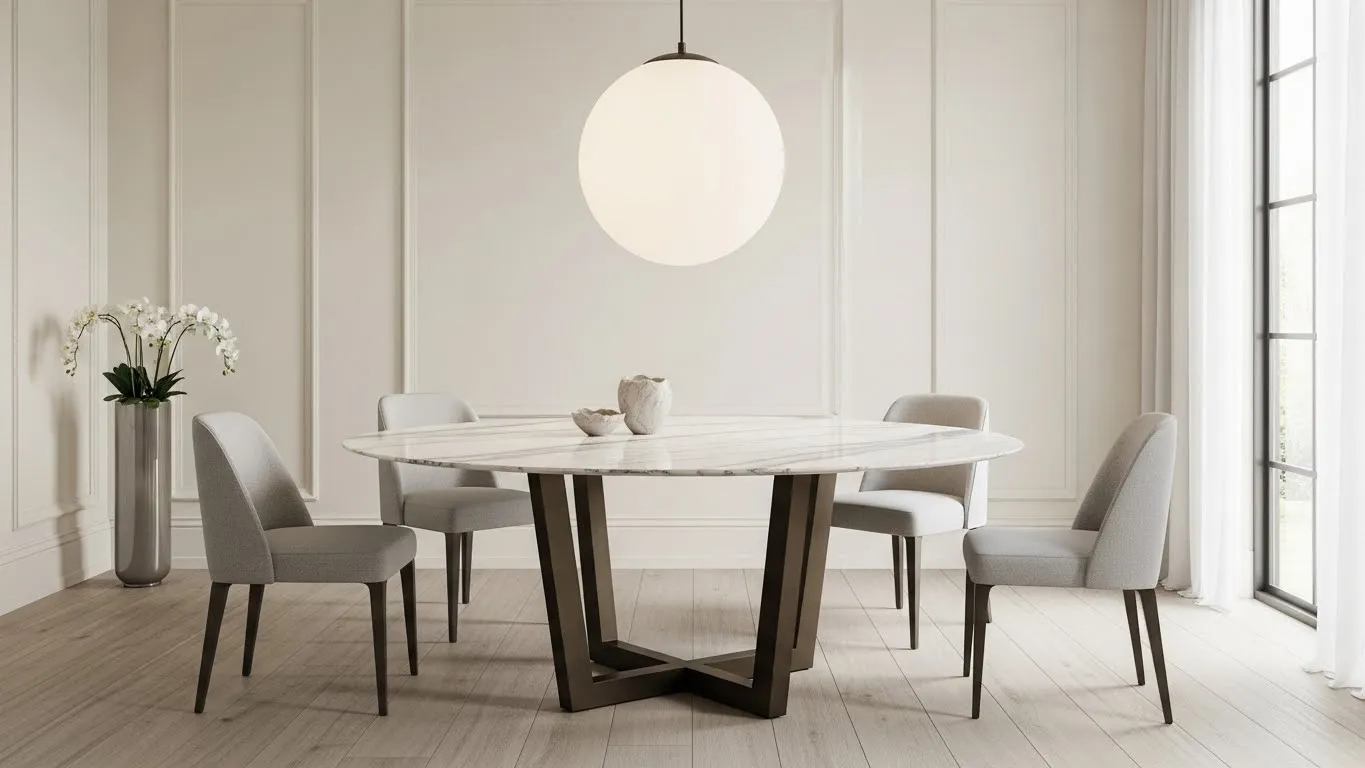
Creating a peaceful sanctuary in your home often starts where you gather for meals, which is why exploring minimalist dining room ideas is the perfect way to bring serenity to your daily routine. By focusing on essential furniture, clean lines, and a lack of clutter, you can transform a chaotic eating area into a sophisticated space that encourages mindful eating and conversation.
Embrace an All-White Palette
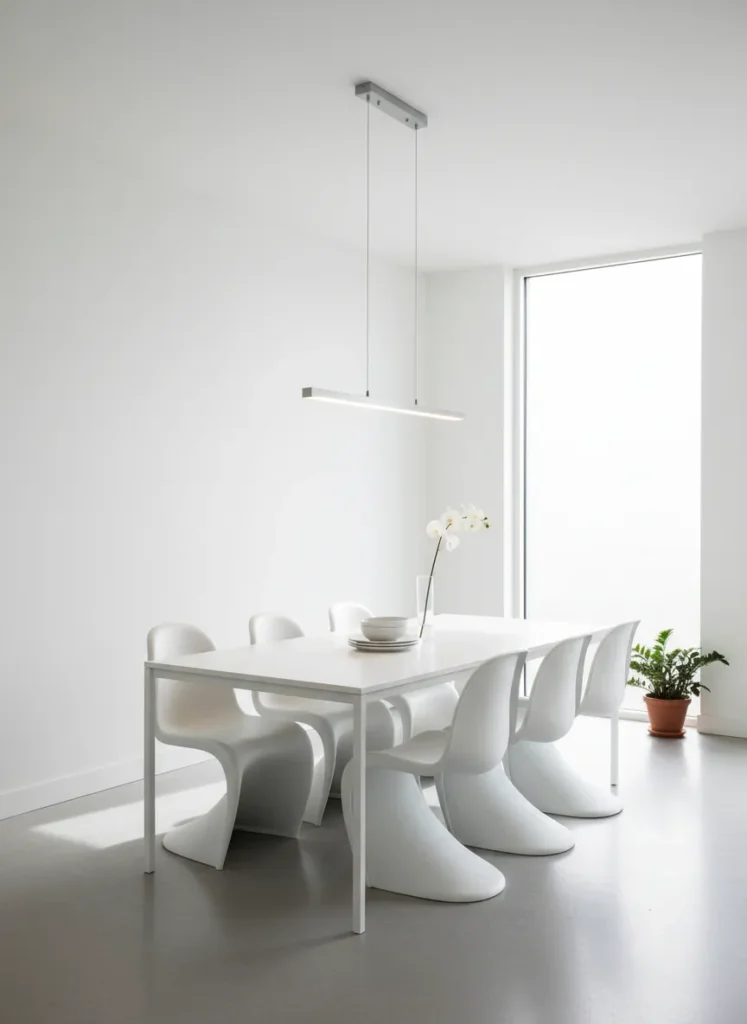
Choosing an all-white color scheme is one of the most effective ways to achieve a truly minimalist look. It instantly makes the room feel larger, brighter, and incredibly airy, removing visual noise that comes from clashing colors.
To keep the space from feeling sterile, focus on varying textures within the white tones, such as a matte table finish paired with fabric chair upholstery. This approach adds depth and interest without breaking the clean, monochromatic visual flow.
Incorporate Warm Wood Tones
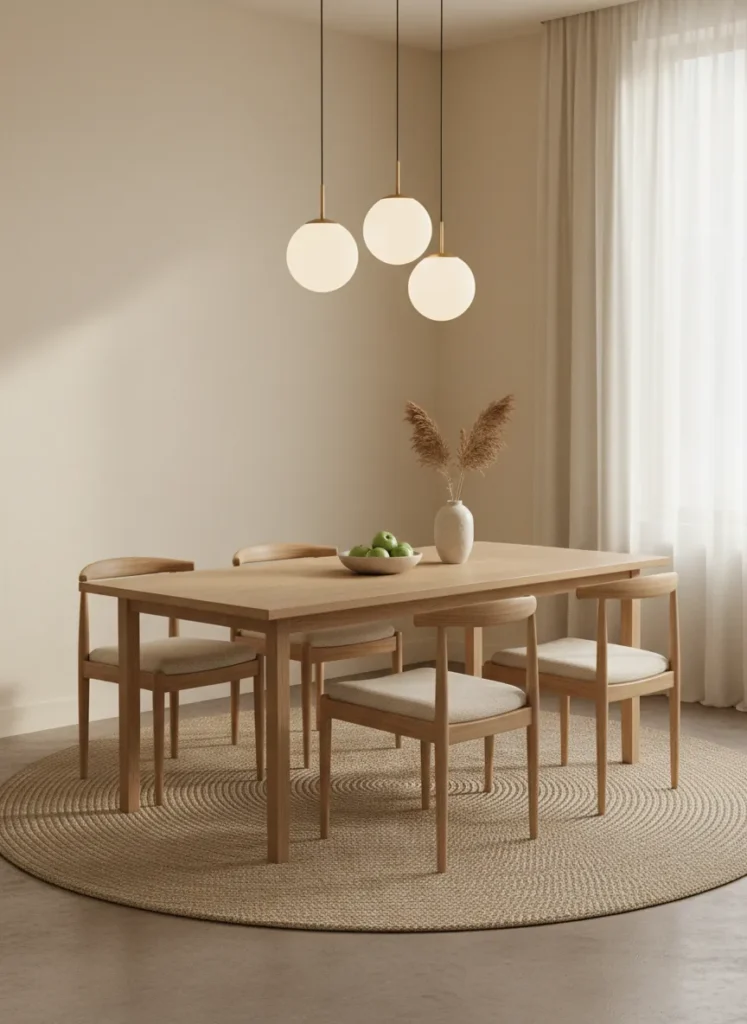
Minimalism does not have to mean cold or stark designs, and incorporating warm wood tones is the best way to prove that. A solid oak or walnut dining table serves as a beautiful anchor for the room, bringing nature indoors and adding a sense of organic warmth.
Keep the rest of the room simple with neutral walls and unadorned flooring to let the wood grain shine as the main feature. This balance creates a cozy, inviting atmosphere that remains strictly uncluttered and modern.
Install a Statement Pendant Light
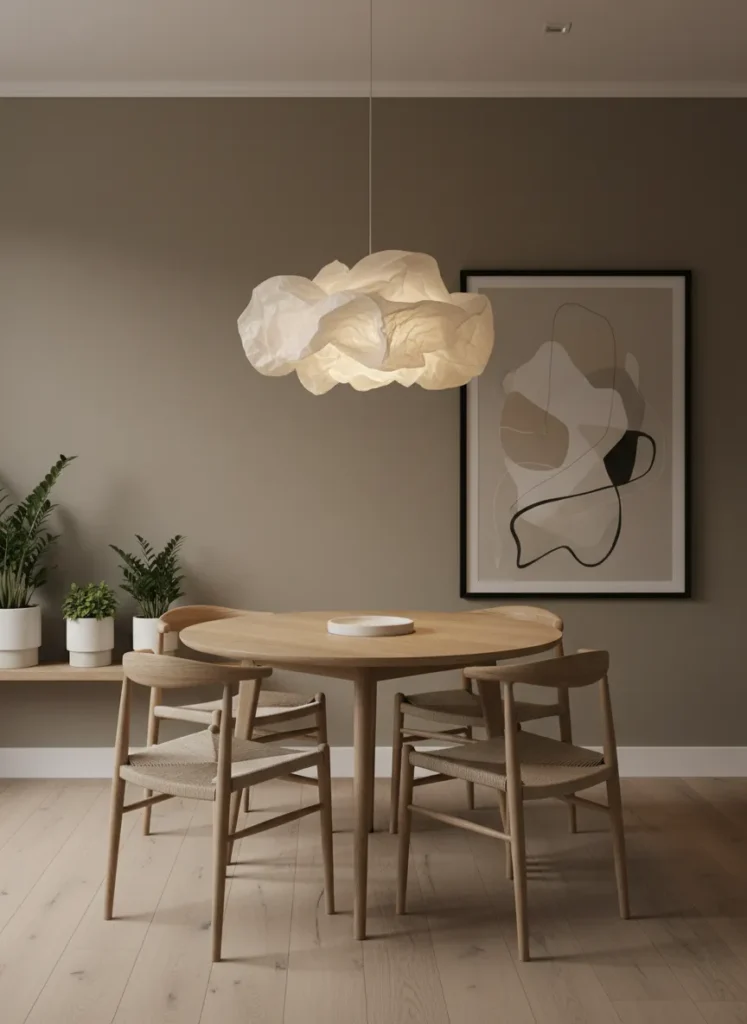
In a room with very few items, lighting becomes a crucial design element that doubles as art. Installing a single, large statement pendant light above the dining table creates a stunning focal point that draws the eye upward and centers the space.
Choose a fixture with a sculptural shape or an interesting texture, like a paper lantern or a matte black metal dome. Because the rest of the room is sparse, this bold lighting choice feels intentional and sophisticated rather than overwhelming.
Use Floating Sideboards
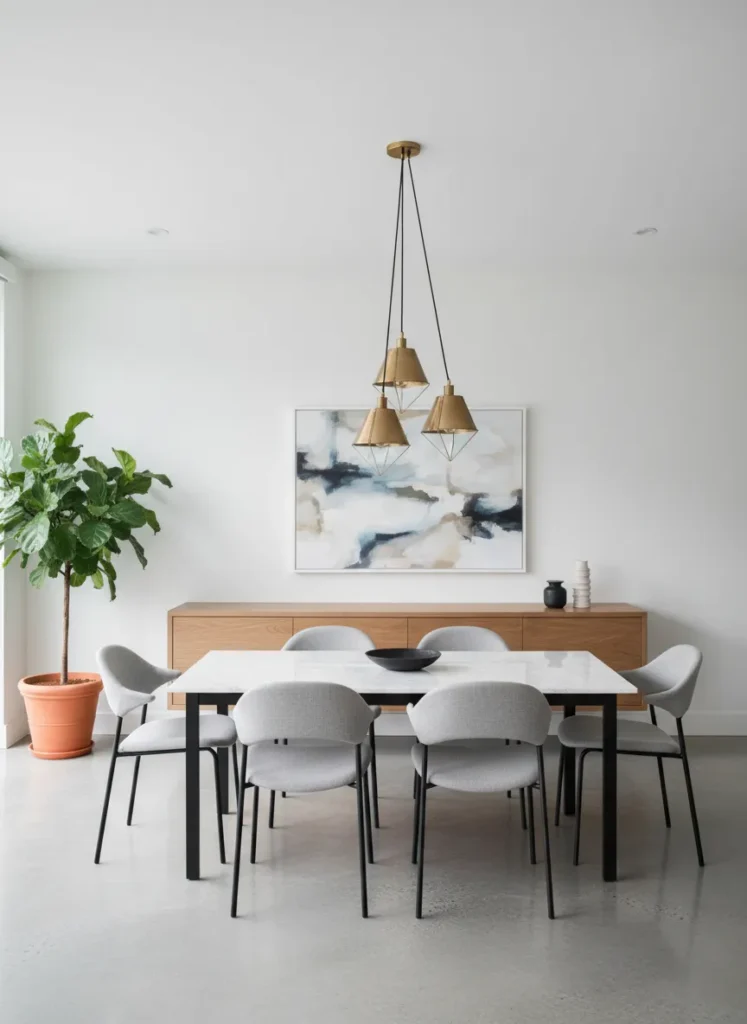
Floor space is precious in a minimalist design, and lifting furniture off the ground creates an illusion of more room. A floating sideboard mounted to the wall provides necessary storage for dishes and linens without the visual weight of legs or a bulky base.
This keeps the floor visible underneath, which helps the light flow freely throughout the room. Keep the top of the sideboard mostly clear, perhaps displaying only one or two carefully selected decorative objects to maintain the clutter-free aesthetic.
Opt for Ghost Chairs
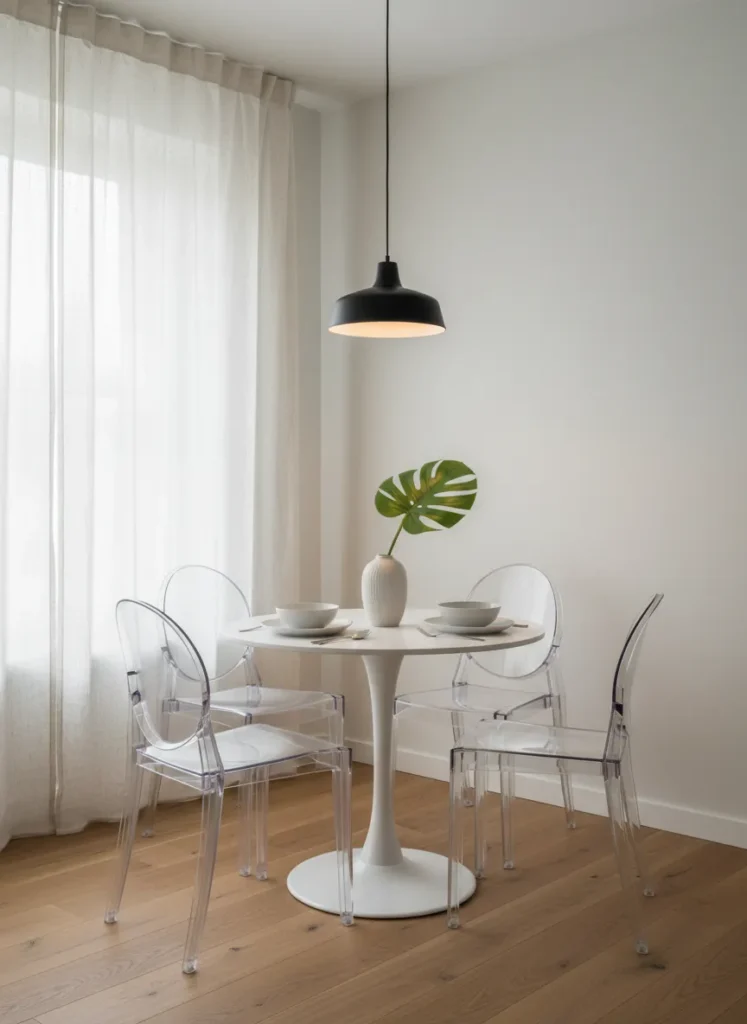
For smaller dining areas, transparent acrylic chairs, often called ghost chairs, are a brilliant solution. They provide full functionality and seating capacity while taking up almost zero visual space, making the room appear open and unobstructed.
These chairs work well with almost any table style, from heavy wood to sleek glass. They add a touch of modern elegance and are perfect for maintaining a light, airy feel in a room that might otherwise feel cramped with heavy furniture.
Select a Concrete Dining Table
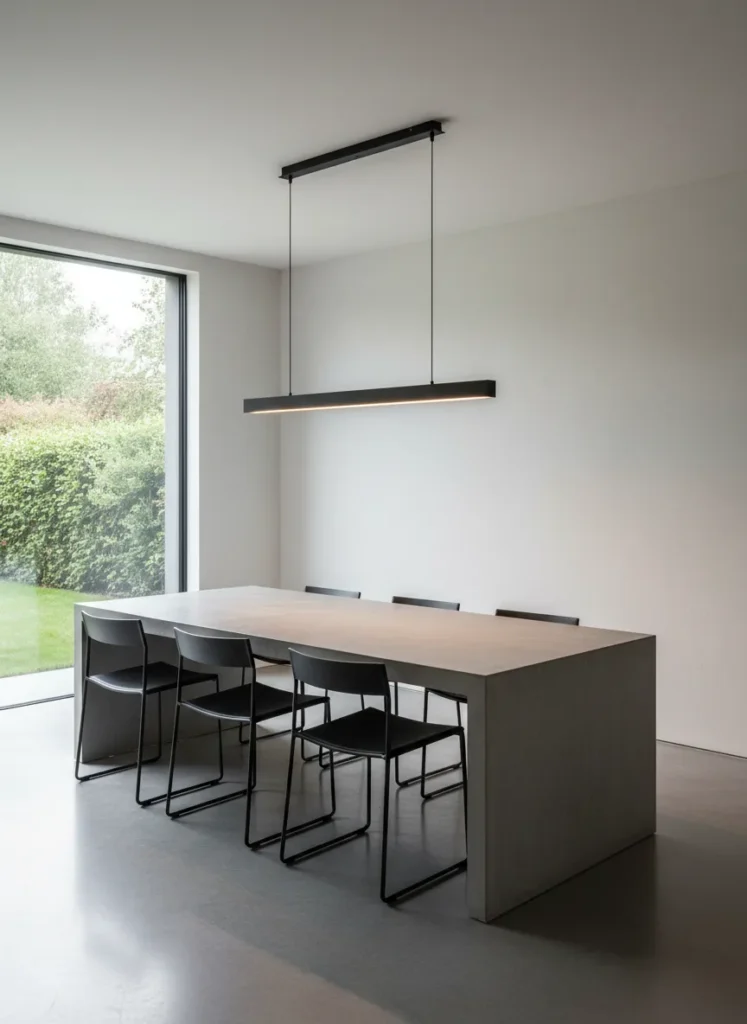
Concrete tables are an excellent choice for modern minimalist homes because of their raw texture and solid presence. The cool grey tones of concrete provide a neutral base that pairs beautifully with black, white, or wood accents.
This material is durable and offers an industrial edge that contrasts well with softer elements like curtains or an area rug. A concrete table acts as a piece of modern sculpture in the center of the room, requiring no tablecloth or centerpiece to look complete.
Blend Japandi Styles
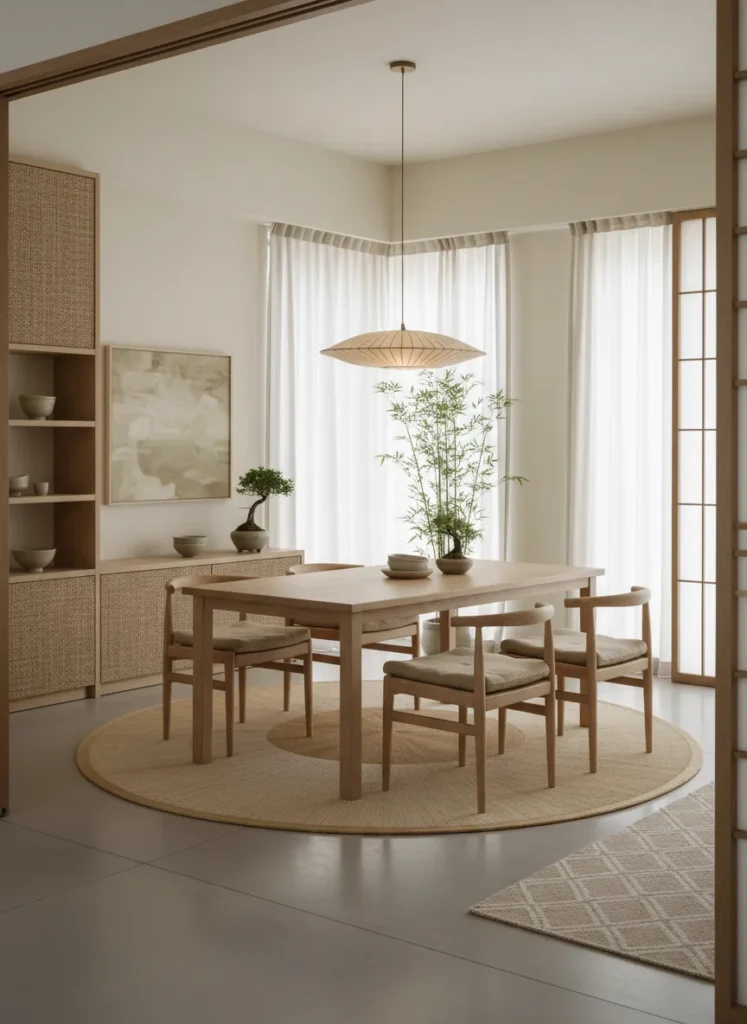
Japandi design creates a perfect hybrid of Japanese rustic minimalism and Scandinavian functionality. This style focuses on low-profile furniture, natural materials like bamboo and rattan, and a calming, muted color palette.
To achieve this look, choose a table that sits slightly lower to the ground and pair it with chairs that feature clean, curved lines. The result is a space that feels incredibly grounded, peaceful, and harmonious, perfect for quiet meals.
Display Large Scale Art
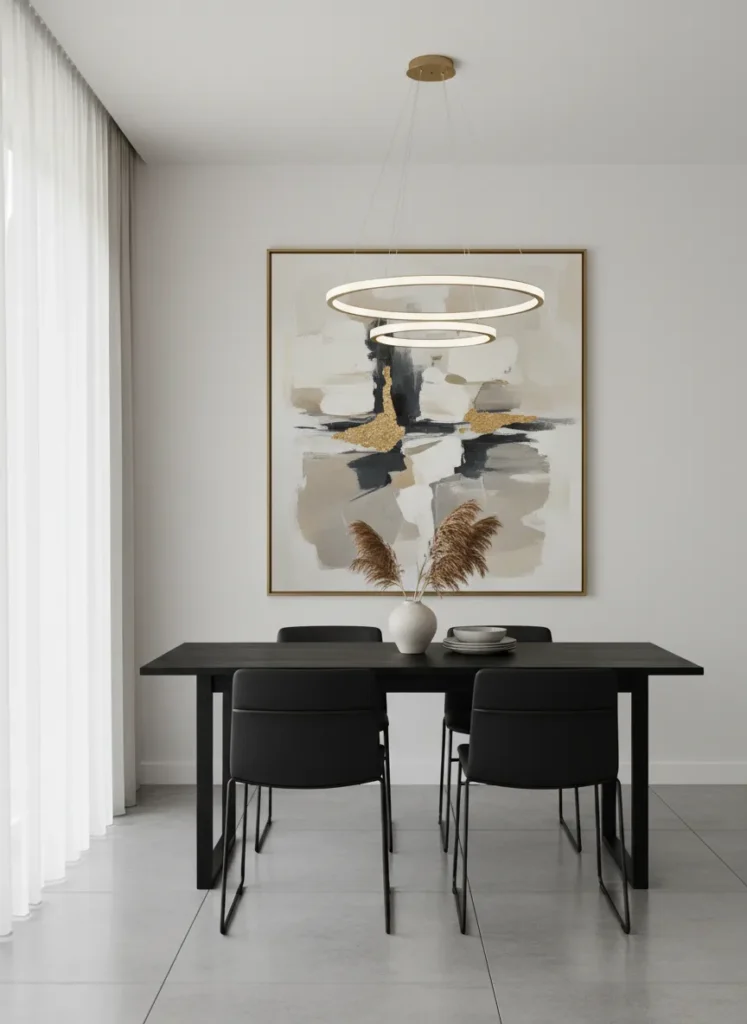
Instead of a gallery wall with many small frames, minimalism favors one large, impactful piece of art. Hanging a massive canvas with abstract shapes or neutral tones creates a dramatic backdrop that defines the dining area without creating visual chaos.
This single focal point eliminates the need for other wall decor, keeping the vertical surfaces clean. It adds personality and emotion to the room while adhering to the rule of quality over quantity.
Choose Bench Seating
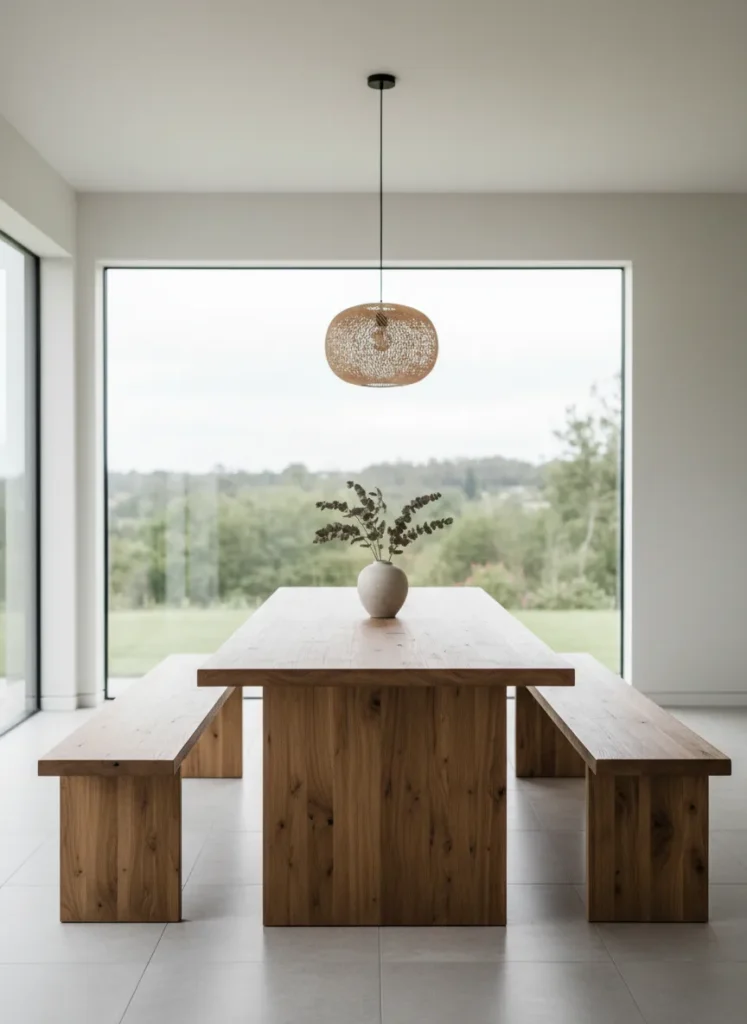
Replacing chairs with long benches is a great way to streamline the look of your dining set. Benches can be tucked completely under the table when not in use, opening up the walkways and making the room feel much larger.
The long, horizontal lines of a bench complement the shape of a rectangular table and reduce the visual clutter of multiple chair backs. This setup is perfect for casual, communal dining and fits perfectly into a pared-back aesthetic.
Focus on Round Pedestal Tables
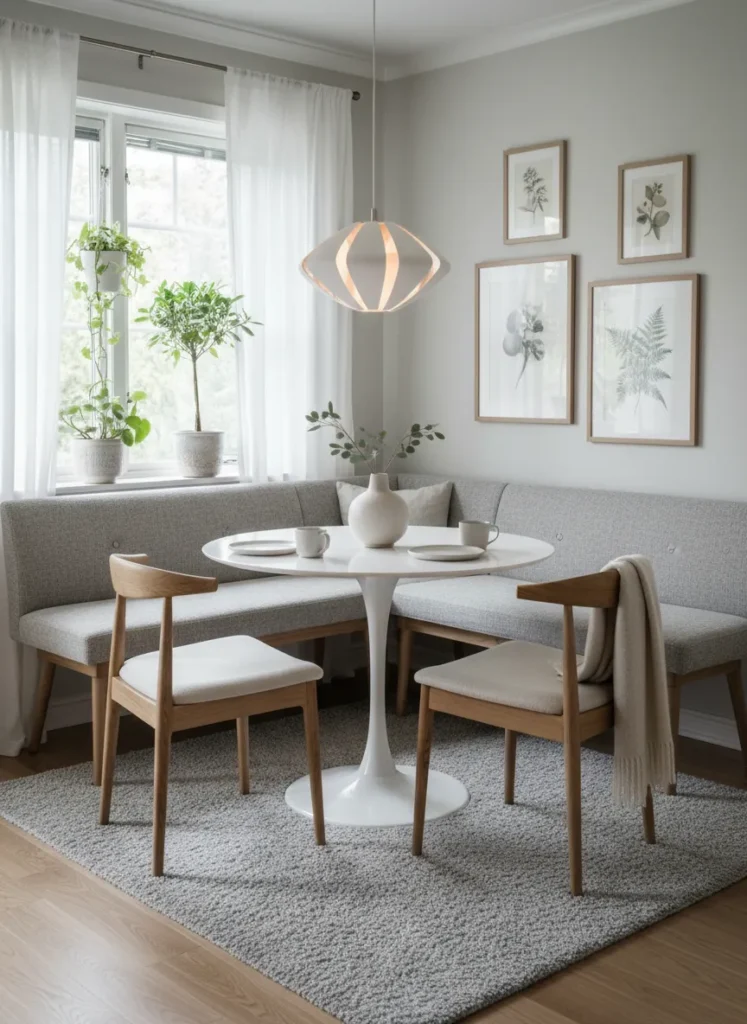
Round tables are ideal for minimalist spaces because they lack sharp corners and improve the flow of movement in the room. A pedestal base eliminates the visual noise of four table legs, creating a sleek silhouette that looks elegant and tidy.
This shape encourages conversation and works exceptionally well in square rooms or open-concept nooks. Pair it with simple chairs that curve around the table to create a compact, cohesive dining circle.
Add Black and White Contrast
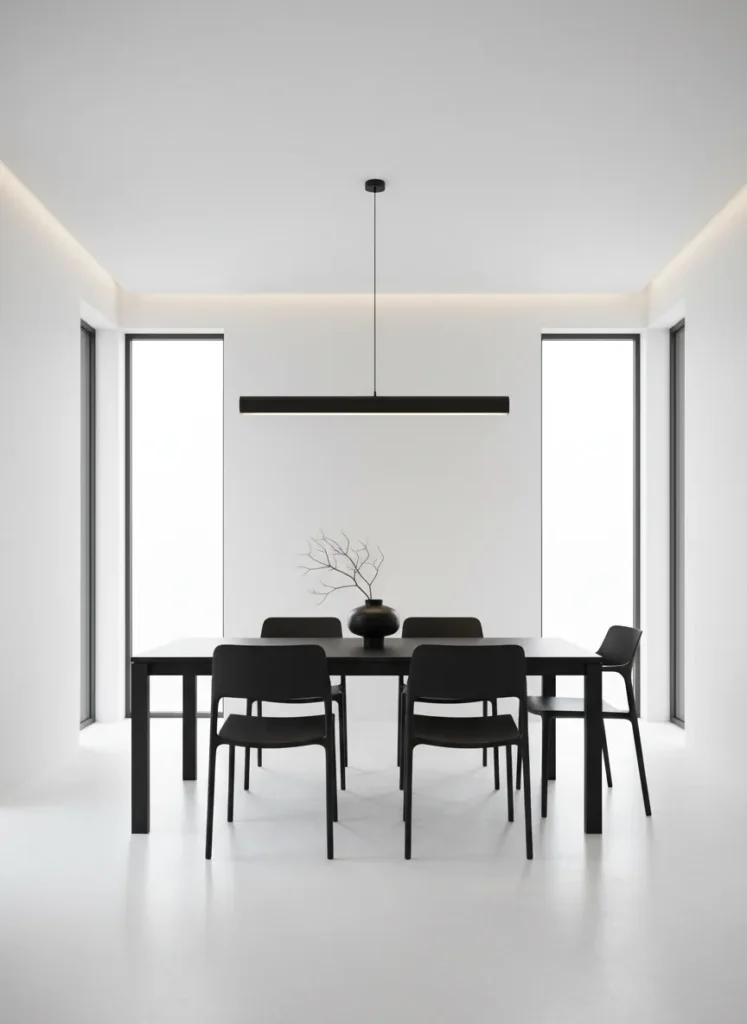
High contrast is a hallmark of modern minimalism, and nothing beats the classic combination of black and white. Using black furniture against white walls creates a sharp, graphic look that feels intentional and bold.
This high-contrast approach means you do not need extra colors or patterns to make the room interesting. The shapes of the furniture become the decoration, standing out clearly against the bright background.
Prioritize Natural Light
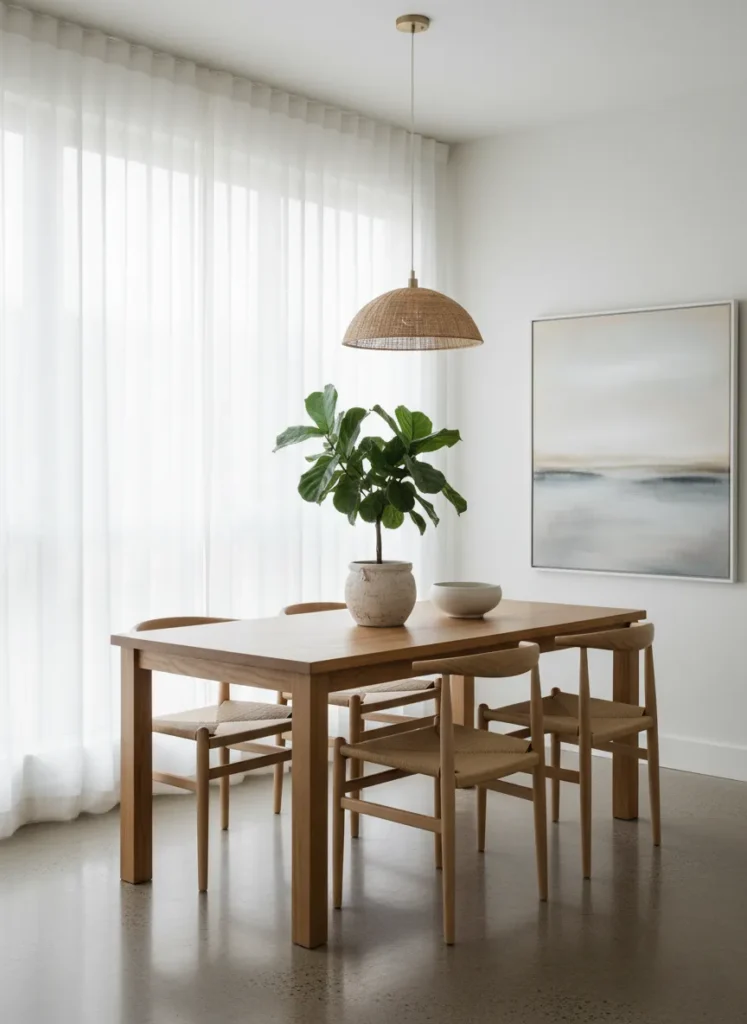
In a room with little decor, natural light becomes a primary design element. Keep window treatments extremely simple, using sheer curtains or roller blinds that disappear when rolled up, to maximize the amount of sunlight entering the space.
Sunlight naturally warms up the room and highlights the textures of your furniture and flooring. A sun-drenched room feels open and welcoming, reducing the need for artificial lighting during the day and connecting the interior with the outdoors.
Decorate with Earthy Ceramics
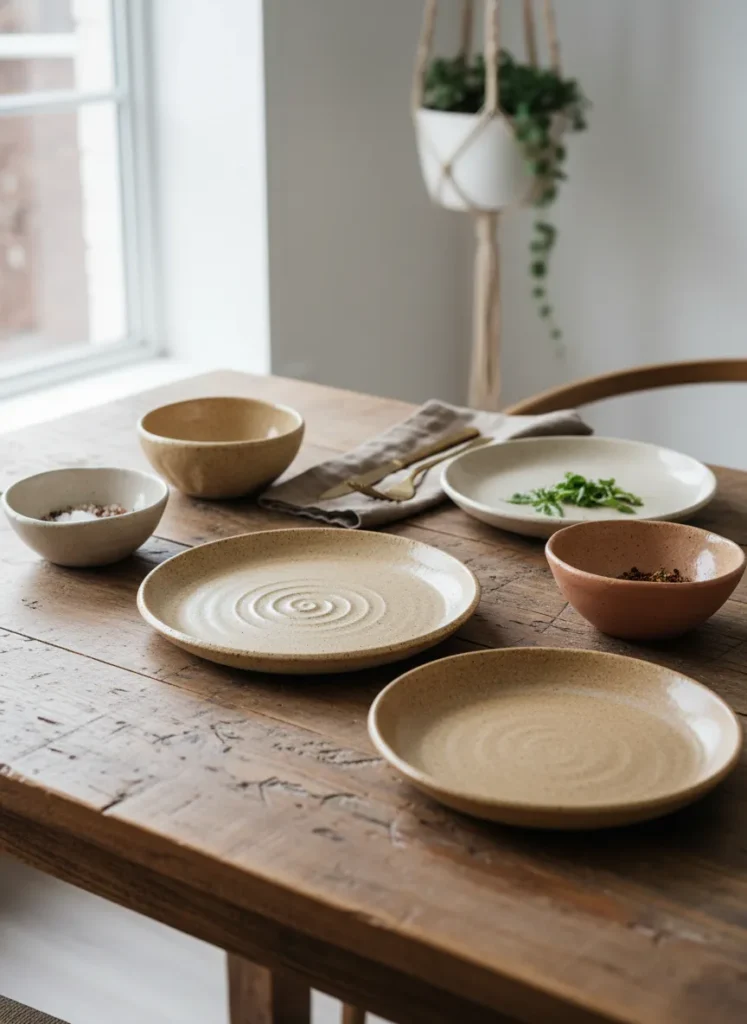
When accessories are kept to a minimum, the items you do use should have texture and character. Handmade ceramics in earthy tones like clay, stone, and sand add a tactile element to the dining experience.
Stacking a few beautiful bowls or placing a single ceramic pitcher on the table serves as functional decor. These organic shapes and colors soften the straight lines of modern furniture and add a human touch to the minimalist design.
Invest in Wishbone Chairs
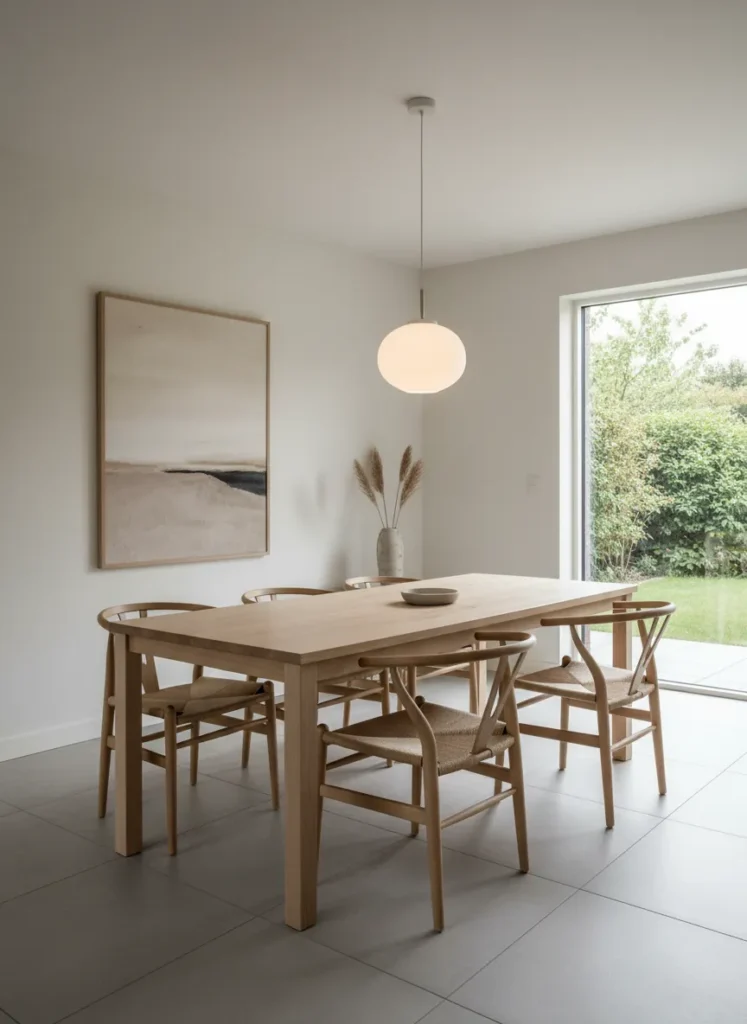
The wishbone chair is a design icon that fits perfectly into minimalist interiors. Its curved back and woven seat offer comfort and style without looking heavy or bulky, blending seamless structure with organic materials.
These chairs have a sculptural quality that looks beautiful from every angle, which is important in an open room. Their light wood frame and natural cord seat bring texture and warmth without disrupting the clean color palette.
Go Rugless
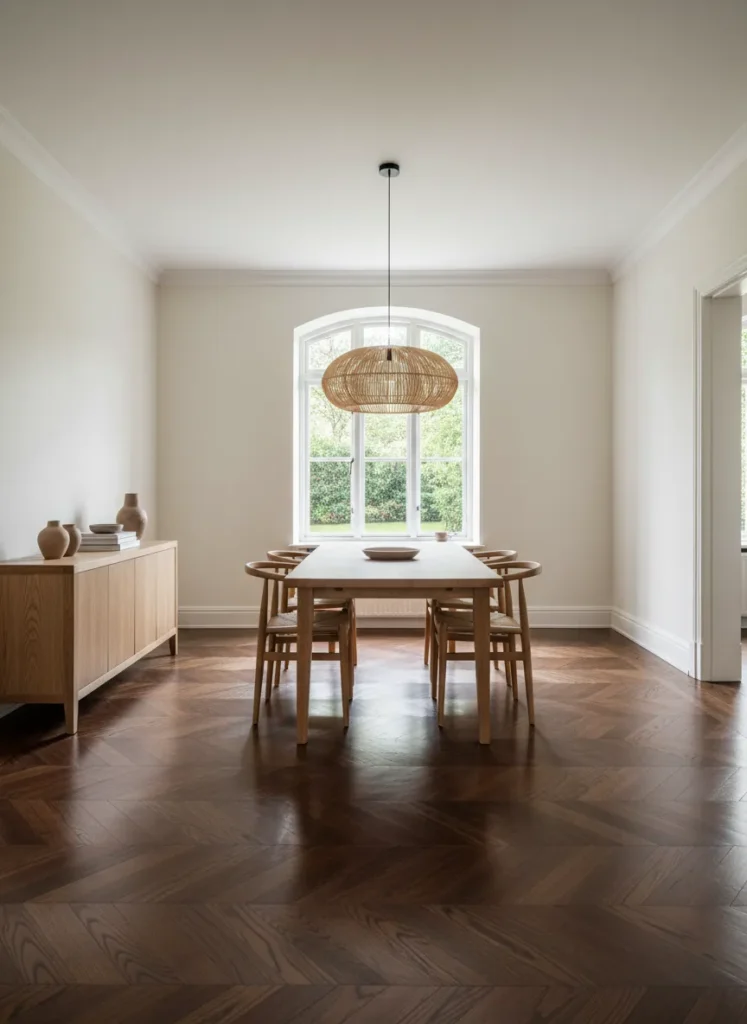
One bold move in minimalist design is to skip the area rug entirely. Exposing the bare floor creates a seamless flow that connects the dining area with the rest of the house, making the footprint feel expansive.
This look works best with beautiful flooring materials like hardwood, polished concrete, or large-format tile. It also makes cleaning much easier and highlights the legs and architecture of your dining table and chairs.
Build Integrated Storage Walls
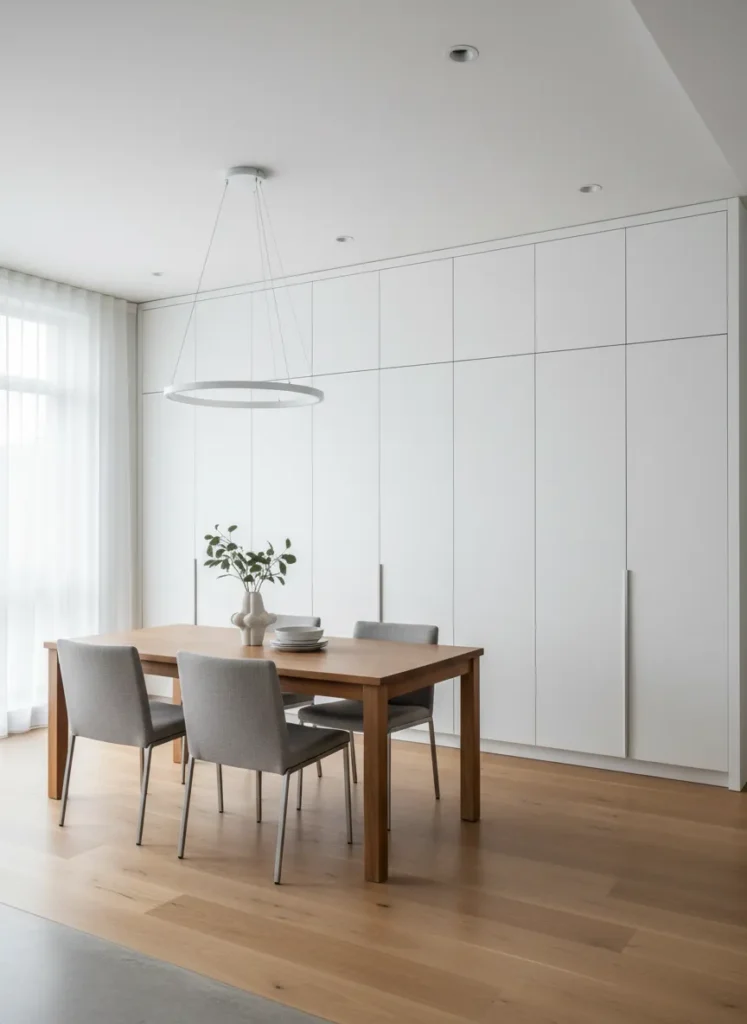
Clutter is the enemy of minimalism, so hiding it away is essential. A floor-to-ceiling wall of built-in cabinets with flat, handle-less doors can store everything from china to linens while looking like a clean architectural wall.
This seamless integration allows you to keep the dining table and surfaces completely clear. By painting the cabinets the same color as the walls, they disappear visually, leaving only the essential furniture in focus.
Select a Marble Top Table
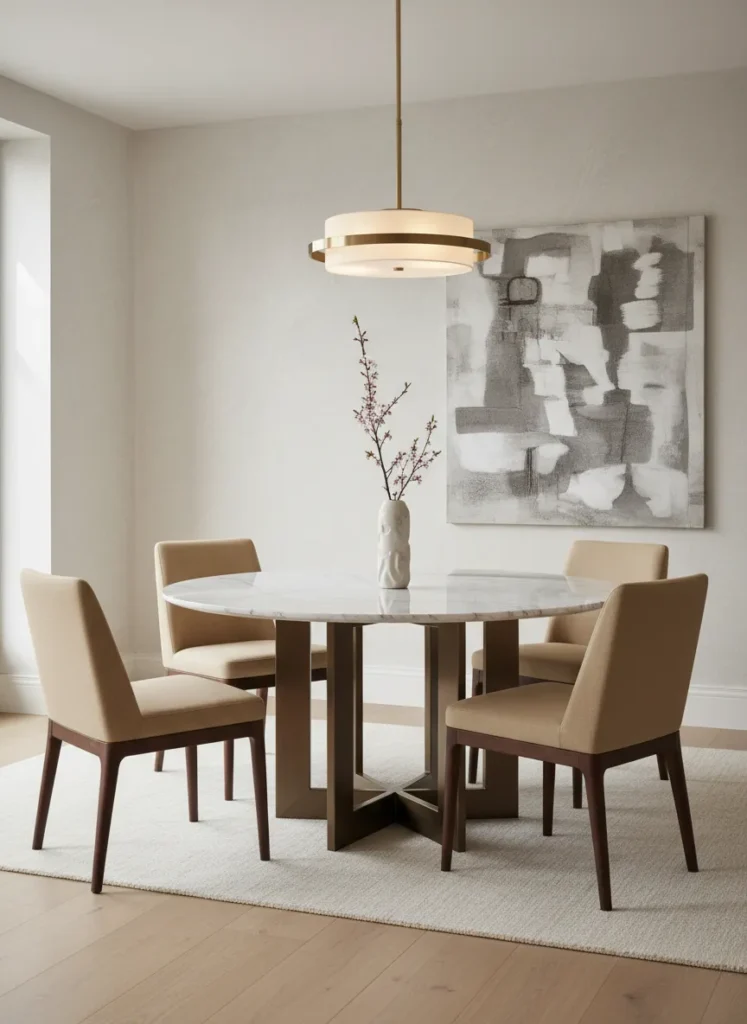
Marble is a material that speaks of luxury and nature simultaneously. A marble-top dining table brings natural pattern and movement into the room through its veining, eliminating the need for tablecloths or runners.
The cool, smooth surface of marble pairs well with simple leather or metal chairs. Because the stone itself is so decorative, you can keep the rest of the room very sparse while still achieving a high-end, finished look.
Style with a Single Vase
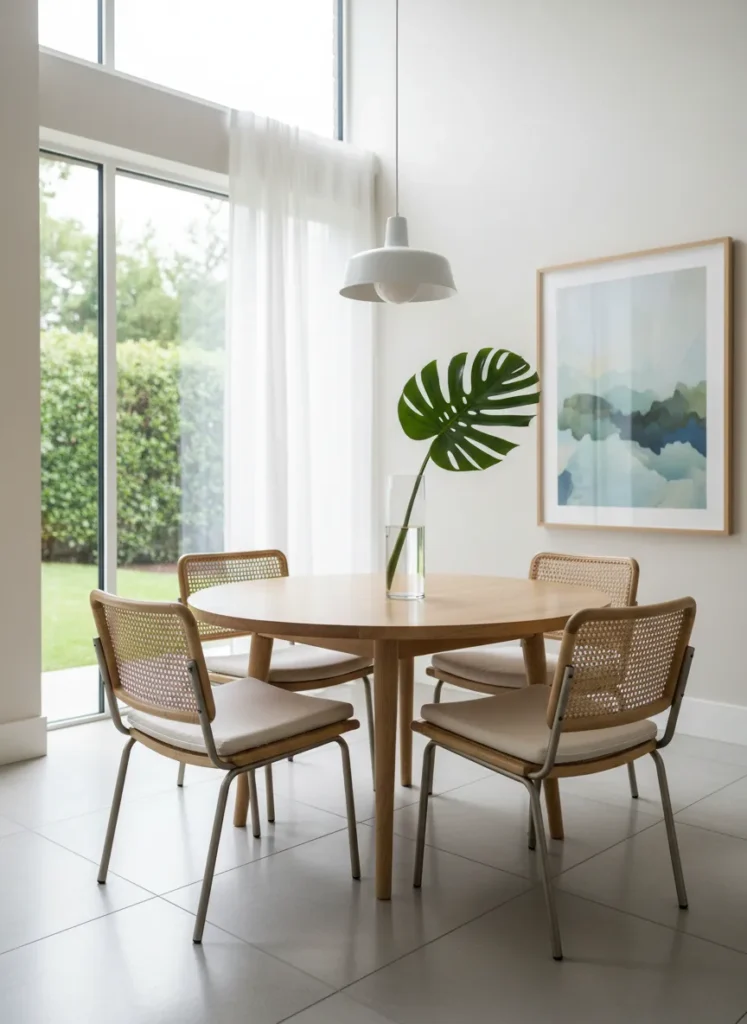
Table centerpieces in minimalist homes should be understated yet impactful. A single, clear glass or ceramic vase holding one type of flower or a sculptural green branch is often all that is needed.
This solitary arrangement draws the eye to the center of the table without blocking views across it. It introduces a splash of life and color that feels fresh and deliberate, rather than a cluttered arrangement of various items.
Layer with Linen Textures
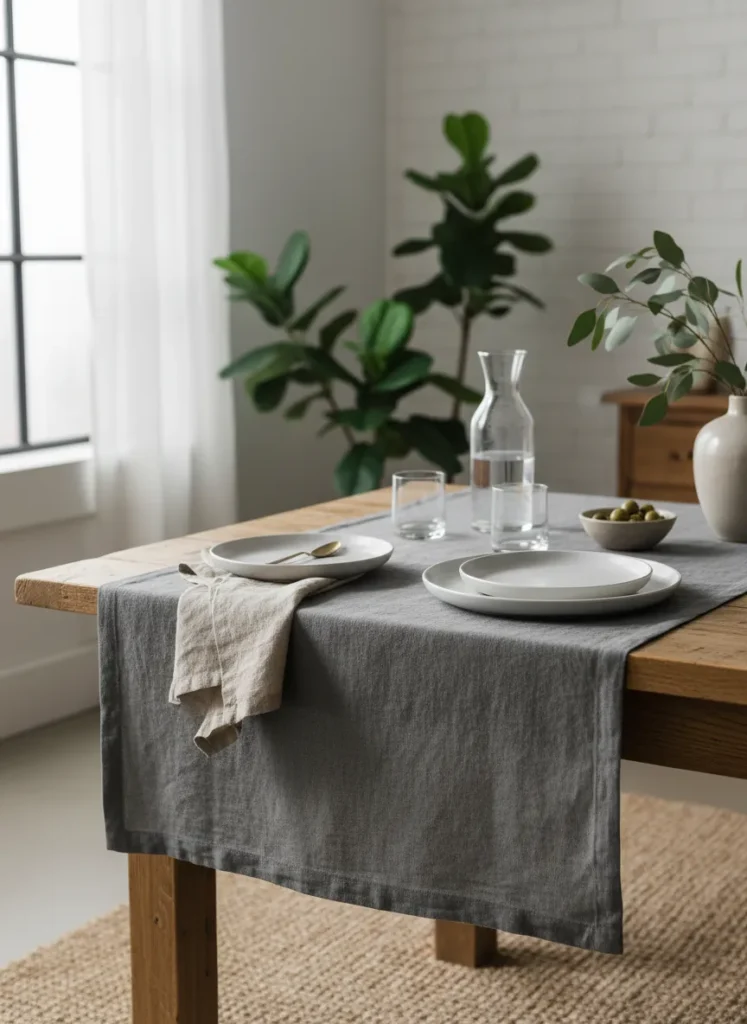
If you prefer a softer look, high-quality linen is the perfect textile for a minimalist dining room. The natural wrinkles and matte finish of washed linen add a relaxed, lived-in elegance that feels cozy but not messy.
Use a neutral-colored tablecloth or just simple linen napkins to soften the acoustics of the room. The texture of the fabric contrasts beautifully with hard surfaces like wood or glass, adding a layer of sensory comfort.
Define with Open Concept Flow
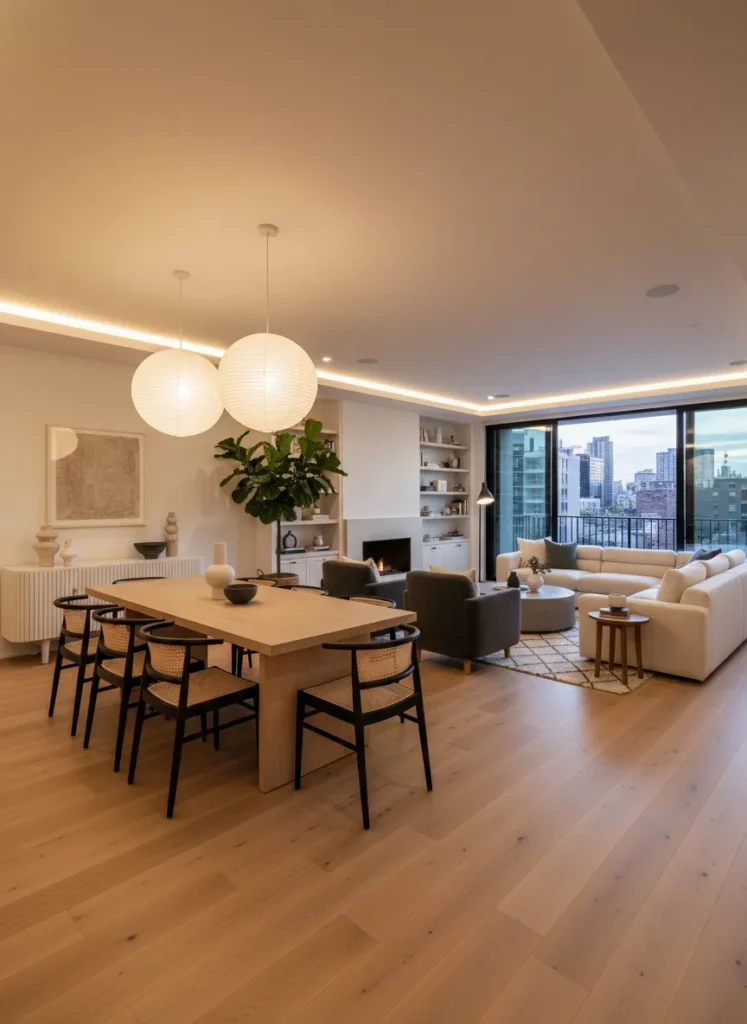
In many modern homes, the dining room is part of a larger open space. Minimalism embraces this by removing physical barriers and allowing the architecture to define the zones naturally.
Instead of using rugs or dividers, let the empty space around the dining set act as the border. This negative space is crucial in minimalism, as it gives the furniture room to breathe and emphasizes the openness of the home.
Use Matte Black Fixtures
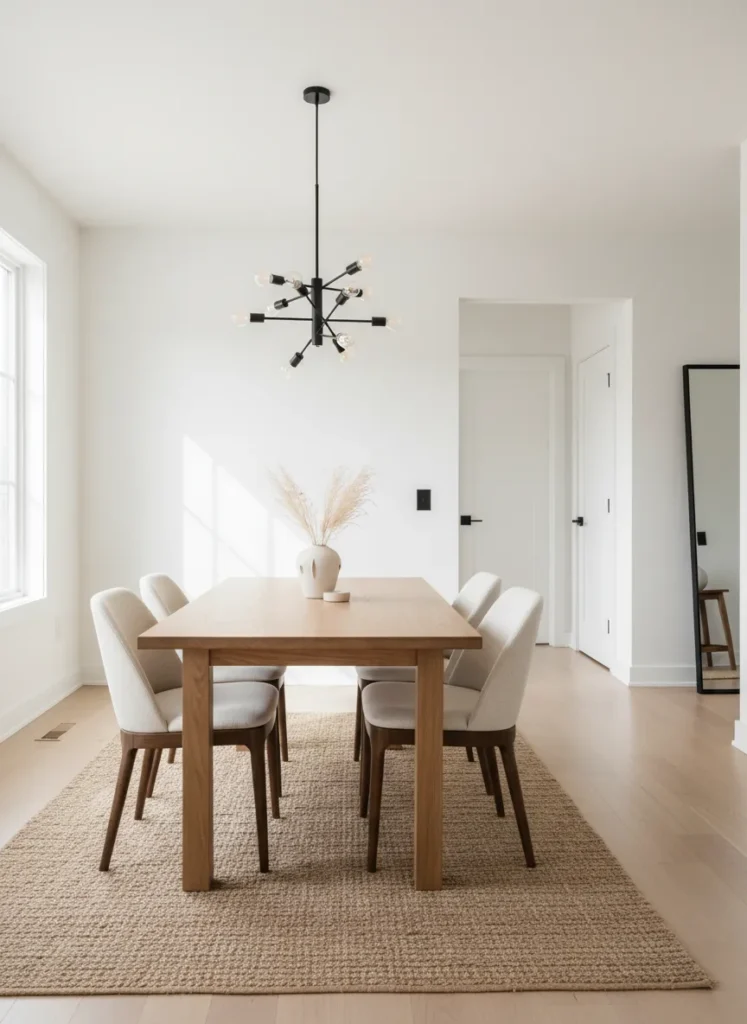
Matte black is a favorite finish for minimalist hardware because it absorbs light rather than reflecting it. Using matte black for light fixtures, door handles, or chair legs adds a modern, graphic punch to a neutral room.
These small accents ground the space and provide a visual anchor for the eye. The lack of shine keeps the look understated and sophisticated, ensuring the metal elements do not compete for attention with other features.
Feature a Large Indoor Tree
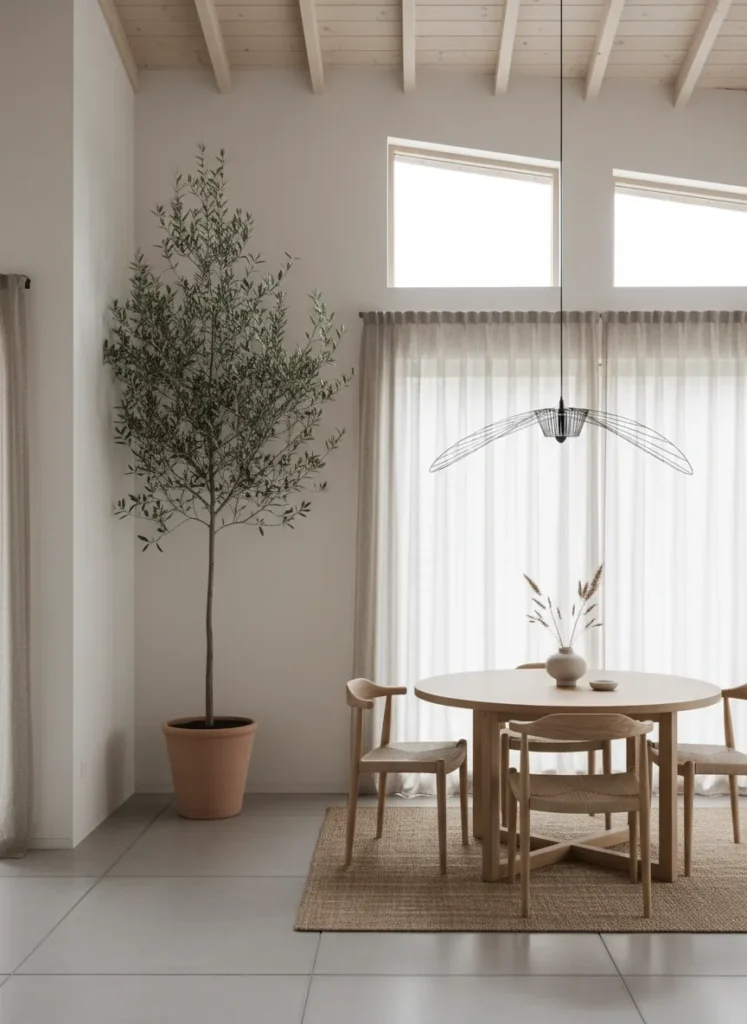
Bringing a large indoor tree into the dining room is a fantastic way to fill an empty corner without adding clutter. A tall olive tree or fiddle leaf fig adds vertical interest and a vibrant pop of green.
The organic shape of the branches contrasts with the rigid lines of the table and walls. This single natural element breathes life into the space, making the minimalist environment feel healthy, fresh, and connected to nature.
Conclusion
Adopting a minimalist approach to your dining room does not mean sacrificing style or comfort; rather, it elevates the dining experience by removing distractions. By implementing these ideas, from streamlined furniture to purposeful lighting, you can create a home that feels open, calm, and effortlessly chic. A clutter-free space invites you to slow down and truly enjoy your meals and the company you share them with.