
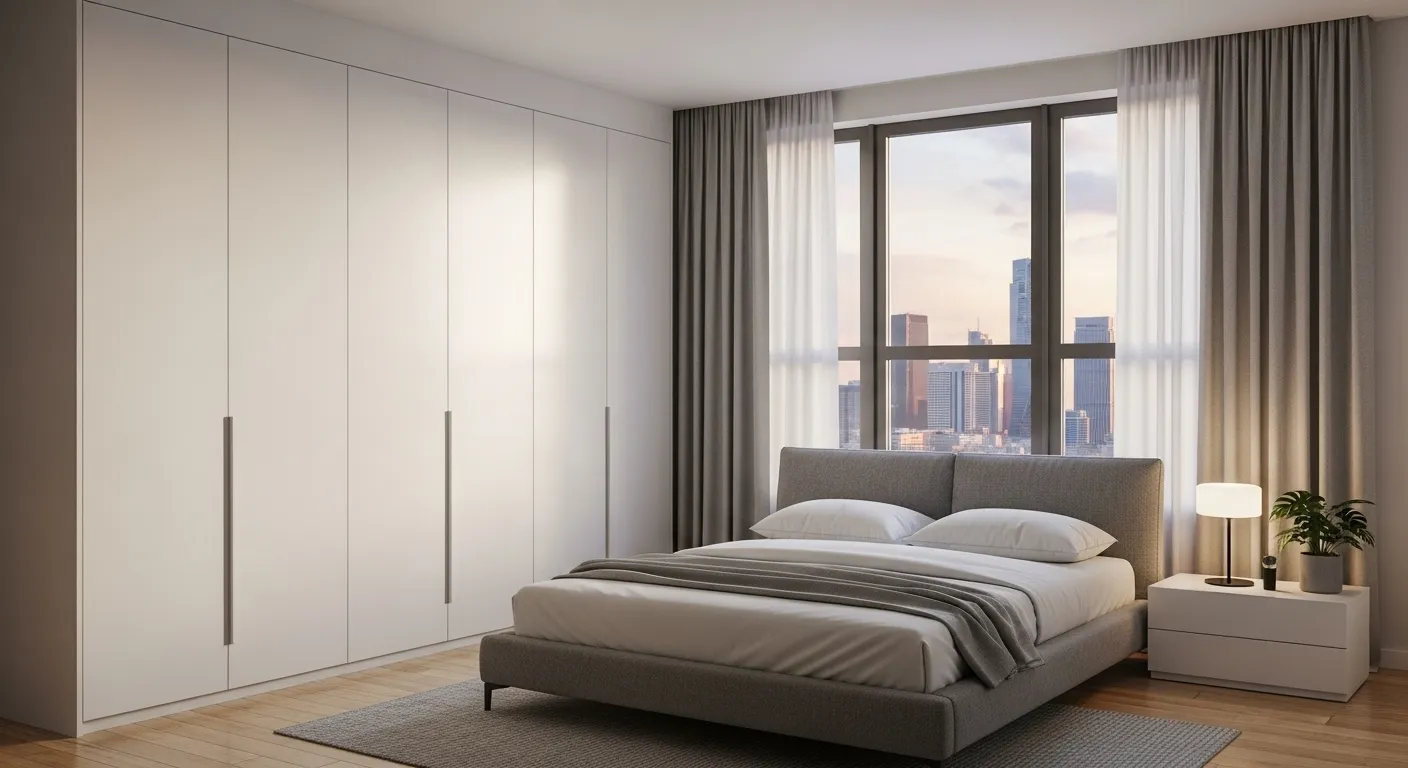
Creating a sanctuary is easier when you explore minimalist bedroom ideas that prioritize peace and function. By stripping away the unnecessary, you allow the architecture and select furniture pieces to shine, resulting in a space that feels open, airy, and incredibly relaxing. This style is not about having nothing, but rather about making sure everything in the room serves a purpose or brings joy.
Low Profile Platform Beds
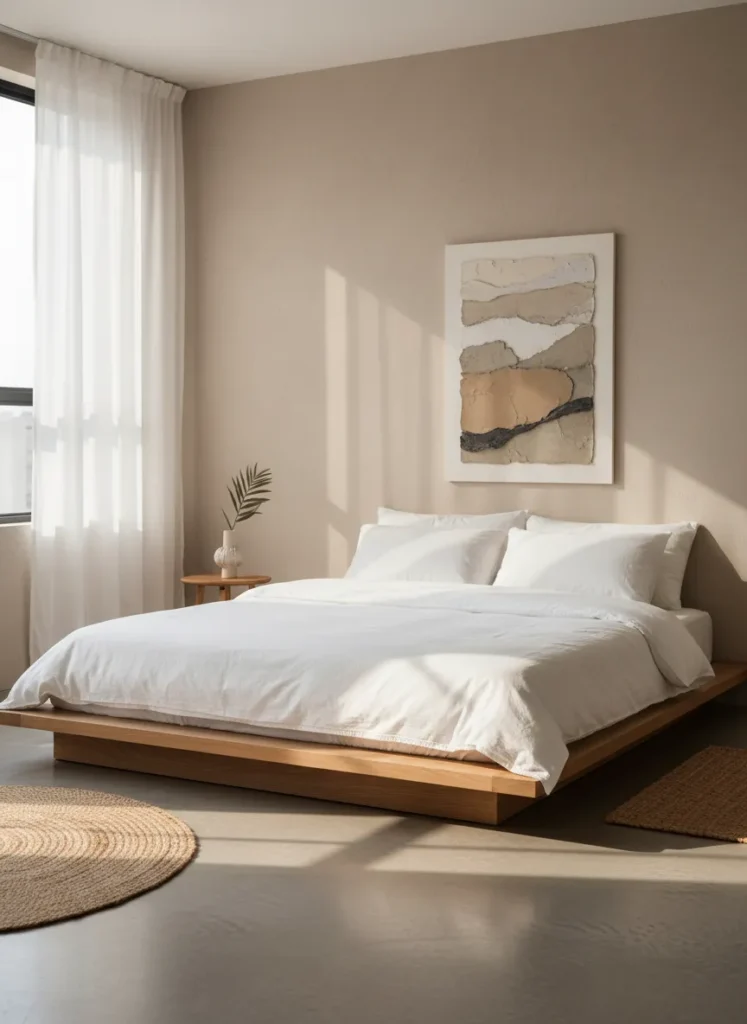
A low profile platform bed is the cornerstone of many minimalist designs because it physically and visually grounds the room. By keeping the bed closer to the floor, you create a sense of vertical space that makes even small bedrooms feel larger and more open. This design choice draws inspiration from Japanese interiors where being closer to the earth promotes a feeling of stability and calm.
The simple lines of a platform frame eliminate the need for a bulky box spring or an elaborate headboard. It encourages you to focus on the quality of your mattress and bedding rather than ornate details. This approach perfectly aligns with modern living, where the emphasis is on comfort and simplicity rather than excess decoration.
Monochromatic White Palette

Using a monochromatic white palette is one of the most effective minimalist bedroom ideas for achieving instant serenity. White reflects natural light, making the room feel airy, clean, and spacious throughout the day. It acts as a blank canvas that silences visual noise, allowing your mind to rest the moment you step into the space.
To prevent the room from feeling sterile or cold, focus on layering different textures within the same color family. Combine cotton sheets with a chunky knit throw and a plush rug to add depth and warmth. This technique keeps the visual interest high without breaking the calming rule of a single color scheme.
Floating Nightstands
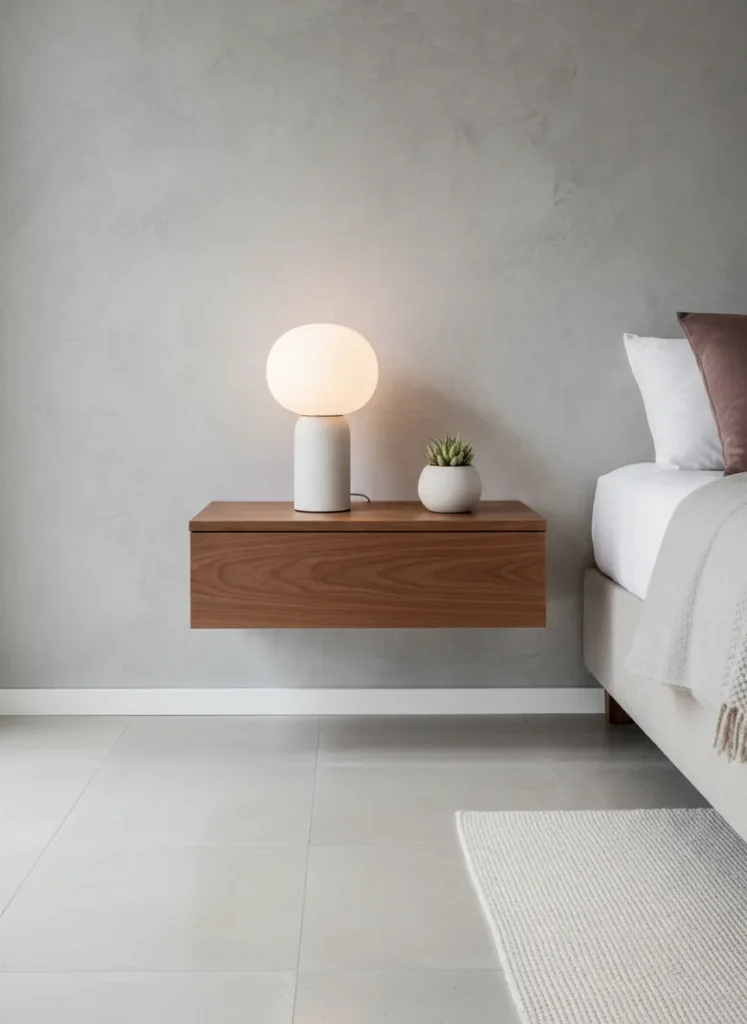
Floating nightstands are a brilliant solution for maintaining a clutter-free look in a modern bedroom. By mounting your bedside tables to the wall, you free up valuable floor space, which creates an uninterrupted visual flow. This small detail significantly contributes to the open feeling that defines minimalist interiors.
Beyond aesthetics, floating furniture makes cleaning much easier since there are no legs to vacuum around. These units usually come with a simple drawer or shelf, encouraging you to keep only the absolute essentials by your bedside. This limitation helps prevent the accumulation of random receipts and trinkets that often clutter traditional nightstands.
Floor-to-Ceiling Wardrobes
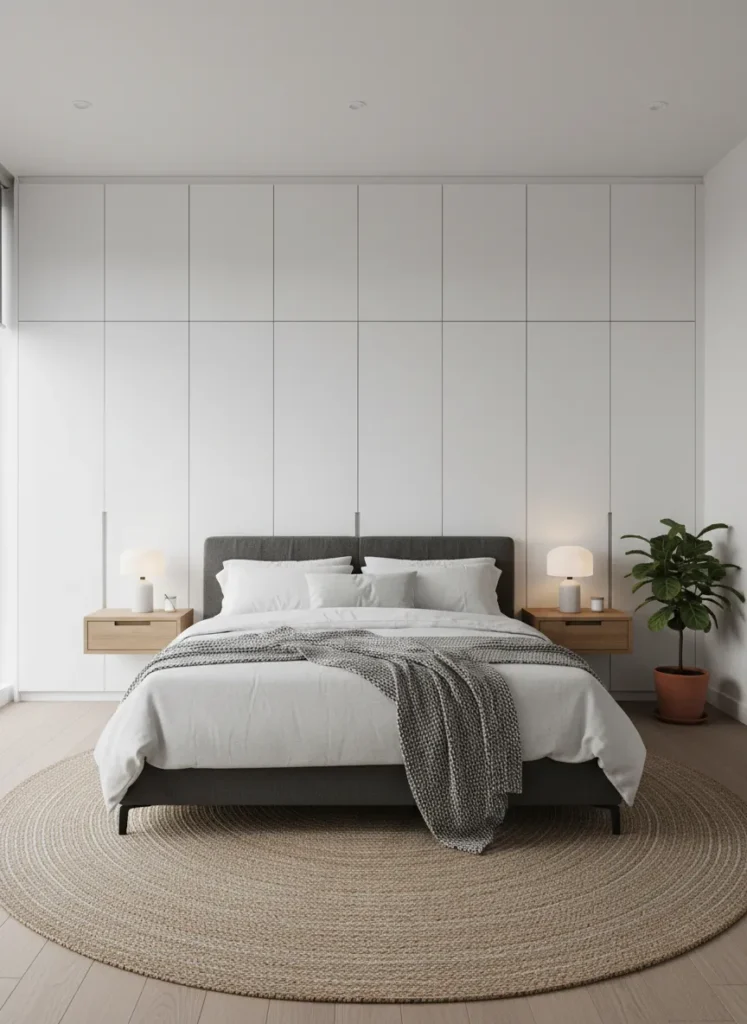
Storage is vital in a minimalist room because clutter is the enemy of calm. Floor-to-ceiling wardrobes that span an entire wall act as a hidden storage powerhouse. When designed with flat, handleless doors that match the wall color, these wardrobes virtually disappear, maintaining the sleek lines of the room.
This design trick eliminates the visual weight of standalone dressers and armoires. Inside, you can organize clothing, shoes, and linens efficiently, ensuring that everything has a designated place out of sight. The result is a bedroom that always looks tidy and organized, promoting a restful state of mind.
Warm Wood Textures

While minimalism often leans towards cool tones, incorporating warm wood textures is essential for making a bedroom feel inviting. Light oak, walnut, or birch accents bring an organic element into the space that softens the starkness of plain walls. The natural grain patterns serve as subtle artwork provided by nature itself.
You can introduce wood through a bed frame, a simple bench at the foot of the bed, or even exposed ceiling beams. These natural elements connect the indoors with the outdoors, fostering a grounding atmosphere. Balancing white space with wood tones creates a harmonious environment that feels both modern and cozy.
Statement Art Piece
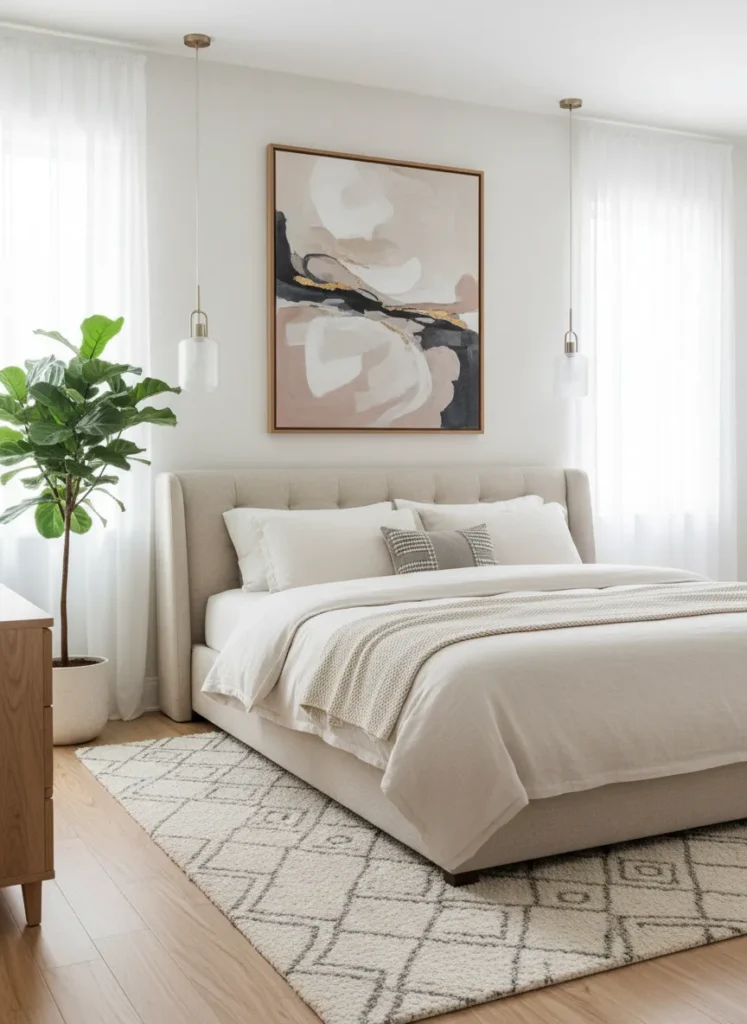
Instead of a cluttered gallery wall, minimalist bedroom ideas often feature a single, large statement art piece. Placing one significant painting or photograph above the bed creates a clear focal point that anchors the room. This approach prevents the eye from darting around to multiple small items, which can feel chaotic.
Choose art that reflects the color palette of the room or offers a soothing abstract design. The goal is to complement the space rather than overwhelm it with loud colors or busy patterns. A single large frame commands attention and adds personality without sacrificing the clean, uncluttered ethos of the style.
Airy Linen Bedding

Linen bedding is the perfect textile choice for a minimalist bedroom because of its naturally relaxed and matte appearance. Unlike crisp cotton that requires ironing to look perfect, linen looks beautiful with a bit of a rumpled texture. This adds a layer of ‘perfect imperfection’ that makes the room feel lived-in and comfortable.
The tactile quality of linen adds necessary interest to a room that lacks heavy decoration. Sticking to neutral tones like soft gray, oatmeal, or muted sage enhances the calming vibe. It invites you to dive into bed and relax, proving that minimalism is just as much about physical comfort as it is about visual order.
Industrial Concrete Accents
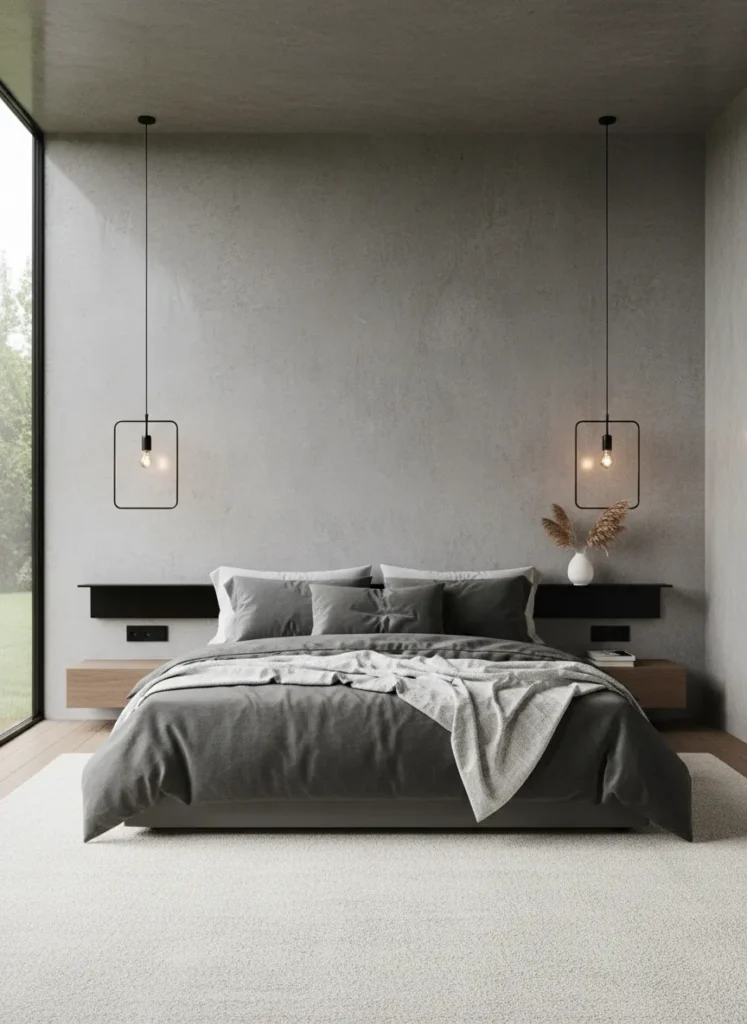
For a more edgy take on minimalism, consider incorporating concrete elements into your bedroom design. A polished concrete wall or floor adds a raw, industrial texture that contrasts beautifully with soft bedding. The gray tones of concrete provide a neutral backdrop that is sophisticated and durable.
If a full wall feels too committed, you can introduce this material through smaller accessories like concrete planters or bedside lamps. The cool, matte finish of the material complements the sleek lines of modern furniture. It adds a sense of urban modernity while keeping the color palette strictly neutral and calm.
Sculptural Pendant Lighting
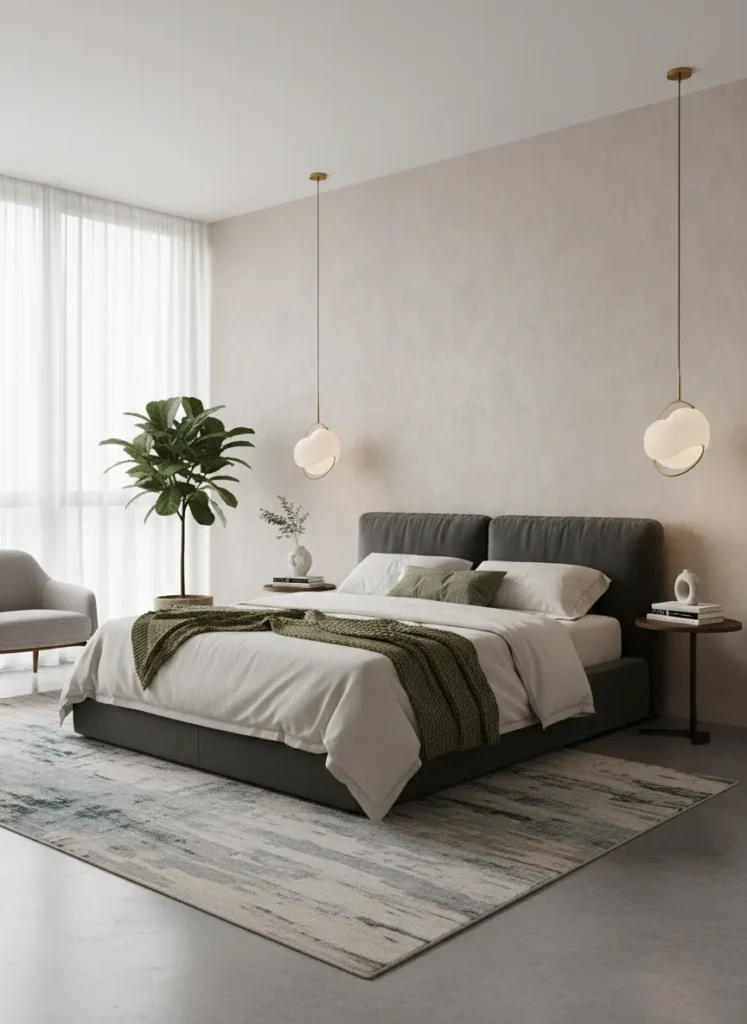
Lighting in a minimalist room should be both functional and beautiful, often doubling as a piece of art. Hanging sculptural pendant lights on either side of the bed is a smart way to save space on your nightstands. These fixtures draw the eye upward, emphasizing the height of the room.
Choose fixtures with simple geometric shapes or organic curves that mimic the lines found elsewhere in the room. The lack of cords cluttering the bedside table helps maintain a clean look. Warm bulbs are essential here to ensure the light is soft and relaxing, perfect for winding down in the evening.
Large Leaning Mirrors
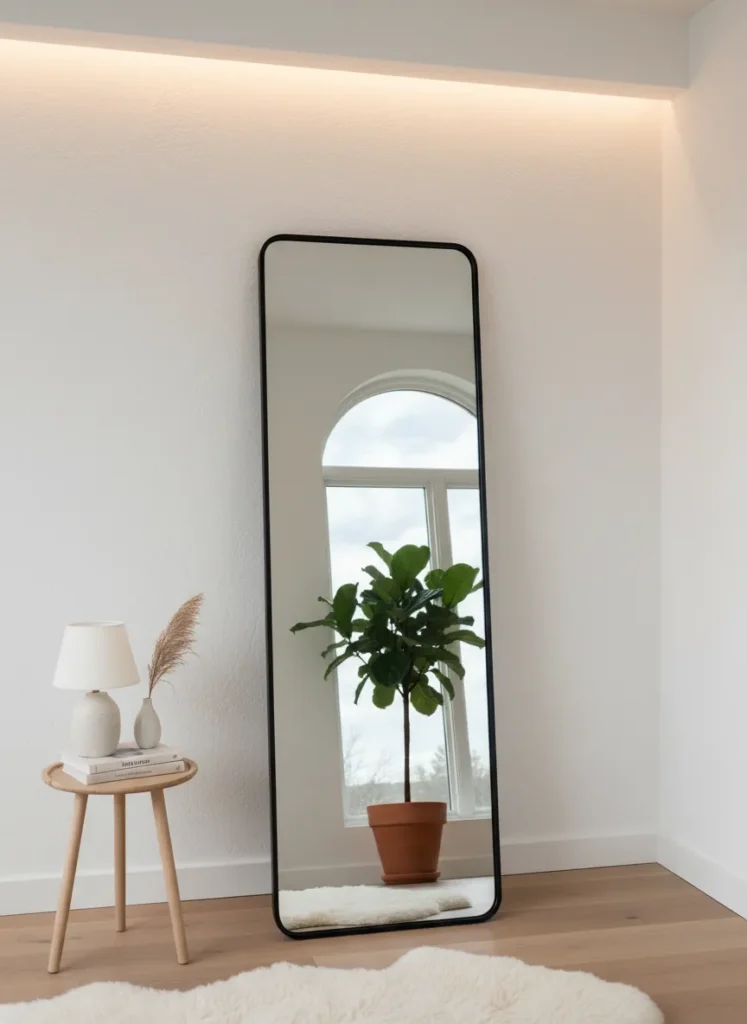
A large mirror leaning against the wall is a classic trick to enhance light and space in a minimalist bedroom. The reflection bounces natural light into darker corners, making the room feel twice as big and much brighter. It serves a functional purpose while acting as a sleek decorative element.
Select a mirror with a very thin frame or no frame at all to keep the look seamless. Avoid ornate, heavy frames that distract from the reflection itself. Positioning the mirror opposite a window maximizes the view and brings the outside world into your sanctuary, reinforcing the connection to nature.
Indoor Greenery
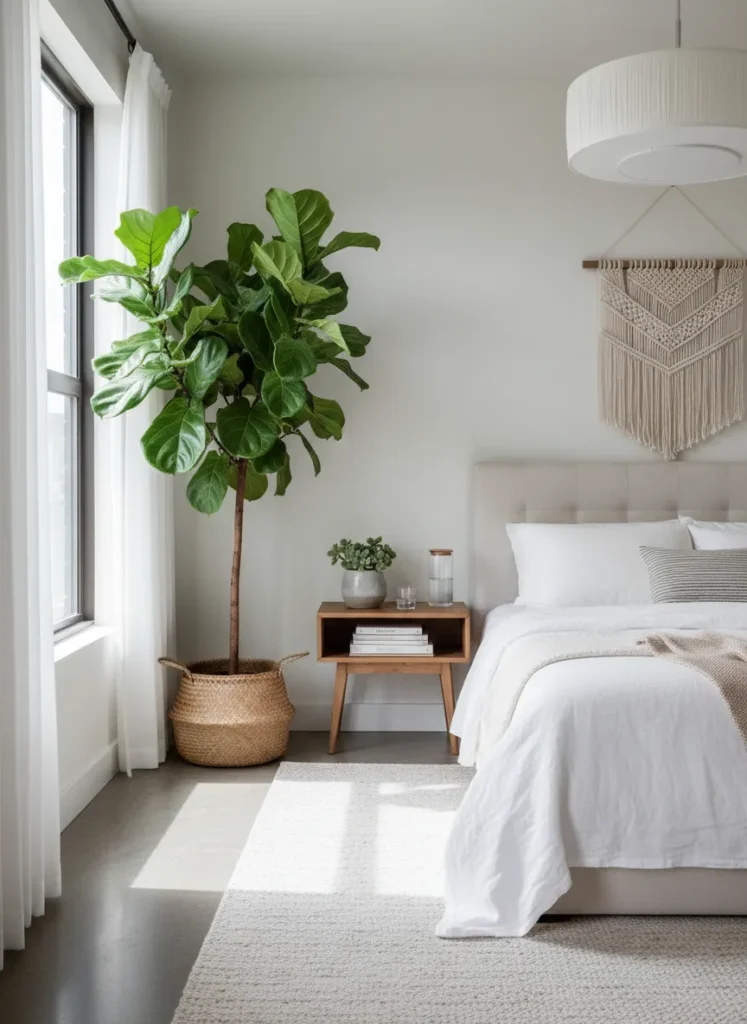
Plants are the only accessory you truly need to bring life to a minimalist space without adding clutter. The vibrant green color pops against neutral walls and wood furniture, adding energy and freshness. A large floor plant can fill an empty corner perfectly, serving as living sculpture.
Beyond their visual appeal, plants improve air quality and boost mood, which is essential for a restful bedroom environment. Stick to simple planters in white, terracotta, or concrete to match the room’s aesthetic. Even a single small succulent on a windowsill can make the room feel more organic and welcoming.
Matte Black Hardware
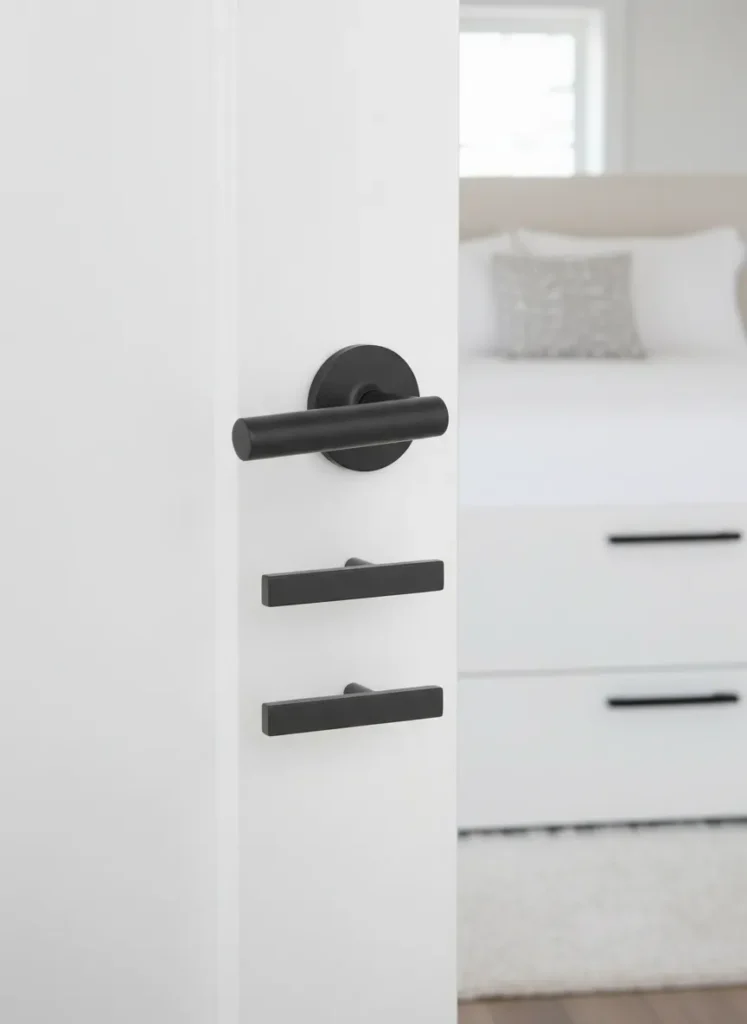
Matte black accents act as punctuation marks in a light and airy minimalist room. Swapping out standard shiny brass or chrome hardware for matte black handles, light fixtures, or curtain rods creates a modern, high-contrast look. This sharp definition helps to ground the space and prevents it from looking washed out.
The key is to use black sparingly so it doesn’t overpower the serene atmosphere. Thin black frames on art or a slender black chair can tie the look together. This high-contrast approach creates a graphic, sophisticated style that feels intentional and very contemporary.
Textured Area Rugs
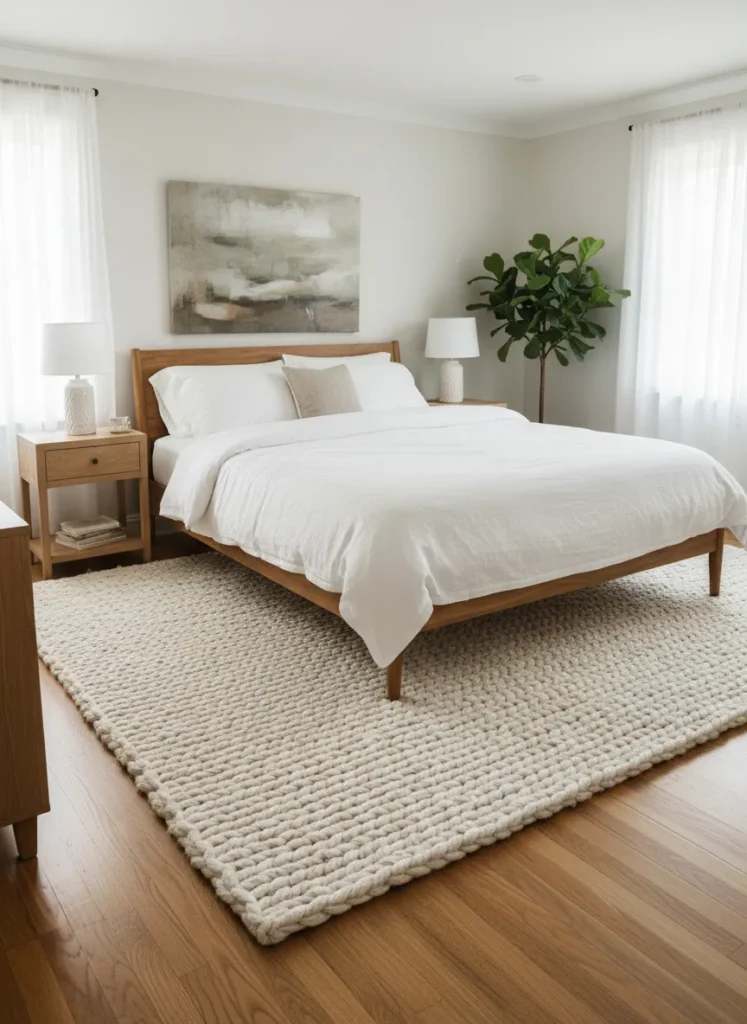
In a room with few furniture pieces, a large area rug anchors the space and adds much-needed warmth. Since minimalist bedroom ideas often involve hard flooring like wood or concrete, a rug provides a soft landing for your feet in the morning. Choose a rug with a rich texture, such as jute, wool, or a high-pile shag.
Stick to a solid color or a very subtle geometric pattern to avoid visual clutter on the floor. The texture of the rug adds a layer of coziness that makes the room feel complete. It also helps to dampen sound, contributing to the quiet, hush-like atmosphere you want in a sleeping area.
Window Seat Nook
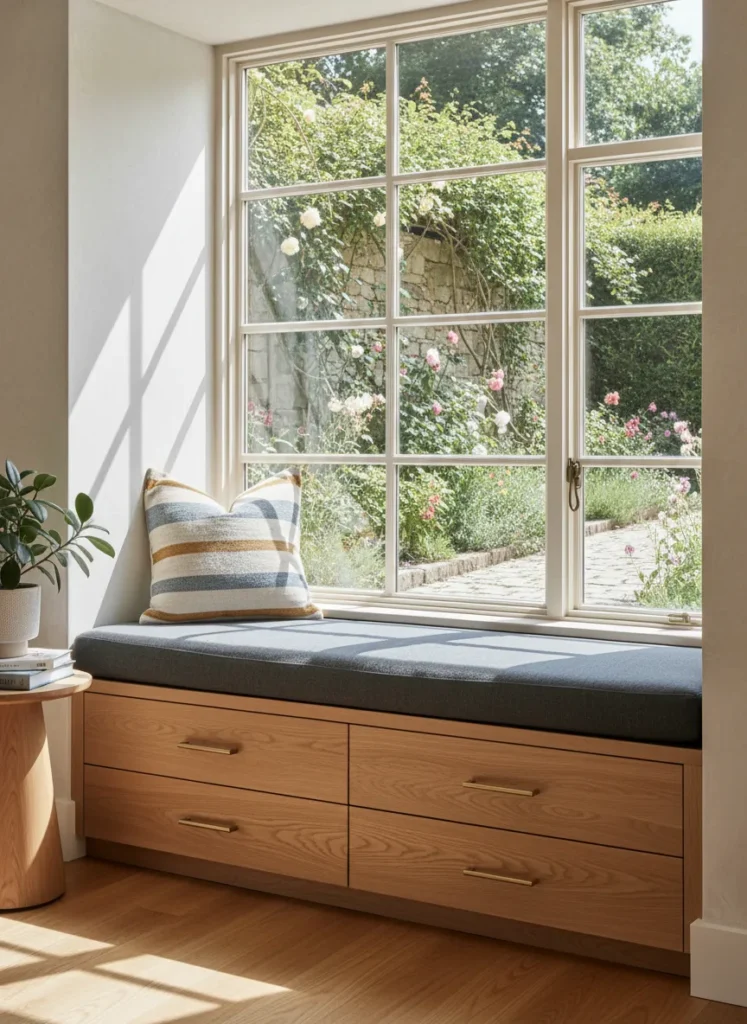
Maximizing the utility of every architectural feature is a hallmark of minimalist design. Transforming a window bay into a seating nook creates a cozy spot for reading or daydreaming without requiring extra bulky furniture. Simple cushions and a throw blanket are all you need to style this area.
Often, the space beneath a window seat can be utilized for hidden storage, further reducing clutter in the main room. This efficient use of space celebrates the luxury of natural light and provides a designated zone for quiet contemplation. It turns a standard window into a functional and beautiful destination within the room.
Symmetrical Layouts
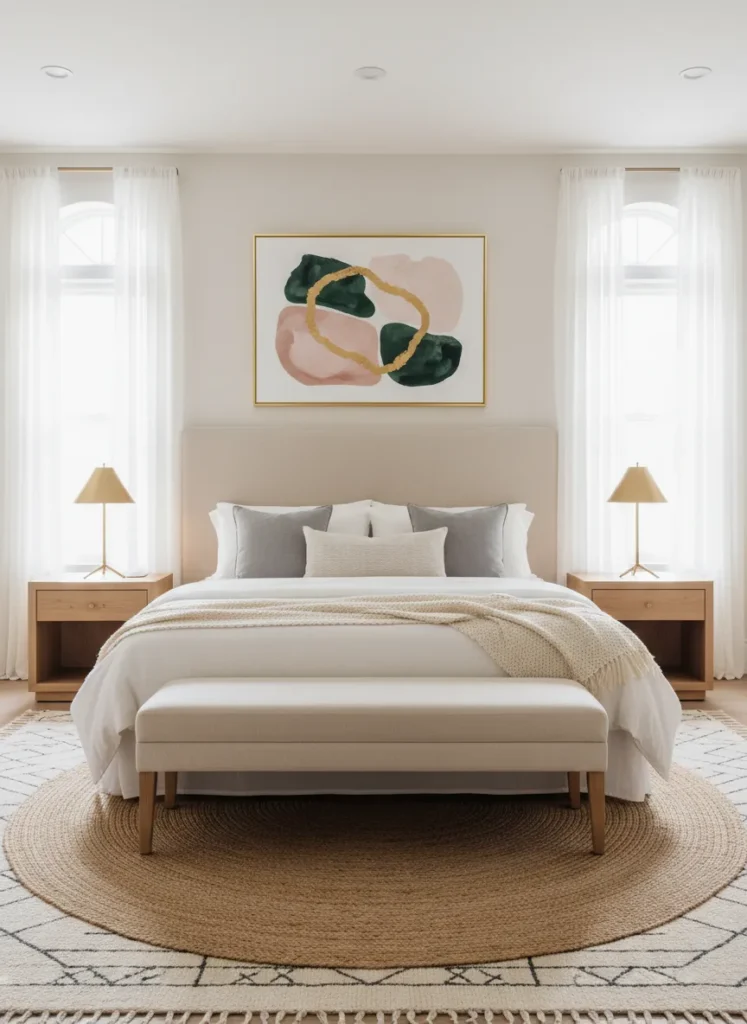
Symmetry is naturally pleasing to the human eye and creates an immediate sense of order and balance. arranging your bedroom furniture symmetrically is a simple way to achieve a minimalist look that feels resolved and calm. Place the bed in the center of the main wall with matching nightstands and lamps on either side.
This mirror-image layout reduces visual tension because the brain can process the room layout quickly and easily. It eliminates the feeling of chaos that comes from a haphazard arrangement. Symmetry provides a solid framework that makes the room feel stable, organized, and ready for rest.
Curved Furniture Lines
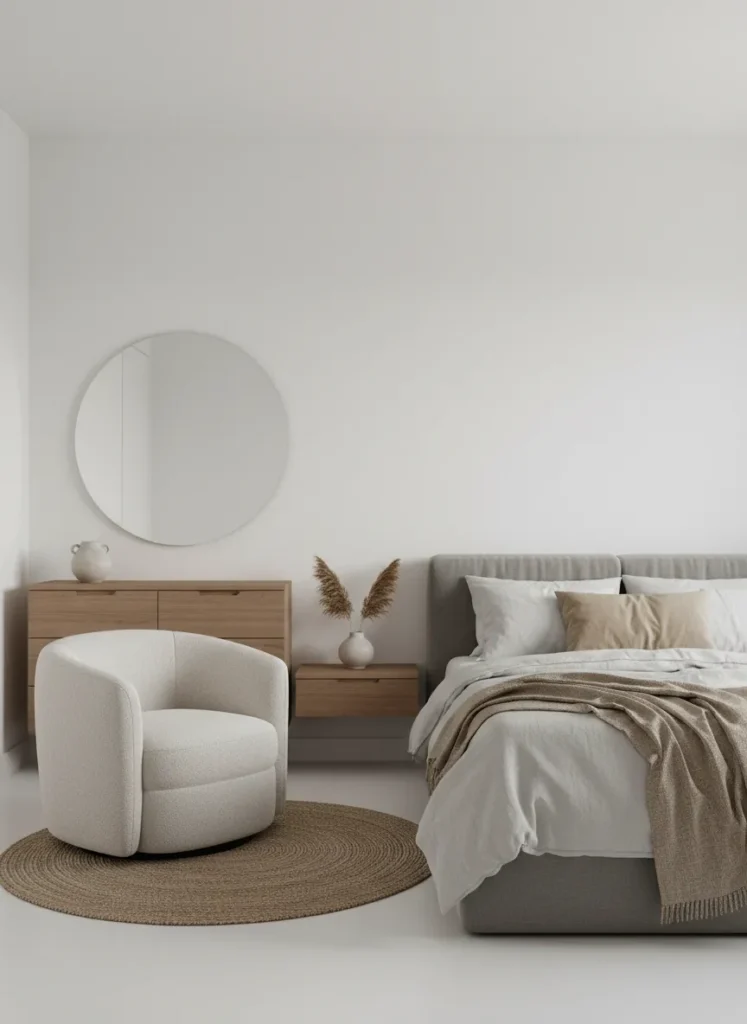
To soften the sometimes rigid look of minimalism, introduce furniture with curved lines and organic shapes. A rounded armchair, a circular mirror, or an oval rug can break up the straight lines of walls and rectangular beds. These curves add a gentle flow to the room that feels more natural and less severe.
Curved forms are inherently more relaxing and welcoming than sharp corners. They guide the eye smoothly around the room, enhancing the sense of spaciousness. Incorporating these softer shapes keeps the modern aesthetic intact while ensuring the bedroom remains a comfortable sanctuary rather than a showroom.
Neutral Beige Tones
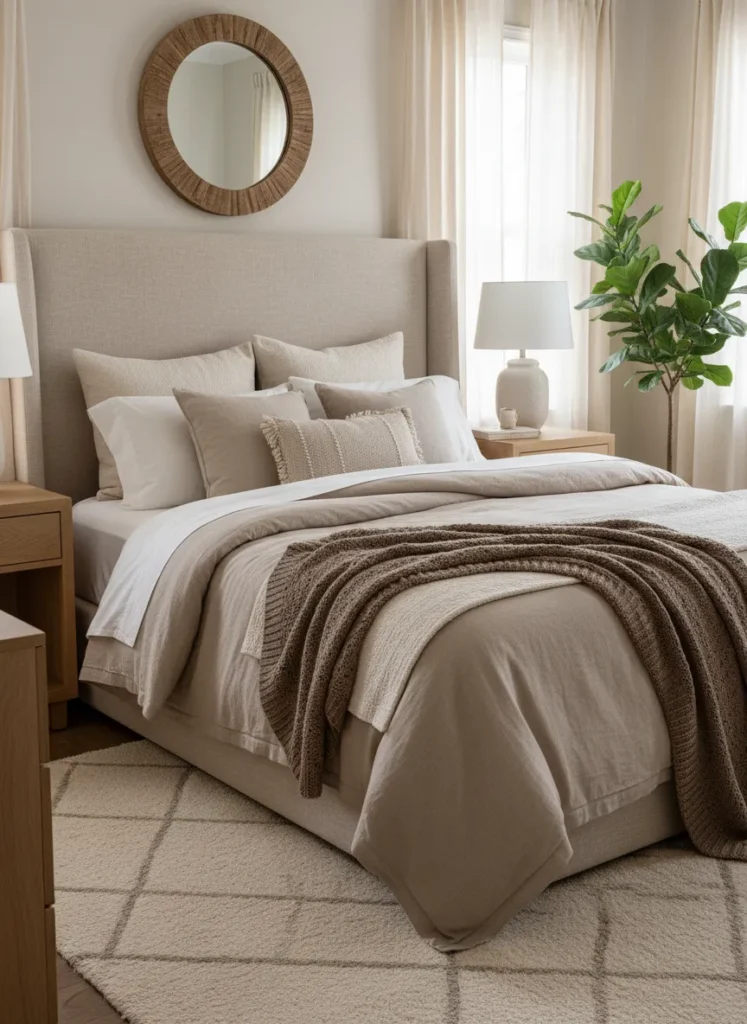
Moving away from stark white, layers of beige, sand, and taupe create a ‘warm minimalist’ aesthetic. These earth tones are incredibly soothing and create a cocoon-like effect that is perfect for sleeping. The key is to vary the shades slightly to create depth so the room doesn’t look flat.
A beige upholstered headboard against a sandy wall with taupe bedding creates a sophisticated, monochromatic look. These colors mimic the hues found in nature, promoting a subconscious connection to the earth. It is a timeless palette that feels warm, elegant, and effortlessly peaceful.
Sheer Window Treatments
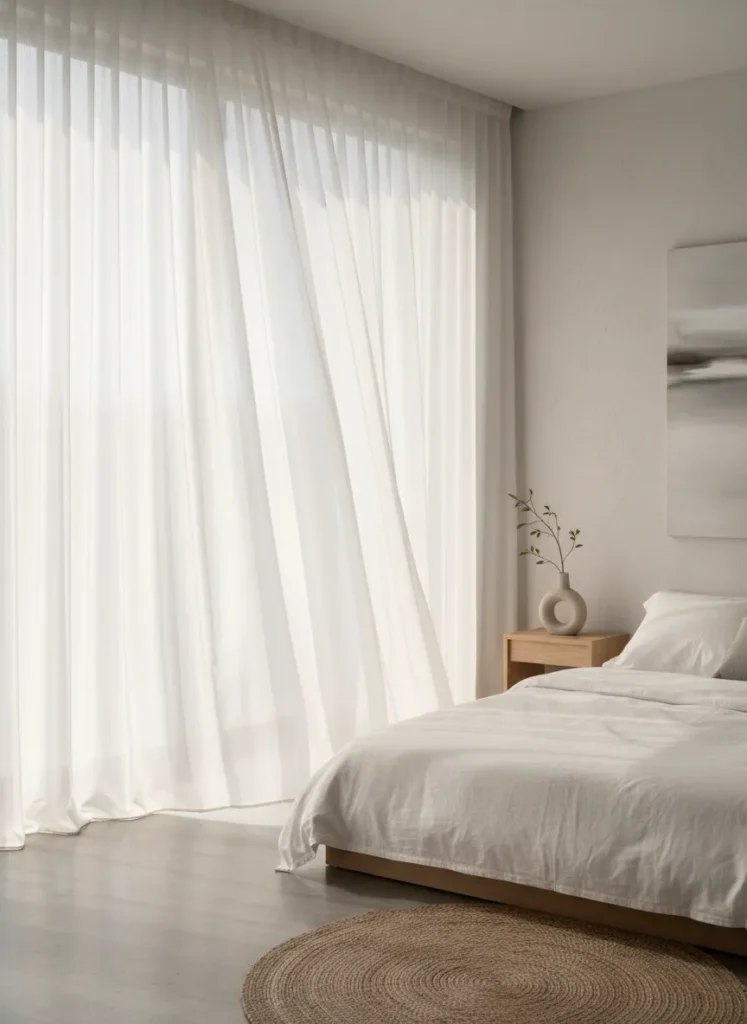
Heavy drapes can feel suffocating in a minimalist space, which is why sheer curtains are a preferred choice. They offer privacy while still allowing an abundance of diffused natural light to fill the room. The soft, filtering effect creates a dreamlike quality that softens the hard edges of the architecture.
Install the curtain rod as high as possible, close to the ceiling, to draw the eye up and make the room feel taller. The vertical folds of the fabric add a subtle rhythm and texture to the walls. During the day, the play of light and shadow through the sheers becomes a dynamic, ever-changing design element.
Conclusion
Embracing these minimalist bedroom ideas allows you to transform your sleeping space into a true retreat from the busy world. By focusing on quality over quantity and clearing away the clutter, you create room for rest, reflection, and rejuvenation. Start with one or two changes, like decluttering your nightstand or updating your bedding, and watch how a simpler environment leads to a calmer mind.