
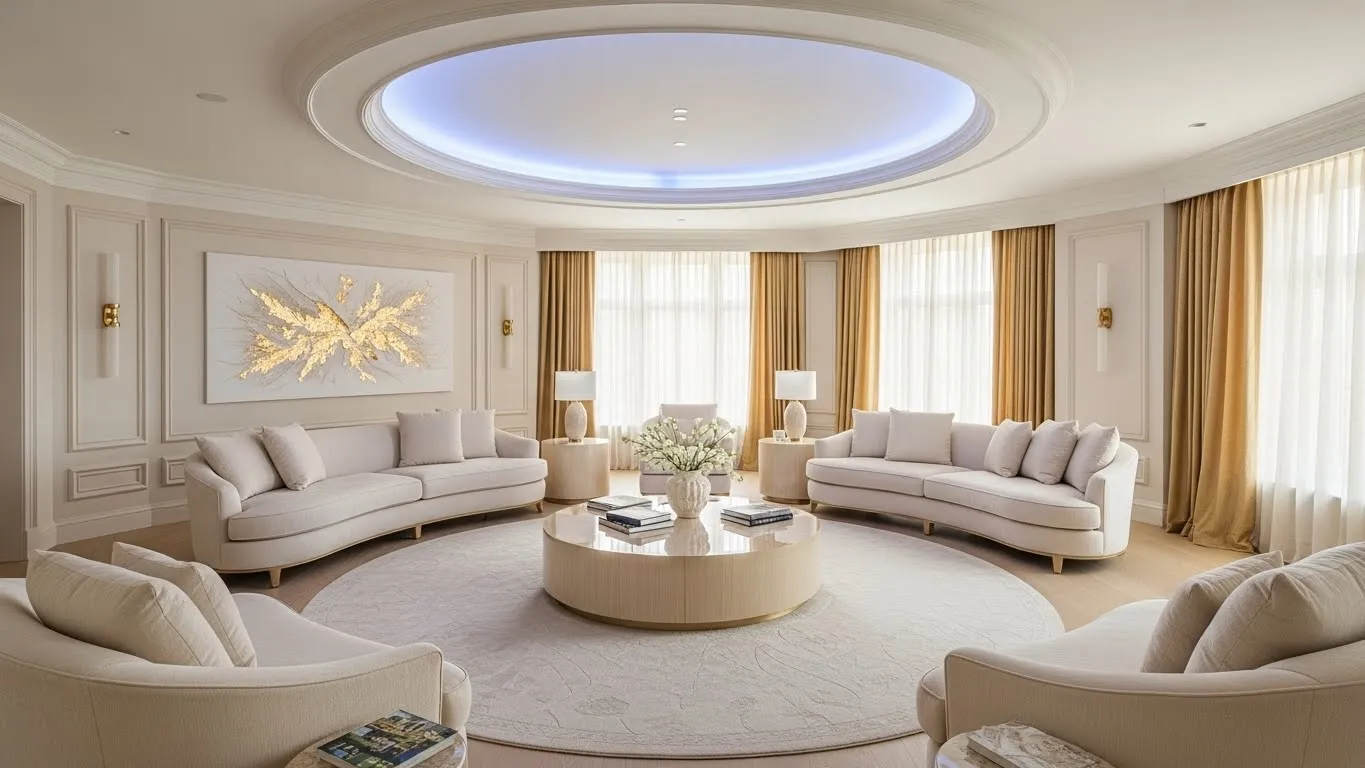
Updating your home often starts with looking up, and choosing the right false ceiling living room designs can completely transform your space. Whether you have a compact apartment or a spacious villa, adding a dropped ceiling brings architectural interest and better lighting options to your daily life. This guide explores nineteen distinct styles that blend modern aesthetics with practical functionality to make your living area feel fresh and sophisticated.
The Classic White Tray
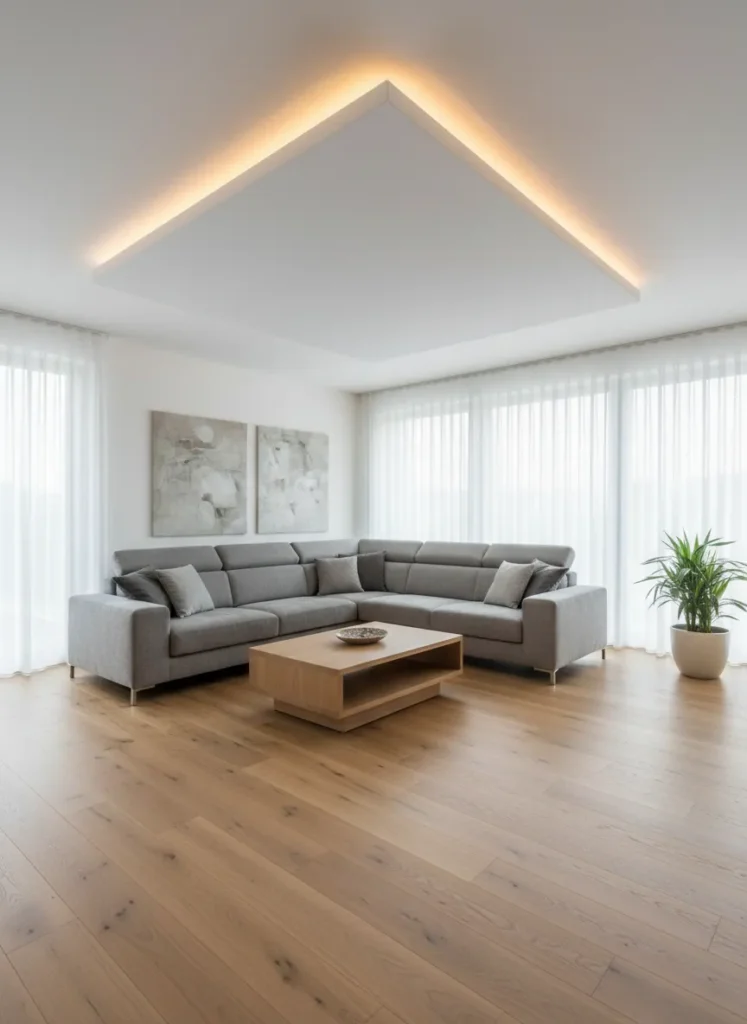
A simple tray design is often the most effective way to add depth to your living room without overwhelming the space. This style features a rectangular recess in the center of the ceiling that creates an inverted tray look. It provides a neat border where you can hide electrical wiring and install soft cove lighting that glows upwards, making the ceiling feel higher than it actually is.
This approach works perfectly for minimalist homes where the goal is to keep lines clean and uncluttered. By painting the recessed area white or a very pale grey, you maintain a bright and airy atmosphere. The subtle separation between the lower border and the higher center adds just enough architectural detail to make the room feel finished and expensive.
Warm Wooden Slats
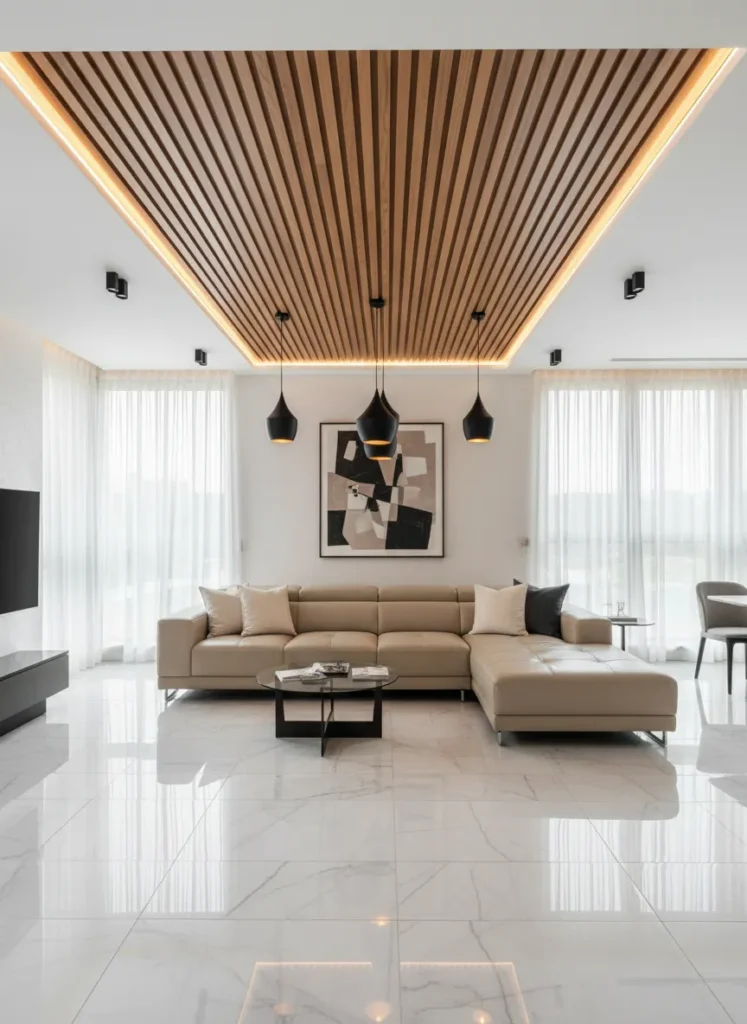
Incorporating wood into your ceiling design brings an immediate sense of warmth and texture to a modern living area. Instead of a solid block of gypsum, you can use parallel wooden slats running across the central recessed area. This linear pattern draws the eye across the room and creates a cozy contrast against plain white walls.
Wooden slats are also excellent for acoustics, helping to dampen echoes in large rooms with tile or marble floors. You can install small spotlights between the slats for functional lighting or let the natural grain of the wood be the main focus. This style bridges the gap between rustic charm and modern precision.
The Circular Centerpiece
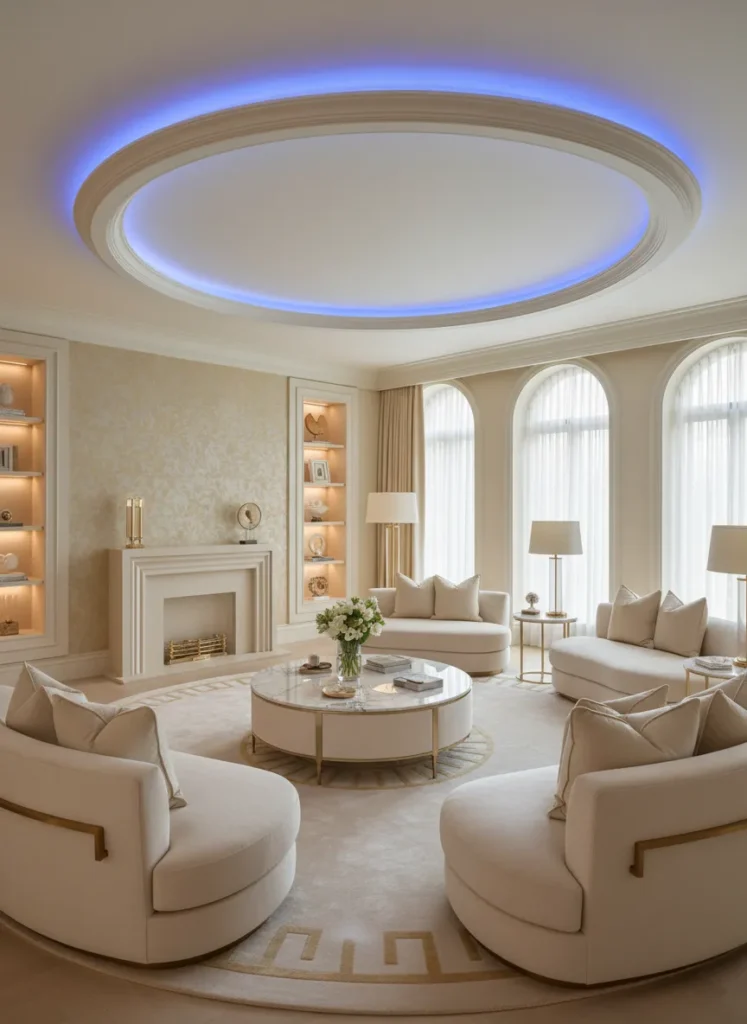
Break away from the monotony of square and rectangular rooms by introducing a circular false ceiling. A round drop in the center of the room acts as a powerful focal point, softening the sharp corners of your walls. This design is particularly effective when mirrored by the furniture layout, such as a round coffee table or a curved sofa arrangement beneath it.
The circular shape allows for dramatic lighting opportunities, such as a central chandelier or a halo of LED lights hidden in the rim. It creates a sense of flow and movement that static straight lines cannot achieve. This design choice feels artistic and fluid, making your living room feel like a carefully curated gallery space.
Peripheral Cove Lighting
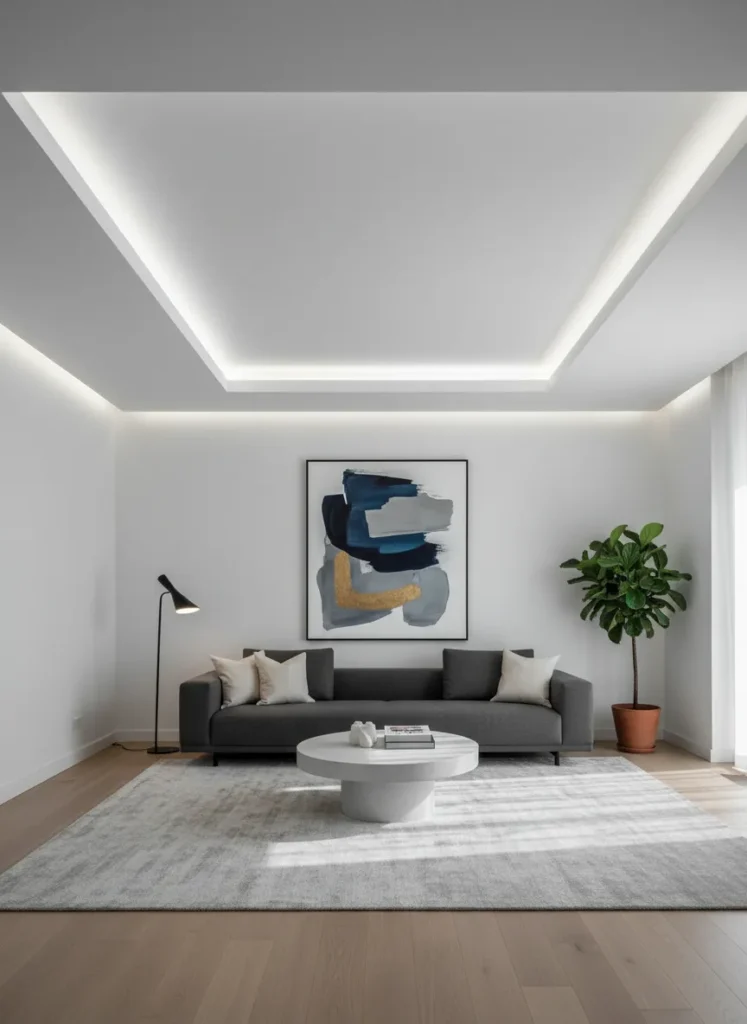
If you want to maximize your room height while still enjoying the benefits of a false ceiling, a peripheral cove design is the ideal solution. In this layout, the dropped ceiling runs only along the edges of the room, leaving the center open and high. This creates a frame that defines the living area without making the space feel enclosed or claustrophobic.
The ledge created by the border is perfect for hiding LED strips that cast a gentle light onto the walls and the central ceiling. This indirect lighting reduces glare and creates a relaxing mood for evening gatherings. It is a subtle design choice that adds a layer of sophistication without demanding too much attention.
Modern Shallow Coffers
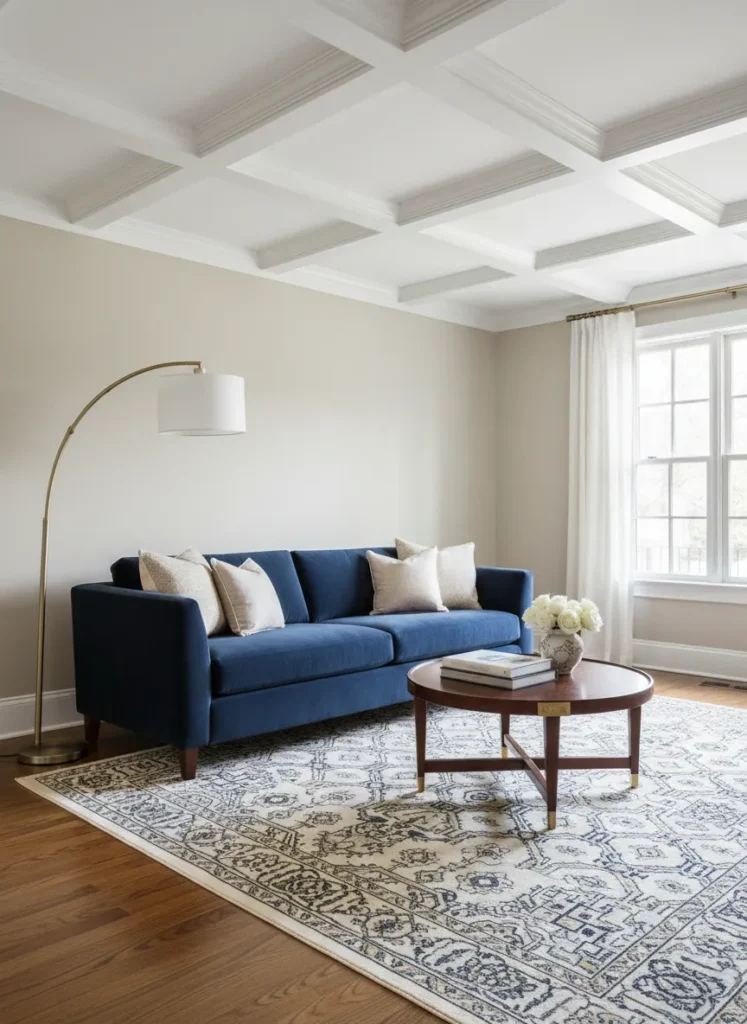
Coffered ceilings are often associated with traditional mansions, but a shallow, simplified version fits perfectly in modern homes. By creating a grid of shallow beams or indentations, you add structure and rhythm to the overhead space. Unlike the deep, heavy coffers of the past, modern versions use thin lines and low profiles to keep the look light.
This geometric pattern adds visual interest and can help define different zones within a large open-plan living room. Painting the grid the same color as the rest of the ceiling keeps the texture subtle, while using a contrasting shade can make a bold statement. It adds a sense of order and craftsmanship to the interior.
The L-Shaped Border
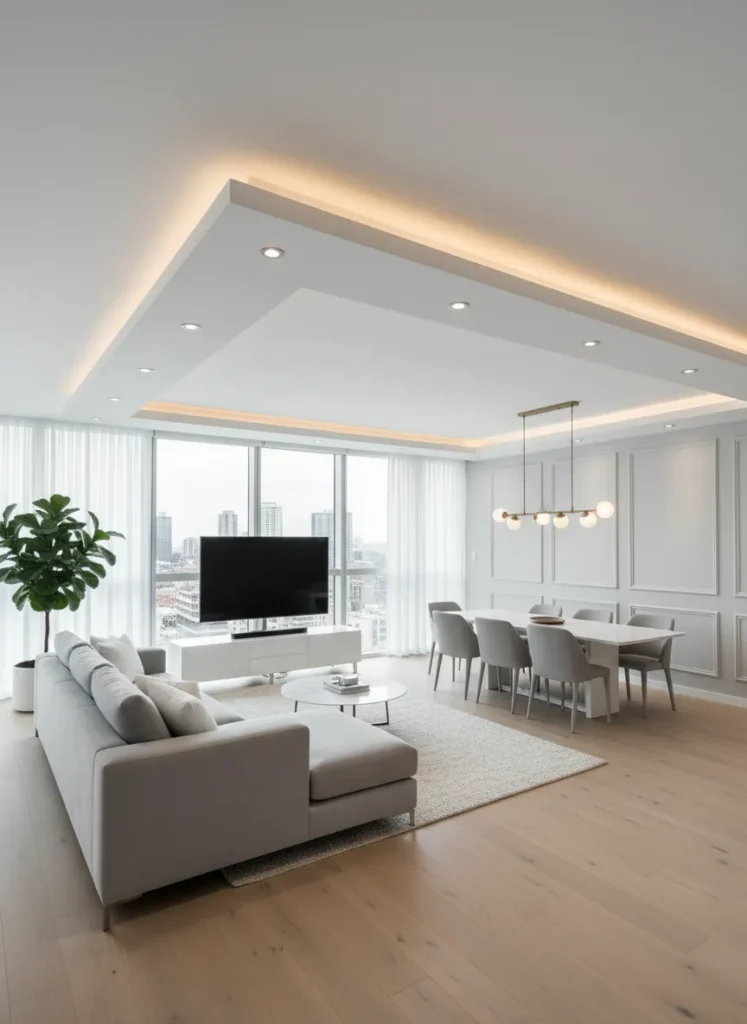
For open-concept homes where the living room connects to the dining area, an L-shaped false ceiling helps define the zones visually. This design runs along two adjacent walls, anchoring the seating area without covering the entire ceiling. It provides a dedicated space to install downlights exactly where you need them, such as over the sofa or the TV unit.
The asymmetry of an L-shaped drop adds a dynamic and contemporary feel to the room. It prevents the ceiling from looking heavy and leaves plenty of breathing room for the rest of the space. This style is also practical for hiding curtain rods or air conditioning ducts along specific walls.
Reflective Mirror Panels
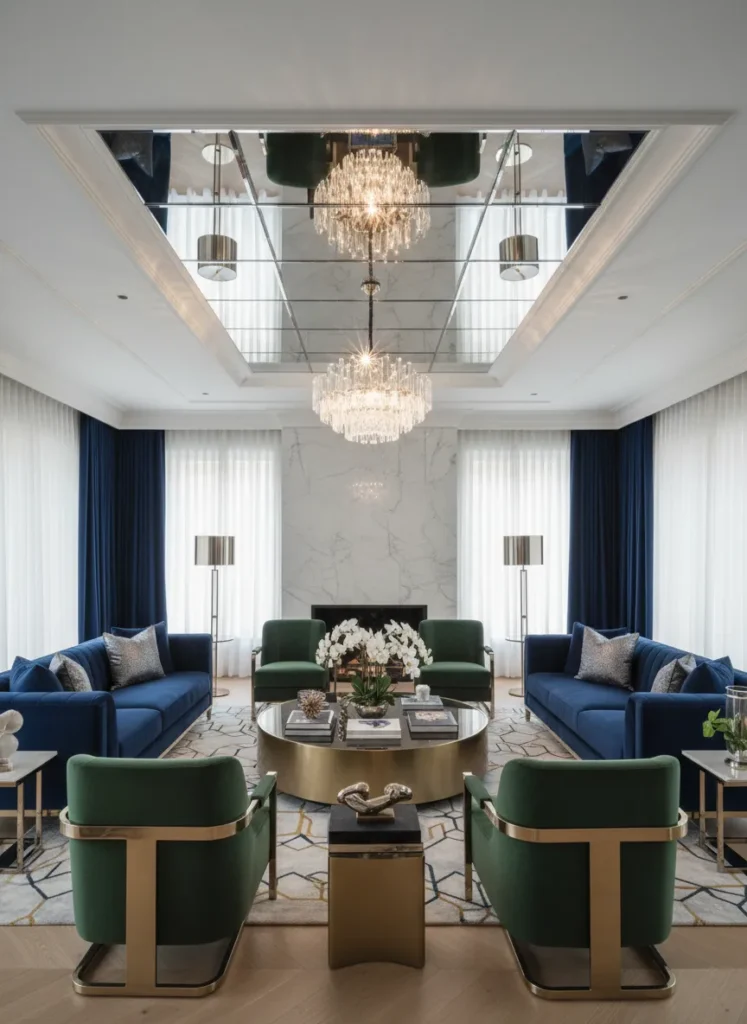
To create an illusion of double height and added luxury, consider incorporating mirror panels into your false ceiling design. Placing mirrors within the recessed tray reflects the room below, making the space feel significantly larger and brighter. This technique works exceptionally well in smaller living rooms or areas with limited natural light.
You can choose between clear mirrors for a crisp look or tinted bronze or grey mirrors for a moodier, more sophisticated vibe. The reflection creates a dazzling effect when paired with a central chandelier or floor lamps. It is a bold design choice that turns the ceiling into a stunning decorative element.
The Floating Island
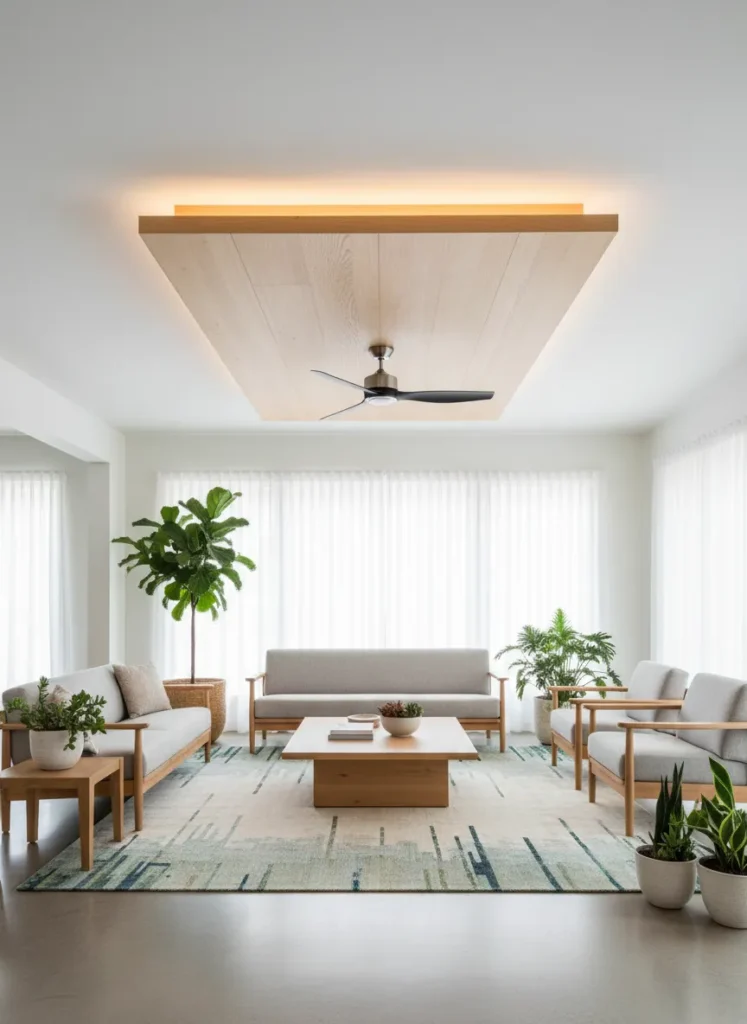
A floating island ceiling is essentially the reverse of a tray ceiling; instead of a recess, a panel is suspended in the center of the room. This creates a gap between the panel and the main ceiling, which gives the impression that the structure is floating in mid-air. This gap is the perfect place to install backlighting that creates a halo effect.
This design is excellent for highlighting a specific area, such as the center of a conversation circle. It also provides a sturdy base for mounting heavy ceiling fans or decorative pendant lights. The floating look is undeniably modern and adds a layer of futuristic elegance to any living room.
Industrial Grid Style
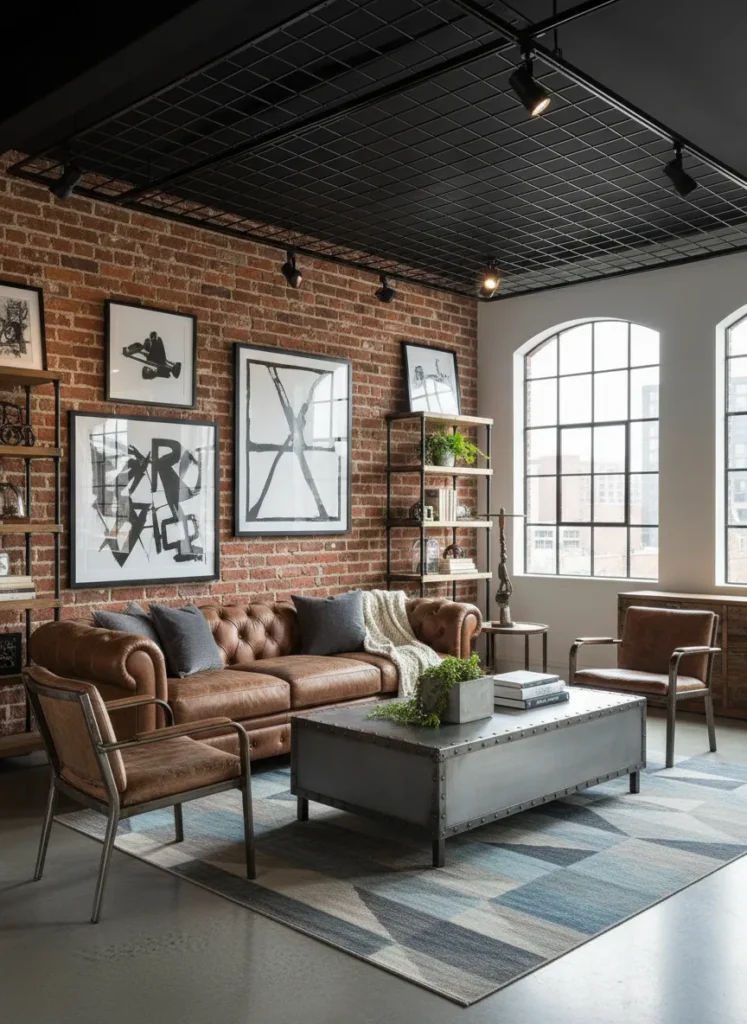
For a loft-inspired or industrial aesthetic, you can opt for an exposed grid or mesh false ceiling. Instead of smooth gypsum, this design uses metal grids or open-cell structures that add raw texture to the room. Painting the grid and the ceiling above it in a dark color like charcoal or black creates a dramatic, studio-like atmosphere.
This style allows for easy access to utilities and offers unique lighting possibilities using clamp-on fixtures or hanging bulbs. It pairs beautifully with exposed brick walls and leather furniture, giving your living room an edgy, urban character. It proves that false ceilings do not always have to be polished and white to be stylish.
Recessed Track Lighting Channels
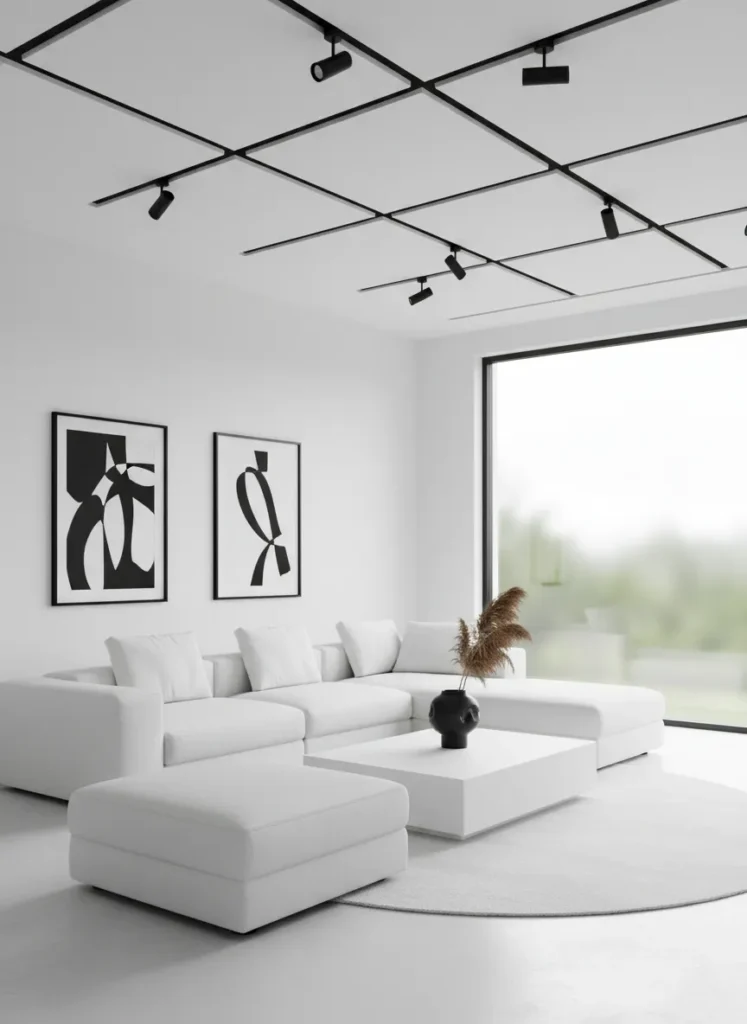
If you prefer a flat ceiling but want a modern twist, installing recessed channels for track lighting is a brilliant solution. In this design, the gypsum board is flush, but deep grooves are cut into it to house black lighting tracks. This creates a graphic black-and-white look that is highly architectural.
The functionality of this design is unmatched, as you can aim the lights at artwork, the coffee table, or reading corners. The flush finish keeps the ceiling looking high and uncluttered, while the black lines add a sense of direction and precision. It is a favorite among architects for its clean and professional appearance.
Double Layered Steps
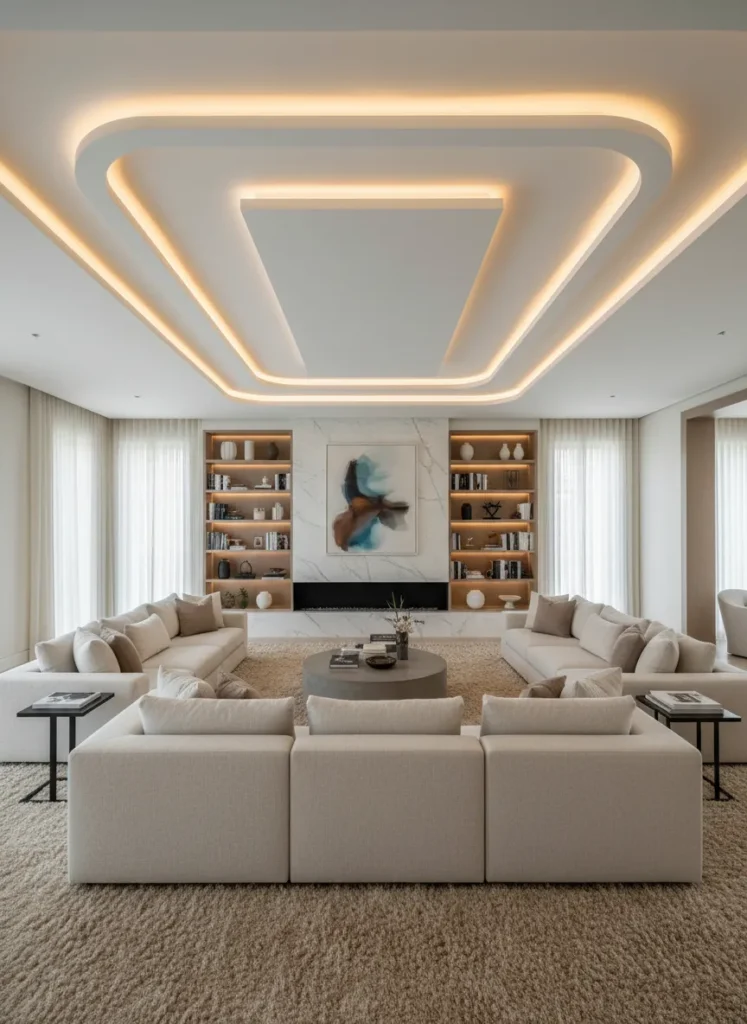
To add a sense of grandeur and depth, a double-layered or stepped false ceiling is a fantastic option. This design features two or more levels of drops, creating a stair-step effect that leads the eye inward or upward. Each step can hide its own strip of LED lighting, allowing for multiple layers of ambient illumination.
This style works best in rooms with decent height, as the layers can take up some vertical space. The result is a rich, three-dimensional look that feels luxurious and substantial. It turns the ceiling into a sculpture rather than just a flat surface, adding immense character to the living area.
Organic Curved Edges
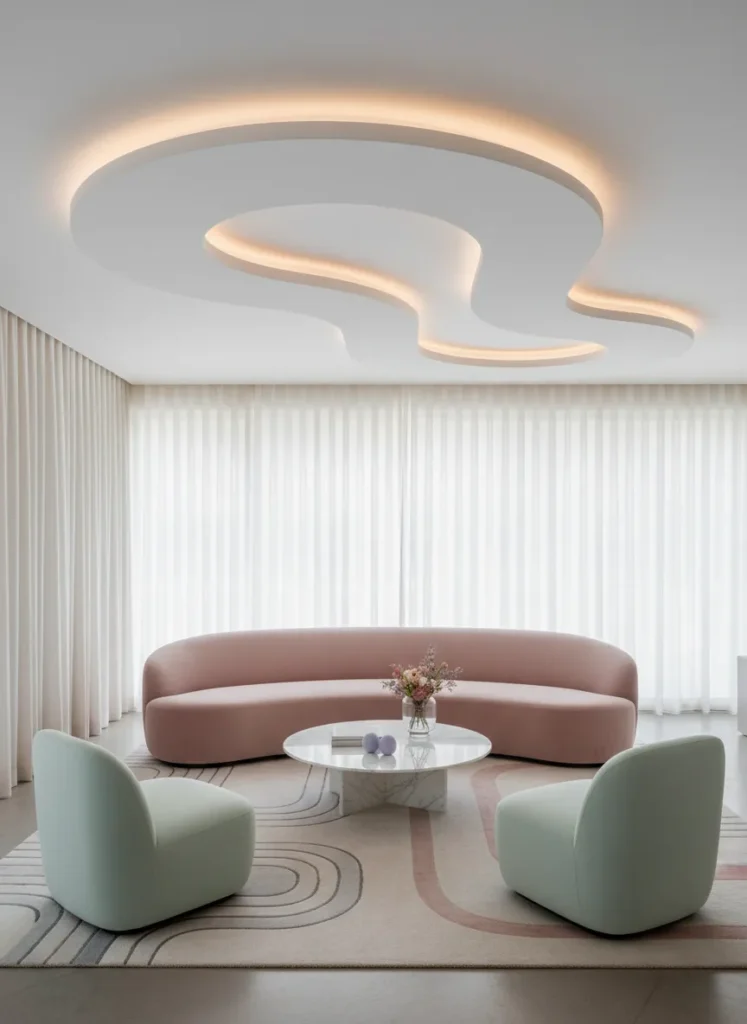
Nature rarely moves in straight lines, and bringing organic curves to your ceiling can make your living room feel softer and more welcoming. Instead of sharp 90-degree angles, this design uses fluid S-shapes or kidney-bean curves for the dropped sections. This is a great way to break the rigidity of a standard boxy room.
Curved ceilings create a sense of flow and can guide movement through the space visually. They are particularly effective in contemporary homes that feature rounded furniture or arched doorways. The smooth lines are soothing to the eye and add a bespoke, artistic quality that feels custom-designed.
Backlit Stained Glass Effect
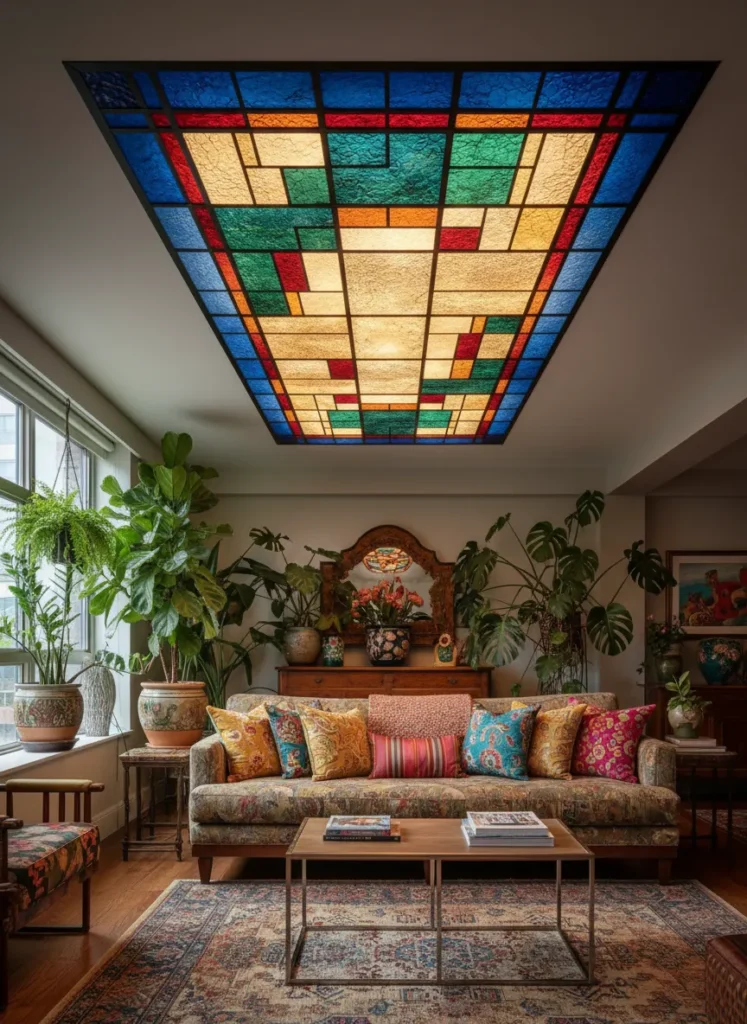
For a truly unique focal point, incorporate a backlit glass or acrylic panel into your false ceiling. This can mimic the look of a skylight, bringing a sense of brightness to the room even at night. You can choose frosted glass for a soft glow or a stained glass pattern for a burst of color and art.
This design acts as a massive light fixture, flooding the room with diffused illumination that eliminates harsh shadows. It creates a stunning visual centerpiece that draws guests’ eyes upward immediately. It is especially useful in apartments that lack large windows, as it simulates the feeling of natural light pouring in from above.
Metallic Gold Accents
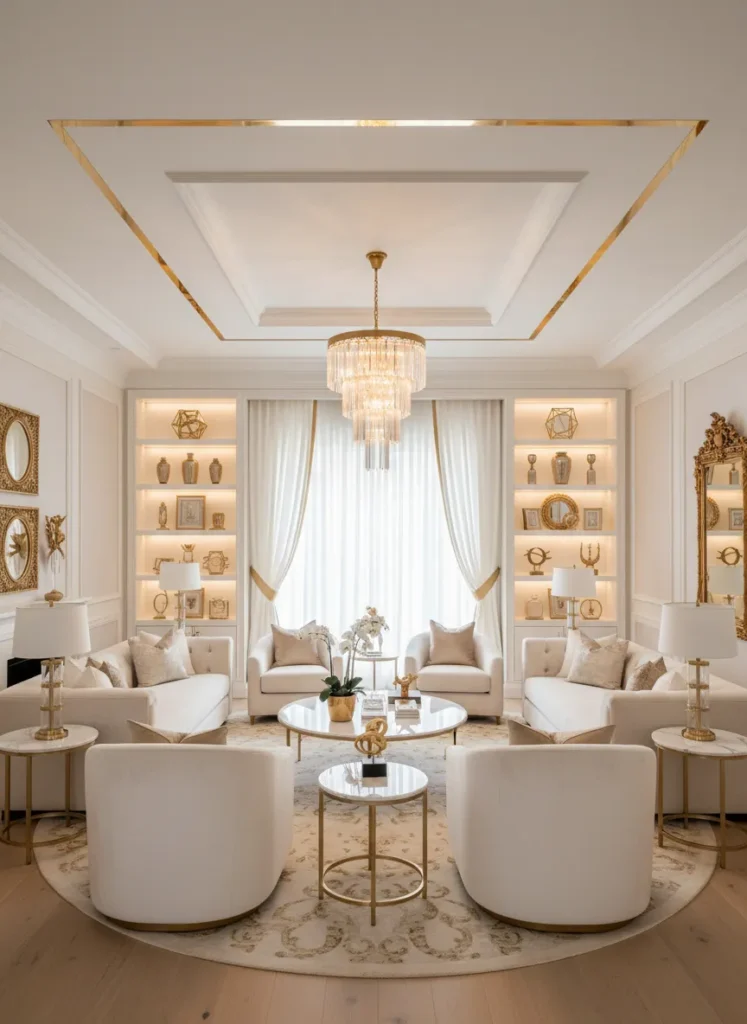
Adding metallic trims to a gypsum ceiling is a simple way to inject luxury and glamour into your living room. Thin strips of gold, copper, or brass can be embedded into the design, usually outlining the borders of a tray or coffered section. These metallic lines catch the light and add a subtle sparkle.
This detail pairs beautifully with other metal finishes in the room, such as cabinet handles, lamp stands, or table legs. It elevates a plain white ceiling into something decorative and high-end. The contrast between the matte paint and the reflective metal creates a sophisticated palette that feels modern and chic.
Rustic Faux Beams
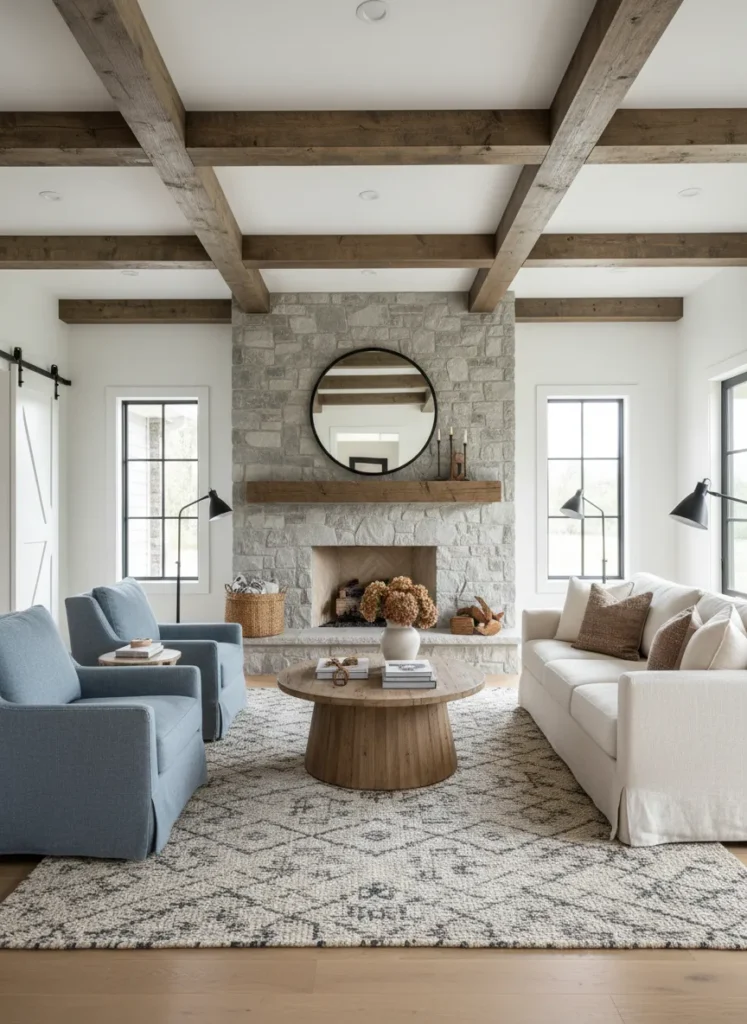
The modern farmhouse look is incredibly popular, and adding faux wooden beams to your false ceiling is the best way to achieve it. These beams are lightweight and purely decorative, attached to the gypsum surface to simulate structural timber. They add a rugged, cozy charm that makes a large living room feel intimate.
You can arrange the beams in a simple parallel pattern or a truss design for more drama. The contrast between the dark wood and the white ceiling creates a striking visual impact. This design brings the character of a country cottage into a city apartment, blending comfort with style.
Moody Dark Recess
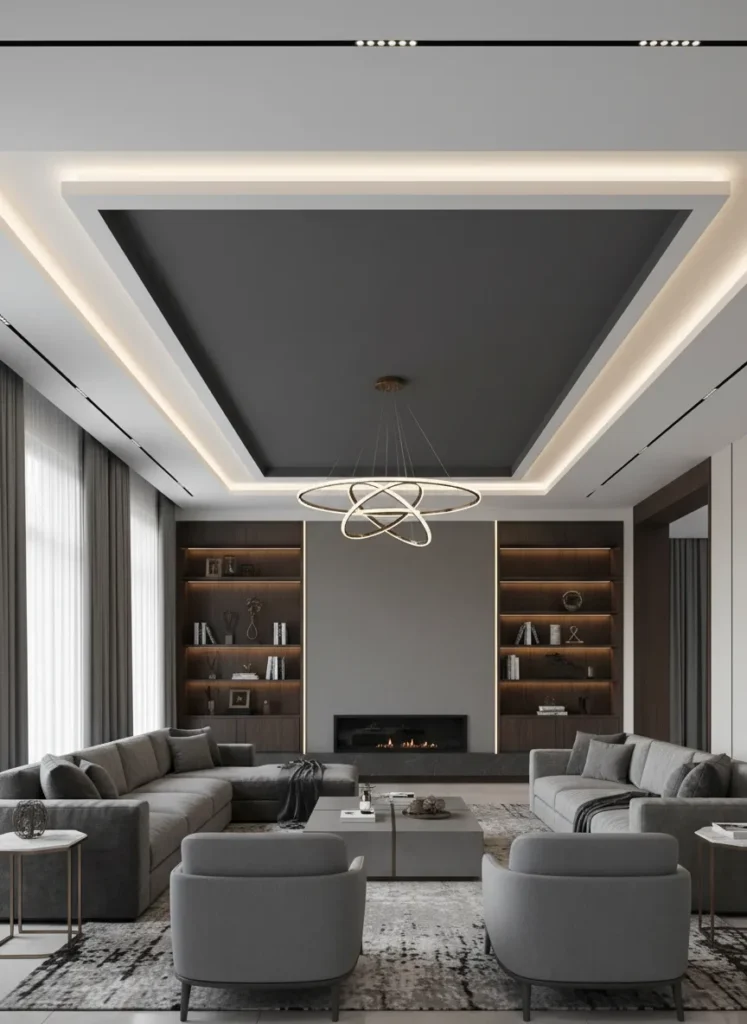
While white is the standard color for ceilings, painting the recessed part of a false ceiling in a dark hue can be incredibly stylish. Colors like charcoal grey, navy blue, or even black create a feeling of infinite depth, much like the night sky. The outer border remains white to keep the room feeling bright and to frame the dark center.
This technique makes light fixtures, especially crystal or brass chandeliers, pop vividly against the dark background. It creates a cozy, moody atmosphere that is perfect for movie nights or intimate conversations. It is a bold move that pays off by giving the room a designer edge.
Textured Wallpaper Inlay
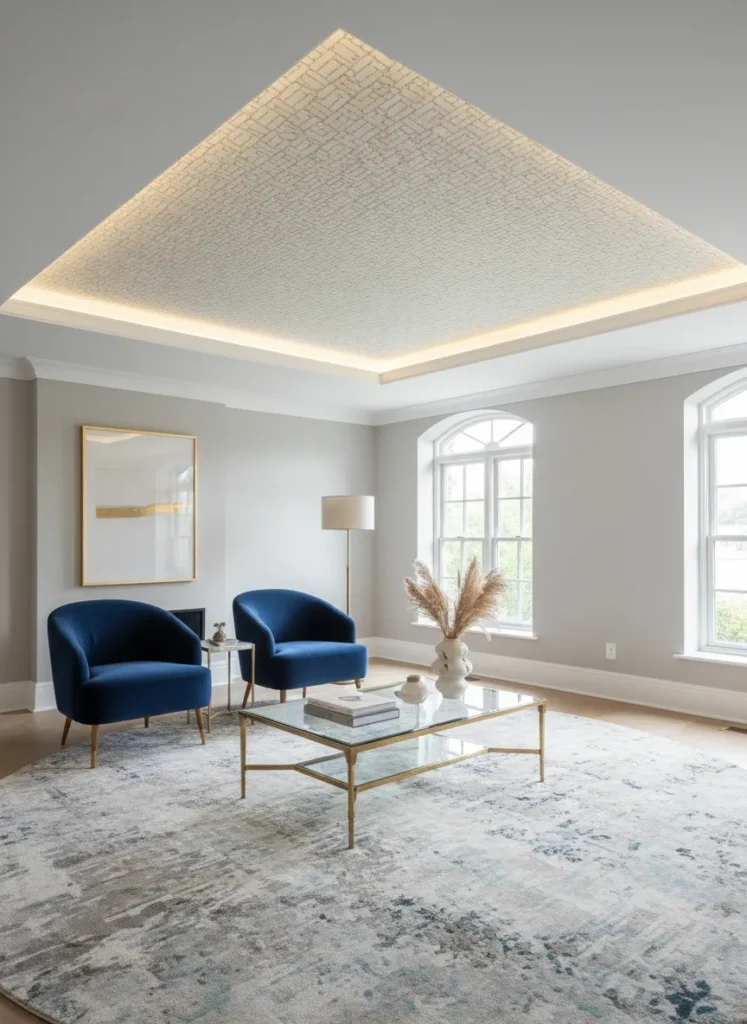
Wallpaper isn’t just for walls; applying it to the recessed area of your false ceiling adds unexpected texture and pattern. Whether it creates a subtle linen effect or features a bold geometric print, wallpaper can tie the ceiling into the room’s color scheme. It turns the ceiling into a feature wall that you look up to.
This is a cost-effective way to customize a standard tray ceiling without expensive carpentry. If you ever want to change the look of the room, you can simply replace the wallpaper. It creates a boutique hotel vibe that feels curated and personal.
Geometric Asymmetry
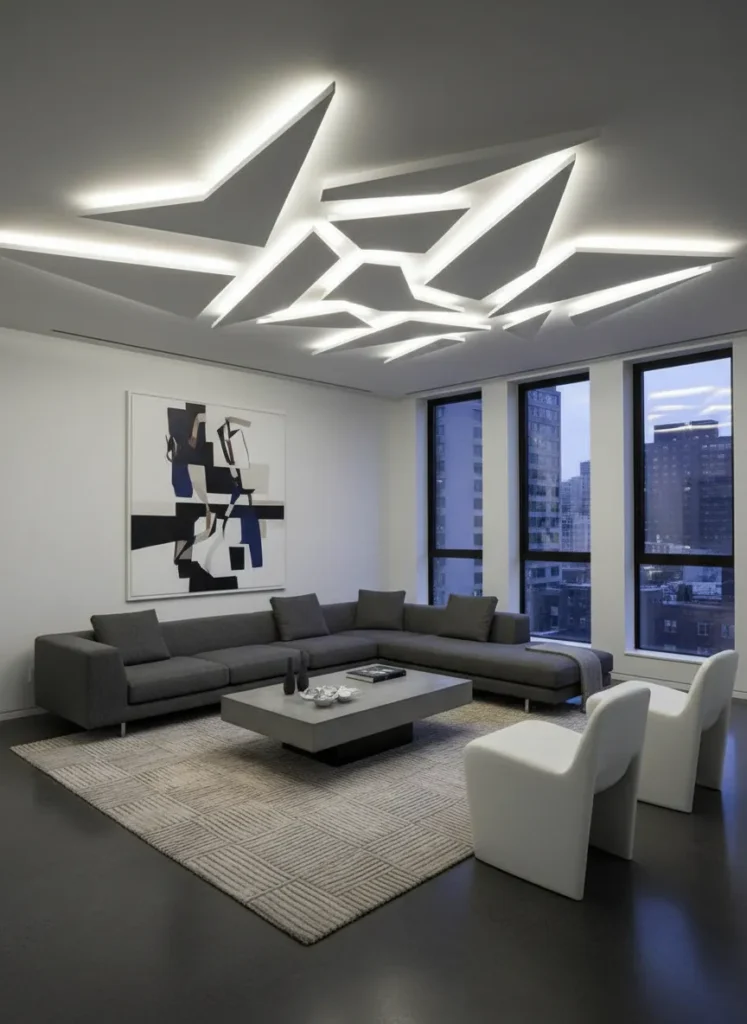
For those who love edgy and unconventional designs, an asymmetric false ceiling creates a strong modern statement. Instead of centering the drop, this style uses off-center geometric shapes, zig-zags, or overlapping panels. It disrupts the expected symmetry of the room and adds dynamic energy.
This design works particularly well in irregularly shaped living rooms or modern minimalist spaces that rely on shape rather than decoration. The sharp angles and unique composition become the art of the room. It shows a willingness to experiment and break design rules for a stylish result.
Wall-to-Ceiling Panel
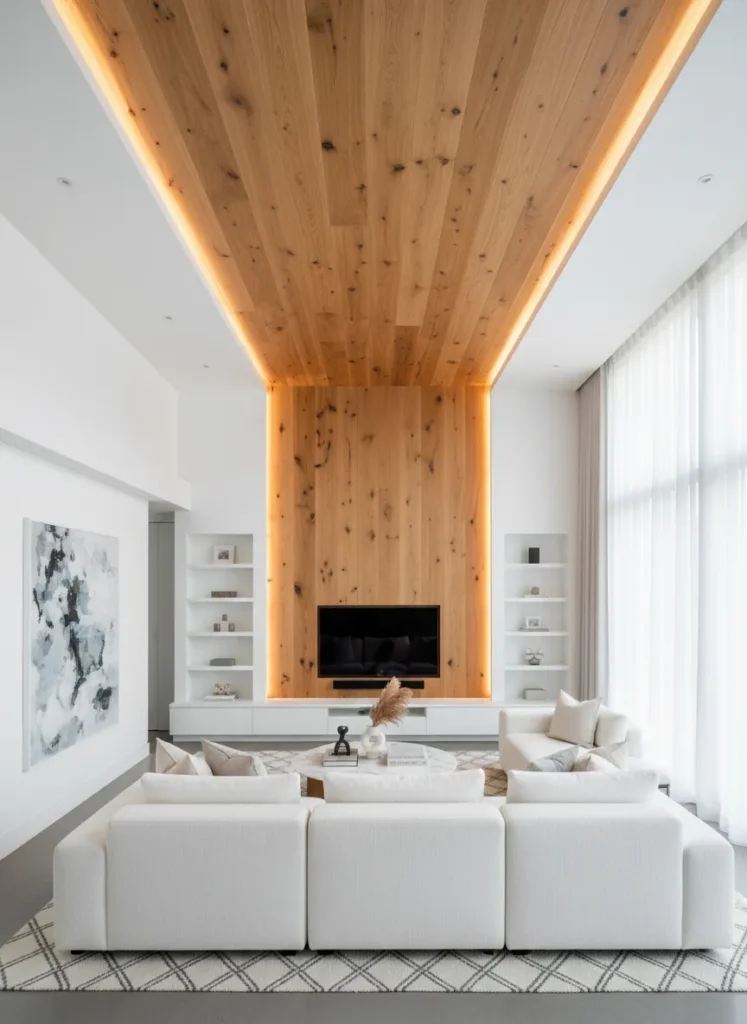
Creating a seamless connection between the wall and the ceiling creates a stunning visual continuity. In this design, a panel—often wood or glossy laminate—starts behind the TV unit or sofa and continues vertically up the wall and across the ceiling. This unifies the space and creates a strong focal zone.
This technique makes the room feel longer and more cohesive. It is excellent for zoning a specific area in a large room, like the entertainment center. The continuous line draws the eye upward, blending the boundaries of the room for a sleek, integrated appearance.
Conclusion
Choosing the right false ceiling can redefine the entire atmosphere of your home, turning a plain box into a designed masterpiece. From the warmth of wooden slats to the drama of dark paint or the simplicity of a white tray, there is a solution for every taste and budget. By paying attention to these overhead details, you ensure that your living room feels complete, modern, and uniquely yours.