
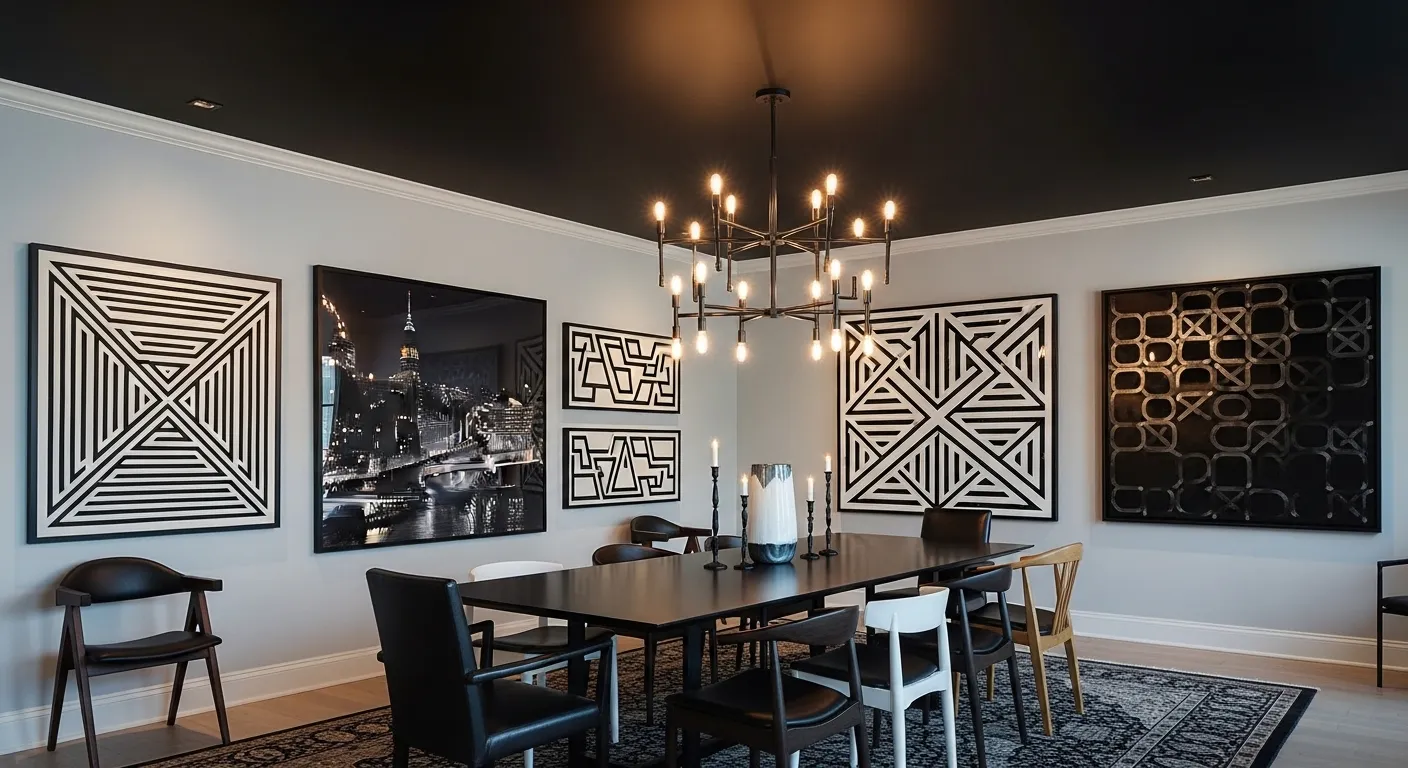
Creating a sophisticated and intimate atmosphere in your home often starts with the gathering space, and exploring various dark dining room ideas can transform a boring meal into a memorable experience. Embracing deep tones like charcoal, navy, or forest green allows you to play with shadows and light, resulting in a room that feels both cozy and dramatic. Whether you prefer a modern minimalist look or a classic vintage vibe, using darker shades adds a layer of depth that lighter colors simply cannot achieve. This guide explores nineteen distinct ways to style a moody dining area that balances elegance with comfort.
Charcoal Walls with Gold Accents
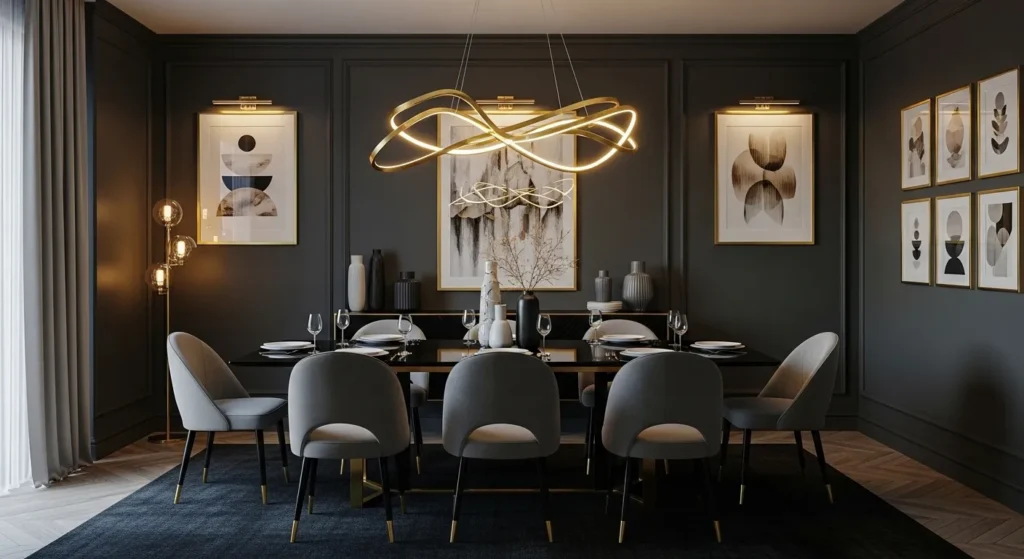
Using charcoal gray as a base color creates a stunning canvas for metallic elements to shine. When you paint your walls in this deep, matte shade, it absorbs light in a way that makes the room feel enclosed and private. To prevent the space from feeling too heavy, introducing gold accents through light fixtures, chair legs, or picture frames adds a necessary spark of brightness. The contrast between the dark gray and the shimmering gold offers a high-end look that feels expensive and curated.
This specific approach to dark dining room ideas works well because it balances the masculine energy of the gray with the glamour of the gold. It is important to keep the flooring relatively neutral or dark to maintain the moody vibe without breaking the visual flow. By focusing on metallic finishes, you ensure that light bounces around the room in specific areas, highlighting the decor rather than washing out the deep color of the walls.
Midnight Blue Color Drenching
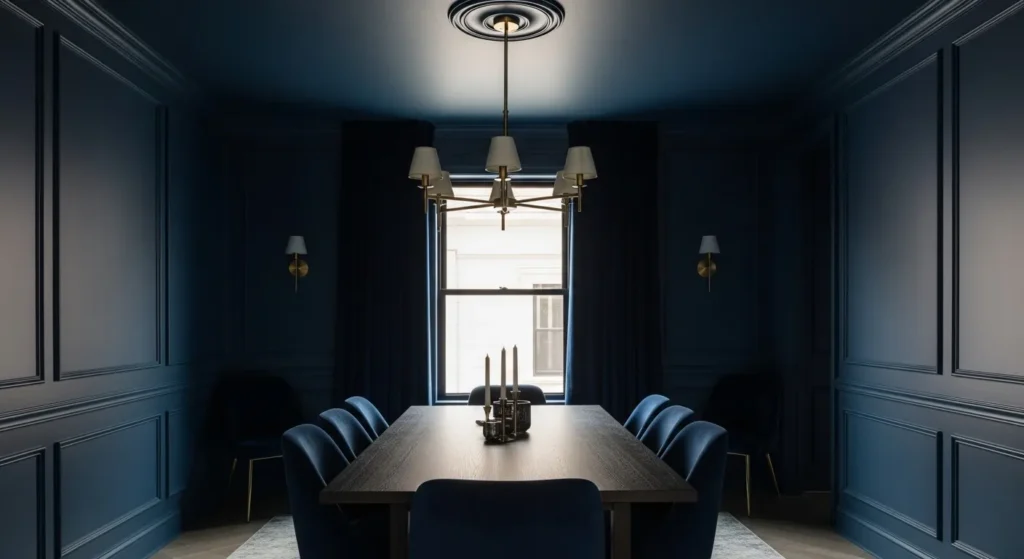
Color drenching is a technique where you paint the walls, trim, and even the ceiling in the same color, and midnight blue is a perfect candidate for this style. This method blurs the boundaries of the room, making corners disappear and creating an infinite, cozy feeling. It envelops guests in color, making the dining experience feel immersive and theatrical. This is particularly effective in smaller dining rooms where you want to embrace the size rather than trying to make it look artificially large with white paint.
Implementing this concept requires commitment to the color palette, but the result is incredibly striking. To break up the sea of blue, you can use texture rather than different colors. A dark wood table or velvet upholstery in a similar shade adds tactile variety without disrupting the visual continuity. This is one of the boldest dark dining room ideas that simplifies the design process by limiting the color palette while maximizing impact.
Forest Green and Natural Wood
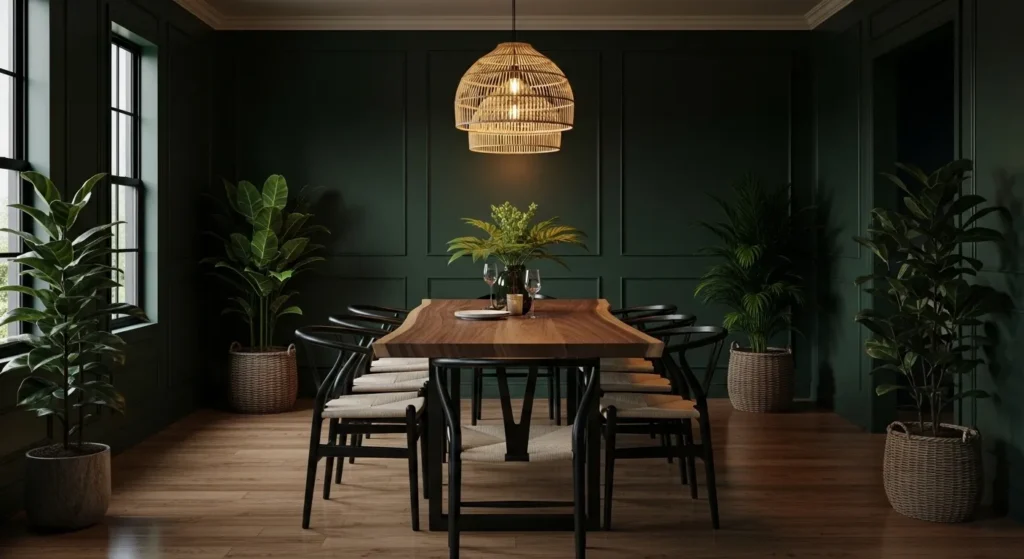
Bringing nature indoors takes a dramatic turn when you select a deep forest green as your primary wall color. This shade evokes the feeling of a dense woodland and pairs beautifully with natural wood tones. The warmth of a walnut or oak table cuts through the coolness of the green, creating a space that feels grounded and organic. This combination is perfect for those who want a moody atmosphere that still feels connected to the natural world.
The success of this design relies on the balance between the painted surfaces and the natural textures. Using wooden furniture with visible grain patterns adds character and warmth to the dark backdrop. You can enhance the theme by adding real plants, which pop against the dark green walls, creating a layered effect. This approach proves that dark dining room ideas can be fresh and lively rather than just somber.
Matte Black Minimalist
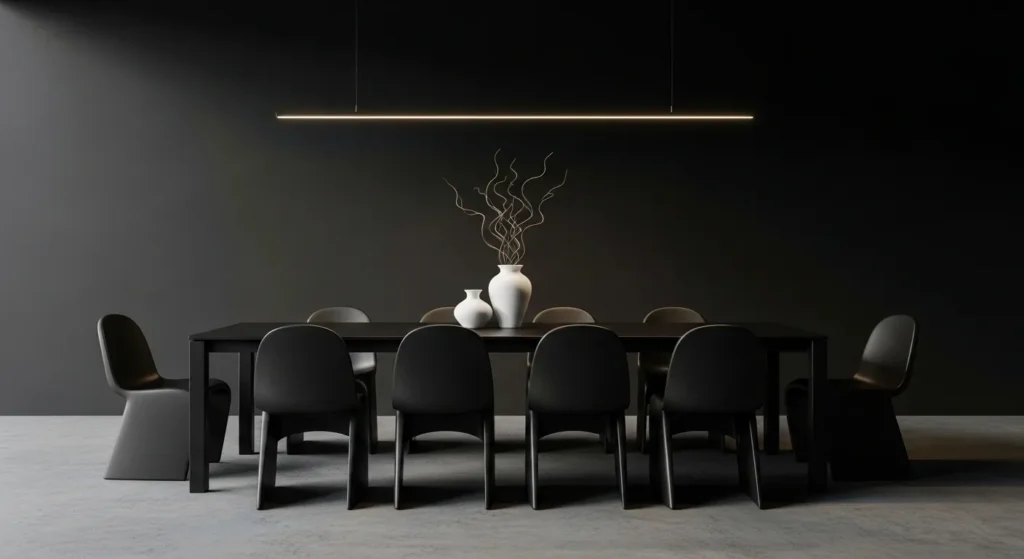
For a truly striking look, a matte black color scheme offers a clean and architectural aesthetic. The lack of sheen on the walls prevents glare and creates a soft, velvety texture that absorbs light beautifully. In a minimalist setting, the focus shifts to the silhouette of the furniture and the layout of the room. By keeping accessories to a bare minimum, the darkness becomes the main feature, creating a sense of calm and order.
This style works best when you prioritize shape and form over decoration. Since the color palette is restricted, the furniture needs to have interesting lines to keep the eye engaged. A linear light fixture or a sculptural table base becomes a piece of art against the black background. It is a bold interpretation of dark dining room ideas that appeals to those who love modern design and clutter-free living.
Moody Victorian Gothic
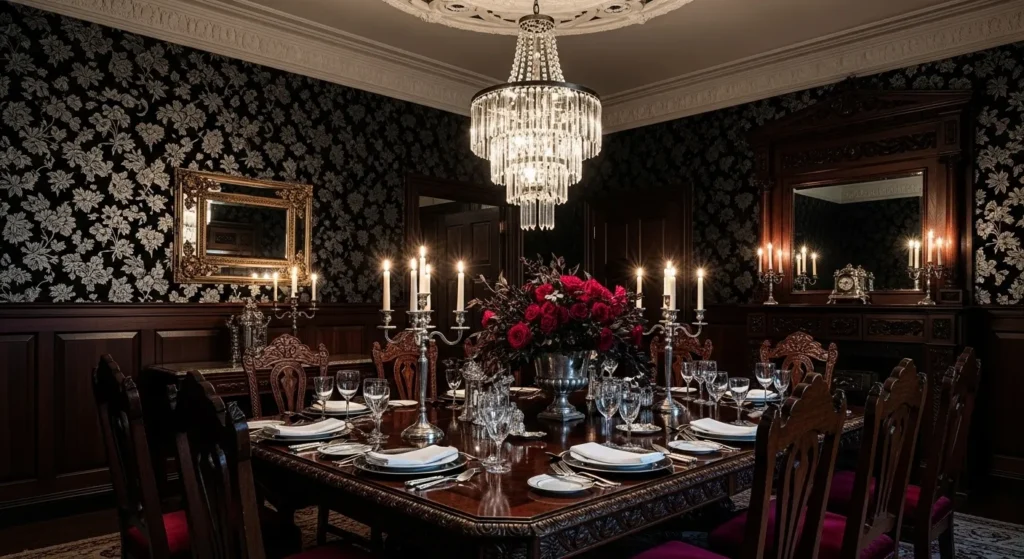
Channeling a Victorian Gothic vibe allows you to embrace darkness with a sense of history and romance. This style often utilizes intricate wallpapers featuring dark florals or damask patterns, paired with heavy wood furniture. The aim is to create a space that feels timeless and slightly mysterious, perfect for long, lingering dinner parties. Rich textures like velvet and heavy drapes play a significant role in softening the hard edges of the dark wood and walls.
To execute this look effectively, attention to detail is key. ornate frames, antique silverware, and crystal glassware contribute to the narrative of the room. The lighting should be low and warm, preferably from a vintage-style chandelier or candlelight, to enhance the shadows and mood. This is one of the most character-rich dark dining room ideas, ideal for older homes or for adding soul to a newer space.
Deep Plum and Brass
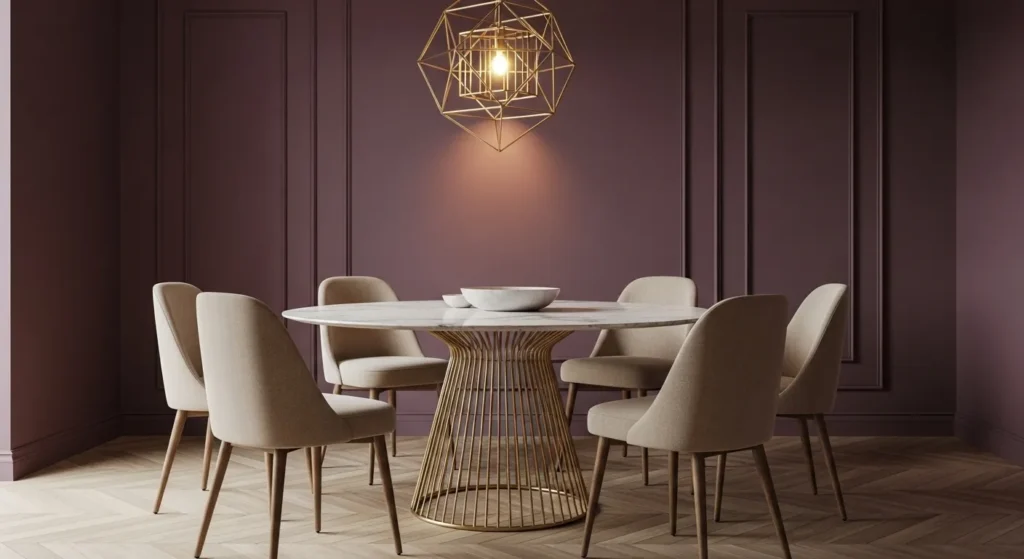
Moving away from standard blacks and blues, deep plum offers a unique warmth that stimulates the appetite and conversation. This reddish-purple hue is incredibly sophisticated and pairs exceptionally well with brass or copper hardware. The warmth of the metal complements the red undertones in the paint, creating a glowing effect when the lights are dimmed. It is a color that feels royal and luxurious without being overly traditional.
When using such a strong color, balancing it with lighter furniture can prevent the room from feeling too closed in. A marble table or light beige chairs provide a fresh contrast that highlights the richness of the plum walls. This combination creates a welcoming environment that feels distinct from the rest of the home. It is a creative option among dark dining room ideas for those who want color rather than just neutral darkness.
Industrial Concrete and Black Metal
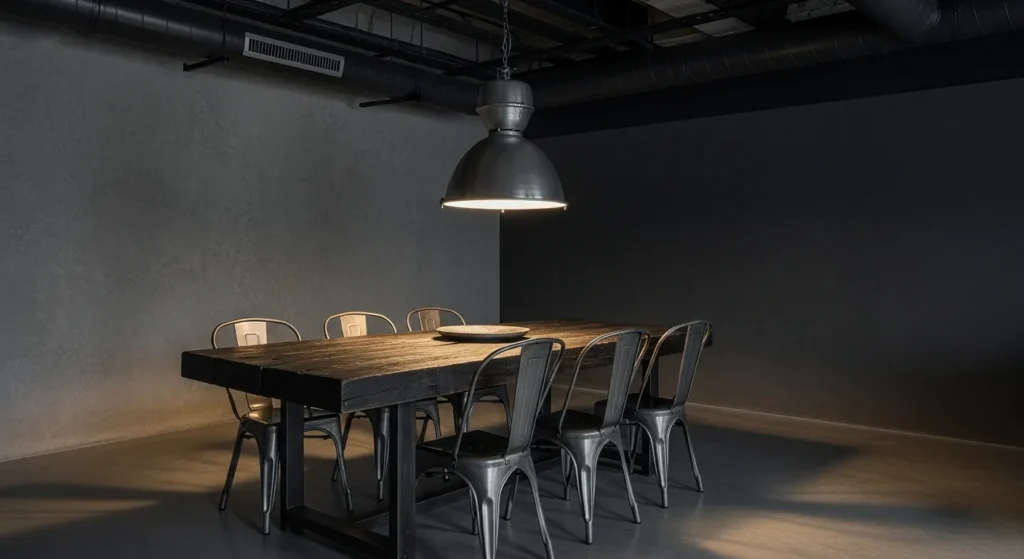
The industrial aesthetic naturally lends itself to darker tones through the use of raw materials like concrete and metal. Dark gray concrete walls provide a textured, imperfect background that adds grit and character to the dining area. Painting exposed pipes or ceiling beams in black unifies the industrial elements and lowers the visual ceiling height, making a loft-style space feel more intimate.
Furniture in this setting should be sturdy and functional, mixing wood with black metal accents. The contrast between the cold metal and the warm wood grain prevents the space from feeling sterile. Lighting plays a crucial role here, often utilizing Edison bulbs or large metal domes to cast a warm pool of light over the dining table. This approach to dark dining room ideas is perfect for urban apartments or homes with a modern, edgy architecture.
Dark Wood Paneling
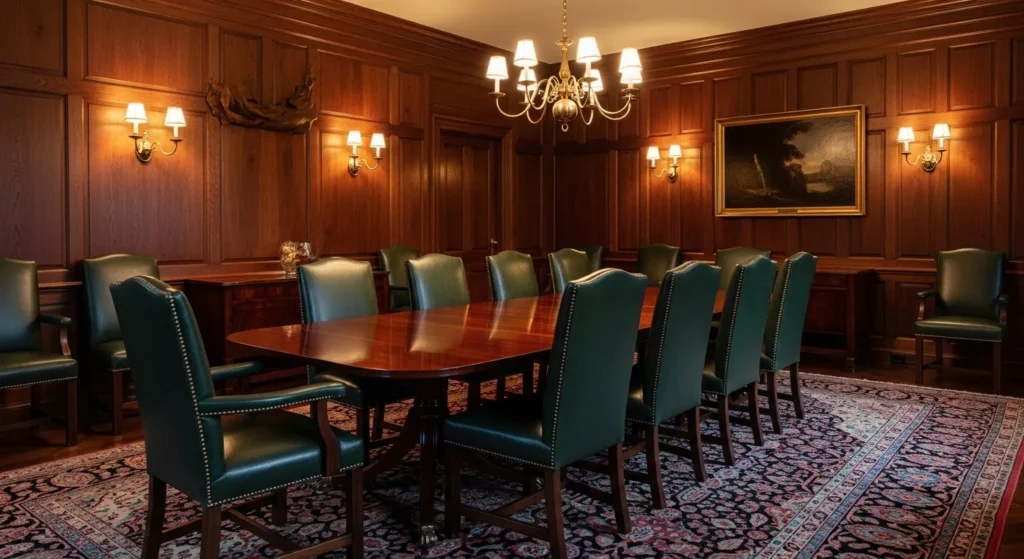
Wood paneling brings a texture and depth to a room that paint alone cannot achieve. When stained in a dark walnut or mahogany finish, the walls take on a life of their own, evoking the feel of an exclusive members’ club or a historic library. This look is timeless and exudes a sense of permanence and quality. The natural variation in the wood grain adds visual interest even in a dimly lit room.
To keep the room from feeling too much like a box, it is helpful to introduce textiles like a colorful vintage rug or leather upholstery. These elements break up the wood tones and add softness to the hard surfaces. Wall sconces are an excellent lighting choice here, as they highlight the beauty of the wood and create pockets of light. This is a classic choice among dark dining room ideas that emphasizes craftsmanship and tradition.
Black Ceiling Statement
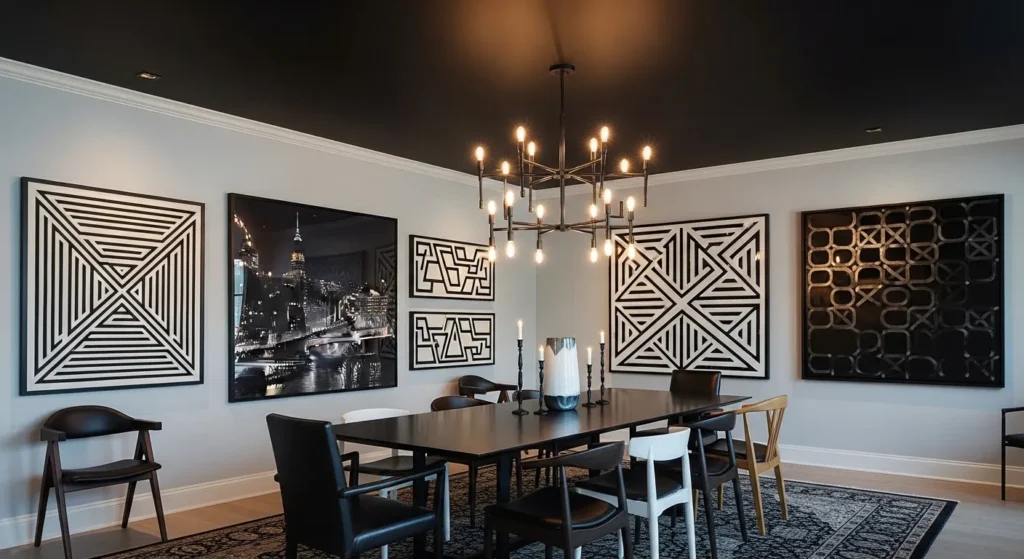
If painting all four walls dark feels too intimidating, painting the ceiling black is a powerful alternative. This technique, often referred to as the fifth wall, draws the eye upward and can actually make the ceiling feel higher by blurring the boundaries. It adds a lid to the room, creating a cozy canopy that anchors the dining space without darkening the entire environment.
This design strategy works best when you tie the ceiling color into the rest of the room through accessories. Black picture frames, a black dining table, or a dark rug help to integrate the dark ceiling with the lighter walls. It creates a dynamic contrast that feels modern and unexpected. This is one of the most versatile dark dining room ideas because it retains the brightness of the walls while still offering a moody edge.
Chocolate Brown Warmth
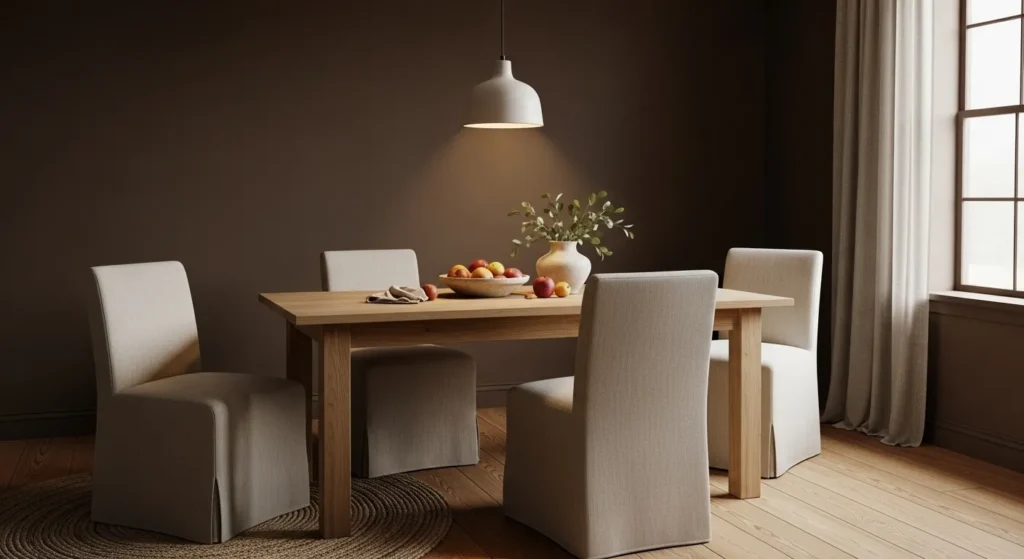
Brown is making a significant comeback in interior design, offering a warmer, earthier alternative to black or gray. A deep chocolate brown wall color creates a cocoon-like effect that feels incredibly welcoming and safe. It pairs beautifully with lighter neutrals like cream, beige, and light oak, creating a soft contrast that is easy on the eyes. This color palette is reminiscent of coffee and cream, evoking feelings of comfort and relaxation.
To keep the look modern, avoid heavy, dark furniture that matches the walls too closely. Instead, opt for lighter woods and natural textures like linen, wool, and jute. These materials pop against the dark brown backdrop and prevent the room from feeling muddy. This approach to dark dining room ideas is perfect for creating a relaxed, family-friendly atmosphere that still feels designed and intentional.
Moody Gallery Wall
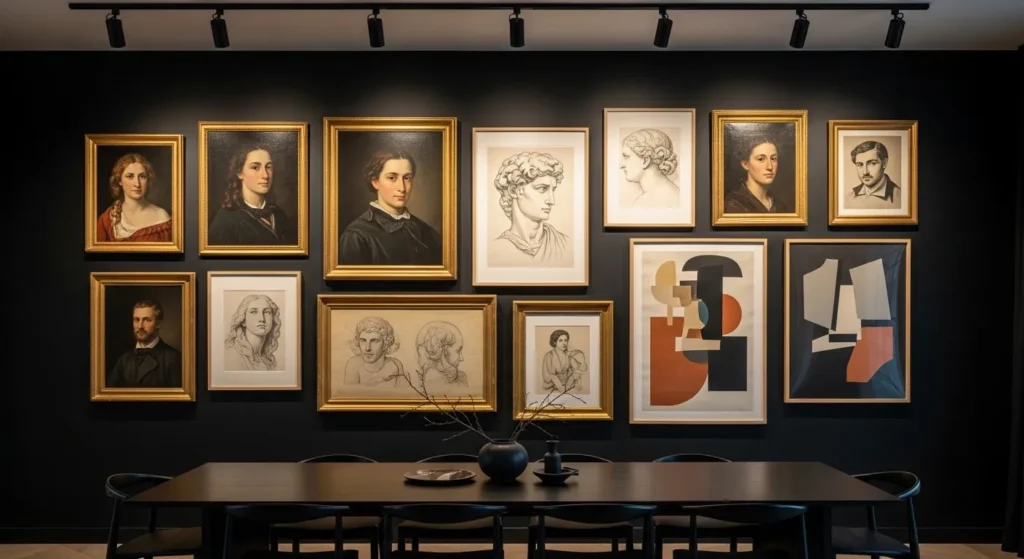
A dark wall serves as the perfect backdrop for an art collection, allowing the colors and frames to stand out vividly. By creating a gallery wall on a black or navy surface, you turn the dining room into a conversation starter. The dark paint makes the whites and bright colors in the artwork pop, creating a visual vibrancy that white walls often wash out. This creates a space that feels personal and curated.
When arranging a gallery wall in a dark room, mixing frame styles can add to the eclectic charm. Gold, wood, and black frames can all coexist, unified by the dark background. It is important to have proper lighting, such as track lighting or picture lights, to ensure the art is visible and to add ambient glow. This is a highly customizable version of dark dining room ideas that allows your personality to shine through.
Slate Blue and Rust
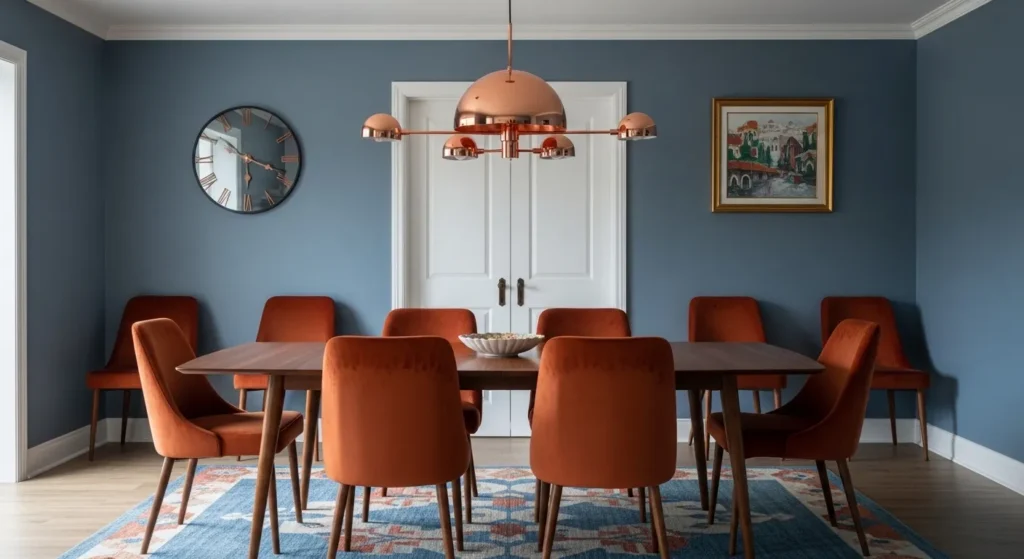
Combining slate blue with rust or terracotta creates a sophisticated color palette that feels both retro and current. The cool tones of the slate blue walls provide a calming backdrop, while the warm rust accents inject energy and life into the space. This complementary color scheme is visually pleasing and creates a balanced atmosphere that is neither too hot nor too cold.
Furniture with mid-century lines works particularly well with this color combination. The rust color can be introduced through velvet dining chairs or heavy drapery. The contrast between the blue and orange-red tones creates a dynamic vibration in the room that keeps it feeling active. This is a great way to explore dark dining room ideas if you want to incorporate color theory and a touch of vintage flair.
Textured Wallpaper Feature
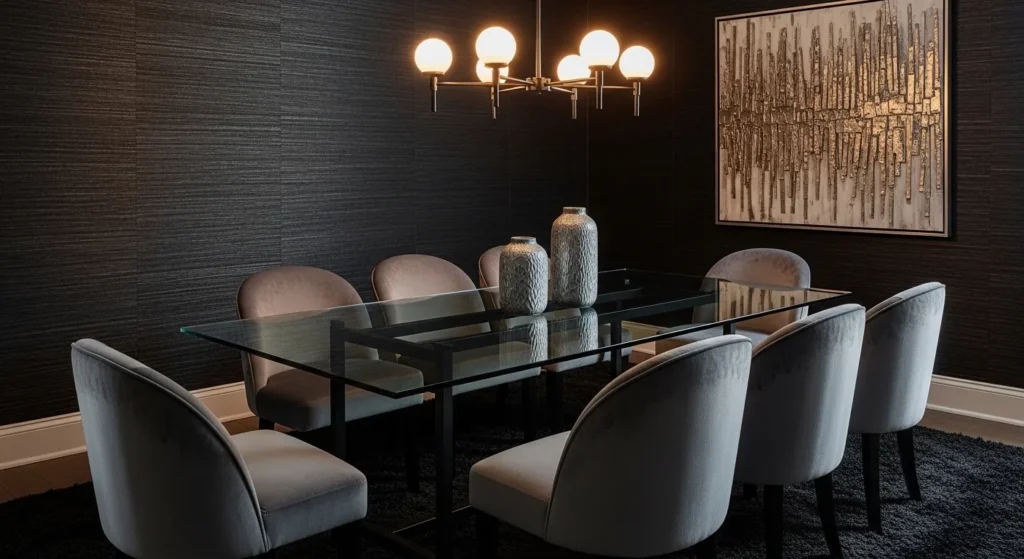
Texture is just as important as color when designing a moody space, and textured wallpaper creates immediate depth. A dark grasscloth or embossed paper adds a tactile quality that flat paint cannot mimic. It catches the light in interesting ways, creating subtle shadows and highlights across the surface of the walls. This adds a layer of richness and luxury to the dining room.
Using a glass dining table in this setting can be a smart move, as it allows the view of the wallpaper to remain unobstructed and reflects the ambient light. The goal is to create a sensory experience where the walls feel substantial and high-quality. This method elevates the concept of dark dining room ideas by adding physical dimension to the darkness.
Two-Tone Wainscoting
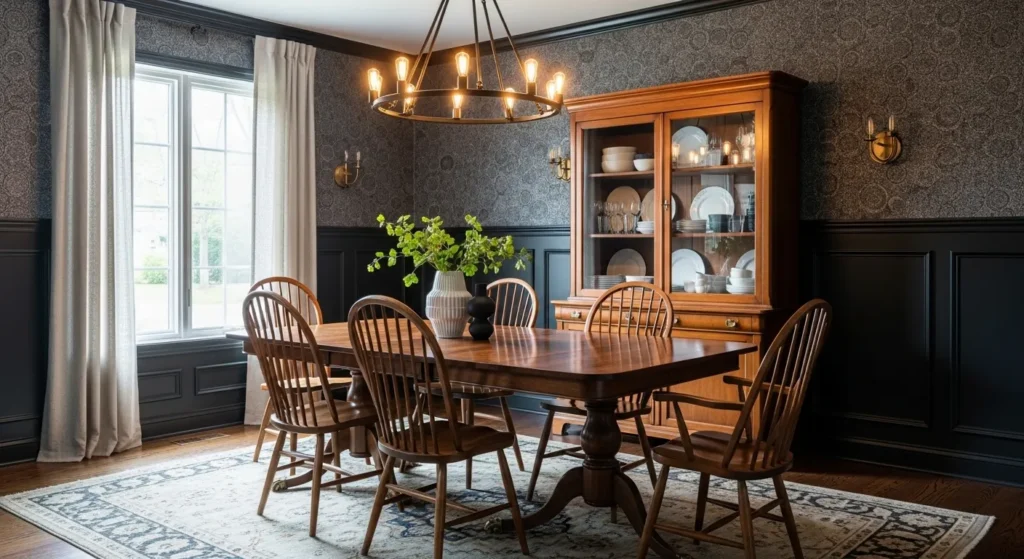
If you want to add architectural interest, a two-tone wall treatment using wainscoting is an excellent choice. Painting the lower woodwork in a deep black or navy while using a slightly lighter shade or a dark pattern above creates a visual break that adds height to the room. This technique adds a traditional structure to the space while the dark colors keep it feeling modern and moody.
This style allows for a play on finishes, such as using a semi-gloss paint on the wainscoting and a matte paint or wallpaper above. The difference in sheen adds complexity to the design. It is a sophisticated way to implement dark dining room ideas, bridging the gap between classic carpentry and contemporary color trends.
Dramatic Drapery
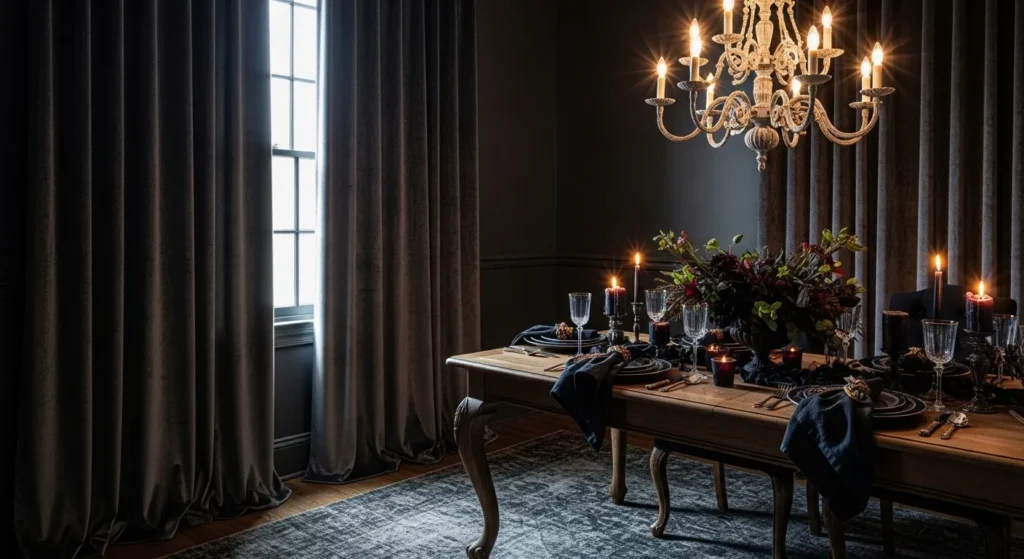
Window treatments can define the mood of a room, and in a dark dining space, heavy drapery creates a sense of enclosure and luxury. choosing curtains in velvet or a heavy linen that matches the wall color creates a seamless, wrapped effect. This not only aids in sound dampening, making the room quieter and more intimate, but also blocks out the outside world, focusing attention on the meal.
To prevent the room from feeling too shut in, ensure that the curtains can be opened fully during the day to let natural light hit the dark walls. At night, the fabric adds a soft, vertical element that contrasts with the hard surfaces of the table and chairs. This focus on textiles is a crucial aspect of comfortable dark dining room ideas.
Mirror Wall Illusion
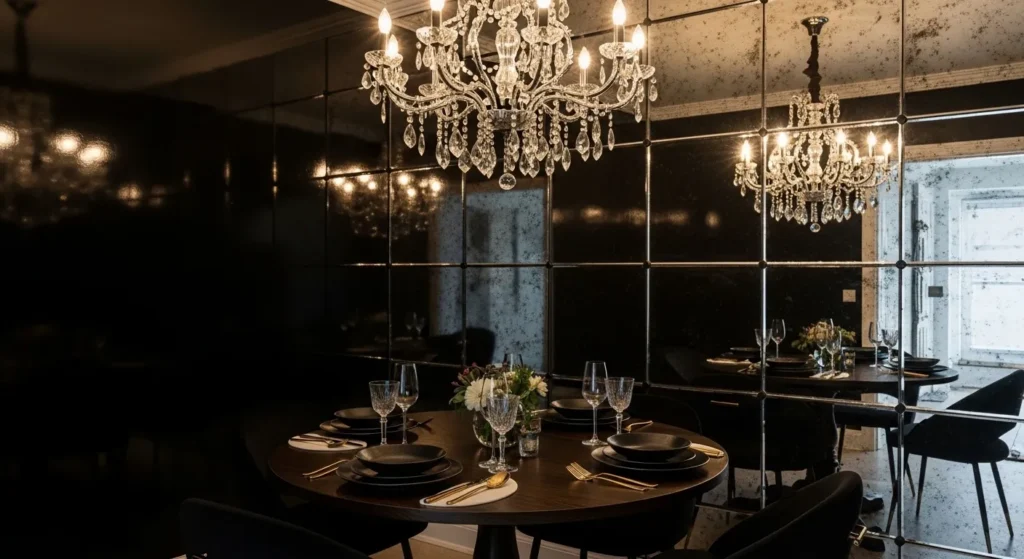
One of the biggest concerns with dark rooms is that they can feel small, but a mirrored wall solves this instantly. By covering one wall in mirrors, preferably with an antique or smoked finish to match the moody vibe, you visually double the space. The mirrors reflect the dark walls and the lighting, creating depth and sparkle without introducing bright white colors.
This technique is especially effective in narrow dining rooms. The reflection of a chandelier or candlelight in the mirror creates a magical, glittering atmosphere during dinner parties. It creates a sense of infinite space while maintaining the cozy, dark aesthetic. This is a strategic choice among dark dining room ideas for maximizing impact in limited square footage.
Rustic Black Farmhouse
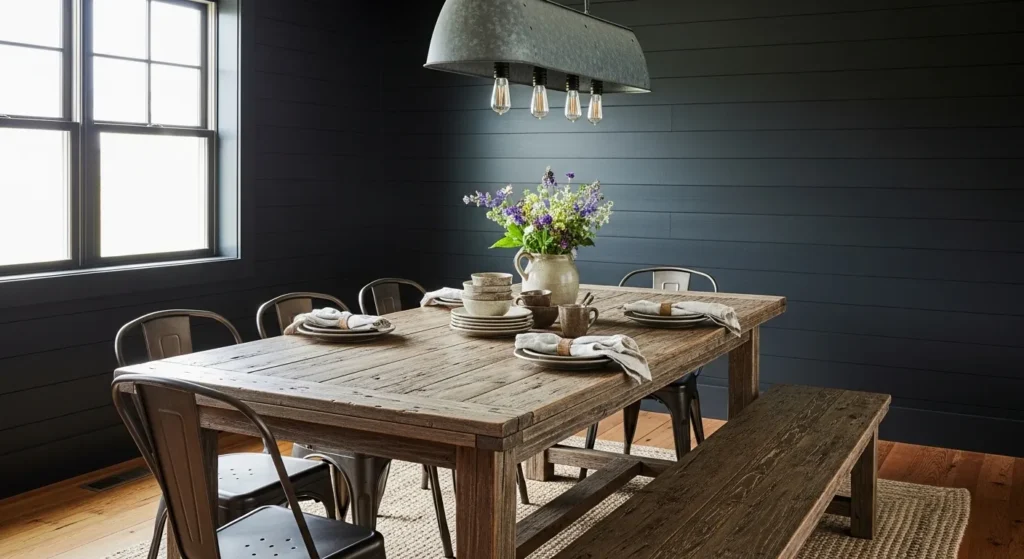
The modern farmhouse style can be adapted to a darker palette by painting shiplap or tongue-and-groove walls in matte black. This retains the rustic texture and charm of the farmhouse look but gives it a contemporary, sophisticated update. The horizontal lines of the shiplap add interest to the dark walls, preventing them from looking flat.
Contrast is created through the use of warm, distressed wood tones in the furniture and flooring. The rustic nature of the table and benches makes the space feel casual and approachable, despite the dramatic wall color. This fusion of styles shows that dark dining room ideas can be family-friendly and relaxed, not just formal and stiff.
Wine Red and Leather
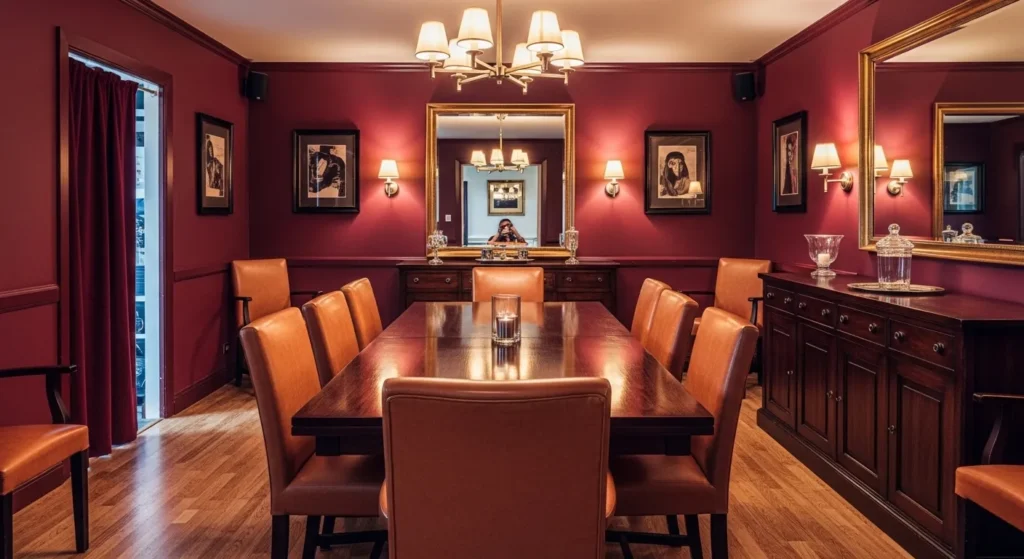
Burgundy or wine red is a powerful color that evokes the richness of fine wine and dining. It creates a stimulating environment that feels warm and passionate. Pairing this wall color with cognac or tan leather chairs creates a classic, masculine aesthetic that feels like a high-end steakhouse or a private study. The leather adds a smooth texture that complements the saturation of the walls.
This combination is timeless and wears well over time. The warm undertones in both the paint and the leather make the room feel physically warmer, which is perfect for evening entertaining. Accessorizing with dark wood and brass completes the look. It is a robust option for dark dining room ideas that prioritizes comfort and classic style.
Candlelight Focus
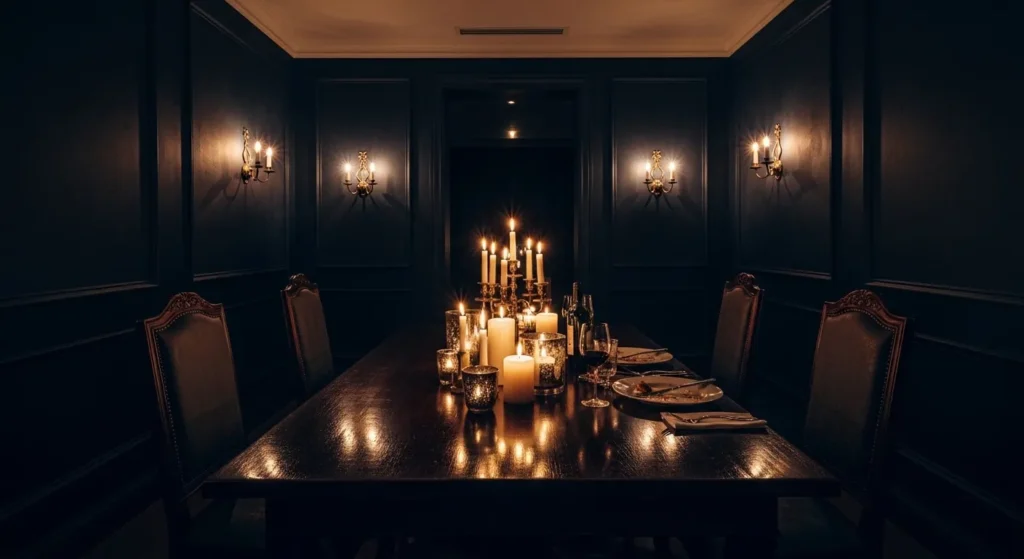
The ultimate way to elevate a moody space is to design it specifically for candlelight. When the walls are dark, they absorb the ambient light, allowing the flicker of candles to become the star of the show. Designing the room with this in mind means choosing surfaces that reflect the flame, such as polished wood, glass, or brass, while keeping the background matte and receded.
This idea focuses less on the furniture and more on the atmosphere. Wall sconces that hold real or realistic faux candles add to the effect. The result is a dining experience that feels separated from the modern world, slowing down time and encouraging conversation. It is the most atmospheric of all dark dining room ideas, turning every dinner into a special occasion.
Conclusion
Transforming your eating area with these dark dining room ideas can completely change the way you experience your home. By stepping away from the safety of white walls and embracing moody hues, you create a space that feels curated, intimate, and deeply stylish. Whether you choose the drama of a black ceiling, the warmth of chocolate brown, or the elegance of charcoal and gold, the key is to balance the darkness with texture and appropriate lighting. Don’t be afraid to experiment with deep colors; the result is often a stunning, cozy sanctuary perfect for gathering with friends and family.