
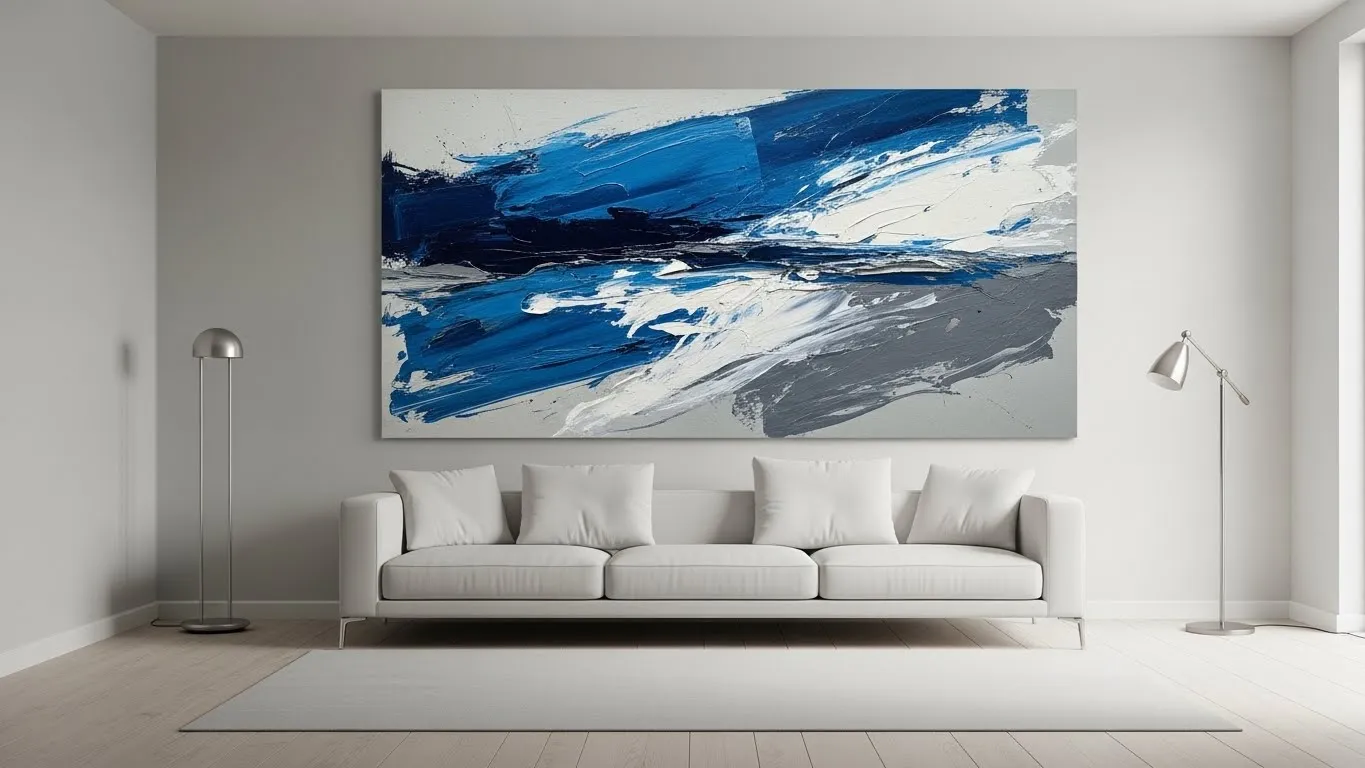
Creating a space that feels both inviting and stylish can be a challenge, but finding the right inspiration makes the process much easier. When exploring contemporary living room design ideas, the goal is often to achieve a sense of visual balance through clean lines, neutral palettes, and intentional decor choices. Whether you are renovating a large open space or refreshing a cozy apartment, these concepts focus on harmony and modern aesthetics to transform your home into a sanctuary of comfort and sophistication.
Embrace Textural Neutrals
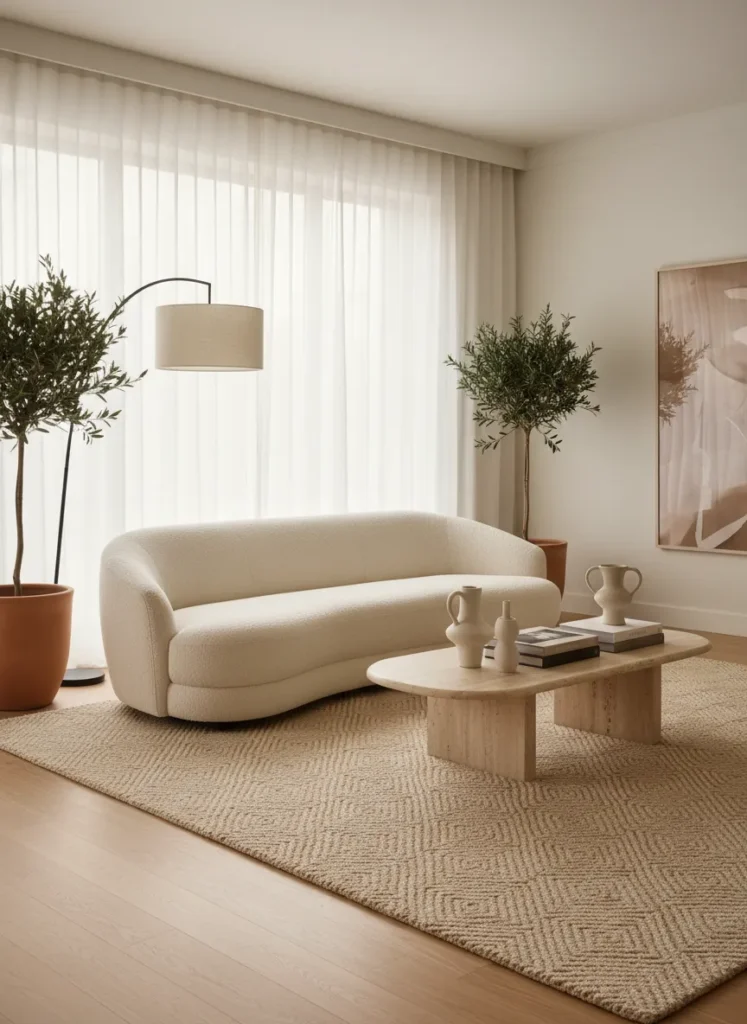
One of the most effective ways to create a calm atmosphere is by using a neutral color palette that relies on texture rather than bright colors. By layering different materials like wool, linen, and stone, you add depth to the room without overwhelming the eye. This approach keeps the space feeling warm and grounded while maintaining a very modern and clean look.
Visual balance is achieved here by ensuring that no single element dominates the room. The softness of a bouclé sofa contrasts beautifully with the hardness of a stone coffee table, creating a tactile experience that is interesting yet subtle. This style is perfect for those who want a sophisticated environment that feels effortlessly chic.
Incorporate Sculptural Lighting
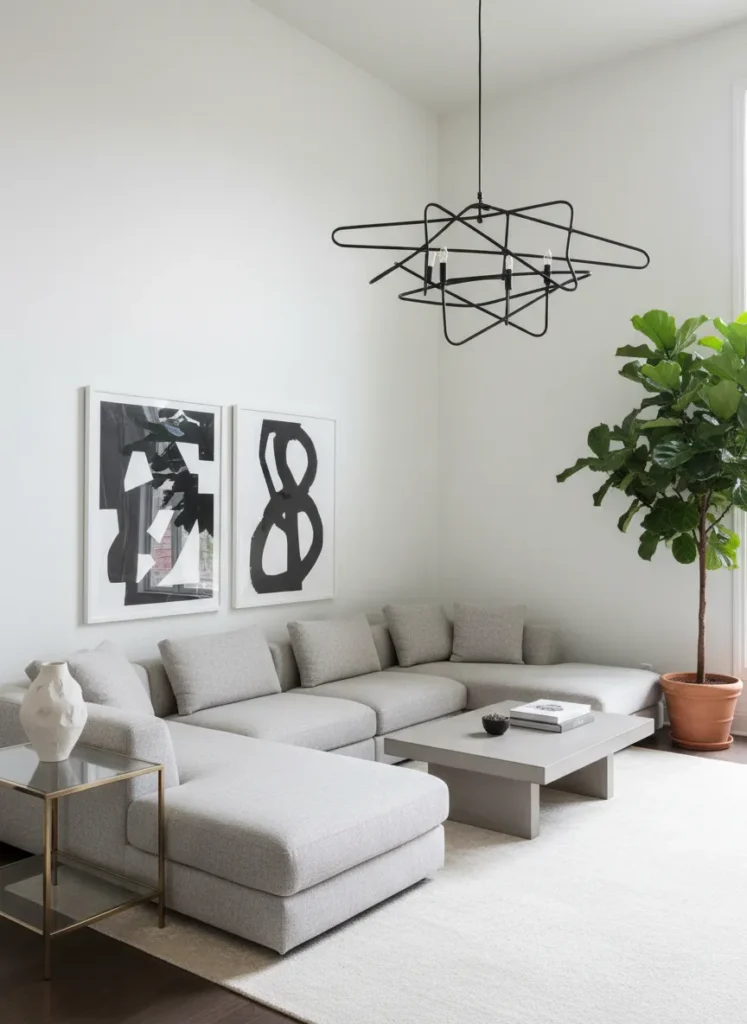
Lighting in a contemporary home serves a purpose beyond just illumination; it acts as a piece of art that draws the eye upward. Choosing a light fixture with a unique, sculptural shape can become the focal point of the living room, anchoring the furniture arrangement beneath it. This works particularly well in rooms with high ceilings or minimalist decor where the fixture can truly shine.
The key to this look is keeping the rest of the room relatively simple so the lighting does not compete for attention. By pairing a bold chandelier with sleek, low-profile furniture, you maintain an open and airy feel. This balance between a heavy visual element above and grounded furniture below creates a dynamic and well-proportioned space.
Select Low Profile Furniture
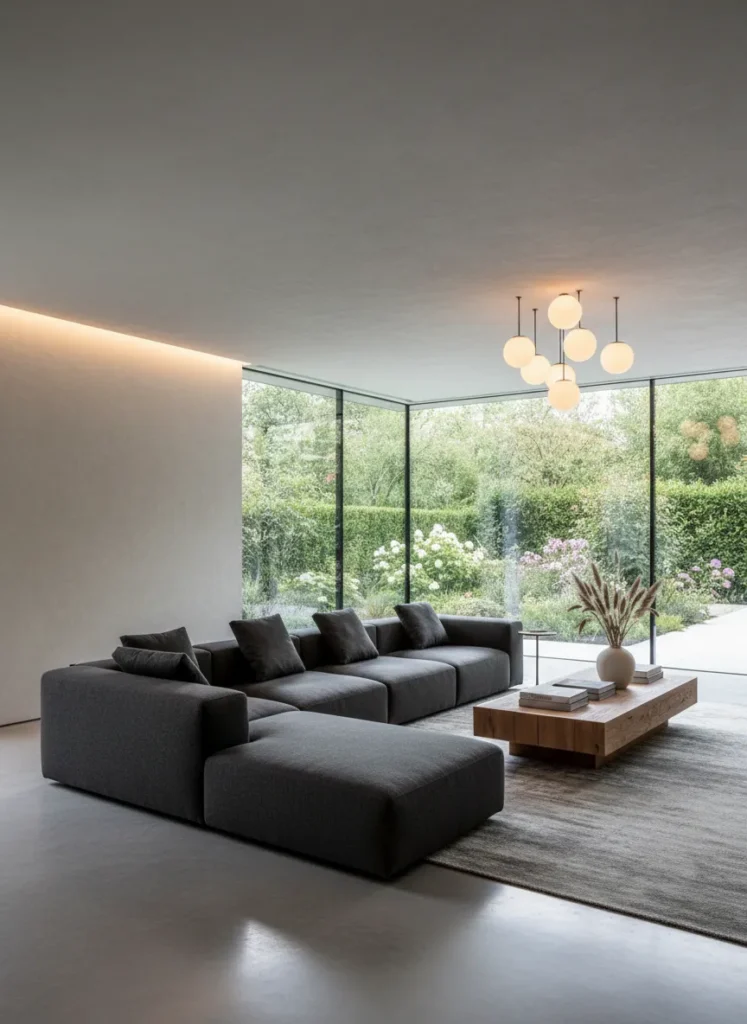
Low profile furniture is a staple of modern design because it emphasizes the vertical space in a room, making ceilings appear higher and the room feel larger. A sofa that sits closer to the ground encourages a relaxed and casual vibe while looking incredibly sleek. This design choice is ideal for open-concept homes where you want to maintain clear sightlines across the floor.
Using furniture with clean horizontal lines helps to ground the space and establishes a sense of stability. It prevents the room from feeling cluttered or top-heavy, which is essential for visual balance. This style invites you to sit back and lounge, proving that high design does not have to sacrifice comfort.
Add Biophilic Accents
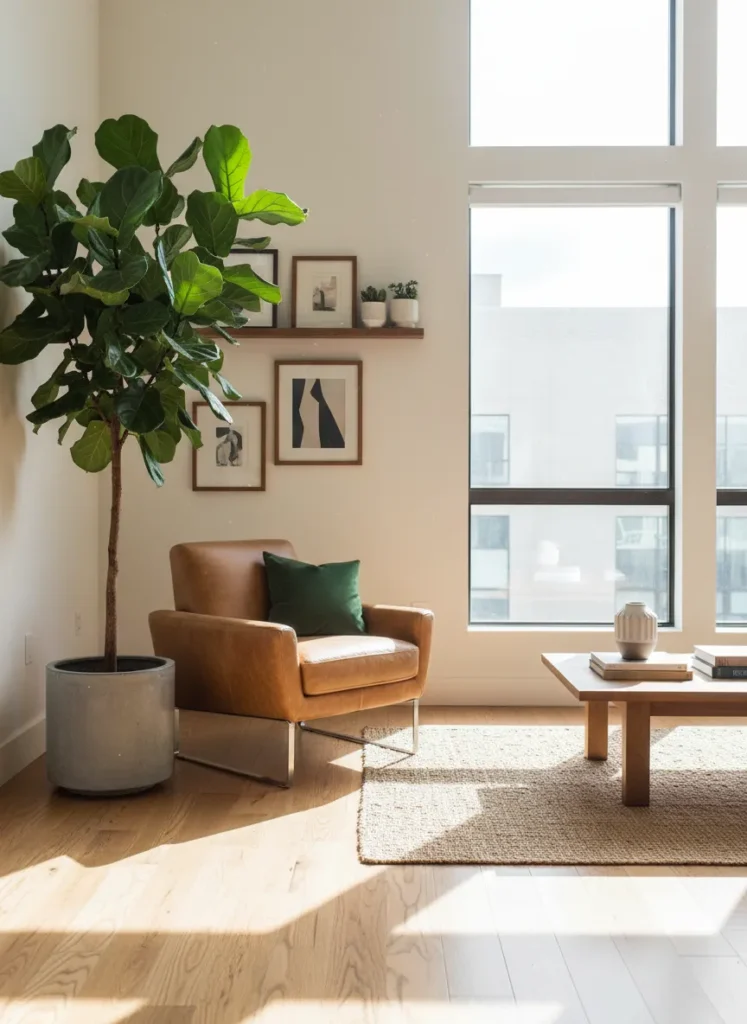
Bringing the outdoors in is a trend that continues to dominate contemporary design because it adds life and vibrancy to sterile spaces. Incorporating large indoor plants like a fiddle leaf fig or a monstera introduces organic shapes that contrast with the straight lines of modern architecture. The natural green tones also act as a refreshing neutral that pairs well with almost any color scheme.
Biophilic design improves the room by creating a connection to nature, which is known to reduce stress and improve mood. Visually, a tall plant can fill an empty corner and balance out the height of bookshelves or windows on the opposite side of the room. It softens the hard edges of furniture and makes the living area feel more breathable and welcoming.
Utilize Monochromatic Greys
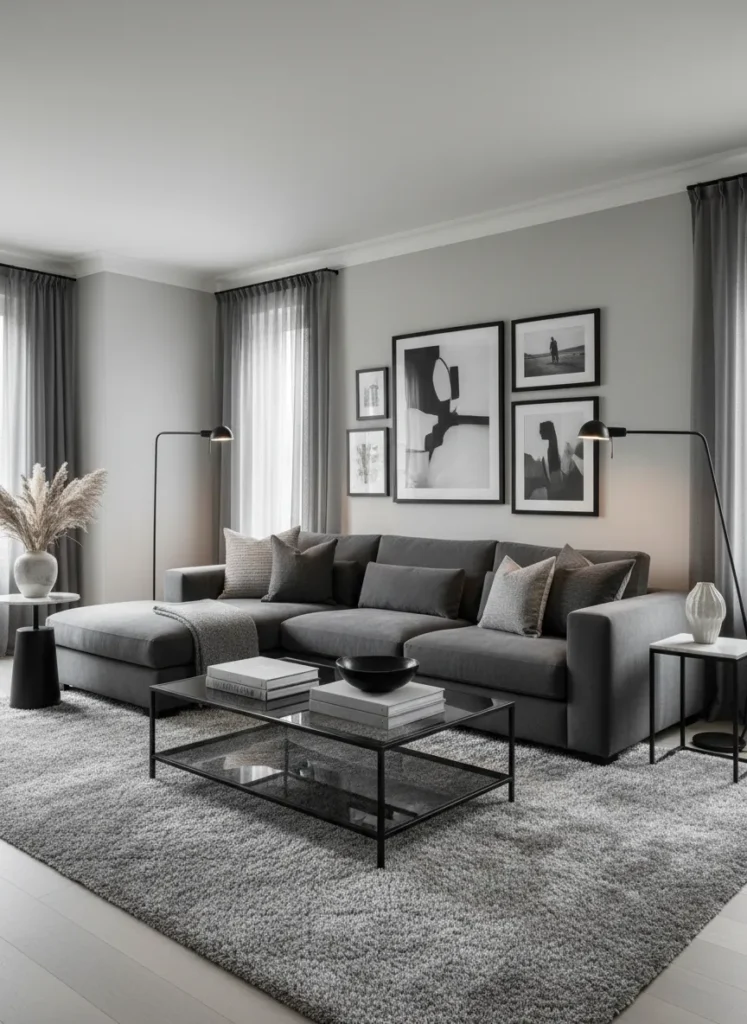
A monochromatic color scheme is a powerful tool for creating a cohesive and harmonious environment. By using varying shades of grey, from nearly white to deep charcoal, you create a layered look that feels intentional and curated. This technique unifies the room and allows the eye to move smoothly from one area to another without interruption.
To prevent the room from looking flat, it is important to vary the textures and finishes within the single color family. Matte walls paired with a velvet sofa and a metallic rug add the necessary contrast to keep the design interesting. This approach creates a serene backdrop that feels timeless and effortlessly modern.
Create Open Concept Flow
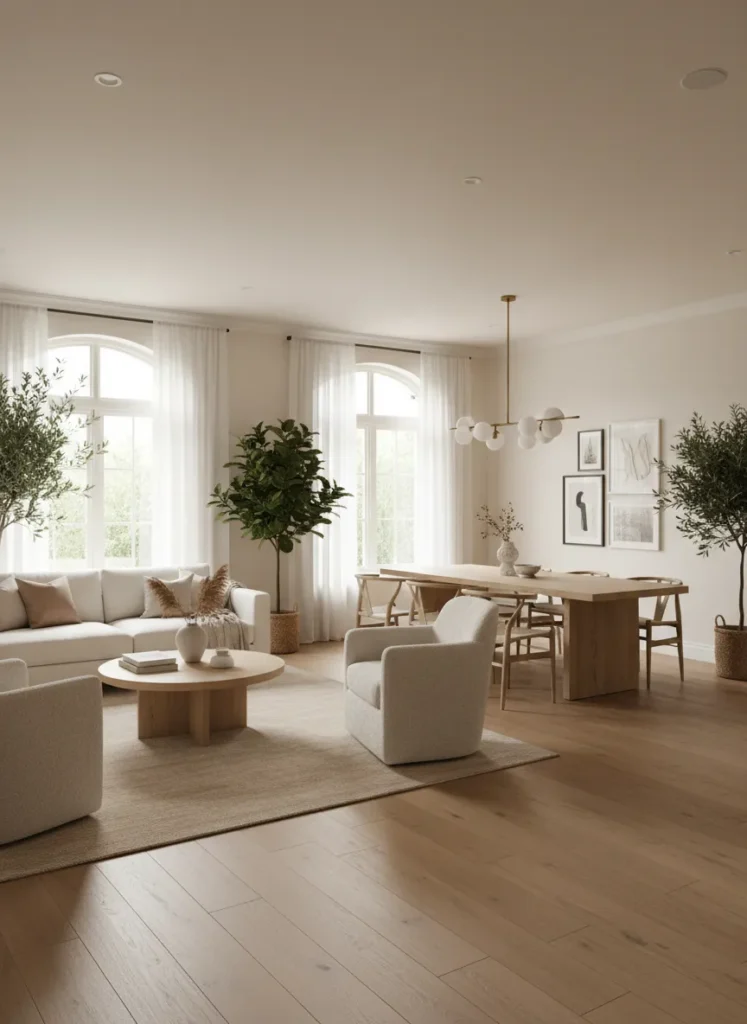
Open concept living is synonymous with contemporary design, emphasizing social interaction and light. The challenge lies in defining the living zone without building walls, which is often achieved through furniture placement and area rugs. orienting the sofa to face a focal point while keeping the back open to the dining area establishes a clear boundary while maintaining flow.
This layout improves the room by borrowing light from adjacent spaces, making the entire area feel brighter and more expansive. Visual balance is maintained by repeating materials or colors, such as wood tones or metal finishes, across the different zones. This repetition ties the spaces together, ensuring the living room feels like part of a larger, cohesive whole.
Install Floating Shelves
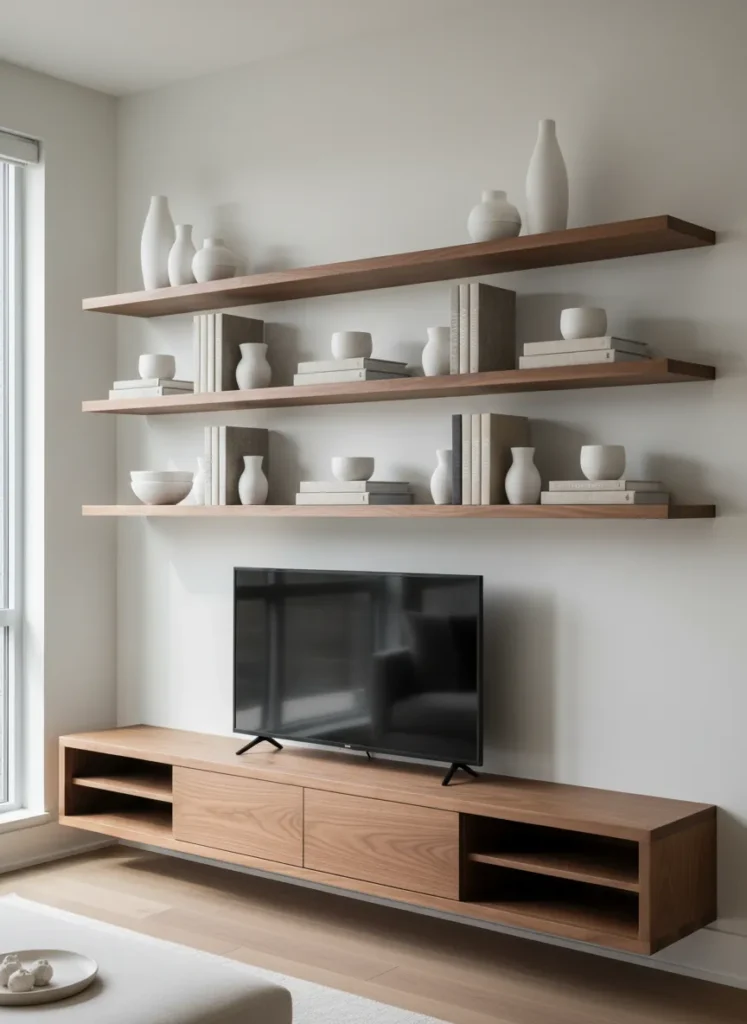
Floating shelves are an excellent solution for storage and display in a contemporary living room because they look light and airy. Unlike heavy bookcases, they do not consume floor space, which helps to keep the room feeling open and uncluttered. They provide a perfect platform to showcase personal treasures, art, or plants in a way that feels organized.
The linear nature of floating shelves reinforces the horizontal lines often found in modern architecture. By keeping the items on the shelves curated and leaving some negative space, you avoid a chaotic look. This balance of function and aesthetics makes the wall interesting without letting it become a distraction from the rest of the room.
Choose Geometric Rugs
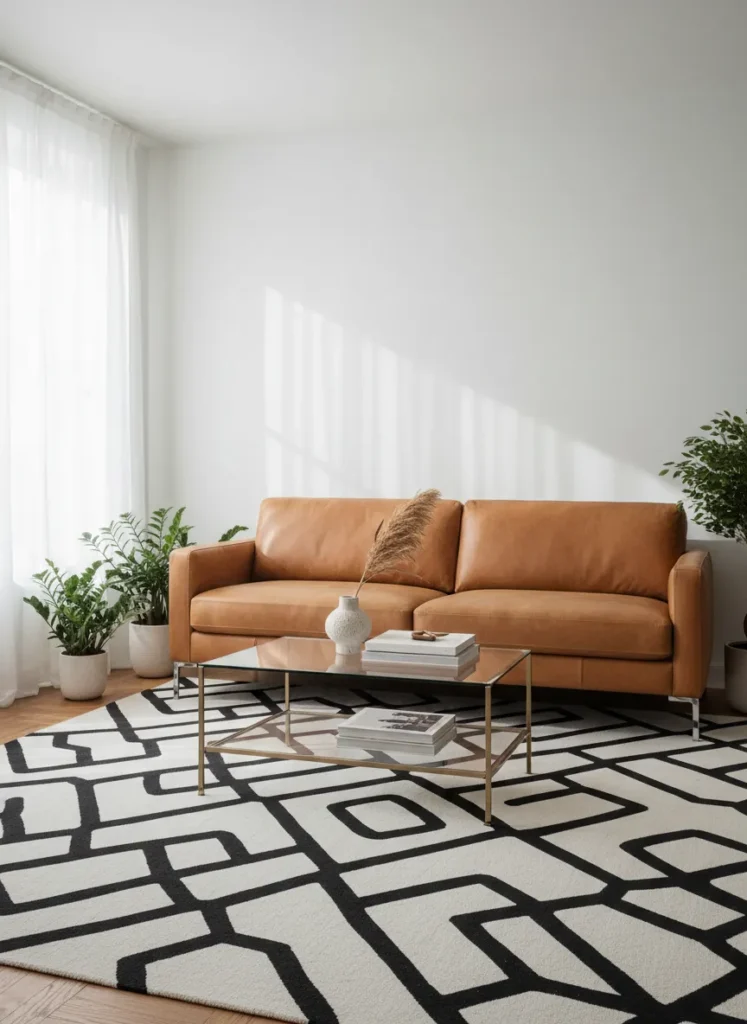
A geometric rug can serve as the foundation of a room, adding energy and a modern edge to the floor plan. The structured patterns provide a nice contrast to the organic shapes of plants or the soft curves of cushions. When the rest of the furniture is solid-colored and simple, a patterned rug becomes a statement piece that anchors the seating area.
Using a rug with a strong design helps to define the living zone, especially in larger rooms. It draws the eye inward and creates a sense of order through symmetry and repetition. This visual weight on the floor balances out lighter walls and ceilings, ensuring the room feels grounded and complete.
Feature Accent Chairs
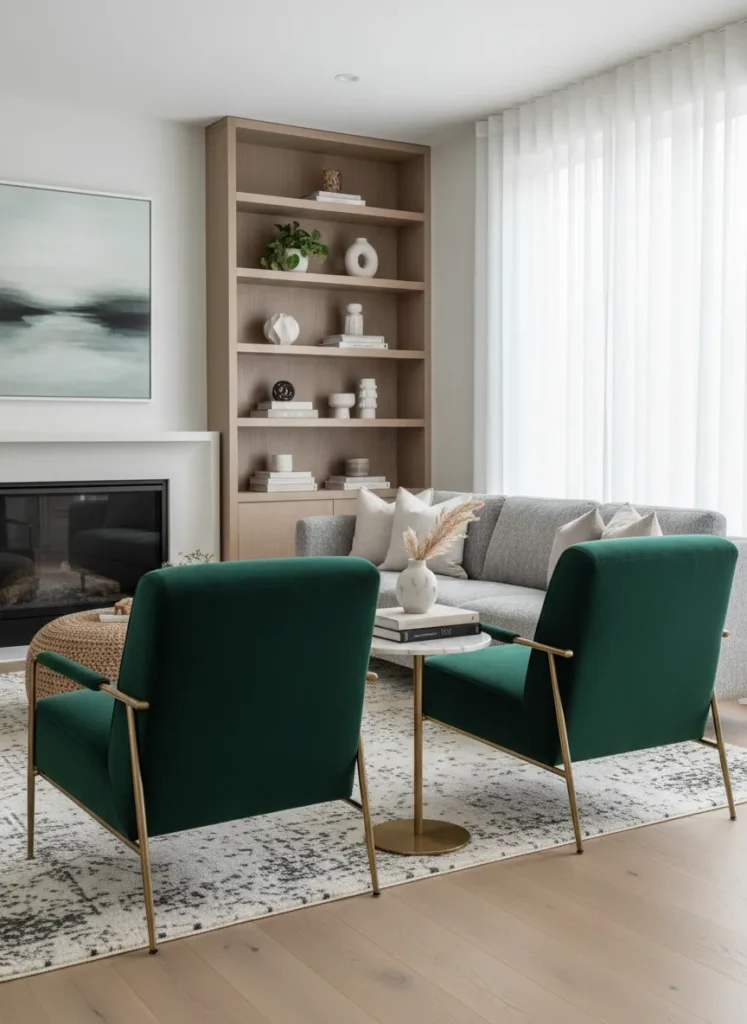
Accent chairs are the perfect opportunity to inject a pop of color or a different texture into a neutral living room. Choosing a bold hue like emerald green or navy blue creates a focal point that enlivens the space without overwhelming it. These chairs act as jewelry for the room, adding a touch of luxury and personality.
Functionally, adding a pair of chairs opposite a sofa creates a conversation circle, which is essential for a social living area. This arrangement balances the visual weight of a large sofa, preventing the room from feeling lopsided. It creates a symmetrical or balanced asymmetrical layout that is pleasing to the eye and practical for entertaining.
Mix Metal Finishes
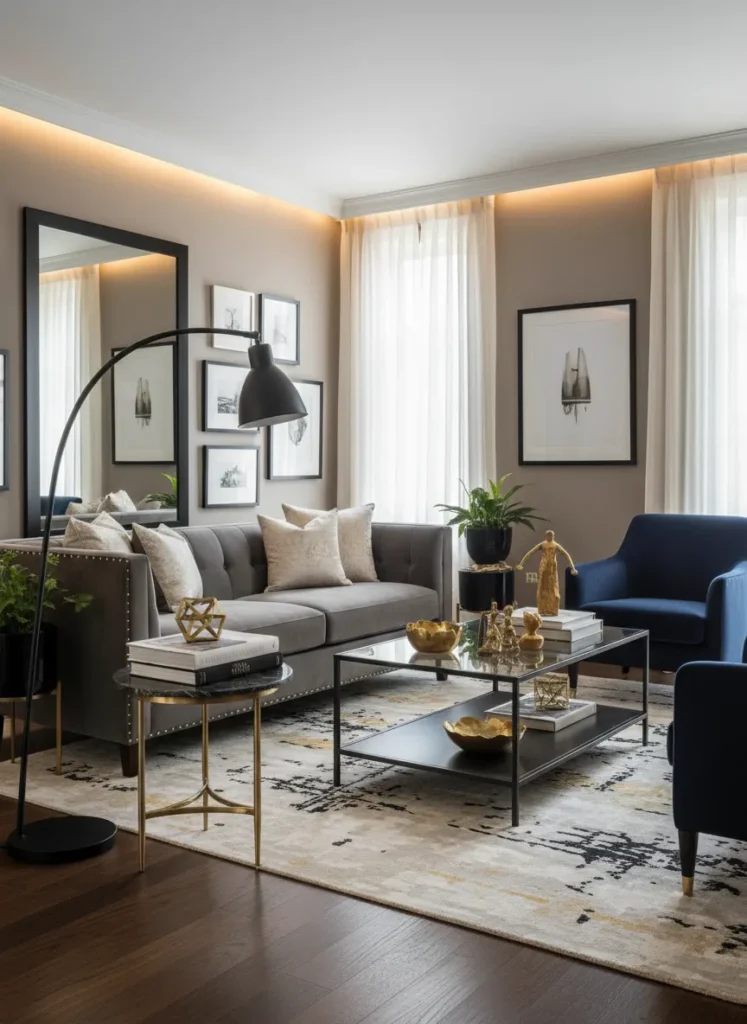
Gone are the days when you had to stick to just one metal finish; mixing metals is a contemporary way to add depth and interest. Combining cool metals like black or chrome with warm metals like brass or gold creates a dynamic look. The key is to choose one dominant metal and use the other as an accent to avoid a cluttered appearance.
This technique works because the contrast between the finishes highlights the unique design of each piece. For example, matte black hardware can ground the space, while a touch of gold adds a hint of glamour and reflects light. This interplay adds a layer of sophistication and shows a thoughtful approach to detailing.
Display Large Abstract Art
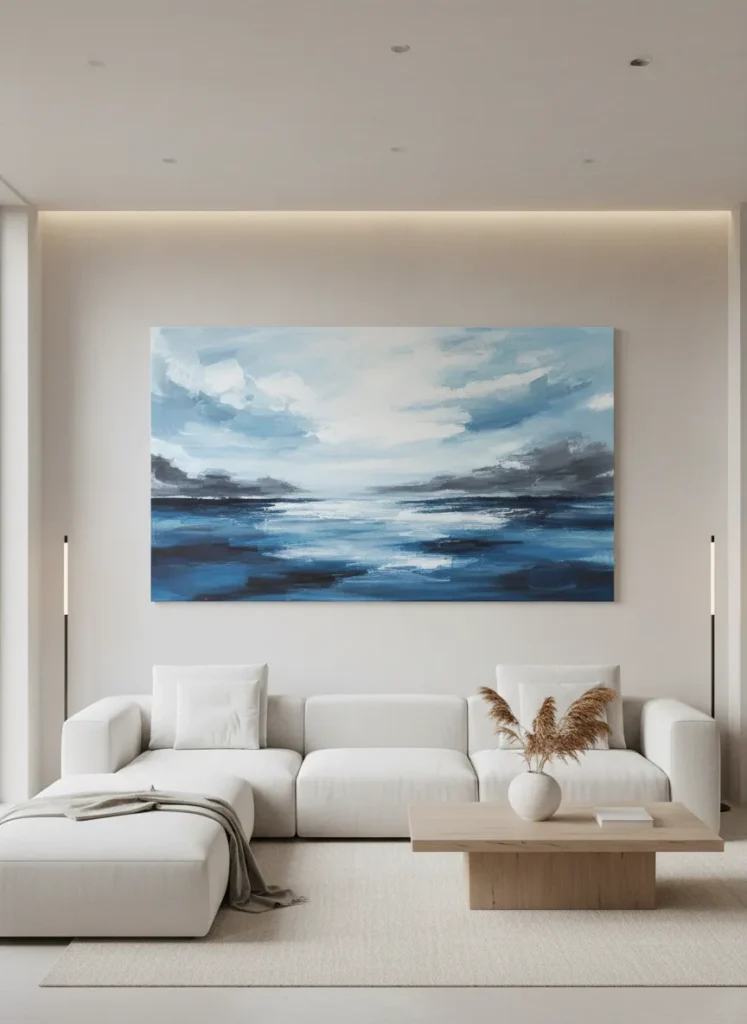
Instead of a cluttered gallery wall, contemporary design often favors one large, impactful piece of art. A large abstract canvas can set the color palette for the entire room and serves as a major focal point. It simplifies the visual field, providing a single moment of drama rather than many small distractions.
Large-scale art helps to scale the furniture, making a sofa appear more grounded and proportionate. It fills the vertical space effectively, eliminating the need for extra decor on the walls. This approach creates a museum-like quality that feels serene, upscale, and intentionally designed.
Define Zones with Sectionals
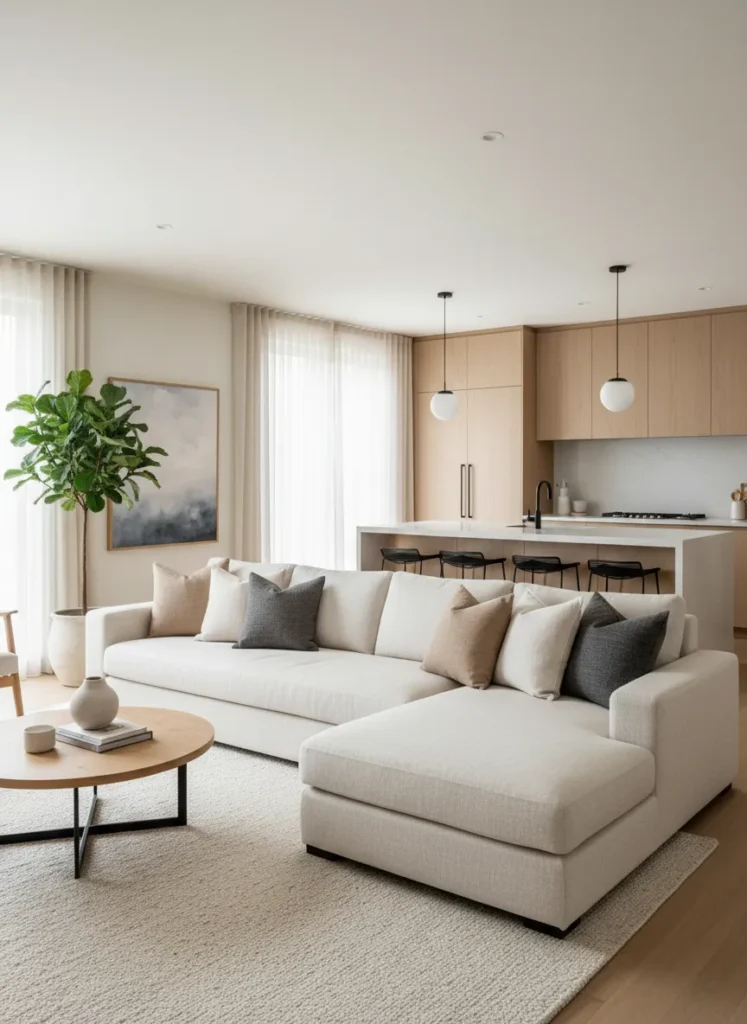
Sectional sofas are incredibly practical for contemporary living rooms because they maximize seating and help define the architecture of the room. An L-shaped sofa can act as a soft wall, separating the living area from a dining space or entryway without blocking light. Their substantial size makes them the anchor of the room, inviting relaxation.
Visually, a sectional provides a strong geometric shape that organizes the layout. It eliminates the need for multiple smaller chairs, which can sometimes make a room feel busy. By consolidating seating into one unified piece, you achieve a cleaner look that prioritizes comfort and open flow.
Maximize Natural Light
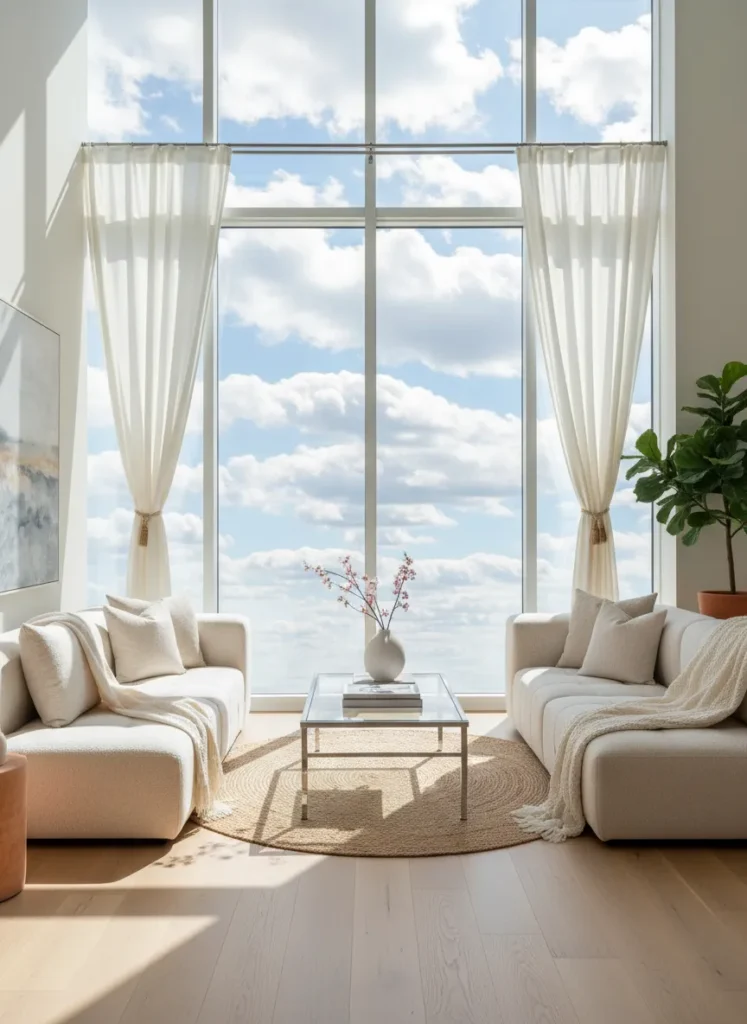
Natural light is a critical element in modern design, often considered more important than any piece of furniture. Maximizing light through large windows or by keeping window treatments minimal makes the room feel expansive and uplifting. Using sheer curtains allows for privacy while still letting diffused light filter through, softening the overall look.
Abundant light improves the room by rendering colors more accurately and highlighting the textures of materials. It creates a seamless connection between the interior and the exterior world. A well-lit room feels balanced and energetic, reducing the reliance on artificial lighting during the day and creating a healthier living environment.
Integrate Industrial Touches
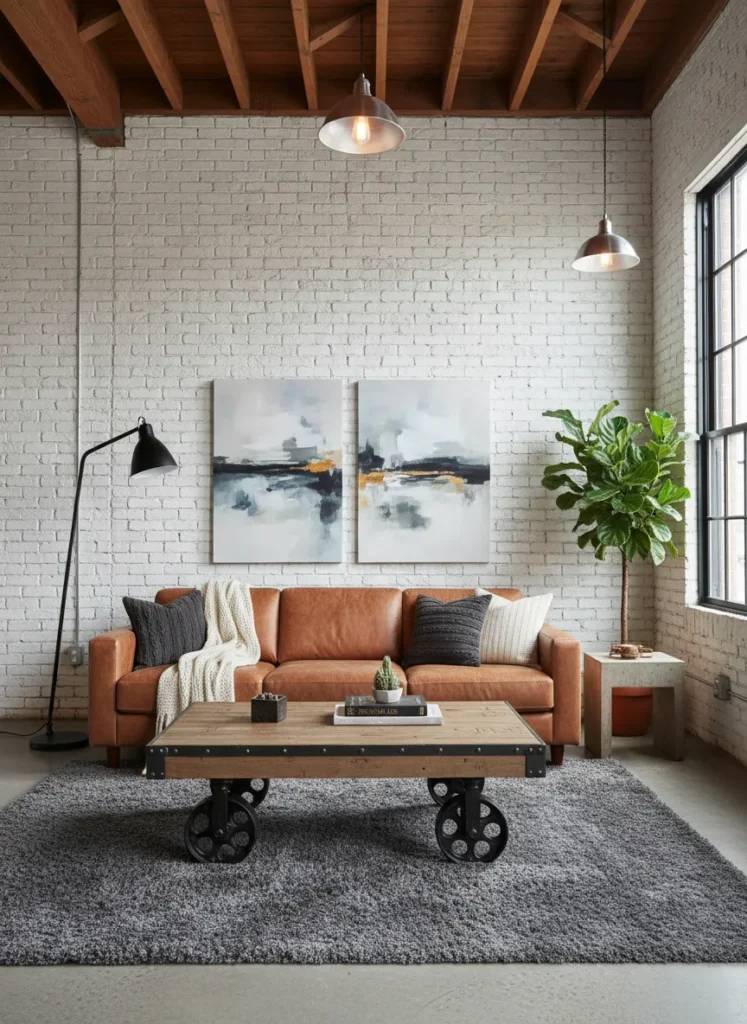
Adding industrial elements to a contemporary living room creates an interesting contrast between refined and raw materials. Exposed brick, concrete floors, or metal piping can add character and history to a space. When balanced with softer textures like rugs and upholstery, these rougher elements prevent the room from feeling too precious or fragile.
This style works by grounding the space with materials that feel permanent and durable. The juxtaposition of a soft velvet pillow against a rough brick wall creates visual tension that is very appealing in modern design. It adds a layer of urban sophistication that feels trendy yet timeless.
Soften with Curved Furniture
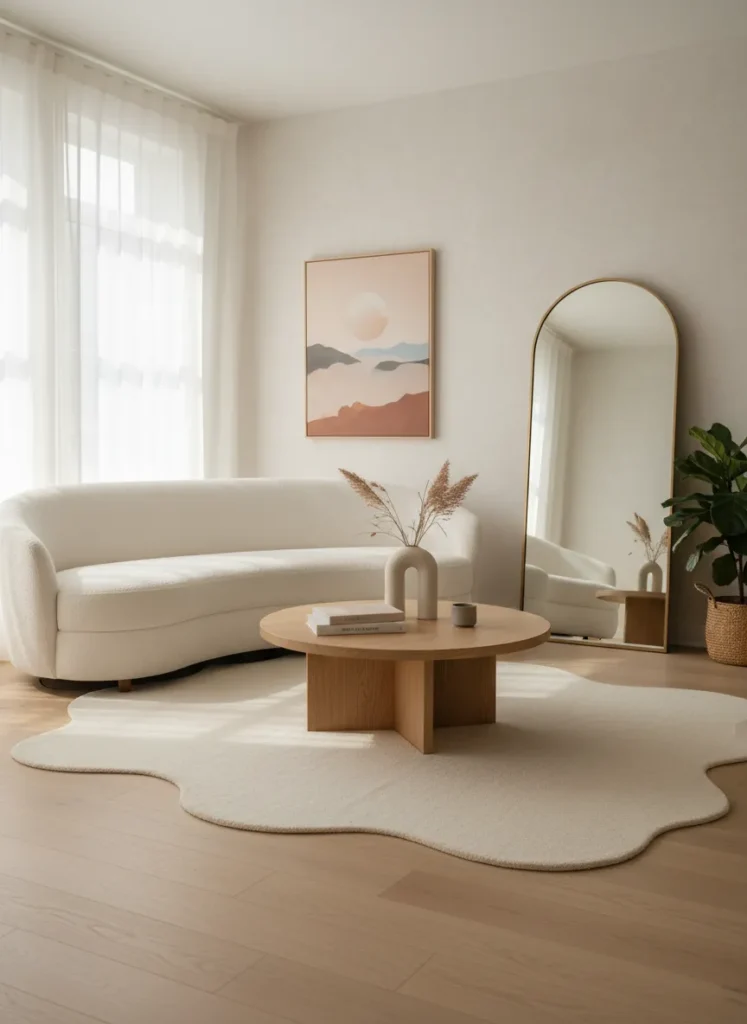
Curved furniture creates a fluid and gentle flow in a living room, breaking away from the rigid rectangular lines typical of modern architecture. Sofas with rounded backs or circular coffee tables allow for easier movement around the room and soften the overall aesthetic. This trend embraces organic shapes that feel more natural and comforting.
Introducing curves improves the room by making it feel less formal and more inviting. It encourages a relaxed atmosphere where the eyes can glide smoothly over the furniture. Balancing straight architectural lines with curved furnishings creates a harmonious composition that feels modern and sculpturally interesting.
Install Wood Slat Walls
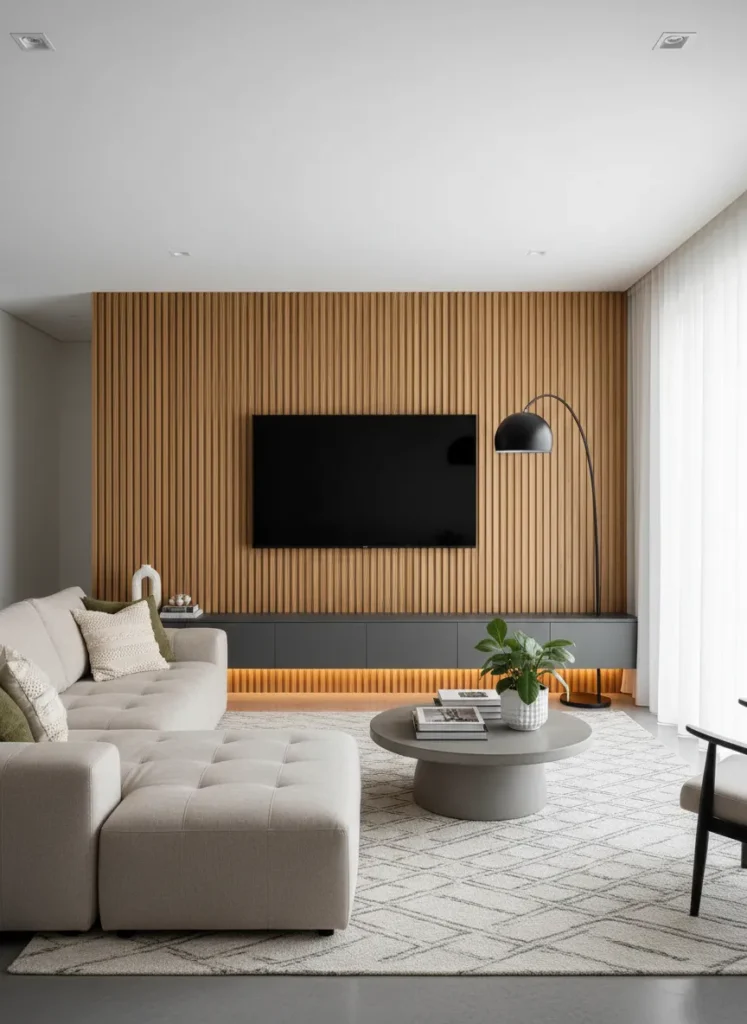
Wood slat walls are a popular contemporary feature that adds texture, warmth, and acoustic benefits to a living room. The vertical lines draw the eye upward, emphasizing the height of the room, while the wood tone brings a natural element indoors. This feature often serves as a backdrop for a television or a focal point behind a sofa.
This design idea works because it adds architectural interest without requiring major structural changes. The repetition of the slats creates a soothing rhythm that is visually pleasing. It balances the sleek, flat surfaces of screens and modern furniture with depth and tactile warmth.
Opt for Velvet Upholstery
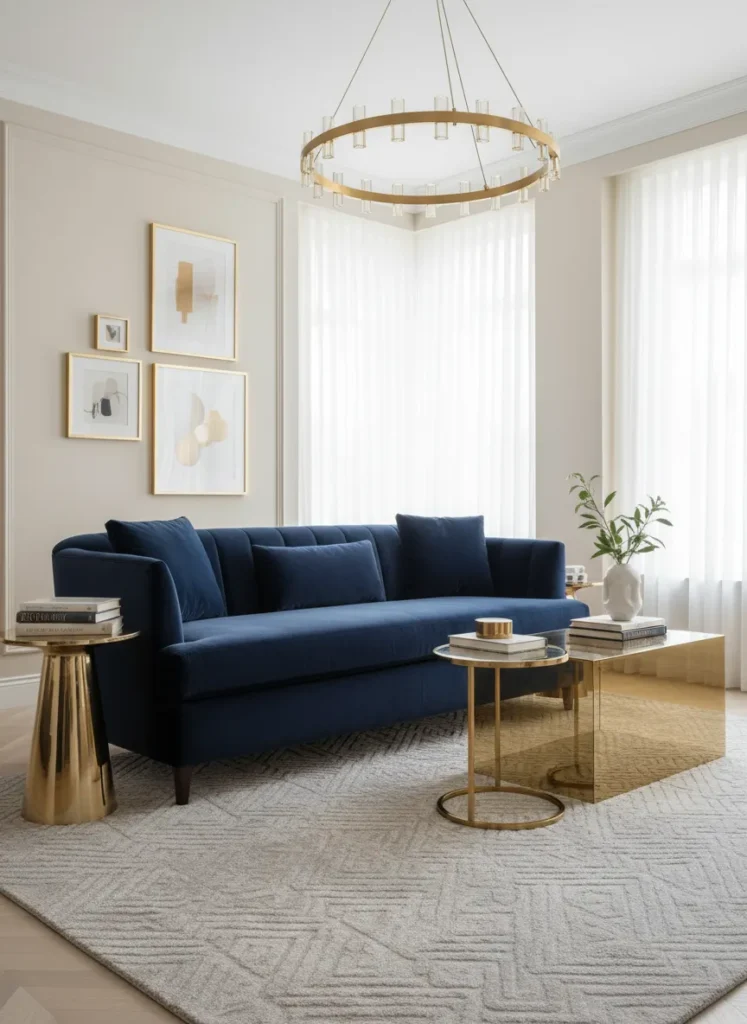
Velvet upholstery adds an immediate touch of luxury and depth to a contemporary living room. The fabric has a unique way of catching the light, creating natural highlights and shadows that make furniture look rich and dimensional. Whether on a sofa or an accent chair, velvet creates a focal point of comfort.
Using velvet balances out harder surfaces like glass, metal, and wood commonly found in modern homes. Its softness invites touch and makes the space feel cozy despite a minimalist layout. This material choice elevates the design, bridging the gap between comfort and high-end style.
Hide Technology
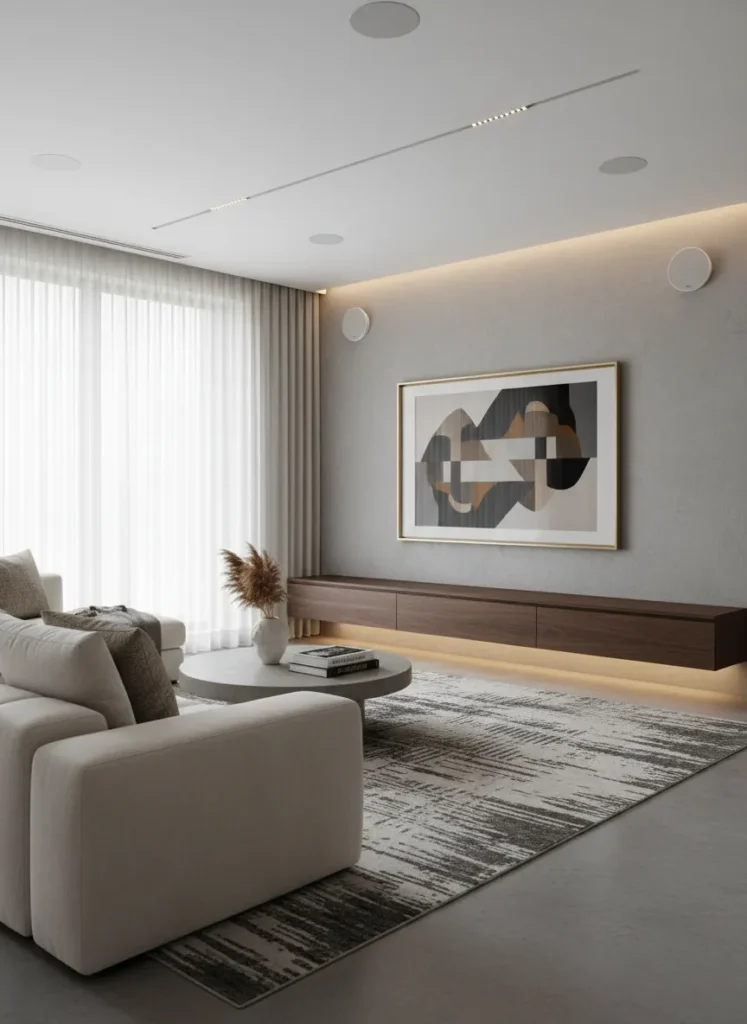
In a truly contemporary living room, technology should serve the lifestyle without dominating the aesthetic. Using solutions like frame TVs that look like art when not in use, or hiding consoles in cabinetry, keeps the focus on design rather than electronics. Managing cables and cords is essential to maintaining the clean lines that define this style.
Hiding technology improves the room by reducing visual clutter, allowing the eye to rest on beautiful furniture and decor instead of black plastic boxes. It creates a more peaceful environment where conversation and relaxation are the priorities. This approach ensures that the room feels curated and intentional, rather than centered solely around a screen.
Layer the Lighting
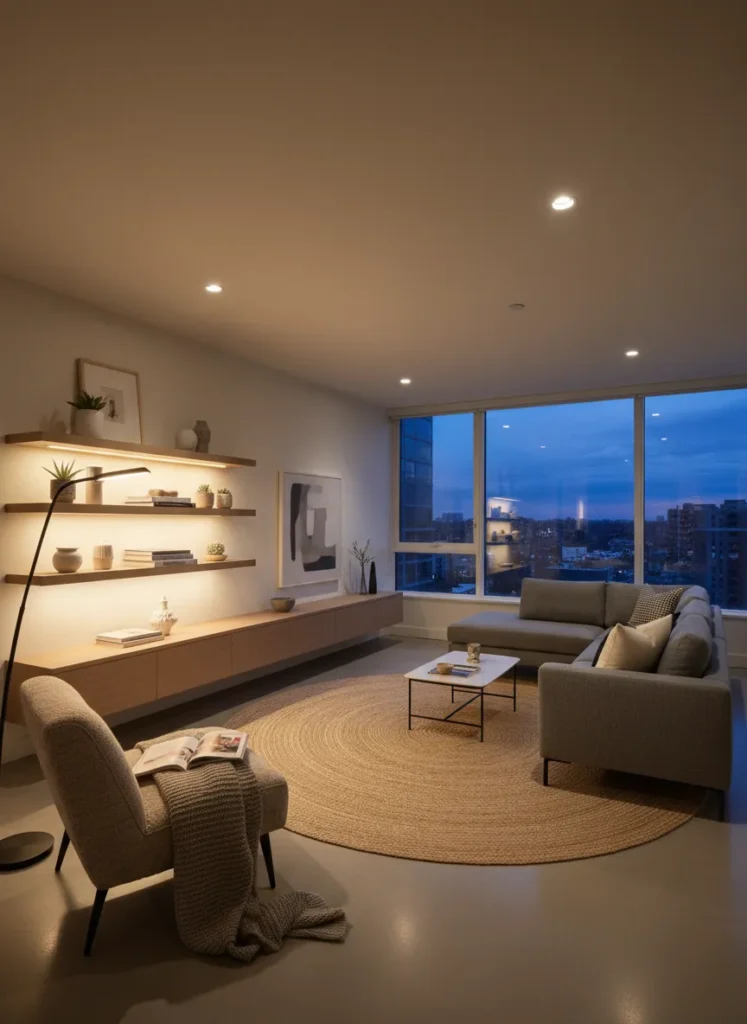
Layered lighting is the secret to a versatile and welcoming living room. Instead of relying on a single overhead light, combining ambient, task, and accent lighting allows you to change the mood of the room instantly. Floor lamps, table lamps, and hidden LED strips work together to eliminate harsh shadows.
This technique creates visual balance by distributing light evenly throughout the space. It highlights architectural features and decor while providing functional light where it is needed, like near a reading chair. A well-lit room feels larger and more dynamic, with different zones illuminated to create depth and warmth.
Use Marble Accents
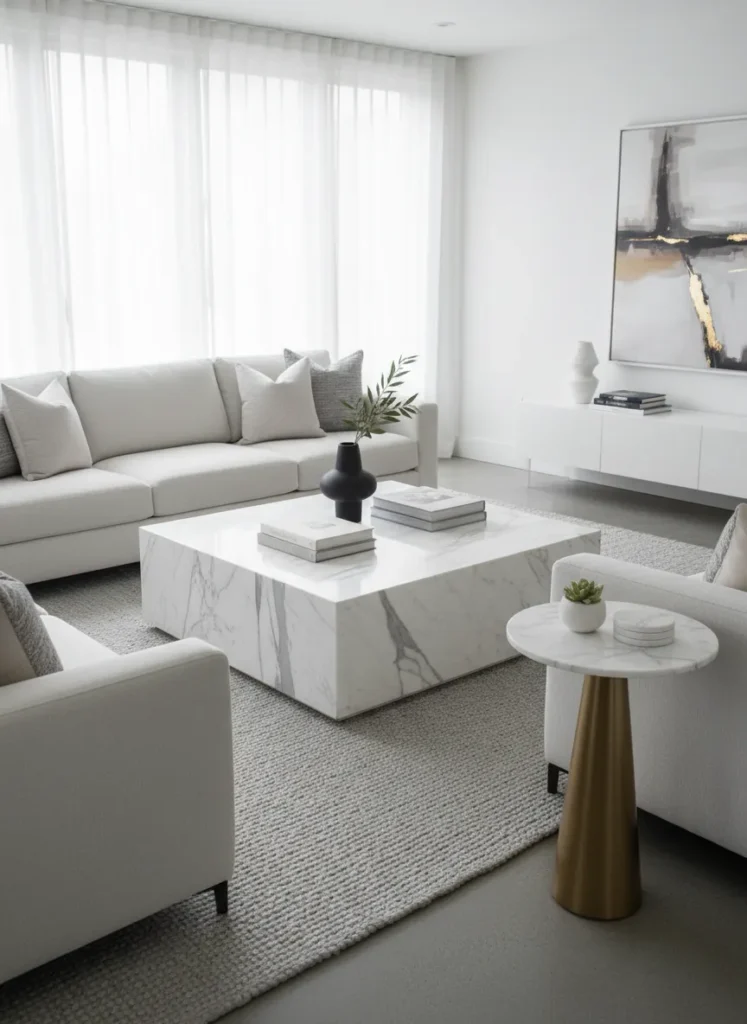
Marble is a timeless material that brings elegance and a cool, natural pattern to a contemporary living room. A marble coffee table or fireplace surround acts as a sophisticated centerpiece that elevates the entire design. The natural veining in the stone provides an organic pattern that contrasts with solid-colored fabrics.
Incorporating marble works well because it adds weight and substance to the room. It feels permanent and high-quality, which anchors lighter furniture pieces. The cool touch of the stone balances warm wood tones and soft textiles, creating a material palette that feels complete and well-rounded.
Commit to Black and White
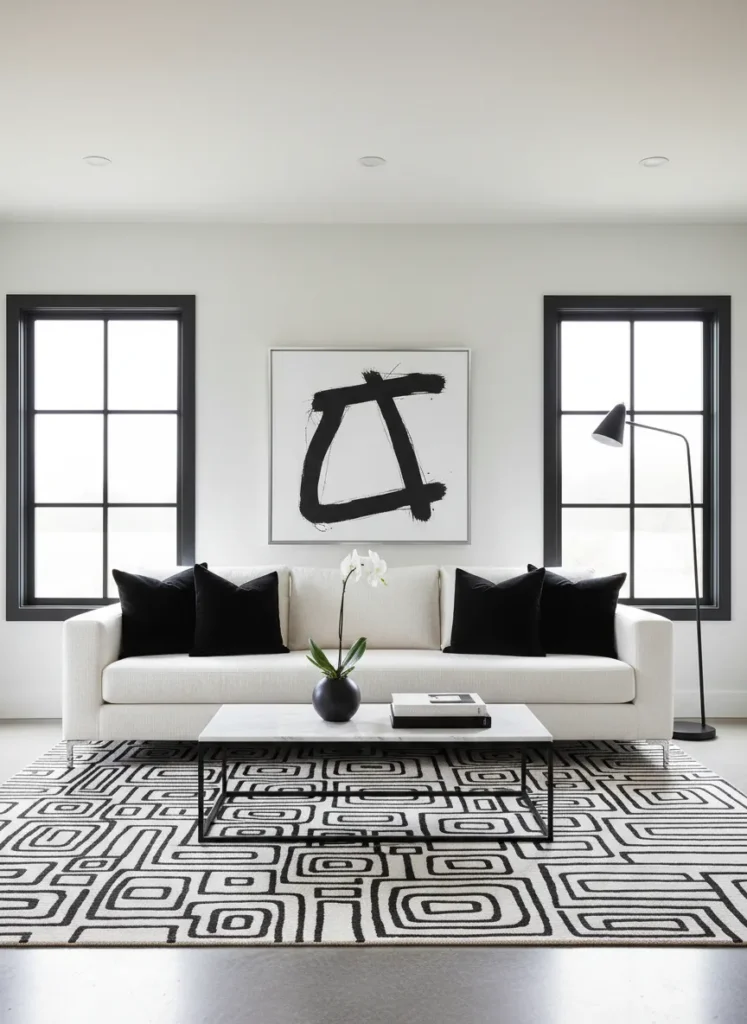
A black and white color scheme is the ultimate expression of modern contrast and visual balance. This classic combination is sharp, clean, and incredibly graphic. The high contrast defines edges and shapes clearly, making the architecture and furniture lines stand out.
To make this look work, it is important to balance the two colors so one does not overpower the other. Using patterns and textures helps to soften the starkness of the contrast. This palette is a safe bet for achieving a contemporary look that feels dramatic yet orderly and sophisticated.
Apply Scandinavian Influence
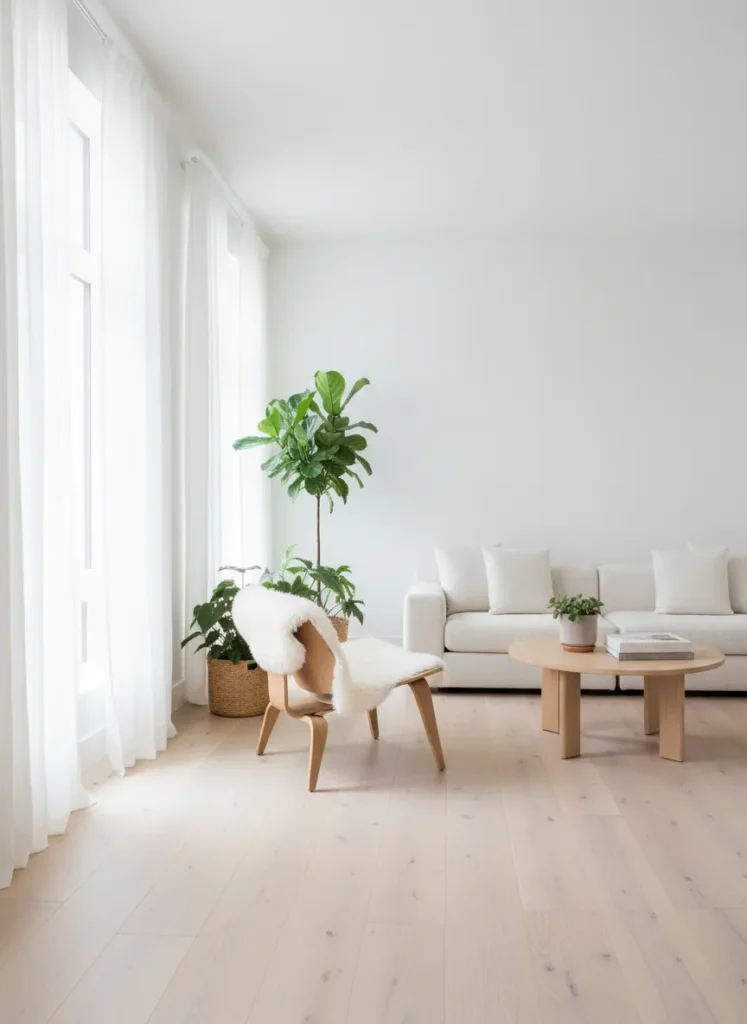
Scandinavian design principles heavily influence contemporary style, focusing on simplicity, functionality, and light. Using pale woods, white walls, and uncluttered layouts creates a space that feels fresh and expansive. This style prioritizes
hygge,
Use Glass Partitions
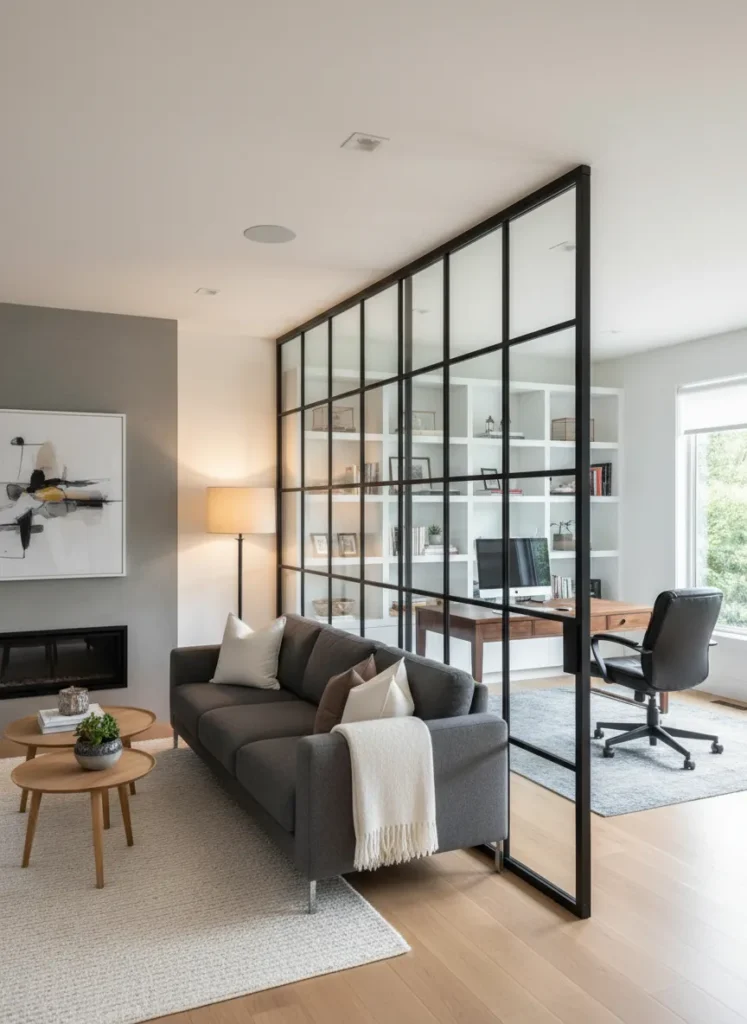
Glass partitions are a brilliant architectural solution for contemporary homes, especially those with smaller footprints. They allow you to create distinct zones, like a reading nook or home office, without blocking the flow of natural light. The black steel framing often used adds a graphic, modern touch.
This idea improves the room by maintaining visual connectivity while providing acoustic separation. It keeps the living area feeling open and spacious rather than chopped up by solid walls. The transparency of the glass ensures that the visual balance of the entire floor plan is preserved.
Focus on a Minimalist Fireplace
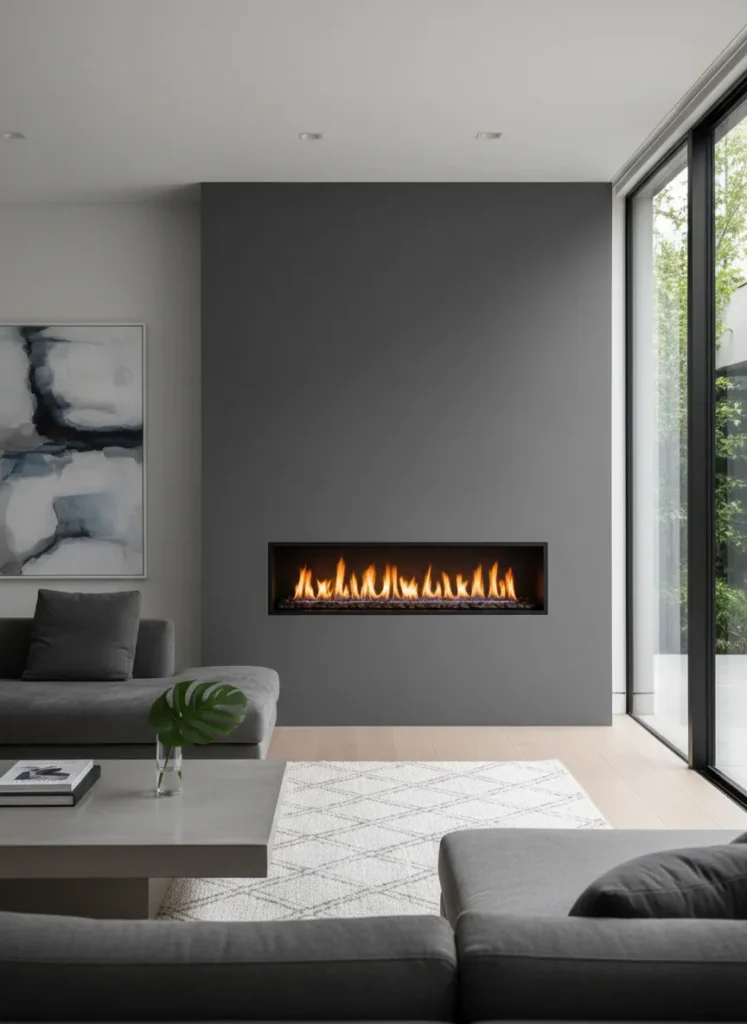
A modern fireplace is often stripped back to its essential elements, avoiding ornate mantels or heavy brickwork. A linear gas fireplace set flush into a wall creates a sleek, horizontal focal point that radiates warmth. This design choice fits perfectly with the clean lines of contemporary interiors.
The minimalist fireplace anchors the room without demanding too much attention. It provides a natural center for the furniture arrangement, promoting a sense of symmetry and balance. The simplicity of the design allows the flickering flames to be the star, adding movement and a cozy ambiance to the sleek space.
Conclusion
Achieving a contemporary living room that feels balanced and stylish is all about making intentional choices. By combining these design ideas—from lighting and textures to layout and furniture styles—you can create a space that reflects modern sensibilities while remaining comfortable for daily life. Remember that the best design is one that resonates with your personal taste, so take these concepts and adapt them to create a home that feels uniquely yours.