
Creating a space that feels both welcoming and visually cohesive often requires looking beyond just furniture placement. When you explore various aesthetic living room designs, you realize that the magic lies in how light, texture, and color interact to establish a specific mood. Whether you prefer the clean lines of minimalism or the warm embrace of bohemian layers, the goal is to establish a natural visual flow that guides the eye gently across the room. This guide explores seventeen distinct approaches to help you transform your living area into a sanctuary that reflects your personal style while maintaining perfect harmony.
Warm Minimalist Sanctuary
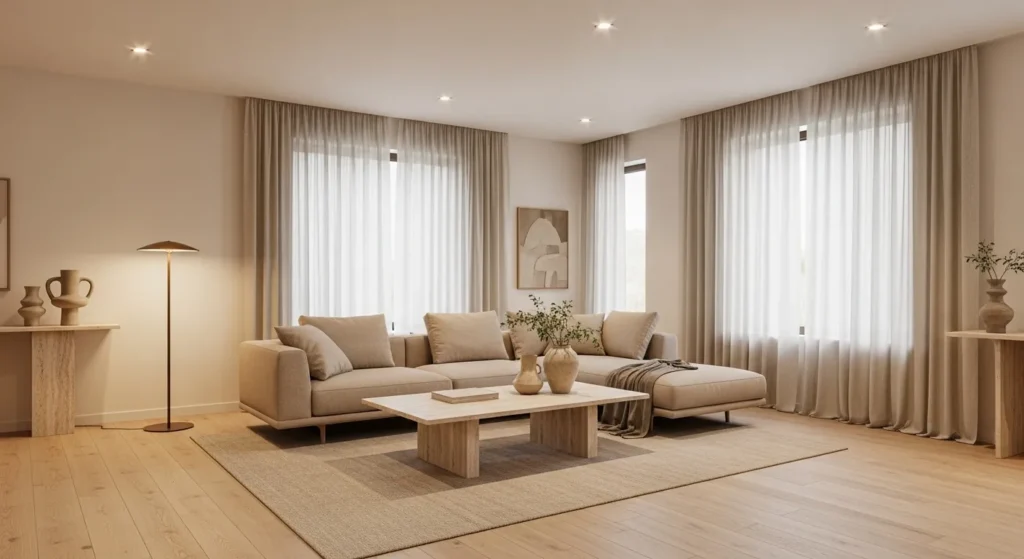
Achieving a minimalist look does not mean your space has to feel cold or empty. By utilizing warm neutral tones like beige, cream, and soft oak, you can create a foundation that feels inviting while remaining uncluttered. The key to this design is selecting furniture with clean lines and low profiles, which allows light to travel freely through the room. This lack of visual obstruction is essential for maintaining a calm atmosphere where you can truly relax.
Texture plays a crucial role in preventing a minimalist room from looking flat. Since the color palette is restrained, you should introduce interest through materials like linen curtains, a boucle sofa, or a stone coffee table. These elements add depth and tactile appeal without overwhelming the senses. This approach to aesthetic living room designs ensures that the space remains serene and sophisticated, proving that simplicity can be incredibly warm and comfortable.
Nature Inspired Greenery
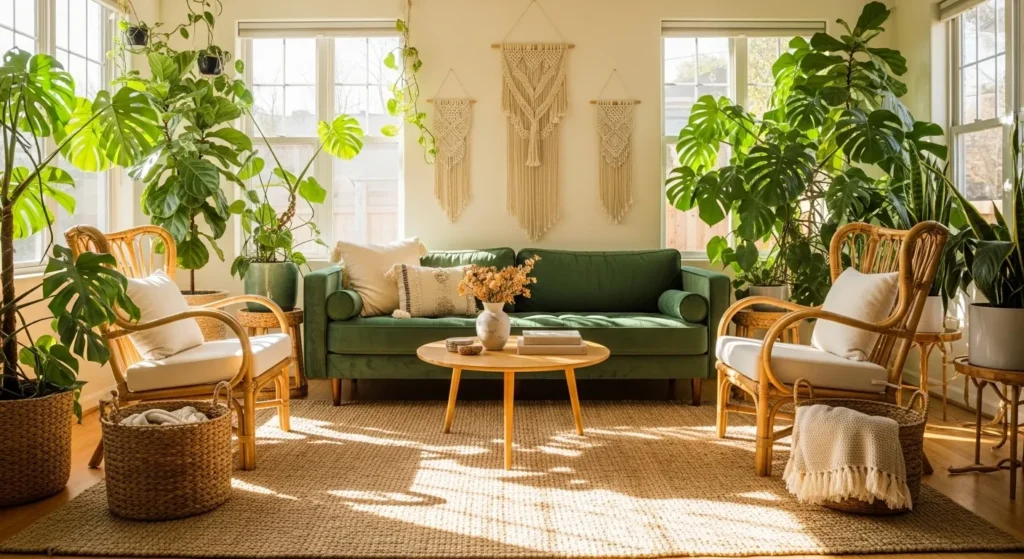
Incorporating biophilic elements into your home is one of the most effective ways to boost mood and air quality simultaneously. This design strategy focuses on blurring the line between the indoors and the outdoors by using plants as primary decor elements. Large statement plants can act as living sculptures, filling empty corners with vibrant life and color. When paired with natural materials like rattan and jute, the greenery creates a cohesive, grounded environment that feels fresh and restorative.
The color palette in this setup naturally revolves around earth tones, with various shades of green serving as the primary accent. An emerald green sofa can anchor the room, providing a lush focal point that complements the surrounding foliage. By prioritizing natural light and organic shapes, this style fosters a connection to nature that makes the living room feel like a private garden retreat, perfect for unwinding after a busy day in the city.
Deep Charcoal Sophistication
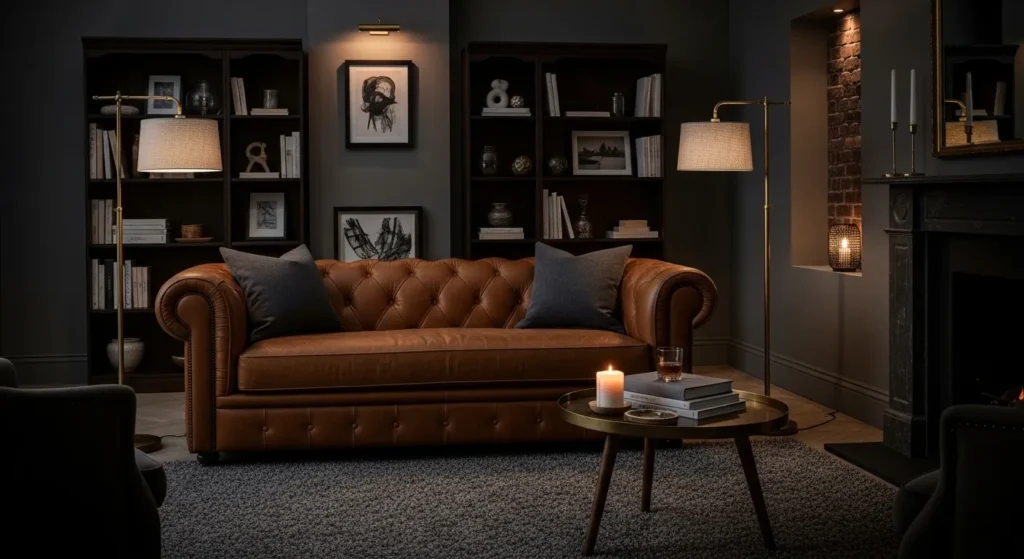
Darker colors can be incredibly effective at creating a sense of intimacy and quiet luxury. Painting walls in deep shades like charcoal or navy wraps the room in a comforting embrace, making large spaces feel cozier and small spaces feel like a jewel box. To balance the darkness, rich leather furniture in warm tones like cognac or whiskey provides a stunning contrast that draws the eye. This interplay of shadow and warmth is central to moody aesthetic living room designs.
Lighting is paramount in a dark-themed room to ensure it does not feel gloomy. Instead of harsh overhead lights, use multiple sources of soft, ambient lighting such as brass floor lamps and table lamps with warm bulbs. The metallic accents of brass or gold pop beautifully against the dark background, adding a touch of elegance. This design choice is perfect for those who want a living area that feels like a sophisticated lounge or a private library.
Balanced Japandi Harmony
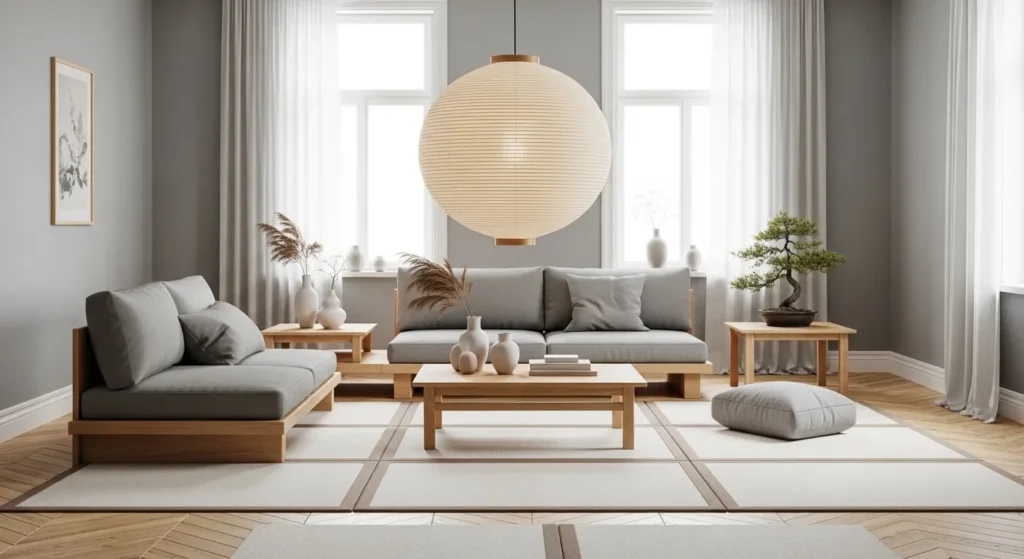
Japandi design is the beautiful intersection of Japanese rusticity and Scandinavian functionality. This style focuses on decluttered spaces, clean lines, and a deep appreciation for craftsmanship. Furniture pieces are often low to the ground, promoting a sense of earthiness and stability. The use of light woods and soft grey tones creates a whisper-quiet visual flow that instantly lowers the heart rate and encourages mindfulness.
In this design, every object has a purpose and a place, eliminating visual noise. Paper lanterns or rice paper screens add a delicate texture that diffuses light softly, enhancing the ethereal quality of the room. By combining the warmth of Scandinavian textiles with the disciplined elegance of Japanese aesthetics, you create a living room that feels perfectly balanced. It is a timeless look that prioritizes well-being and simplicity above all else.
Layered Bohemian Textures
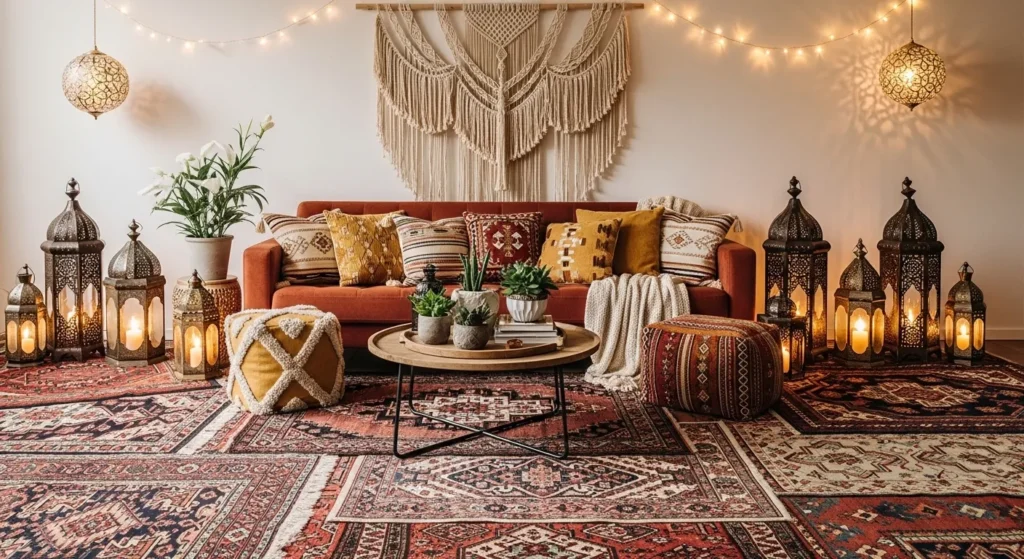
Bohemian design is all about expressing individuality through layers of pattern, color, and texture. This style allows you to mix vintage finds with global textiles, creating a space that feels traveled and collected over time. Layering rugs on the floor anchors the room and adds immediate warmth, while macrame hangings on the walls soften the acoustics and add visual interest. The result is a relaxed atmosphere that invites guests to sit down and stay a while.
Lighting in a boho room should be whimsical and soft. String lights, floor lanterns, and candles help create a magical ambiance in the evenings. The furniture does not need to match perfectly; in fact, a mix of materials like wicker, velvet, and wood adds to the charm. This approach to aesthetic living room designs is perfect for those who find beauty in imperfection and want their home to tell a story through vibrant colors and eclectic accessories.
Breezy Coastal Retreat
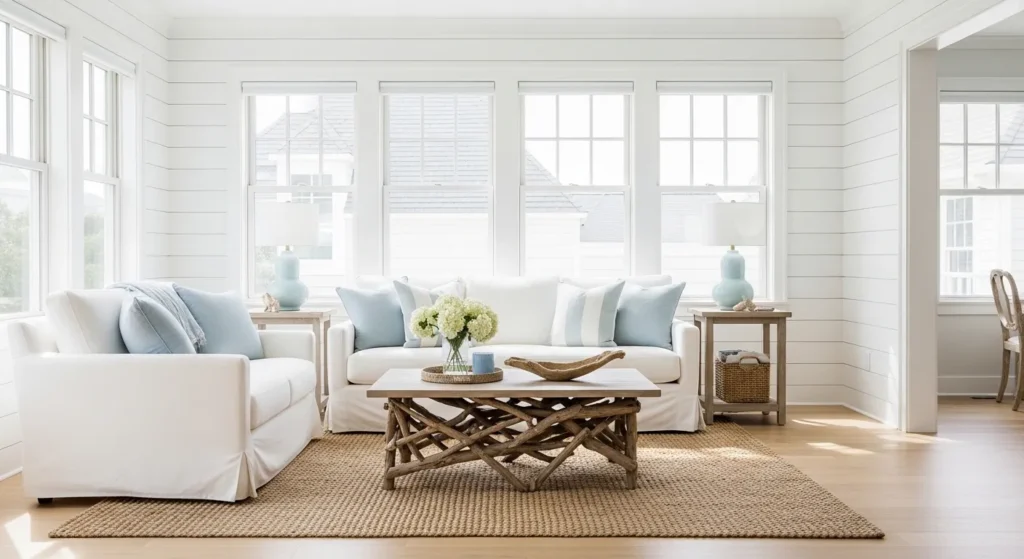
Coastal design brings the relaxation of a beach vacation directly into your home without relying on cliché nautical themes. The foundation of this look is a crisp white palette that maximizes natural light, making the room feel airy and open. Accents of pale blue, seafoam green, and sandy beige are introduced through textiles and art to mimic the colors of the seaside. Shiplap walls can add subtle architectural interest that enhances the cottage-like feel.
Furniture in a coastal living room should prioritize comfort and durability. Slipcovered sofas are a staple because they look casual and are easy to clean, making the space feel livable and unpretentious. Natural textures like a driftwood coffee table or a sea grass rug bring in the raw elements of the coast. This design creates a refreshing visual flow that feels like a breath of fresh ocean air, perfect for creating a serene family gathering spot.
Softened Industrial Loft
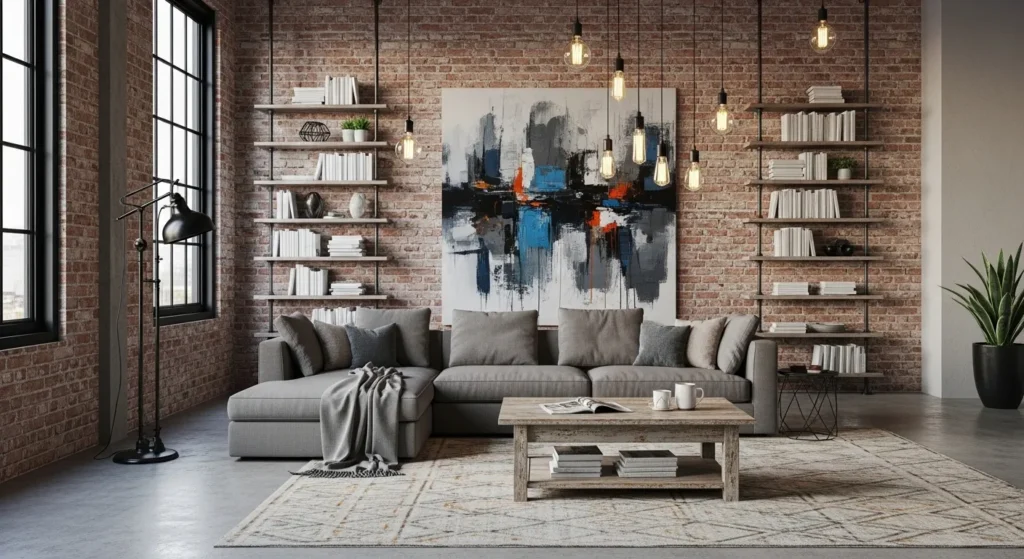
Industrial design often celebrates the raw and unfinished, but modern interpretations focus on softening these hard edges to create a comfortable home. Exposed brick and concrete floors provide a gritty, urban backdrop that contrasts beautifully with softer elements. To prevent the space from feeling cold, introduce a plush grey sectional and plenty of throw blankets. This mix of hard and soft textures is essential for making industrial aesthetic living room designs livable.
Lighting fixtures in an industrial room often feature metal finishes and exposed bulbs, acting as statement pieces that draw the eye upward. Large abstract art can break up the monotony of a brick wall and add a splash of color. By balancing the architectural history of the building with modern comforts, you create a space that feels edgy yet welcoming. This style works exceptionally well in lofts or homes with high ceilings and open floor plans.
Scandinavian Light and Air
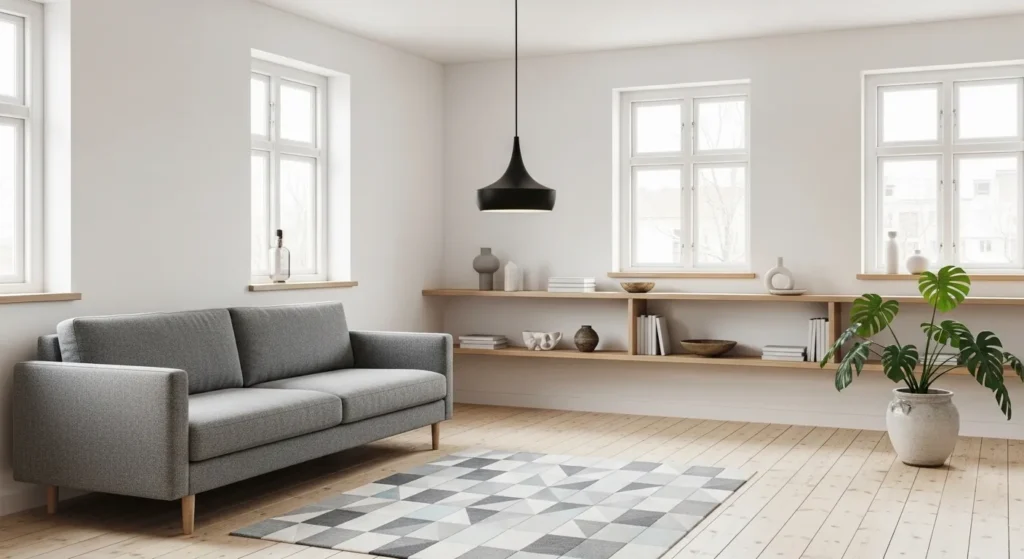
Scandinavian design is world-renowned for its ability to maximize light, which is crucial in regions with long, dark winters. The walls are typically kept white to reflect every bit of available daylight, while pale wood floors maintain a seamless look. Furniture is chosen for its functionality and form, often featuring slender legs that make the room feel larger. This creates a clutter-free environment where every item is both beautiful and useful.
To add warmth to the white backdrop, Scandinavian interiors rely heavily on textiles. A wool sofa, a sheepskin throw, or a cotton rug with a simple geometric pattern adds the necessary coziness known as hygge. The lighting is often architectural and sleek, serving as a piece of art in itself. This design philosophy results in a living room that feels fresh, organized, and incredibly peaceful, making it a popular choice for modern living.
Retro Mid-Century Revival
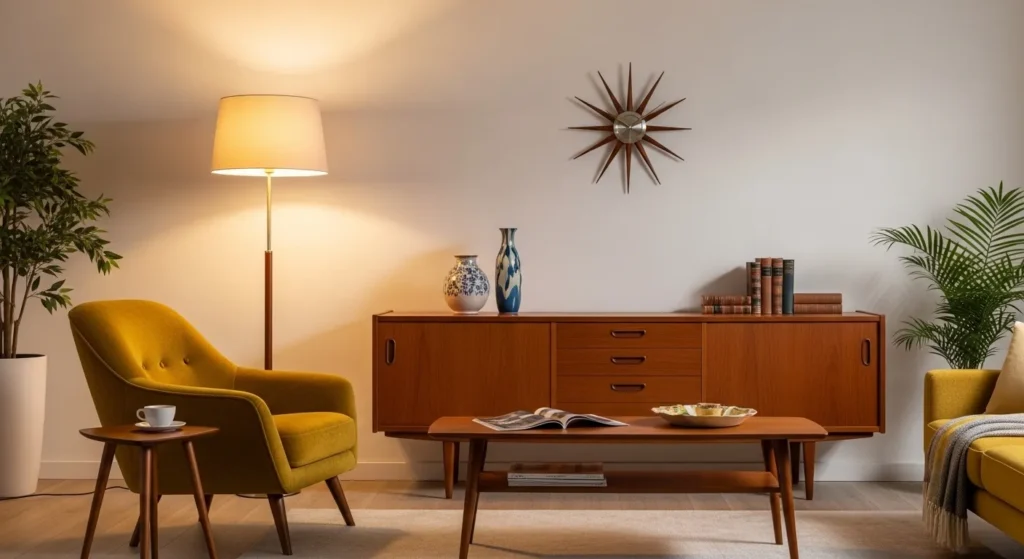
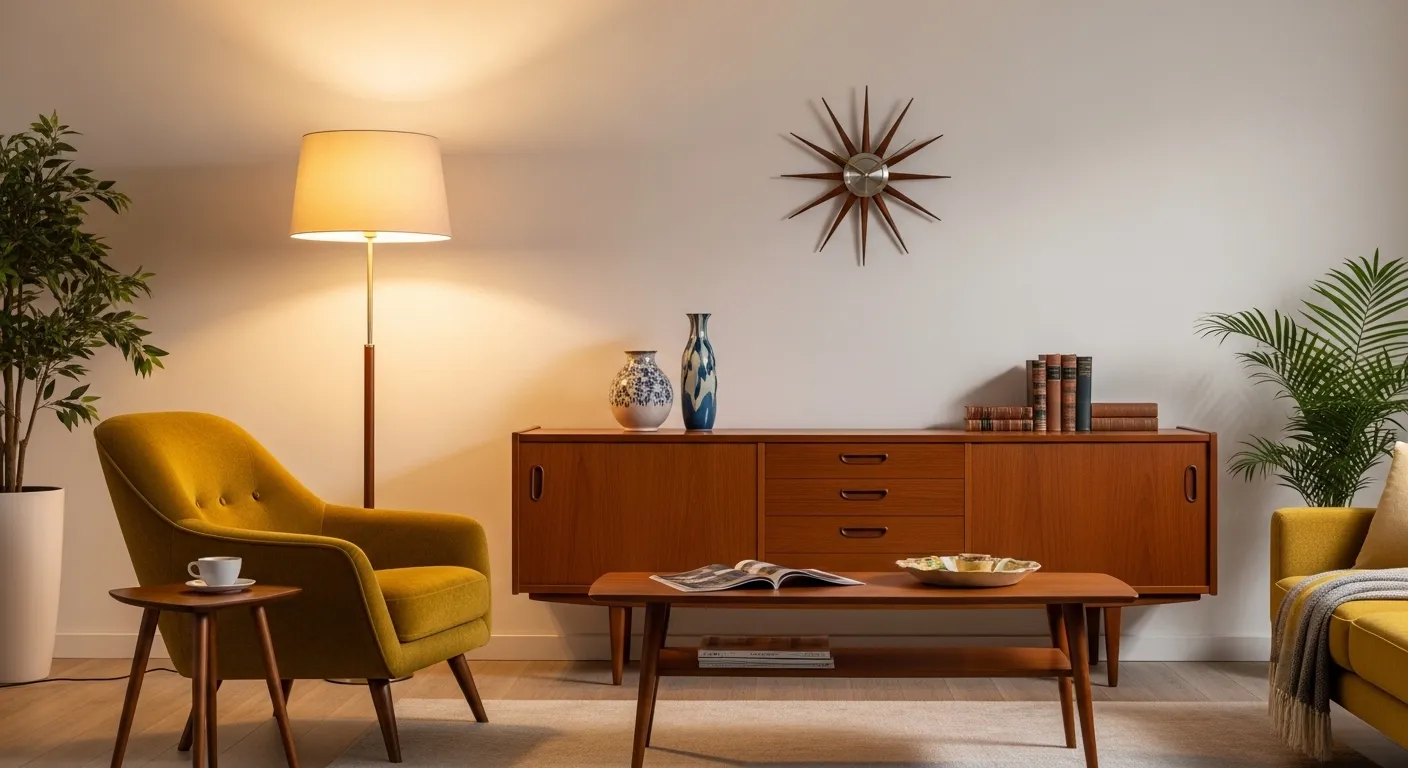
Mid-century modern design captures the nostalgia of the 1950s and 60s while remaining relevant in contemporary homes. The focus is on organic curves and geometric shapes, often realized in warm woods like teak and walnut. A statement armchair in a bold color like mustard yellow or olive green can serve as the focal point of the room, adding personality and retro flair. The furniture typically features tapered legs, which keeps the floor visible and maintains a sense of flow.
Accessories play a fun role in this aesthetic, with items like starburst clocks and abstract sculptures adding character. The lighting often features iconic shapes, such as globe pendants or arched floor lamps. Despite the retro influences, the layout remains functional and open. This approach to aesthetic living room designs is ideal for those who appreciate vintage charm and want a space that feels stylish, curated, and full of history.
Contemporary Rustic Farmhouse
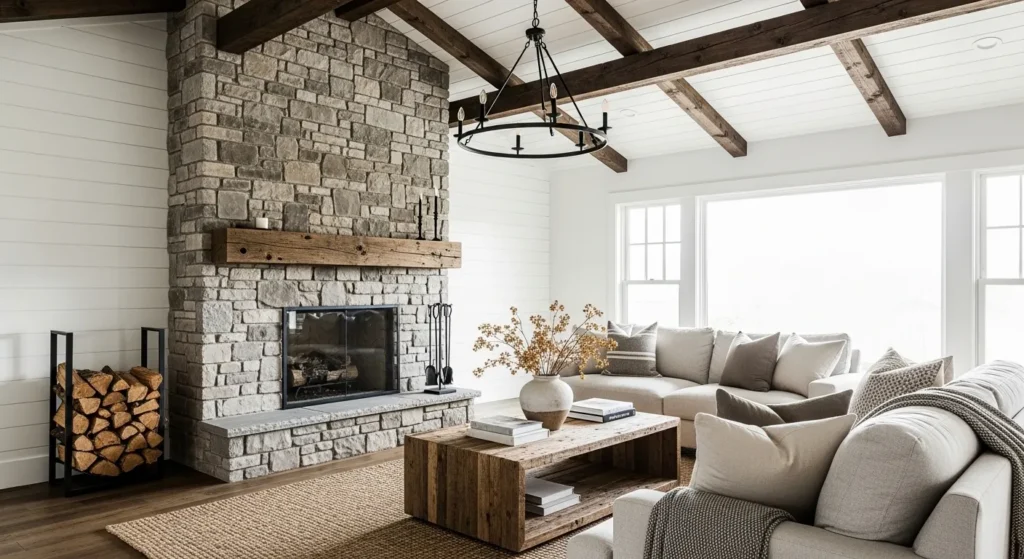
Modern farmhouse design strikes a balance between the rustic charm of a country cottage and the clean lines of contemporary living. The architectural bones of the room, such as exposed beams or a stone fireplace, provide a sense of history and solidity. To keep the look fresh, the walls are usually painted a crisp white, which contrasts beautifully with the rough wood textures. Comfortable, overstuffed furniture invites you to sink in and relax, making the room the heart of the home.
Decor in a farmhouse living room is often practical and sturdy. Reclaimed wood tables and iron light fixtures add an industrial touch that prevents the space from looking too precious. Textiles are simple and durable, often in neutral tones or classic patterns like stripes. This design creates a warm, family-friendly environment that feels grounded and authentic, merging the best of old-world charm with modern convenience.
Glamorous Art Deco Accents
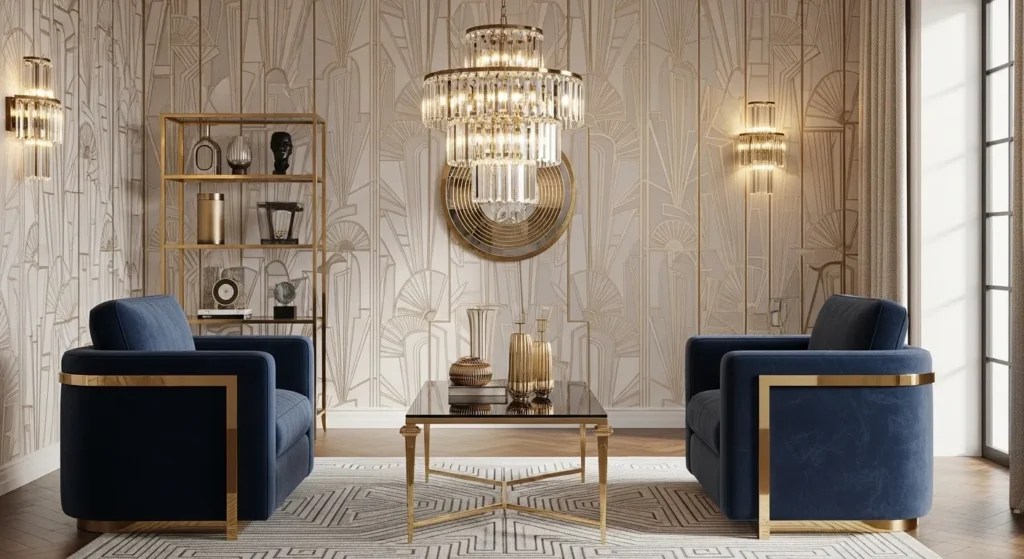
Art Deco is a style for those who love drama, geometry, and high-shine finishes. This aesthetic is characterized by rich colors like navy, emerald, and black, paired with gleaming metallic accents in gold or brass. Velvet upholstery adds a layer of tactile luxury that makes the seating feel regal and inviting. Geometric patterns, whether on wallpaper or rugs, introduce a dynamic visual rhythm that keeps the eye moving across the room.
Lighting in an Art Deco room is never an afterthought; it is the jewelry of the space. A crystal chandelier or sconces with glass rods can scatter light beautifully, enhancing the glamorous mood. Glass and mirrored surfaces on tables help reflect this light, making the room sparkle. This approach to aesthetic living room designs creates a bold statement space perfect for entertaining and showcasing a love for opulence and artistic flair.
Textured Monochromatic Greige
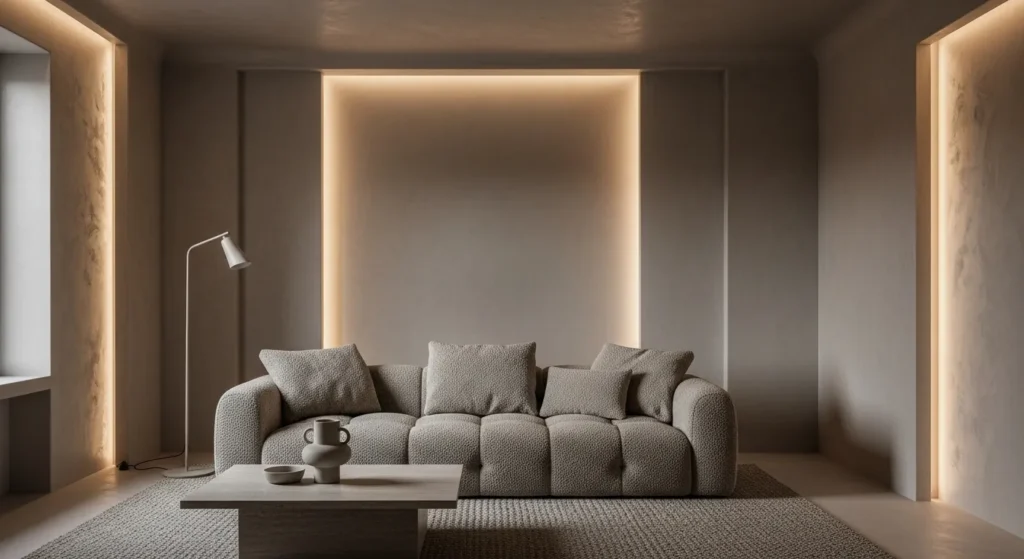
Monochromatic design can be incredibly striking when executed with a focus on texture rather than color contrast. By sticking to a strict palette of greige—a blend of grey and beige—you create a seamless visual envelope that feels sophisticated and calm. Because there are no jarring color shifts, the eye rests easily on the forms and surfaces within the room. This style relies on the subtle interplay of shadows and light to define the space.
To prevent a monochromatic room from feeling flat, variety in materials is essential. A nubby boucle sofa, a smooth plaster wall, and a soft wool rug provide the necessary contrast through tactile differences. Hidden lighting strips can graze the textured walls, emphasizing the depth of the materials. This design creates a sanctuary-like atmosphere where the lack of color acts as a canvas for relaxation and mental clarity.
Vibrant Maximalist Energy
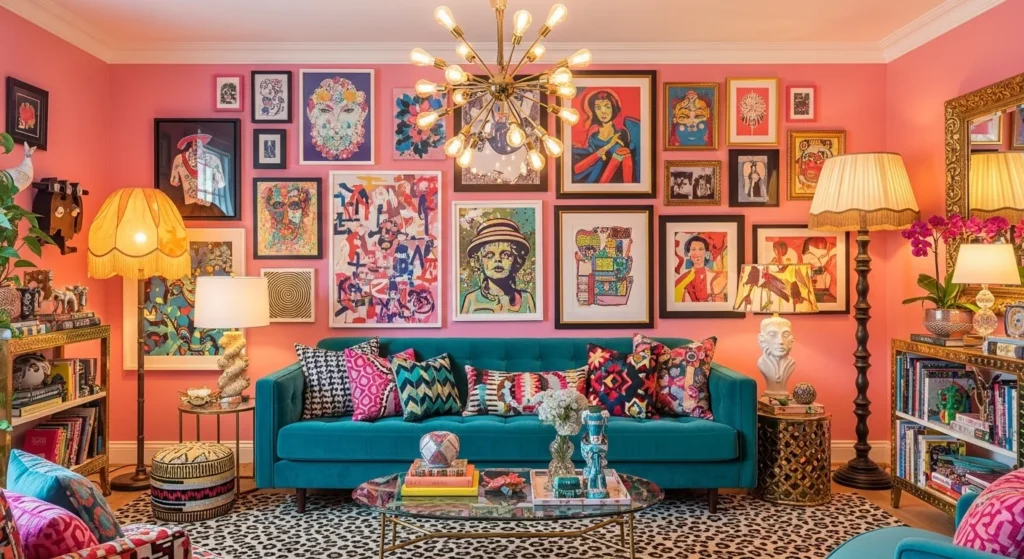
Maximalism is the joyful antithesis of minimalism, celebrating the philosophy that more is more. This style encourages you to fill your space with things you love, regardless of matching rules. Bold wall colors set the stage for a vibrant mix of furniture and art. A teal sofa against pink walls creates a high-energy contrast that immediately uplifts the mood. It is a deeply personal style that showcases a curated collection of treasures and memories.
Pattern mixing is a key skill in maximalist interiors. A leopard print rug can surprisingly act as a neutral base for floral cushions and abstract art. The key to maintaining visual flow in such a busy space is to repeat certain colors or shapes throughout the room. This connects the disparate elements, ensuring the room feels curated rather than chaotic. Maximalist aesthetic living room designs are perfect for creative souls who want their home to be a constant source of inspiration.
Earthy Terracotta Tones
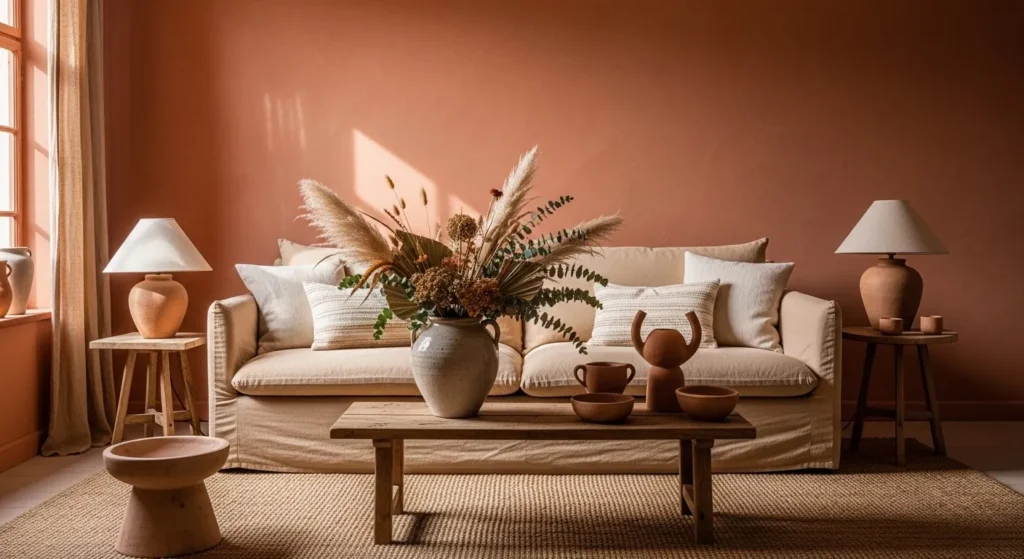
Embracing earthy tones like terracotta, clay, and rust can ground a living room and make it feel intimately connected to the natural world. These warm, reddish-brown hues evoke the feeling of a desert sunset or Mediterranean pottery, creating a cozy and enveloping atmosphere. Painting the walls in a terracotta shade instantly warms up the light in the room, making everyone look and feel better. This color palette pairs exceptionally well with natural fibers and matte finishes.
Furniture should be simple and comfortable, utilizing materials like linen and wood to complement the wall color. Accessories like dried flowers, ceramic vases, and clay lamps reinforce the organic theme. This design avoids shiny plastics or metals, preferring surfaces that have a natural patina. The result is a nurturing space that feels timeless and rooted, providing a calm escape from the digital world.
Soft Curves and Fluid Shapes
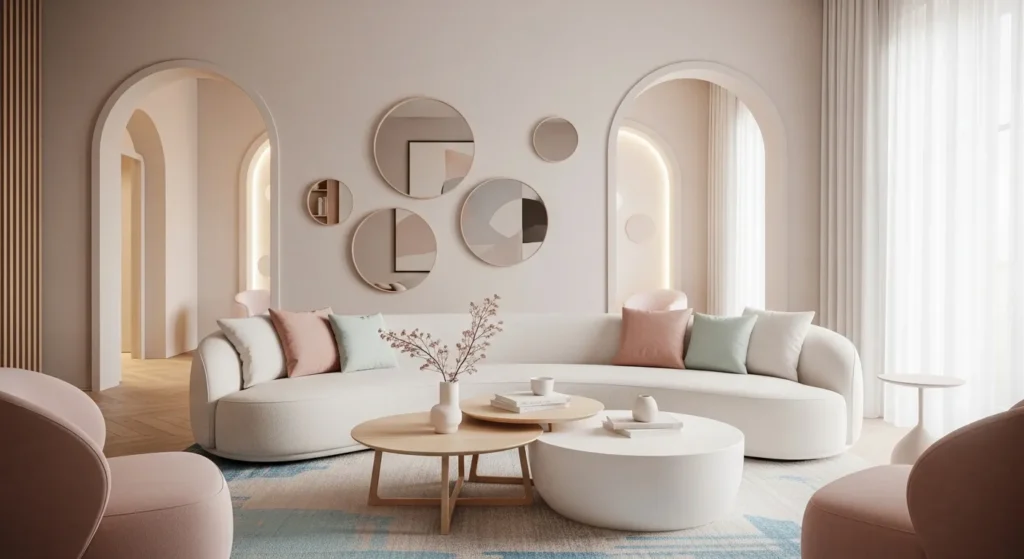
Moving away from the rigid straight lines of traditional design, this aesthetic focuses on fluidity and softness. Curved furniture, such as a kidney-bean-shaped sofa or a round ottoman, encourages a better flow of movement through the room. These shapes are naturally more welcoming and gentle on the eye, reducing visual tension. Arched doorways or mirrors echo these curves, creating a cohesive architectural language that feels modern and organic.
The color palette for a curved room often leans towards soft pastels or neutrals to maintain the gentle vibe. Diffused lighting, perhaps from frosted glass globes or fabric shades, eliminates harsh shadows. This design approach creates a cocoon-like environment that feels safe and comfortable. It is a forward-thinking take on aesthetic living room designs that prioritizes psychological comfort and ergonomic flow.
Intellectual Library Lounge
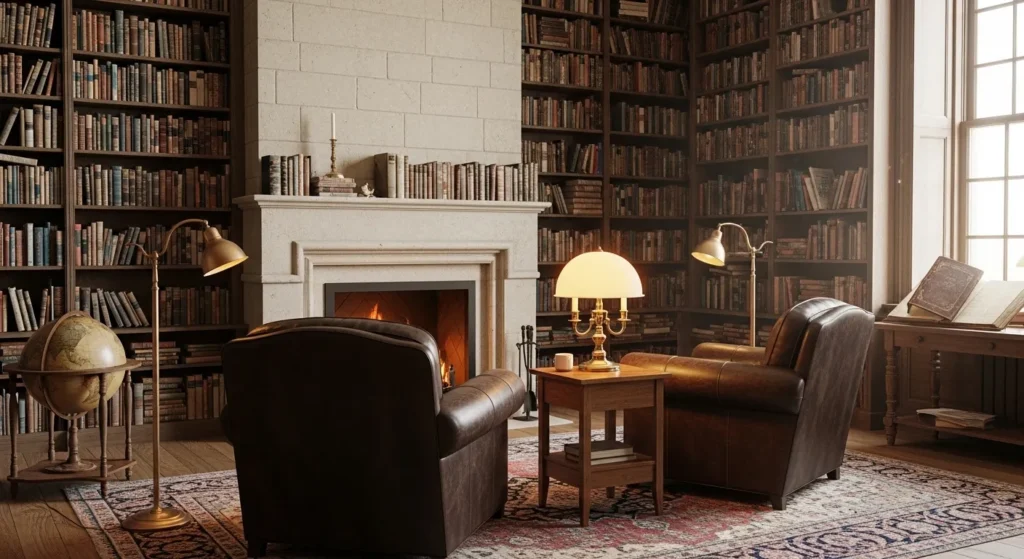
For book lovers, transforming the living room into a library lounge is the ultimate dream. Floor-to-ceiling bookshelves not only provide ample storage but also act as a textured, colorful wallpaper created by the book spines. This design centers the room around the pursuit of knowledge and quiet contemplation. Placing comfortable leather armchairs facing a fireplace or a window encourages reading and conversation rather than screen time.
Lighting is critical in a library setting. Dedicated reading lamps with warm bulbs ensure functionality while adding to the cozy atmosphere. A vintage rug creates a defined zone for seating and adds a layer of history and pattern. This style creates a space that feels established and intellectual, offering a quiet refuge where one can disconnect from the fast pace of modern life and get lost in a good story.
Seamless Open Concept Flow
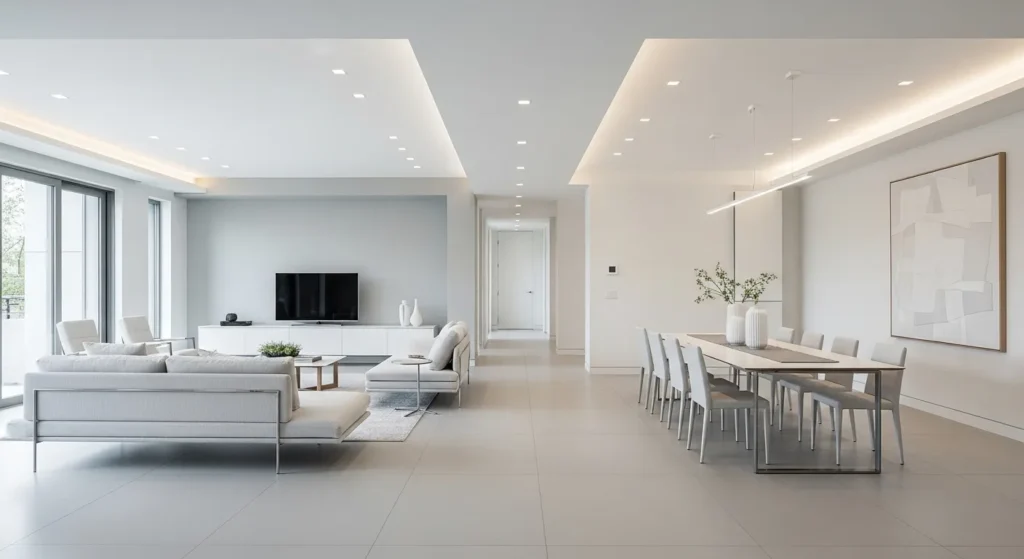
Open concept living requires a strategic approach to ensure the living area feels distinct yet connected to the kitchen or dining space. The key is to maintain a consistent color palette and flooring material throughout the entire level to create a sense of expansion. Using rugs to define the “living room” zone helps ground the furniture without building walls. This layout is ideal for social families who want to stay connected while doing different activities.
Furniture selection is important to maintain the visual flow; low-backed sofas and chairs ensure that sightlines remain open from one end of the room to the other. Recessed lighting provides even illumination without cluttering the ceiling. By keeping the decor cohesive and the pathways clear, you create a multifunctional environment that feels spacious and modern. This approach to aesthetic living room designs maximizes every square inch of your home for daily living.
Conclusion
Exploring these seventeen designs reveals that creating an aesthetic living room is about more than just following trends; it is about finding a style that resonates with your lifestyle and emotional needs. Whether you are drawn to the moody depth of dark colors or the airy freedom of open concepts, the right design will improve both the look of your home and the way you feel within it. Take elements from these ideas that speak to you, and start curating a space that is uniquely yours.