
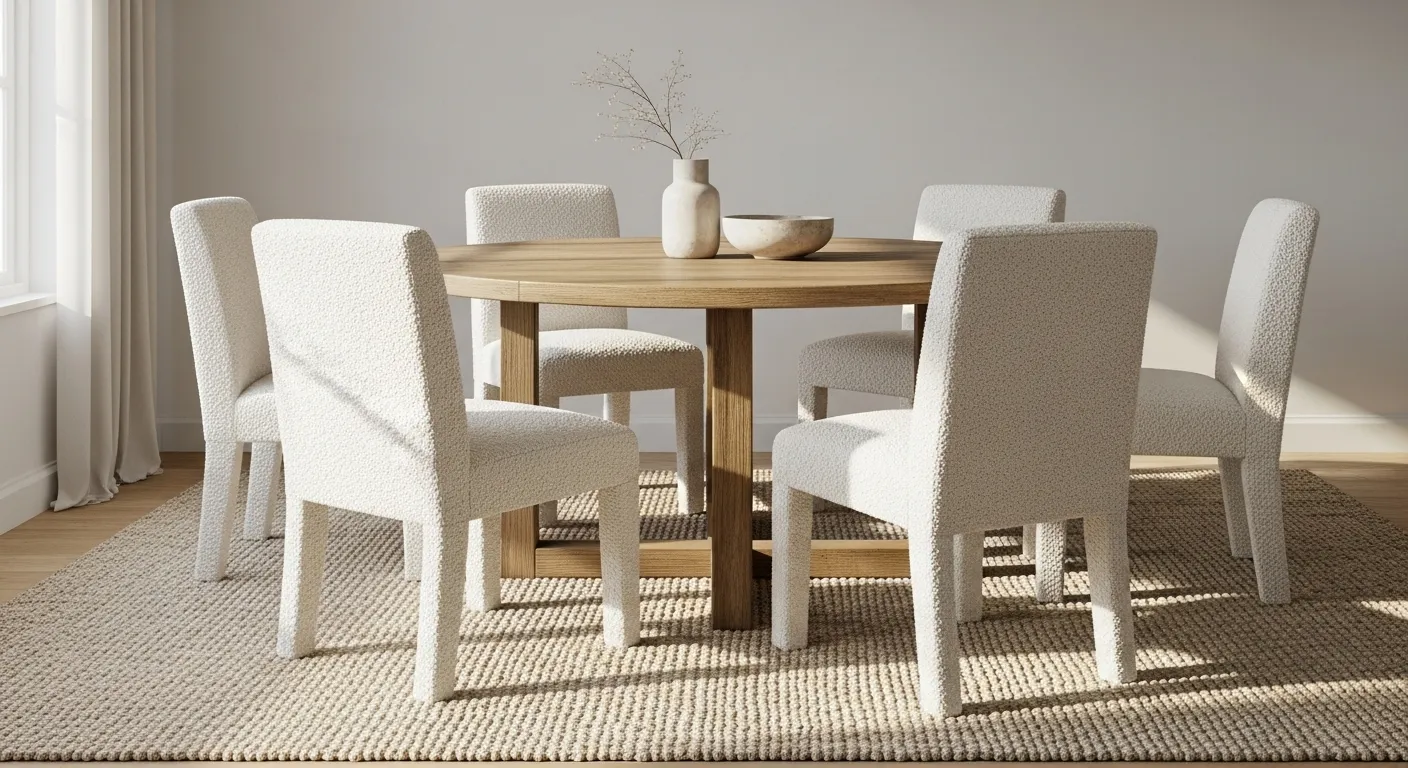
Creating a serene gathering space is all about finding the perfect balance between comfort and minimalism. If you are looking for ways to update your home with a look that feels both cozy and uncluttered, these japandi dining room ideas will inspire you to blend the best of Japanese rustic minimalism with Scandinavian functionality.
Embrace Raw Wood Tables
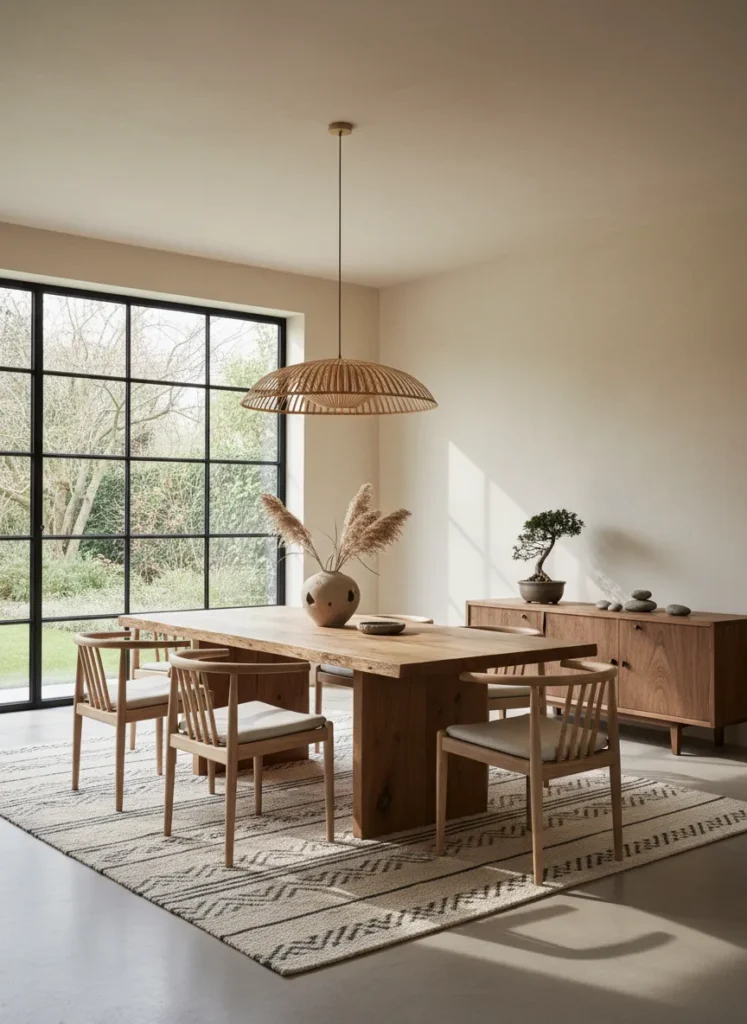
The centerpiece of any dining area is the table, and for this style, nothing beats the beauty of raw wood. A solid oak or ash table with a matte finish anchors the room and brings an immediate sense of warmth and nature indoors. The key is to avoid high-gloss finishes and instead choose surfaces that highlight the natural grain and imperfections of the timber.
This approach aligns perfectly with the wabi-sabi philosophy, which finds beauty in natural flaws. By keeping the table design simple and robust, you create a functional foundation for the rest of the room. It provides a sturdy and earthy element that contrasts beautifully with softer textures like fabric cushions or rugs.
Install Oversized Paper Lanterns
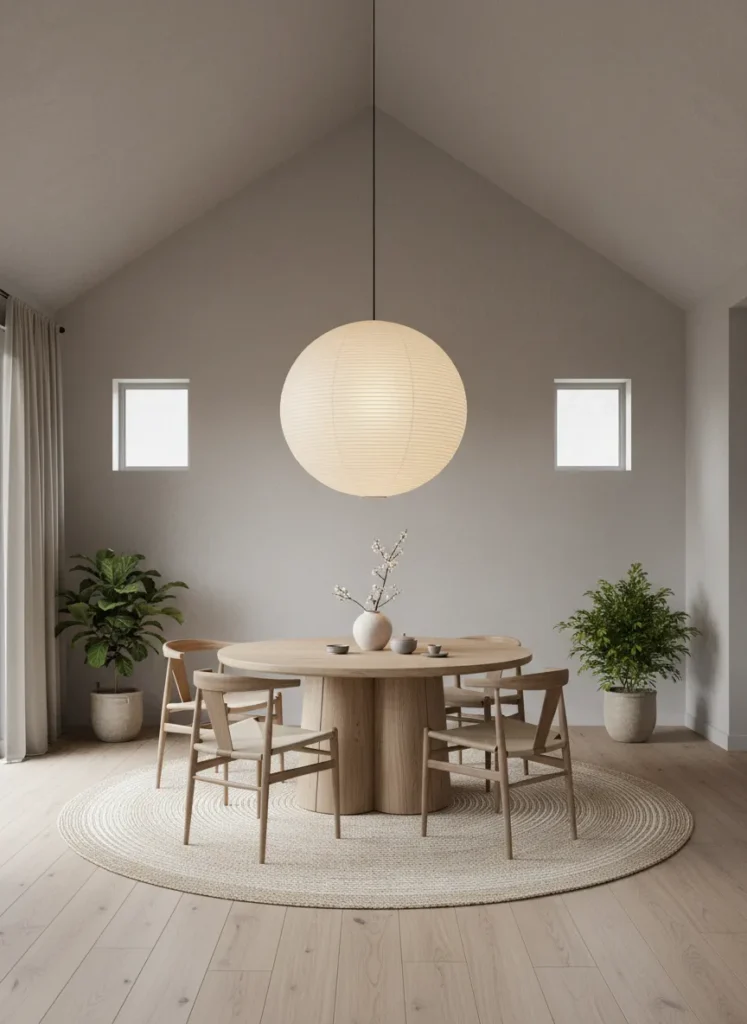
Lighting plays a crucial role in setting the mood, and an oversized paper lantern is a quintessential element of this design aesthetic. These light fixtures, often inspired by traditional Akari lamps, diffuse light softly across the room, eliminating harsh shadows and creating a gentle, inviting glow. They act as a floating sculpture that draws the eye upward without overwhelming the space.
Using a paper lantern adds a delicate, airy texture that balances the heavier wood and stone elements often found in the room. It serves as a focal point that feels organic and weightless. This type of lighting encourages a calm atmosphere, making dinner time feel more intimate and relaxed for everyone at the table.
Incorporate Wishbone Chairs
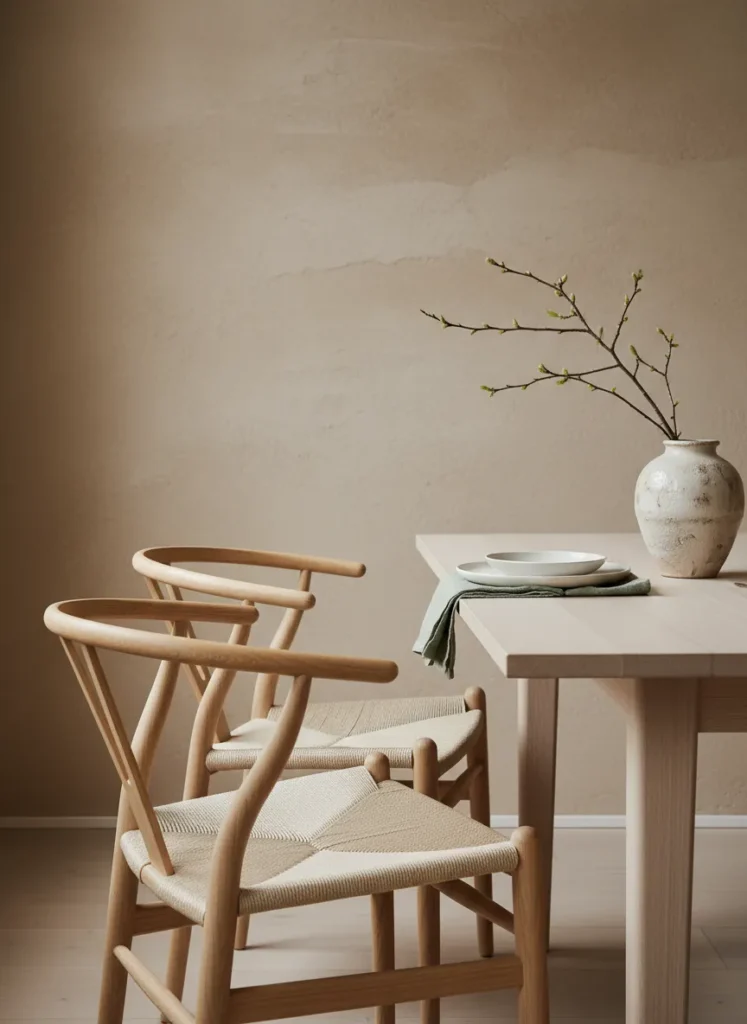
The wishbone chair is a design icon that perfectly bridges the gap between Scandinavian structure and Japanese elegance. Its curved back and woven paper cord seat offer comfort and visual lightness, preventing the dining set from looking too bulky or heavy. The organic curves of the chair soften the straight lines of a rectangular dining table.
Choosing these chairs in natural wood tones like oak or walnut ensures they blend seamlessly with the rest of your neutral palette. They are incredibly durable yet look delicate, making them a practical choice for daily use. Their open back design also allows light to pass through, keeping the room feeling open and airy.
Add Matte Black Accents
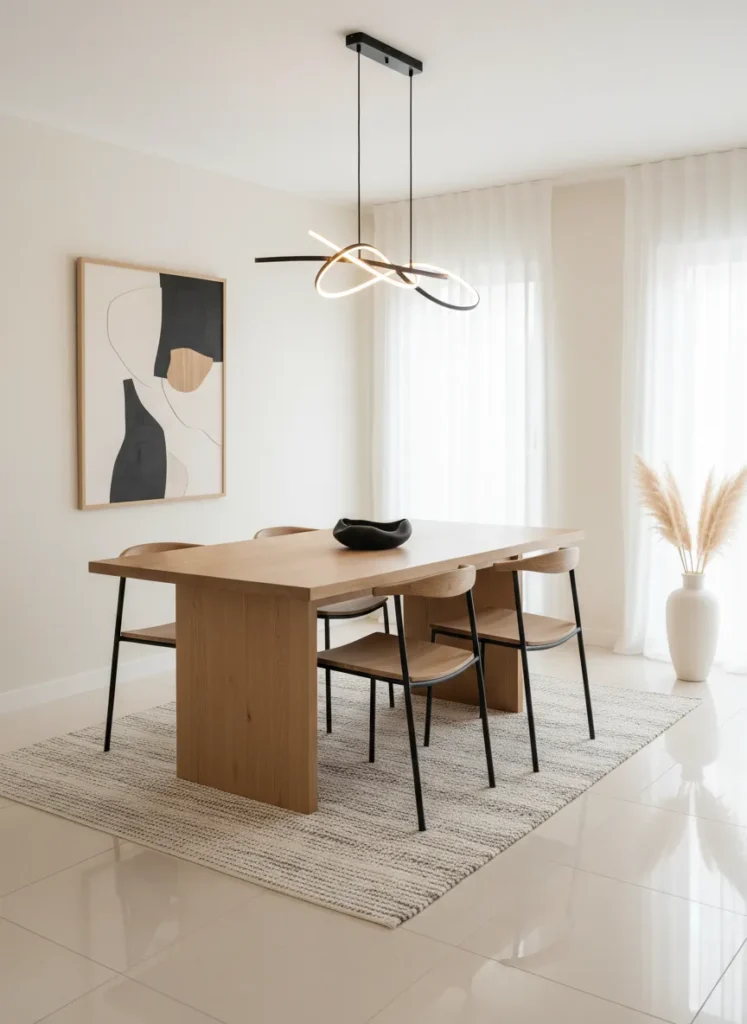
While neutral tones are the backbone of this style, adding matte black accents creates necessary depth and contrast. You can introduce this color through dining chair legs, light fixtures, or small decor items like vases and bowls. The black elements act like ink strokes in a painting, defining the space and grounding the lighter airy colors.
It is important to use black sparingly so it does not overpower the serene vibe of the room. A few well-placed black items can make the natural wood tones pop and look more sophisticated. This high-contrast look is a staple in modern interiors and adds a touch of drama to an otherwise quiet space.
Use Textured Wall Panels
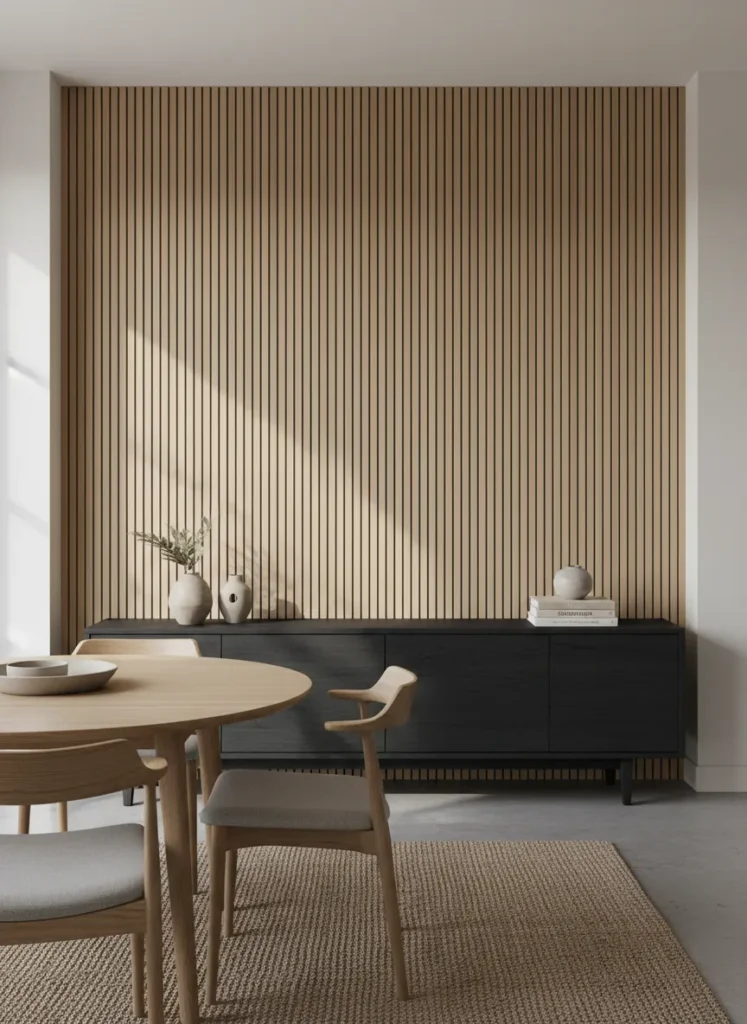
Vertical wood slat panels are a fantastic way to add architectural interest without cluttering the walls with art. These panels introduce rhythm and texture to the room, mimicking the orderly nature of bamboo forests or traditional Japanese screens. They can be used as a feature wall behind the dining table to frame the eating area.
The vertical lines draw the eye upward, making the ceiling appear higher and the room more spacious. This design element also improves acoustics by breaking up sound waves, making your dining room a quieter place for conversation. It is a subtle way to decorate that feels built-in rather than added on.
Choose Soft Bouclé Upholstery
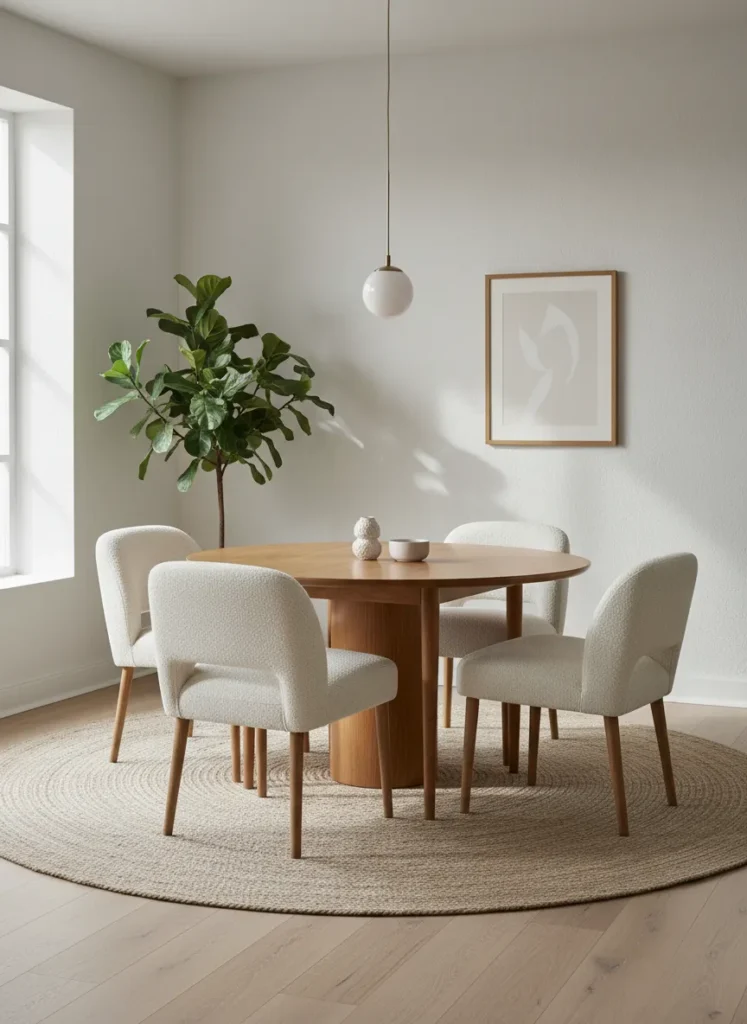
To bring in the ‘hygge’ or cozy aspect of Scandinavian design, consider chairs upholstered in bouclé fabric. This looped yarn material adds a rich, nubby texture that begs to be touched, offering a warm contrast to smooth wood and stone surfaces. White or cream bouclé keeps the palette neutral while adding significant visual interest.
Comfort is key in a dining room where you want guests to linger, and this fabric feels incredibly soft and inviting. It softens the hard edges of modern furniture and adds a layer of luxury to the space. Even just a few cushions or a bench covered in this material can transform the feel of the room.
Utilize Minimalist Bench Seating
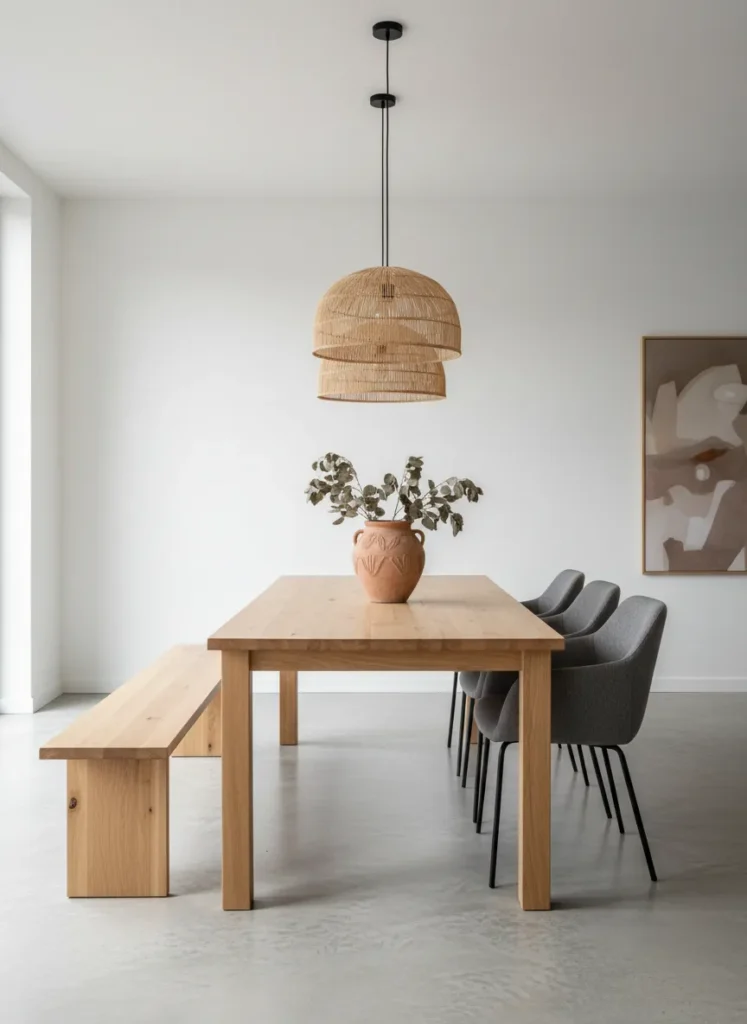
Replacing chairs on one side of the table with a long wooden bench is a great way to save space and reduce visual clutter. Benches can be tucked under the table when not in use, opening up the walkway and making the room feel larger. This setup promotes a communal, family-style way of eating that is casual and warm.
A bench emphasizes clean, horizontal lines, which is a hallmark of this design style. You can leave the wood bare for a rustic look or add a thin seat pad for extra comfort. This versatile seating option works particularly well in smaller dining areas or open-concept homes where flow is important.
Display Earthenware Centerpieces
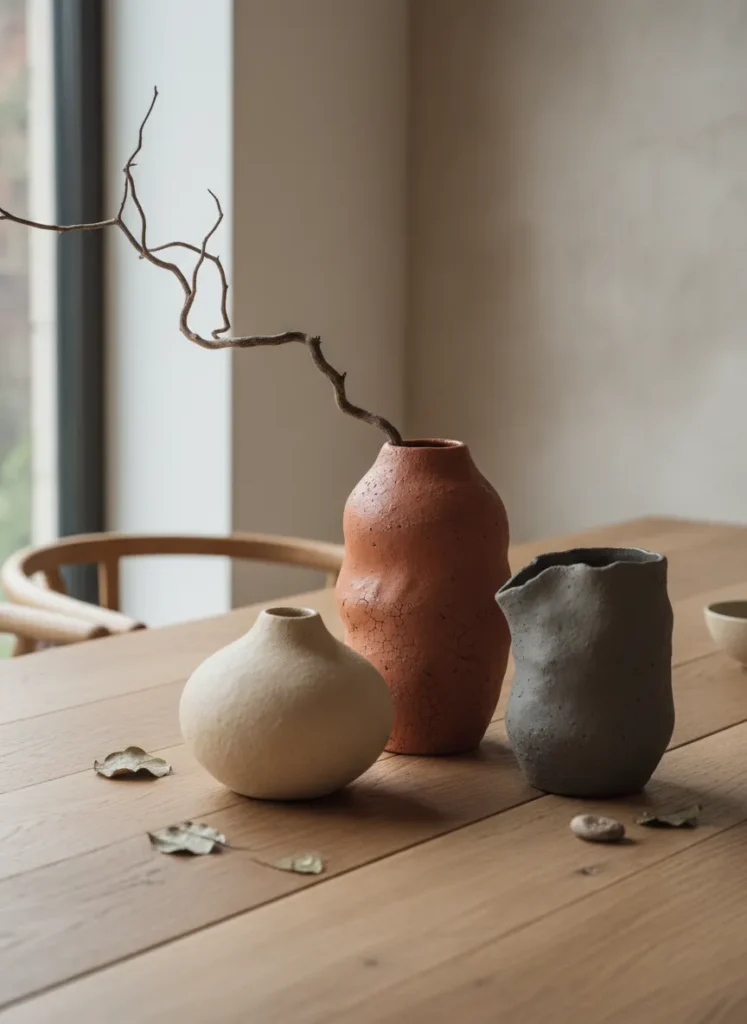
Decor on the dining table should remain simple and intentional, and handmade earthenware is the perfect choice. Imperfect, organic shapes in muted earth tones like terracotta, greige, or slate blue reinforce the connection to nature. A solitary vase or a cluster of small ceramic bowls can serve as a stunning centerpiece without blocking sightlines.
These items celebrate craftsmanship and the beauty of raw materials. Instead of filling the vases with large colorful bouquets, opt for dried botanicals or a single fresh branch. This restraint in decoration highlights the vessel itself and maintains the calm, uncluttered energy of the room.
Stick to a Warm Beige Palette
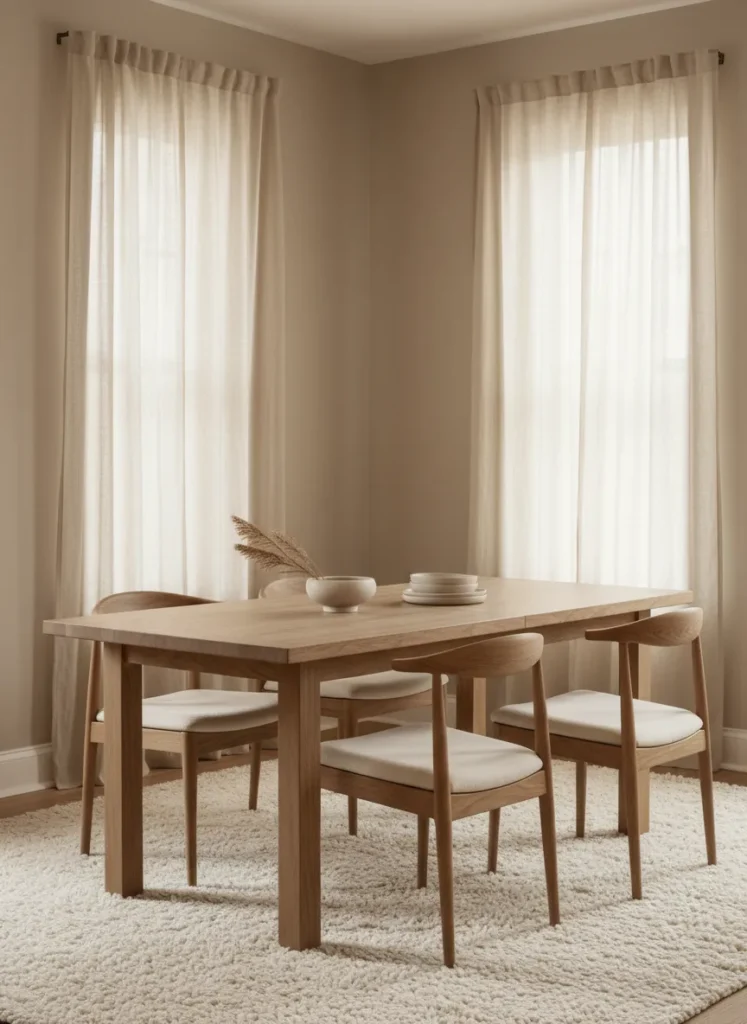
A monochromatic color palette based on warm beige, oatmeal, and cream creates a seamless and soothing environment. By layering different shades of the same color, you create depth without visual chaos. This approach reflects the Scandinavian love for light, bright spaces and the Japanese appreciation for neutrality.
To prevent the room from looking flat, rely on different textures rather than different colors. Mix linen, wood, wool, and stone all within the same color family. This creates a sanctuary-like vibe where the eyes can rest, making the dining room a perfect place to decompress after a busy day.
Introduce Indoor Olive Trees
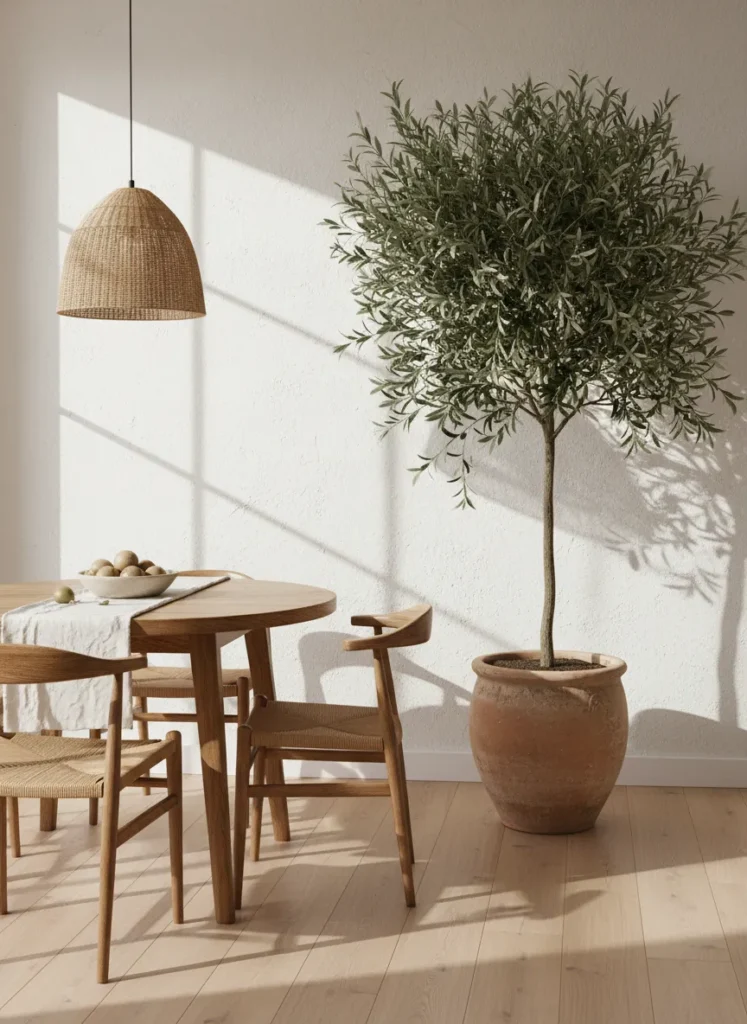
Bringing nature indoors is essential for this style, and an olive tree is an ideal plant choice due to its sparse, delicate foliage and muted green color. Placing a potted tree in the corner of the dining room adds life and organic movement to the space. The dusty green leaves complement natural wood tones perfectly.
Unlike dense tropical plants, an olive tree maintains a minimalist silhouette that doesn’t feel heavy or cluttered. It acts as a living sculpture that changes with the light throughout the day. Ensure the pot is made of natural material like clay or concrete to keep the look cohesive and grounded.
Install Floating Wooden Shelves
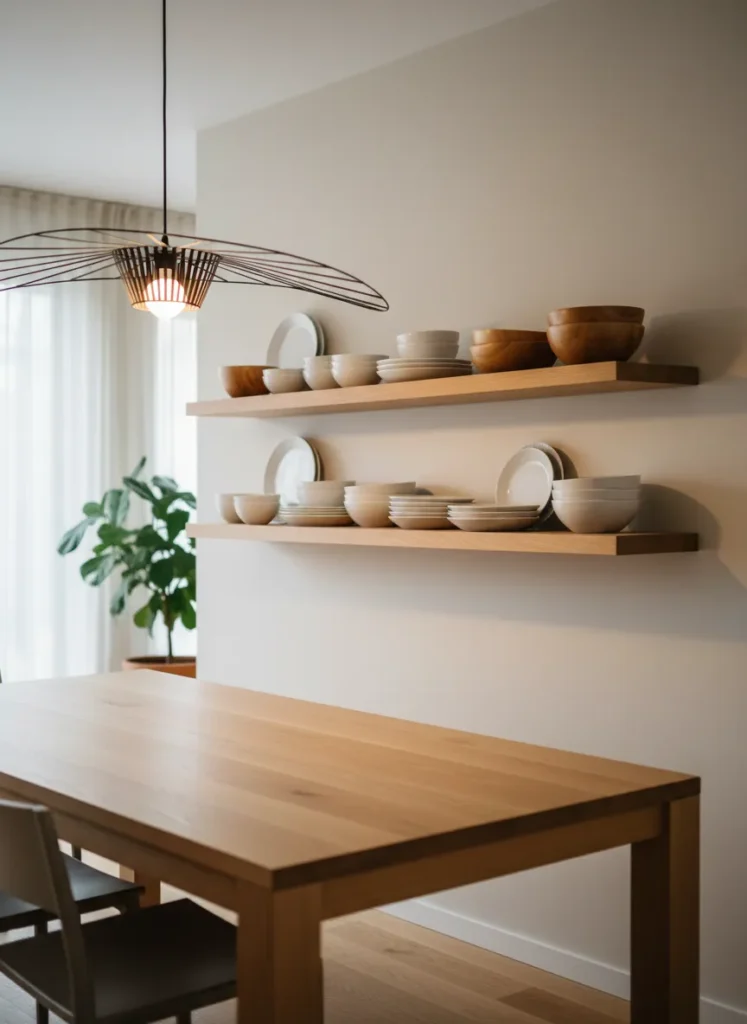
Floating shelves offer a practical storage solution that doubles as a display area for your most beautiful kitchenware. By removing bulky cabinets and using open shelving, you keep the walls feeling open and the room airy. Use these shelves to display a curated selection of ceramics, wooden bowls, or glass jars.
The key to making this work is to avoid overcrowding the shelves; negative space is just as important as the objects themselves. Keep the arrangement balanced and minimal. This functional decor keeps everyday items handy while turning them into part of the room’s aesthetic appeal.
Layer with Natural Jute Rugs
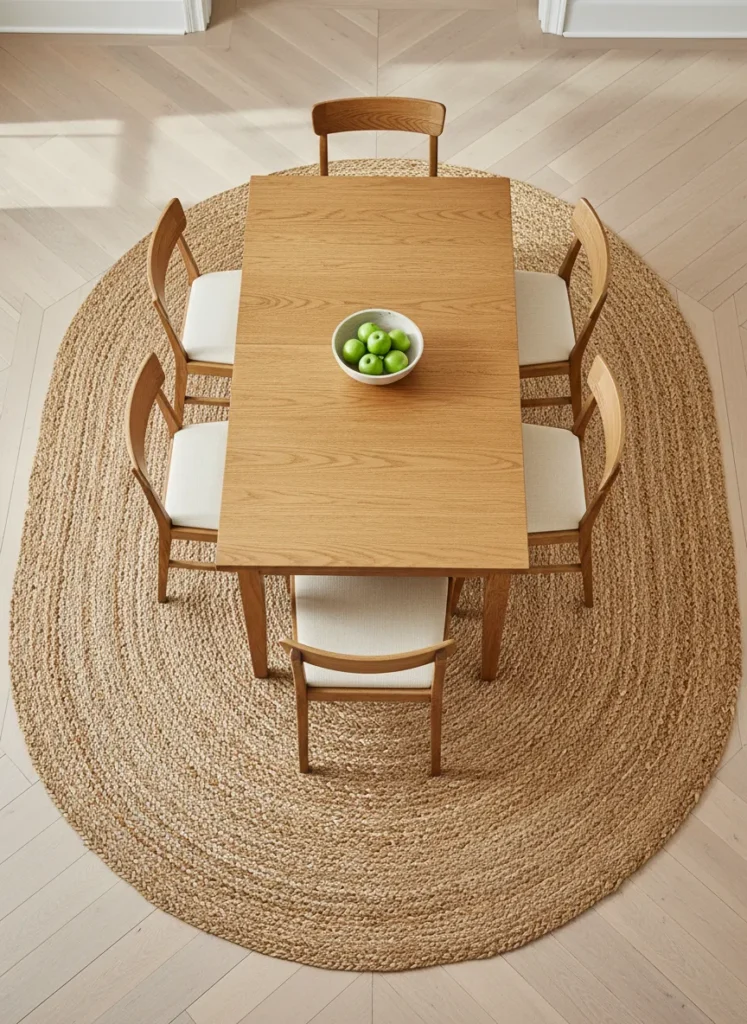
A jute or sisal rug is excellent for grounding the dining area and defining the space, especially in open-plan homes. The rough, natural texture of the fibers contrasts beautifully with smooth furniture legs and adds a layer of warmth to the floor. These rugs are durable and eco-friendly, aligning with the sustainable ethos of the style.
Choose a rug in a natural golden or tan hue to maintain the warm neutral palette. The texture of a woven rug adds visual weight to the bottom of the room, making the space feel settled and complete. It also provides a comfortable surface for feet, adding to the overall sense of coziness.
Hang Sheer Linen Drapes
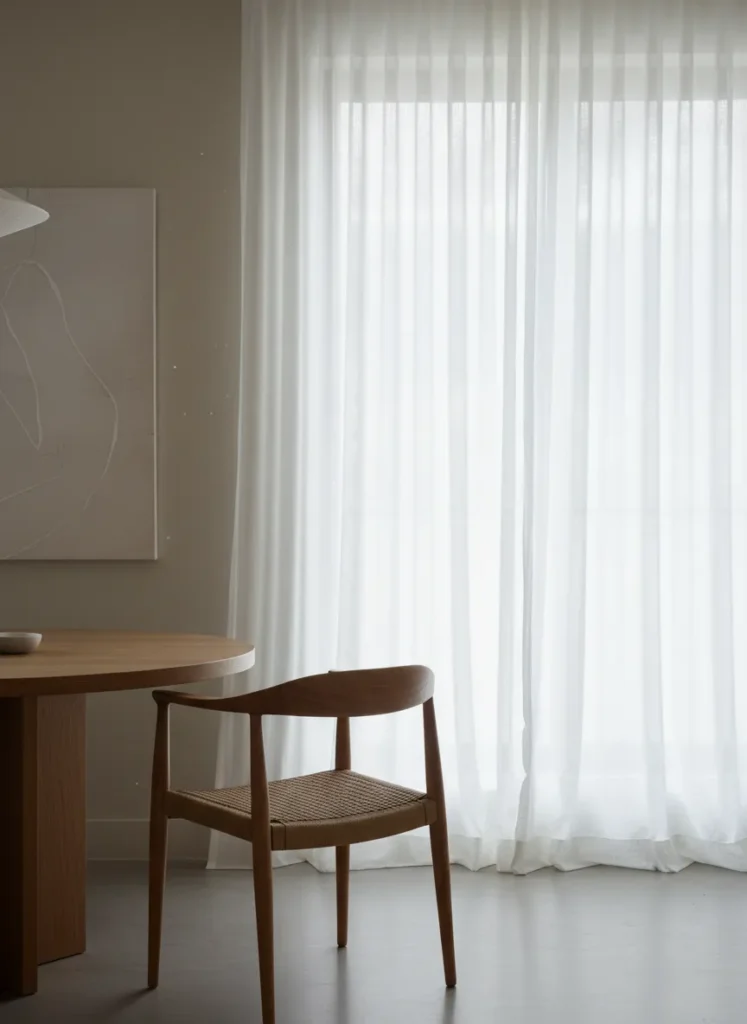
Natural light is a vital component of this design aesthetic, so window treatments should be light and translucent. Sheer linen drapes allow sunlight to filter through softly, creating a bright and ethereal atmosphere. The texture of linen adds a casual elegance that feels refined but not stuffy.
Letting the curtains pool slightly on the floor can add a touch of relaxed luxury. Avoid heavy patterns or bright colors; stick to white, off-white, or light grey. These curtains provide privacy without cutting off the connection to the outdoors, keeping the room feeling fresh and connected to nature.
Mix in Stone and Concrete
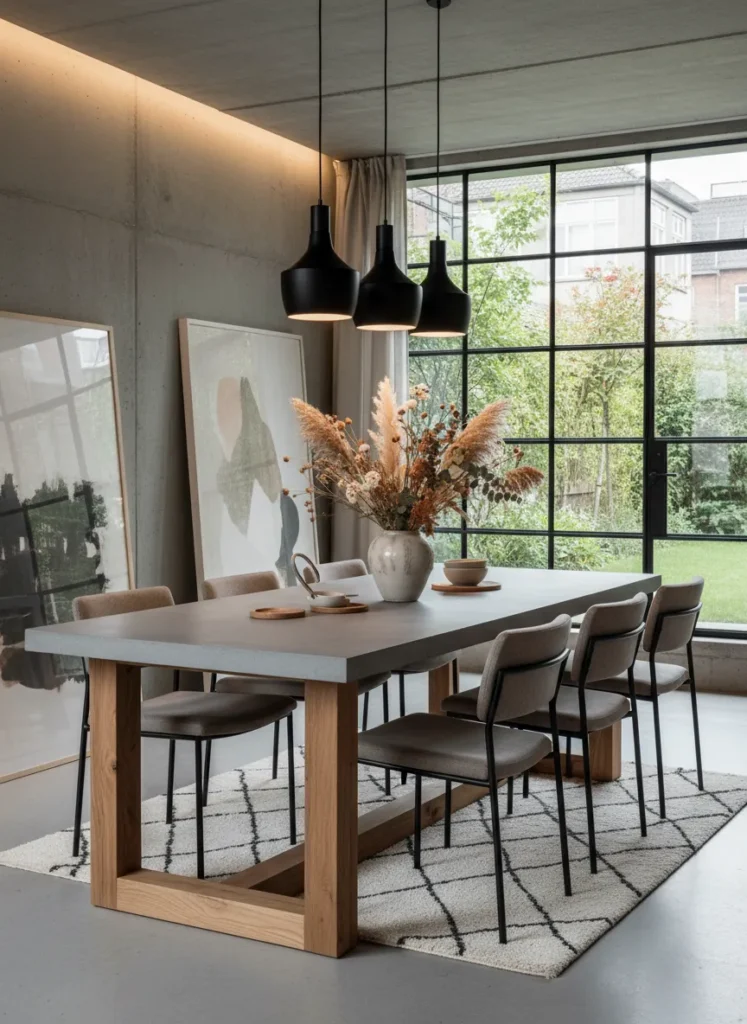
To add variety to a wood-heavy room, introduce elements of stone or concrete. A dining table with a concrete top or a stone sideboard brings a cool, industrial edge that balances the warmth of the wood. These materials are durable and age beautifully, acquiring a unique patina over time.
The contrast between the cold, hard stone and the warm, soft wood creates a dynamic interplay of materials. This mix prevents the room from looking like a sauna or a cabin by adding a modern, architectural touch. It reinforces the connection to raw, earth-derived materials that is central to the design.
Detail with Rattan and Cane
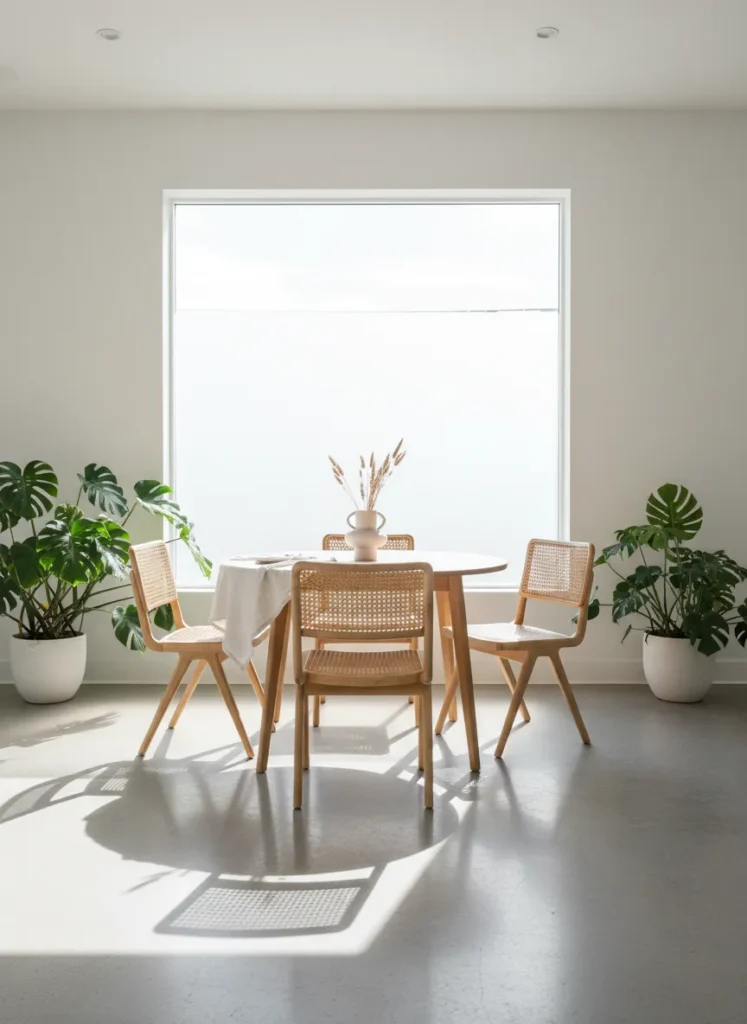
Cane webbing and rattan details are classic elements that add lightness and texture to furniture. Dining chairs with cane backs or a sideboard with rattan doors allow light and air to pass through, reducing visual bulk. This material choice is inherently nostalgic yet feels perfectly modern in a minimalist setting.
The intricate weave of the cane adds a pattern to the room without the need for printed fabrics or wallpaper. It introduces a golden honey tone that warms up the space. These natural fibers are lightweight and sustainable, making them a smart and stylish addition to your dining room.
Experiment with Asymmetrical Layouts
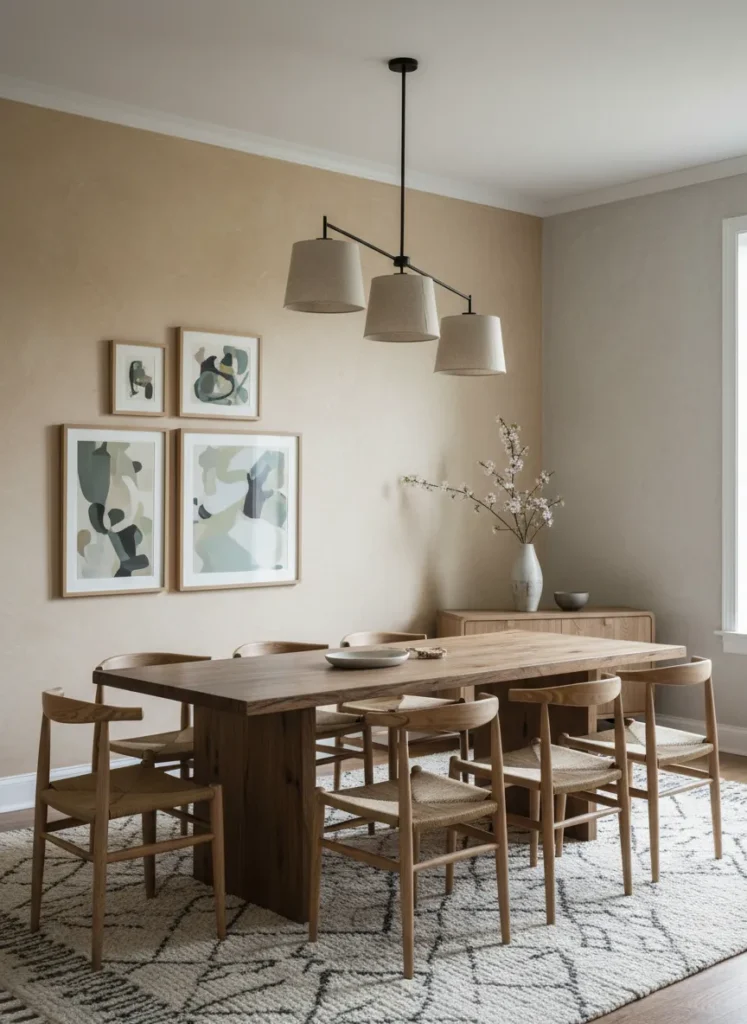
Perfect symmetry can sometimes feel too rigid or formal. Embracing a slightly asymmetrical layout can make the room feel more organic and relaxed. Try placing a piece of art off-center or arranging a cluster of pendant lights at different heights. This approach draws from the Japanese concept of finding beauty in irregularity.
Asymmetry creates visual movement and interest, encouraging the eye to travel around the room. It makes the space feel lived-in and authentic rather than staged. Balance is still achieved through visual weight—counteracting a large item on one side with a group of smaller items on the other.
Select Abstract Line Art
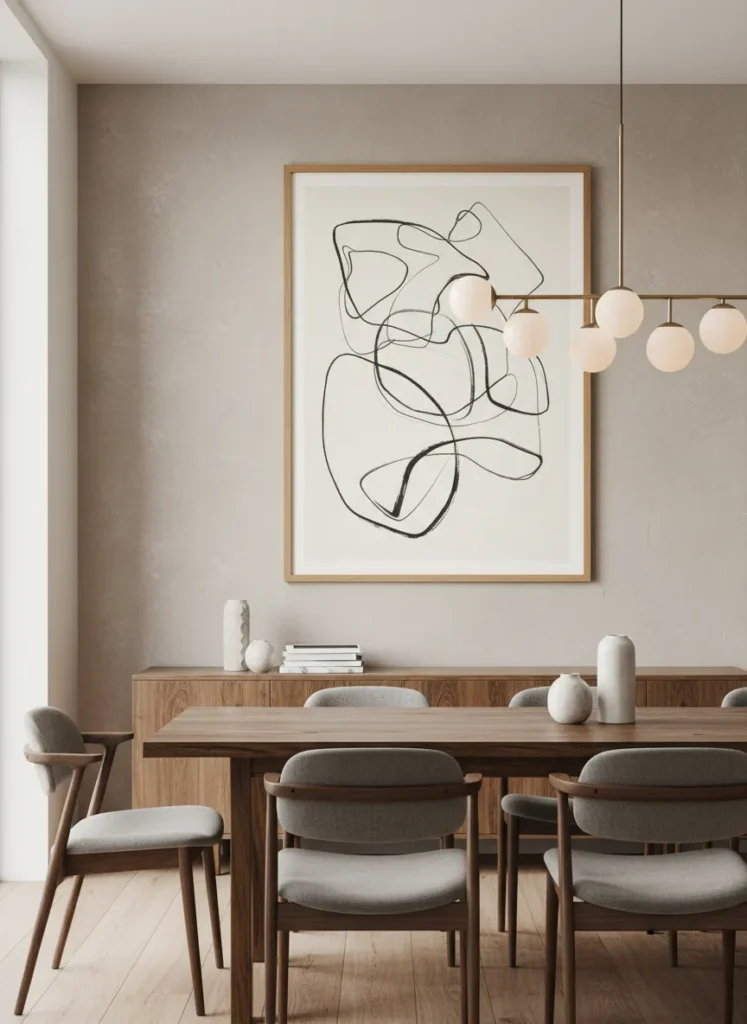
When choosing art for the walls, less is definitely more. Simple abstract line drawings or calligraphy-style prints fit perfectly with the minimalist theme. These pieces should evoke a sense of calm and contemplation, using limited colors and fluid shapes.
Frame the art in simple light wood or black frames to match the furniture. The artwork serves as a quiet focal point that complements the room’s decor rather than competing with it. By keeping the art subtle, you maintain the peaceful, gallery-like atmosphere of the dining space.
Frame Zen Garden Views
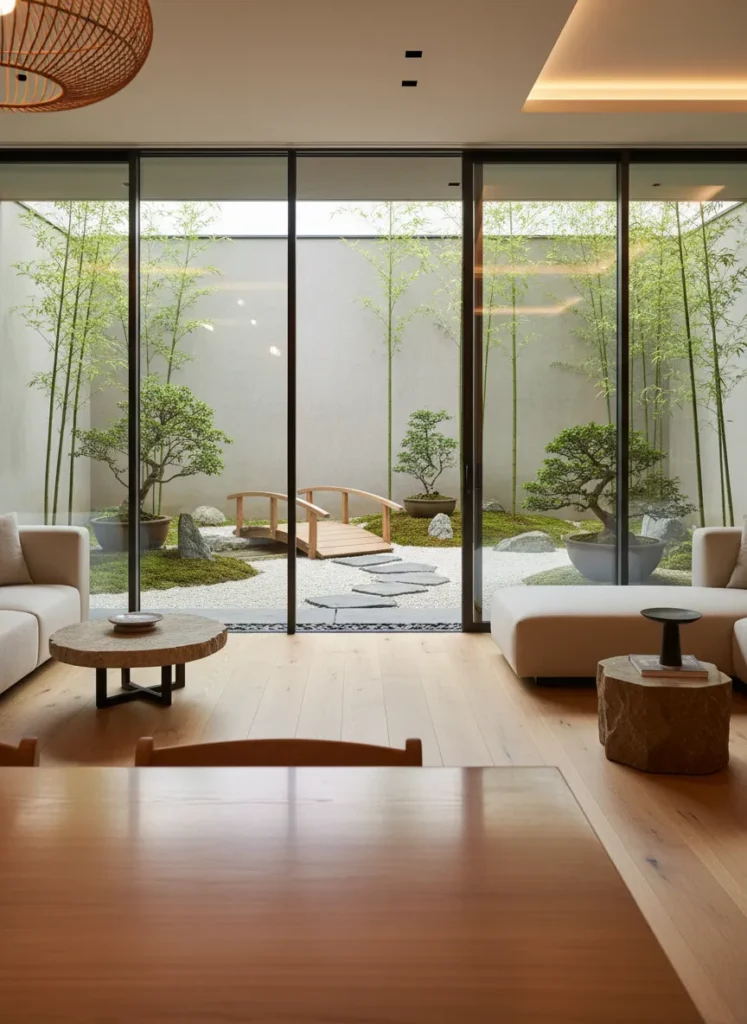
If your architecture allows, orient your dining table to face a window or glass door with a view of greenery. Treating the outdoors as an extension of your dining room blurs the lines between inside and out. Even a small view of a garden, a balcony with plants, or a tree canopy can serve as a living backdrop.
Keep the window treatments minimal to maximize this visual connection. If a view isn’t available, you can create a similar effect by placing a large mirror to reflect an indoor plant. This strategy expands the sense of space and reinforces the nature-centric philosophy of the design style.
Conclusion
Transforming your eating area does not require a complete renovation but rather a shift in perspective toward simplicity and nature. By incorporating these eighteen design elements, you can easily create a space that feels timeless and peaceful, proving that the best japandi dining room ideas are those that prioritize harmony and well-being.