
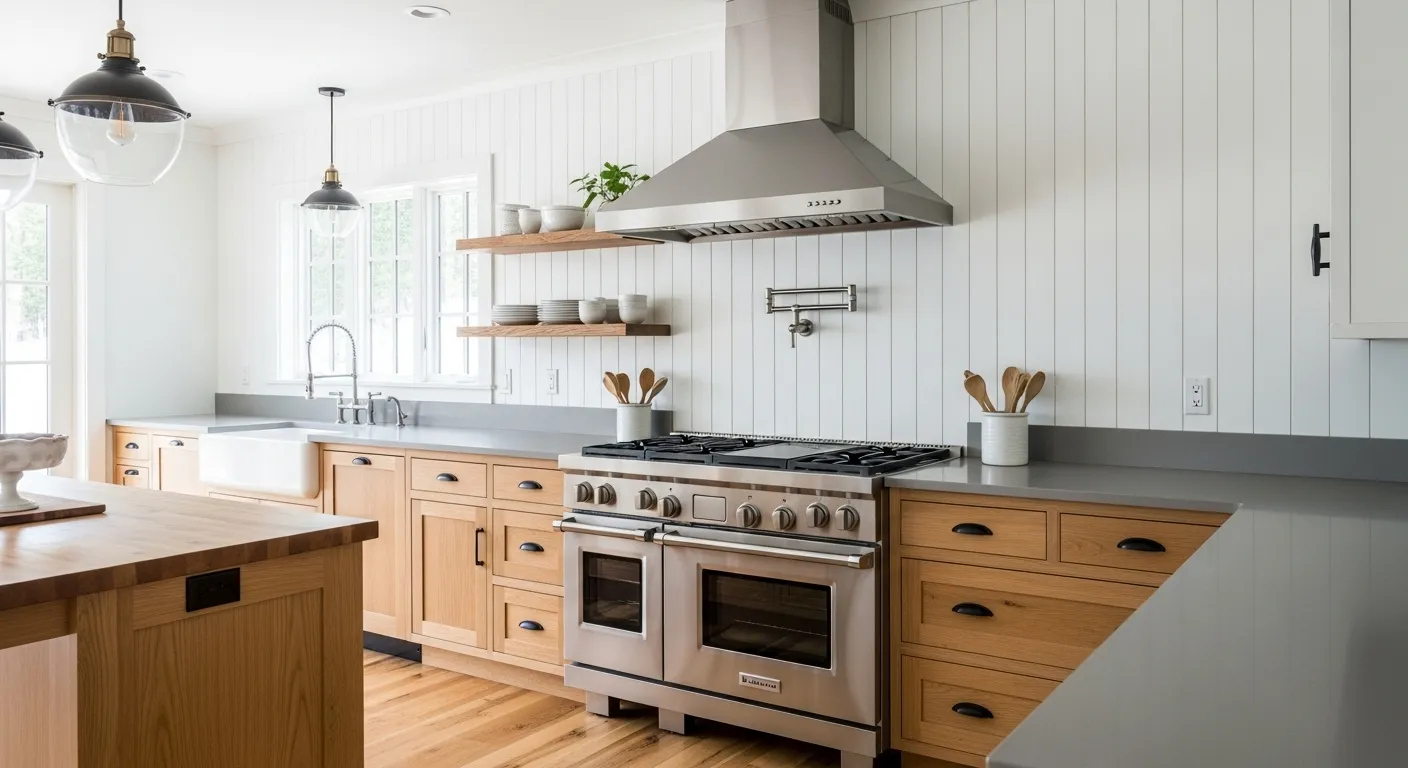
Creating a heart of the home that feels both cozy and current is the main goal of these modern farmhouse kitchen ideas. This design style effortlessly blends the clean, sleek lines of contemporary interiors with the warm, textured charm of rustic country living. By mixing old-world elements like natural wood and vintage metals with modern features such as smooth countertops and minimalist cabinetry, you can achieve a space that is timeless yet functional. Whether you are planning a full renovation or a simple refresh, balancing these two aesthetics will result in a welcoming atmosphere that feels curated and lived-in.
Matte Black Cabinet Hardware
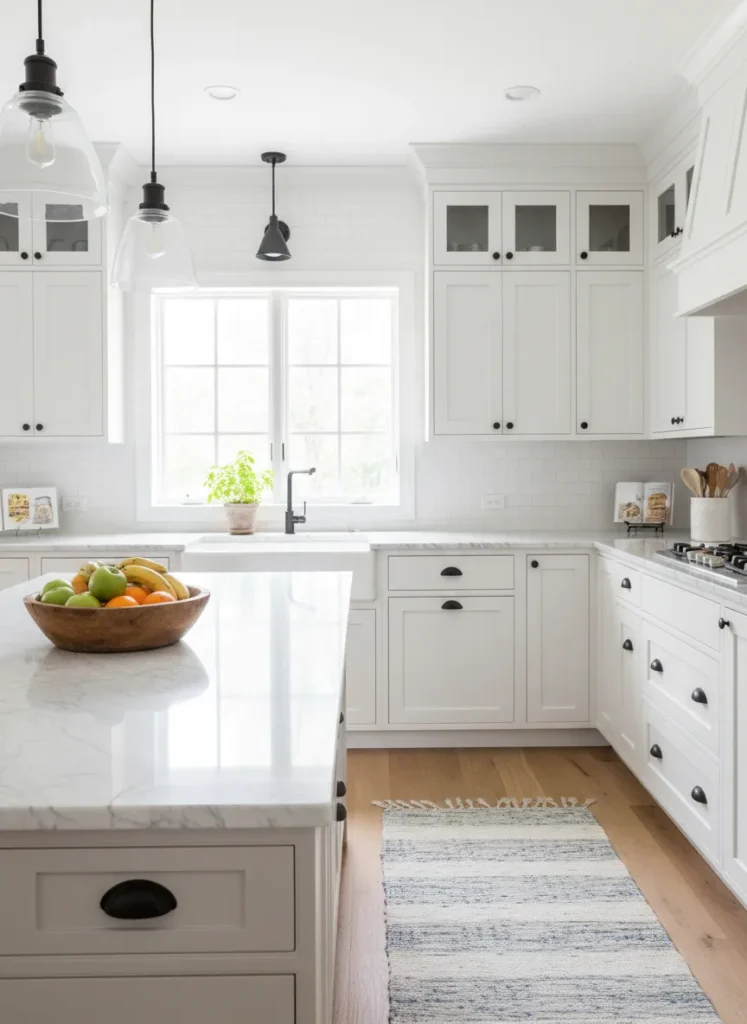
One of the easiest ways to bring a modern edge to a traditional farmhouse kitchen is by updating the hardware. Swapping out standard silver or brass knobs for sleek matte black pulls creates a stunning visual contrast against white or light gray cabinetry. This small detail acts as bold punctuation in the room, grounding the airy space with a touch of industrial flair.
The beauty of matte black hardware lies in its versatility and resistance to fingerprints, making it a practical choice for busy cooking spaces. It pairs beautifully with other black accents, such as window frames or light fixtures, helping to unify the design. This simple change instantly modernizes the look without requiring a major renovation budget.
Reclaimed Wood Kitchen Island
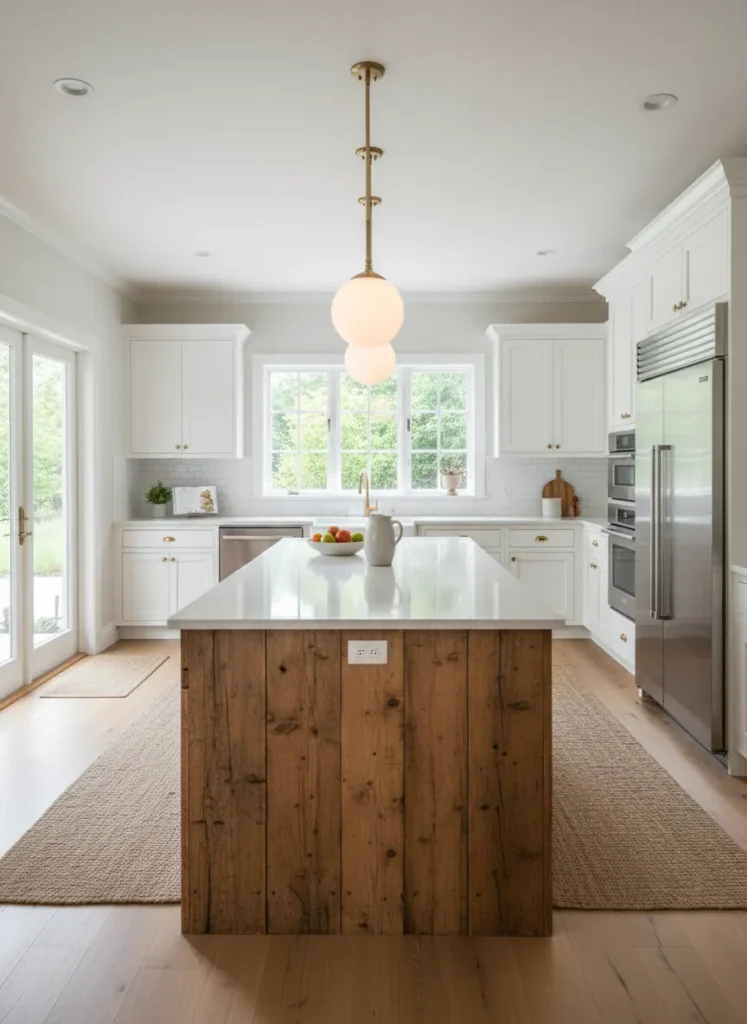
A reclaimed wood island serves as the perfect rustic focal point in a space dominated by clean, modern finishes. The texture and history of the wood add immediate warmth and character, preventing the kitchen from feeling too sterile or cold. When topped with a sleek quartz or marble slab, the island bridges the gap between the rugged countryside aesthetic and refined modern living.
This design choice also introduces natural color variations that can guide the rest of your decor palette. The knots and grain in the wood tell a story, making your kitchen feel unique and custom-made. It functions not just as a prep station, but as a conversation piece that anchors the room with organic beauty.
Classic Apron Front Sink
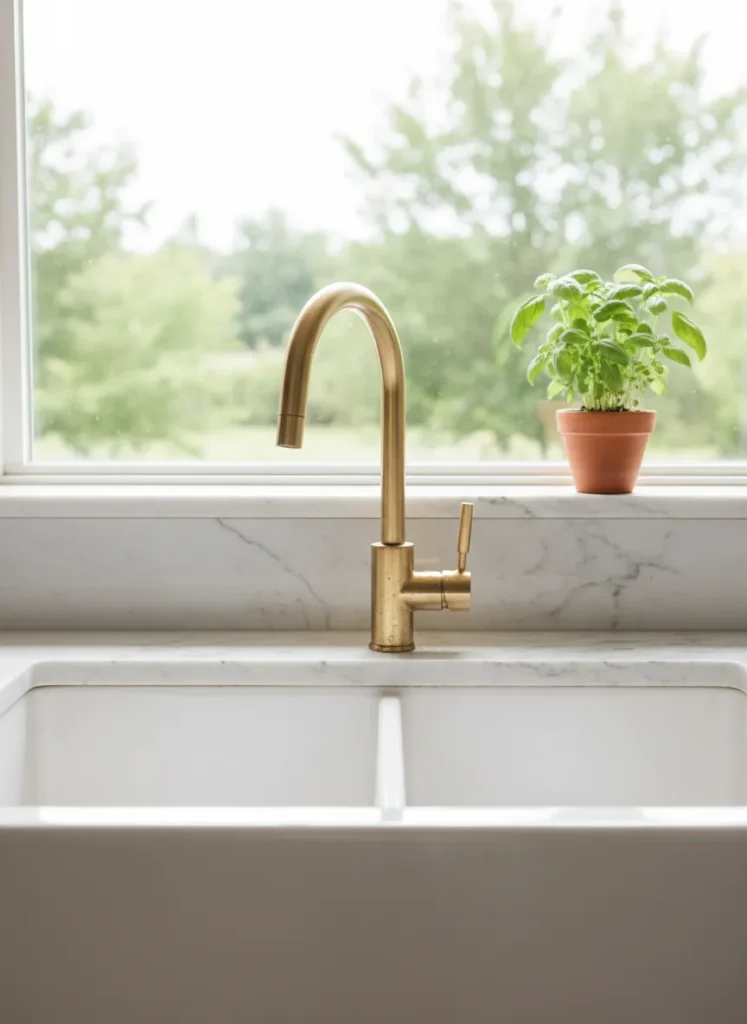
No farmhouse kitchen is truly complete without the iconic apron front sink, also known as a farmhouse sink. These deep, wide basins are incredibly practical for washing large pots and pans, but they also serve as a major style statement. To keep the look modern, pair a traditional white fireclay sink with a streamlined, high-arc faucet in a contemporary finish like brushed gold or polished nickel.
The exposed front of the sink breaks up the cabinetry lines, adding visual interest and a sense of nostalgia. It is a timeless feature that works with almost any countertop material, from butcher block to granite. This element effectively anchors the wet area of the kitchen, blending utility with enduring style.
Floating Rough-Cut Shelves
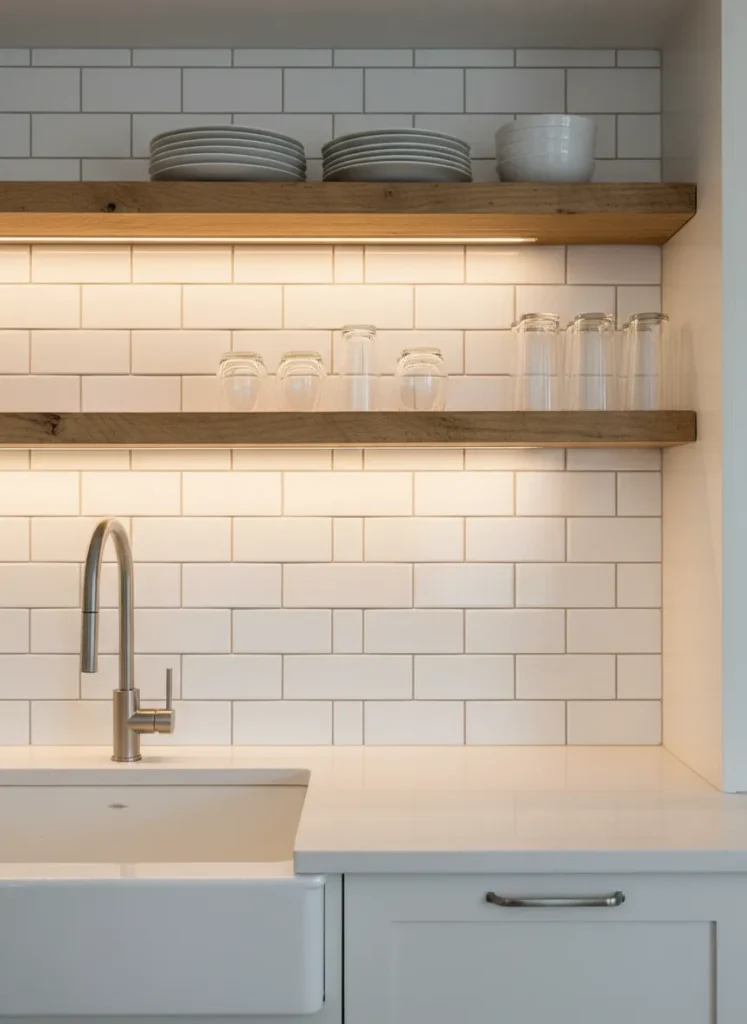
Replacing upper cabinets with floating rough-cut wood shelves is a fantastic way to open up a smaller kitchen and display your favorite items. The open shelving concept makes the room feel larger and airier, which is a key component of modern design. The rough-cut wood adds a necessary rustic texture that contrasts beautifully against smooth backsplash tiles.
Functionally, this encourages you to keep your kitchen organized and allows for easy access to daily essentials like plates and glasses. You can style these shelves with a mix of practical dishware and decorative objects like vintage pitchers or potted plants. This approach creates a casual, lived-in vibe that is central to the farmhouse philosophy.
Vertical Shiplap Backsplash
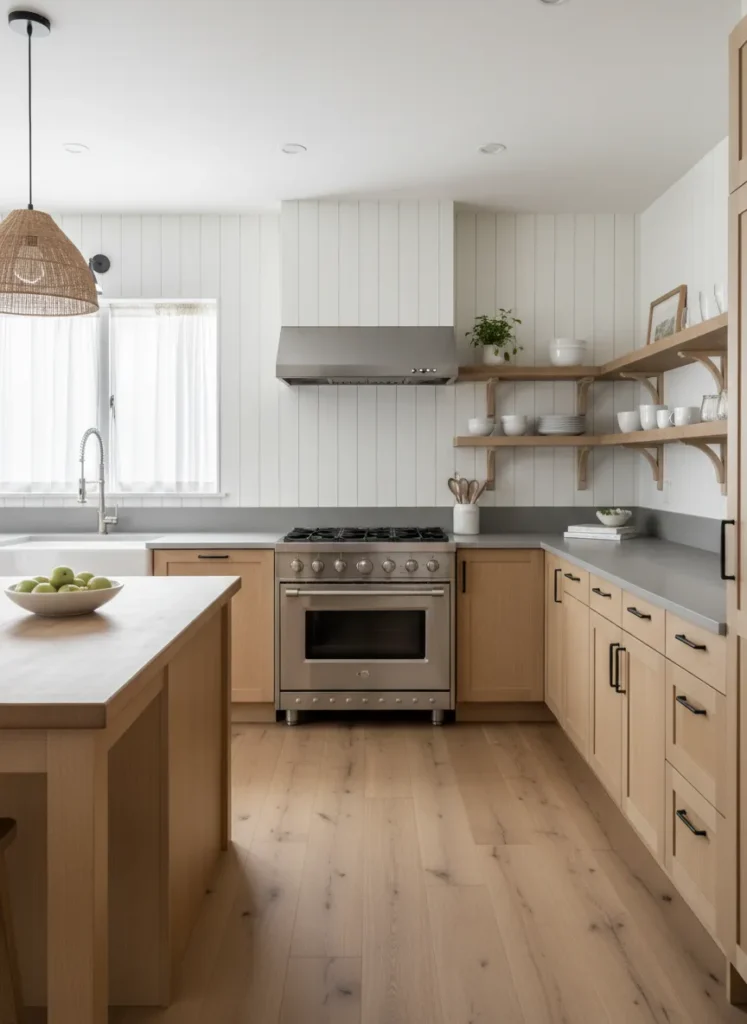
While horizontal shiplap is a staple of the style, installing it vertically offers a fresh, modern twist that draws the eye upward. This technique makes ceilings appear higher and adds subtle texture to the walls without overwhelming the space. Using shiplap as a backsplash instead of tile is a cost-effective way to add charm and clean lines.
To ensure durability behind the sink and stove, use high-quality paint that can withstand moisture and cleaning. The vertical lines create a sense of rhythm and order, contributing to a tidy and structured appearance. It creates a crisp, white canvas that allows other elements, like light fixtures or cabinet colors, to pop.
Industrial Dome Pendant Lights
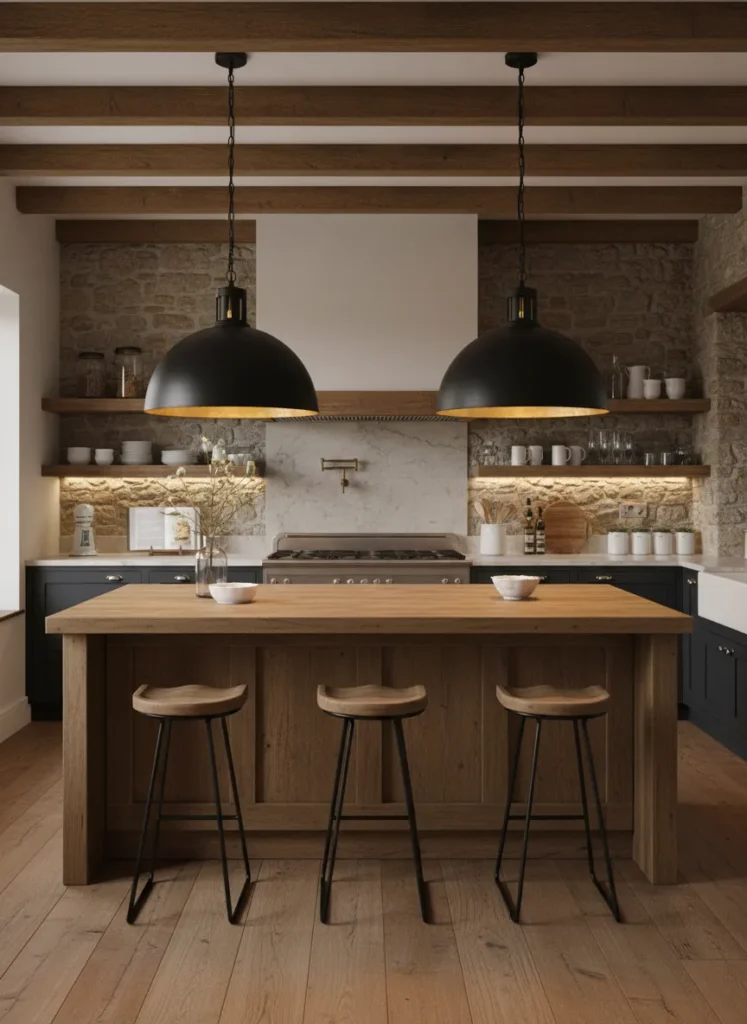
Lighting is the jewelry of the kitchen, and oversized industrial dome pendants are the perfect accessory for this style. Large metal fixtures, perhaps in black, brass, or galvanized steel, command attention and define the dining or prep area. They introduce a factory-inspired element that contrasts nicely with soft wood tones and white surfaces.
These lights provide excellent task lighting for the island while establishing the vertical scale of the room. The blend of metal and light adds warmth and a hint of vintage utility. Choosing fixtures with a different interior finish, like gold or copper, can add a surprising glow and an extra layer of sophistication.
Concrete Countertops
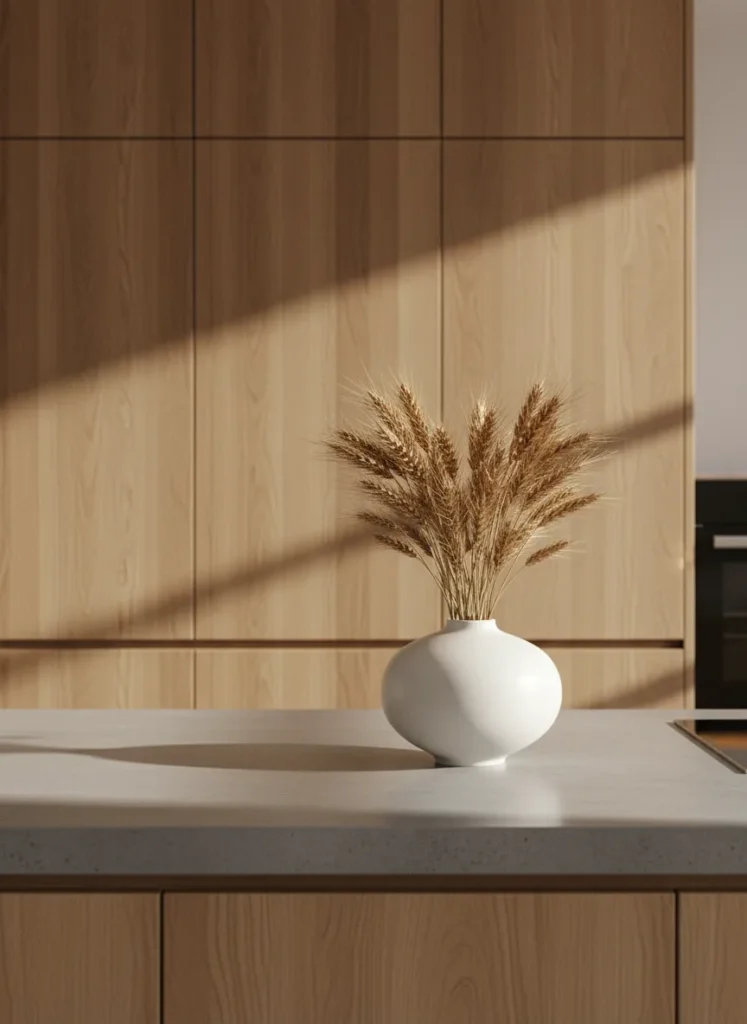
For those leaning heavily into the ‘modern’ side of the farmhouse equation, concrete countertops are an excellent choice. They offer a raw, matte finish that feels earthy yet undeniably industrial. The cool gray tones of concrete balance out the warmth of wood floors or brass accents, creating a harmonious palette.
Concrete is durable and develops a unique patina over time, much like natural wood or leather. It avoids the high shine of polished granite, fitting better with the understated luxury of a farmhouse aesthetic. This material choice signals a design that values texture and substance over gloss and glamour.
Two-Tone Cabinetry
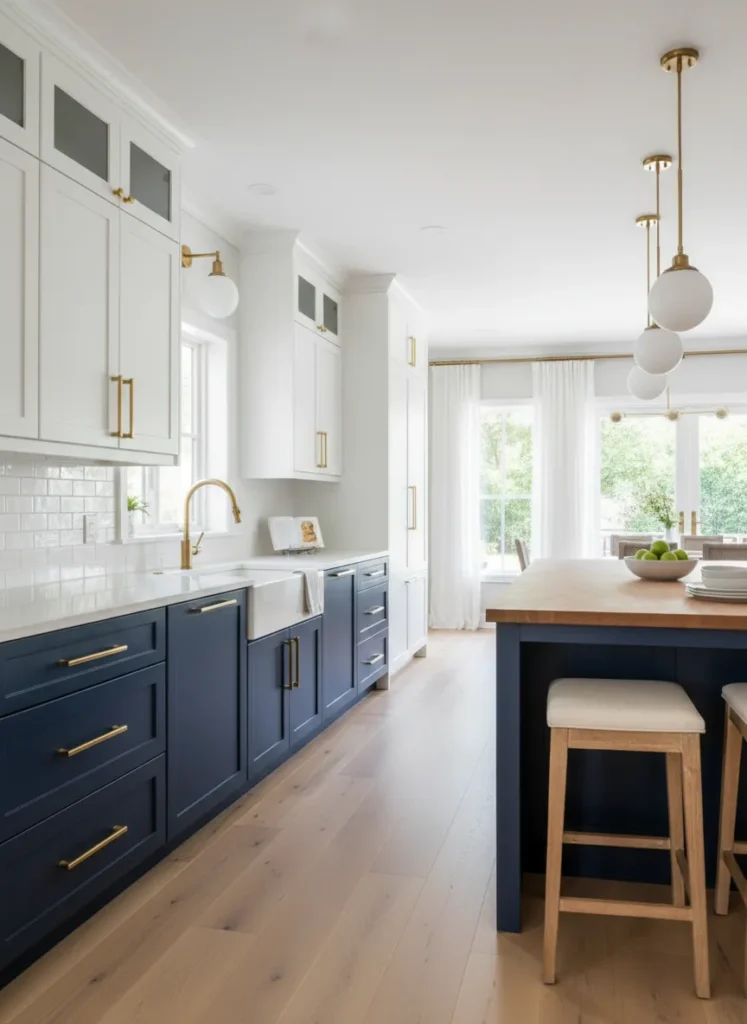
Two-tone cabinetry is a dynamic way to add depth and color to your kitchen without darkening the entire room. A popular approach is to keep upper cabinets white to maintain brightness and paint lower cabinets a deeper shade like navy, forest green, or charcoal. This grounds the kitchen and hides scuffs on the lower units while keeping the eye level feeling open.
This color blocking technique adds a modern layer of customization to standard shaker cabinets. It allows you to incorporate trendy colors in a manageable way that feels timeless rather than fleeting. The contrast between the light and dark sections emphasizes the architectural lines of the kitchen.
Exposed Ceiling Beams
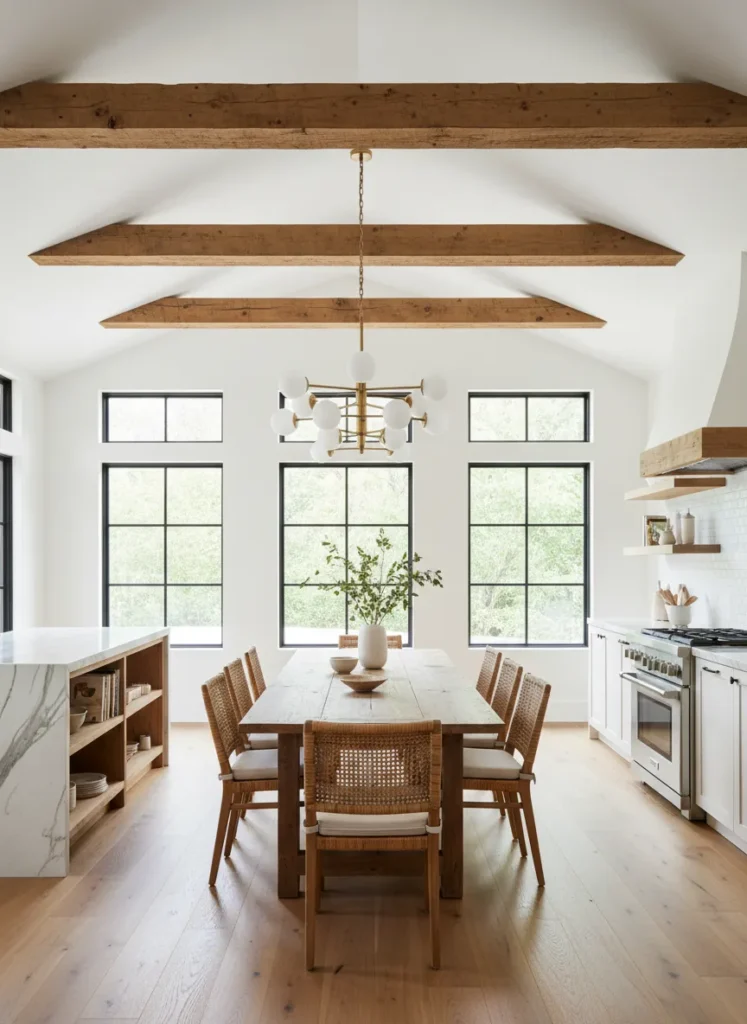
If your architecture allows, exposed wooden ceiling beams are the ultimate rustic statement. They instantly add architectural interest and a sense of history to even a brand-new home. The wood draws the eye up, emphasizing the height of the room and enveloping the space in warmth.
You can leave the beams in a natural, rough state for a country look or stain them dark for a more dramatic, modern contrast against a white ceiling. Even faux wood beams can achieve this effect if structural ones aren’t possible. This design element frames the kitchen and makes the space feel cozy and enclosed, despite an open floor plan.
Vintage Runner Rugs
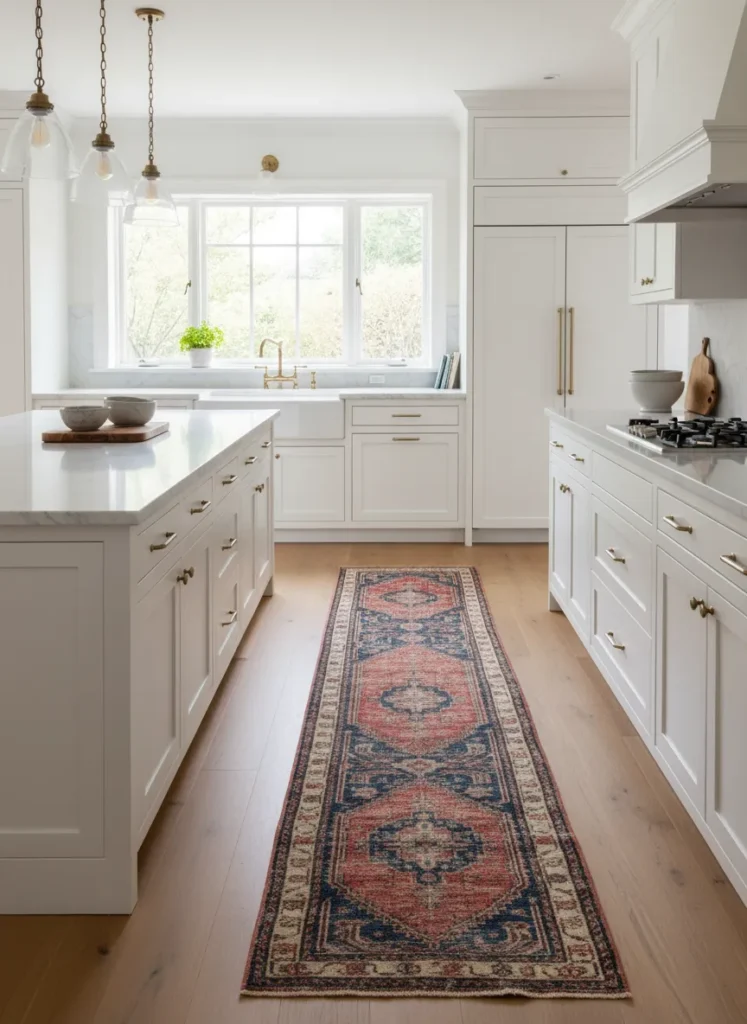
Softening the hard lines of a kitchen is essential for the farmhouse look, and a vintage runner rug is the perfect solution. Placing a worn, patterned rug between the island and the main counter adds a splash of color and pattern to a mostly neutral space. It provides comfort underfoot during long periods of cooking and cleaning.
The intricate patterns of a Persian or Turkish rug hide crumbs and spots well, making it a practical choice for a workspace. This textile element bridges the gap between a utilitarian kitchen and a comfortable living room. It introduces a layer of soul and history that new materials simply cannot replicate.
Wood-Wrapped Range Hood
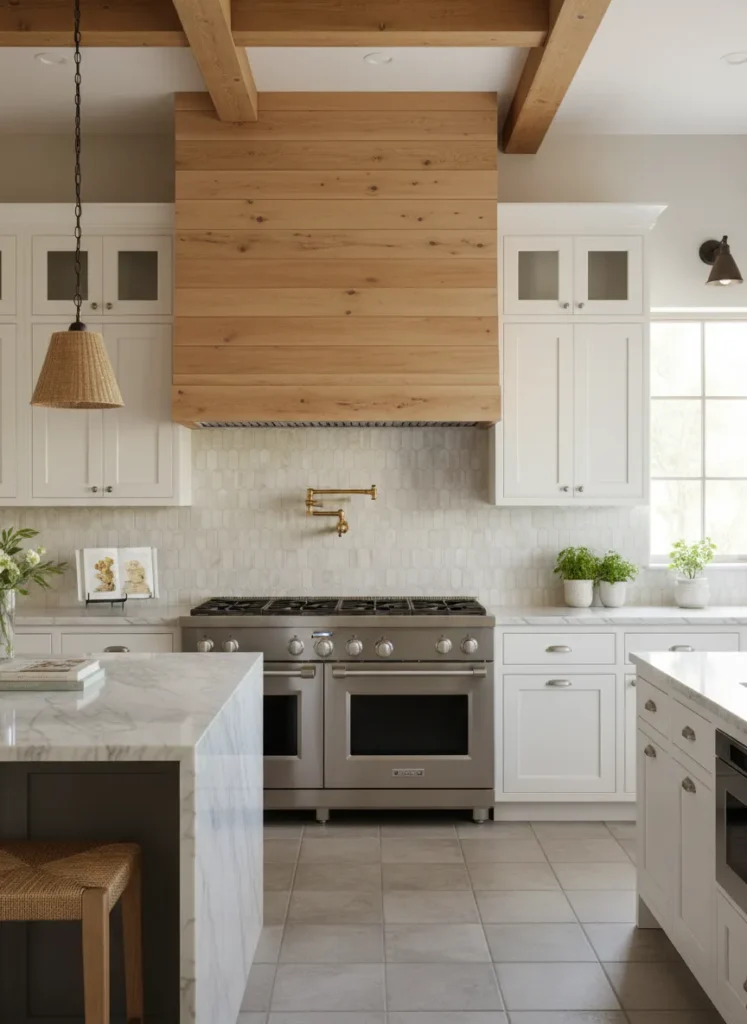
Transforming a standard metal range hood into a wood-wrapped focal point creates a custom, high-end look. By covering the ventilation system with wood planks that match your island or shelves, you bring warmth to the upper half of the kitchen. This feature breaks up the monotony of painted cabinetry and acts as a centerpiece for the cooking wall.
The design can be simple and boxy for a modern feel or feature curved details for a more traditional vibe. It draws attention to the cooking area and makes the kitchen feel more like a furnished room. This specific detail is a hallmark of modern farmhouse design, blending function with natural aesthetics.
Woven Bar Stools
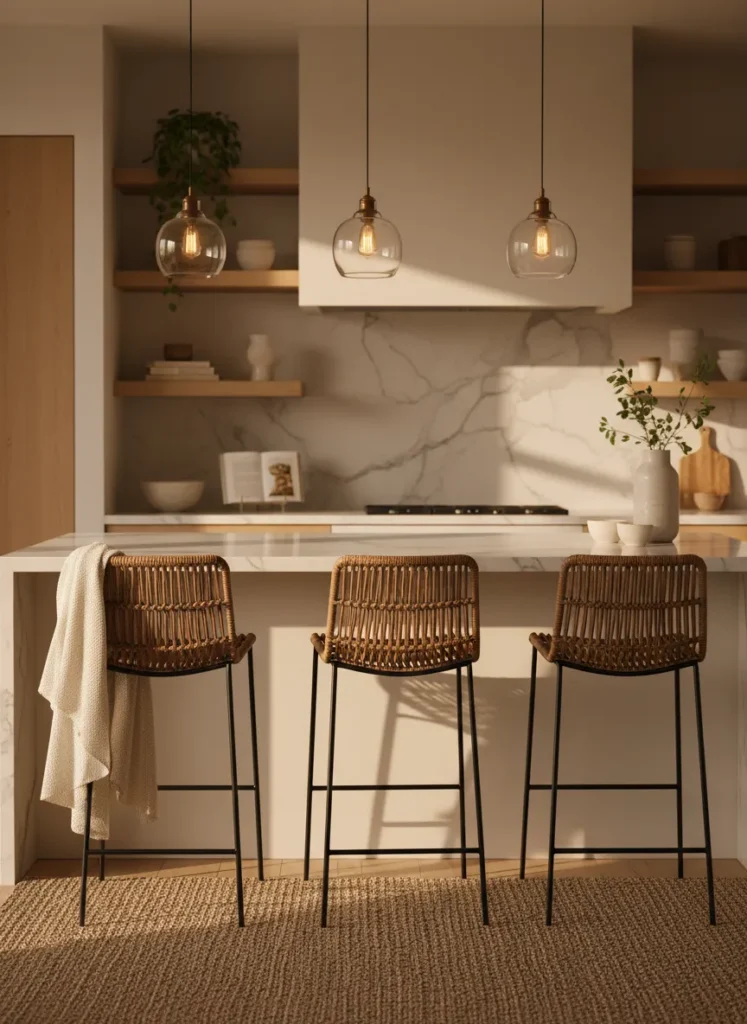
Introducing texture through seating is a subtle but effective way to enhance the rustic modern balance. Woven bar stools, made from materials like rattan, wicker, or rope, add an organic touch to the sleek surface of a stone island. The natural fibers bring warmth and a casual, coastal-country vibe that is very inviting.
Pairing these textured seats with modern metal legs creates the perfect hybrid of styles. They are lightweight and durable, making them great for families. The visual complexity of the weave contrasts beautifully with smooth cabinets and countertops, adding a layer of depth to the room’s design.
Dark Grout with Subway Tile
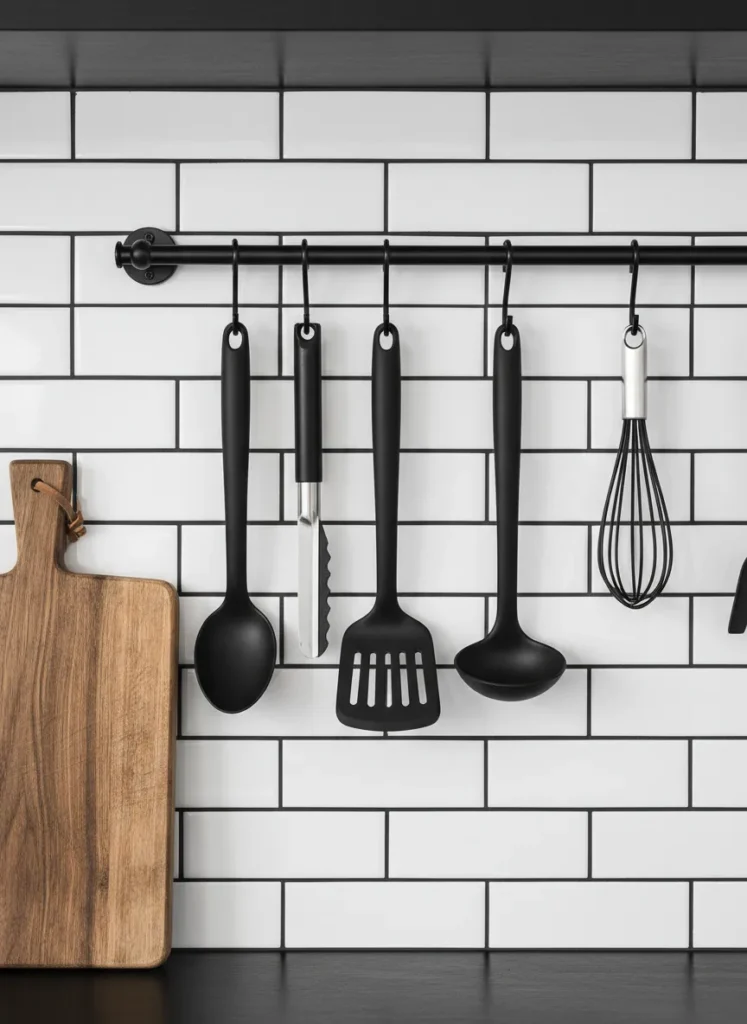
Subway tile is a classic choice, but using dark grout instead of white gives it a distinctly modern, industrial edge. The dark lines emphasize the geometric pattern of the bricks, creating a graphic backdrop for the kitchen. This high-contrast look is bold and prevents the white tiles from fading into the background.
Practicality is another major benefit, as dark grout shows less dirt and discoloration over time than white grout. It pairs exceptionally well with black hardware and dark lower cabinets. This simple tweak to a standard material transforms a safe choice into a design-forward statement.
Brass Faucets and Fixtures
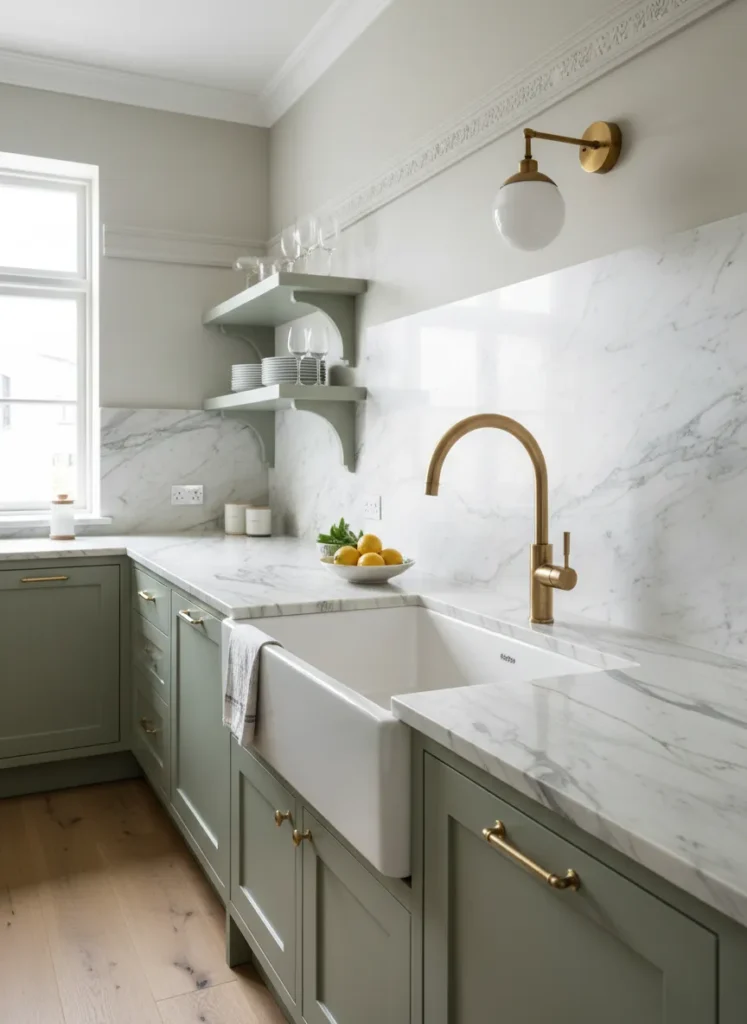
Warm metals like brass or unlacquered gold bring a sense of luxury and nostalgia to a farmhouse kitchen. A brass faucet serves as a jewel-like centerpiece that warms up cool grey or white tones. Over time, high-quality brass can develop a patina, adding to the lived-in charm that this style celebrates.
You can echo this finish in cabinet knobs, light fixtures, or even shelf brackets for a cohesive look. The golden hues complement wood tones perfectly, creating a sunny and welcoming environment. It is a sophisticated departure from standard chrome that elevates the entire room.
Natural Stone Flooring
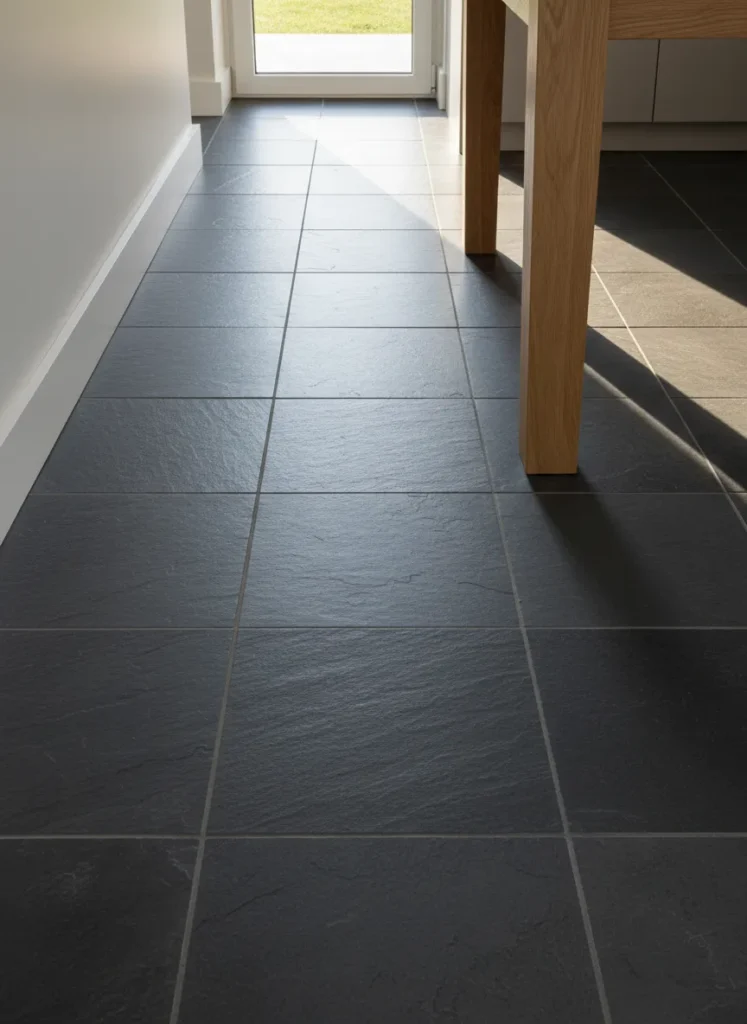
While wood floors are common, natural stone flooring like slate, limestone, or travertine offers a rugged, durable alternative. Large format stone tiles in dark grey or earthy beige ground the space and hide dirt effectively. The natural variation and texture of the stone provide an authentic rustic foundation.
Stone floors are cool to the touch and incredibly hard-wearing, perfect for high-traffic areas and muddy boots. When paired with modern white cabinets, the dark stone creates a dramatic and elegant contrast. This flooring choice feels permanent and historic, adding a sense of age to the home.
Glass Front Cabinetry
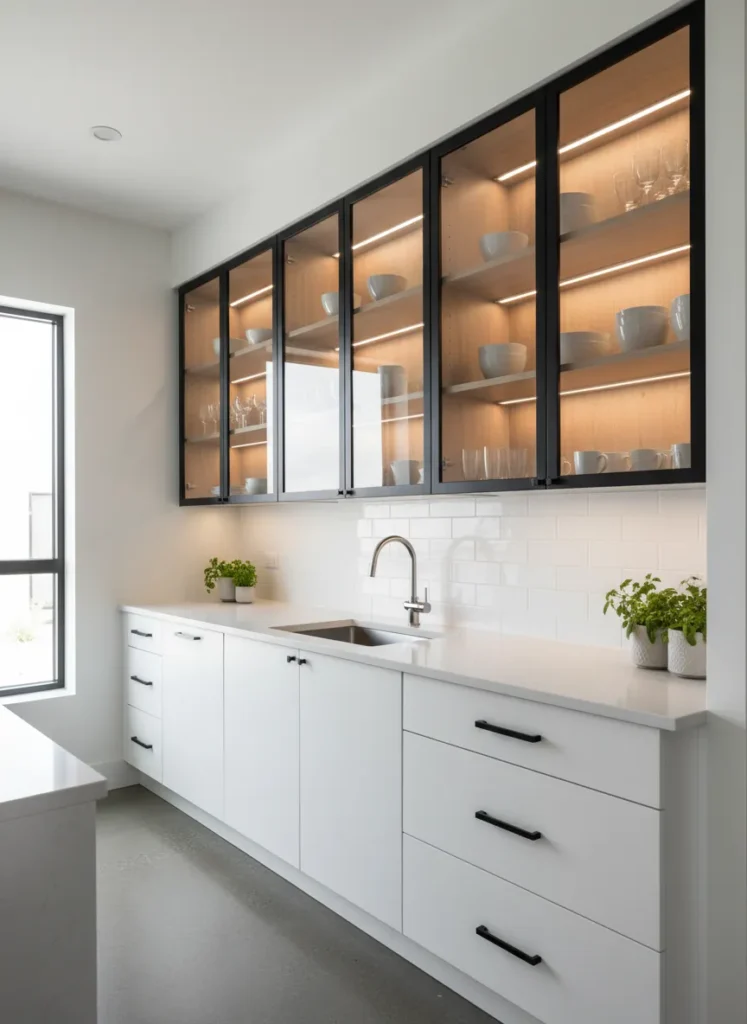
Glass front cabinets offer a compromise between open shelving and solid doors, allowing you to display items while keeping them dust-free. They break up the visual weight of a wall of cabinetry, making the kitchen feel more open and spacious. Using seeded or textured glass can add a vintage touch, while clear glass feels more modern.
Painting the interior of these cabinets a different color or using natural wood inside adds unexpected depth. They are perfect for showcasing your best glassware or heirloom serving pieces. This feature mimics the look of a traditional china hutch but is built-in for a seamless modern finish.
Butcher Block Accents
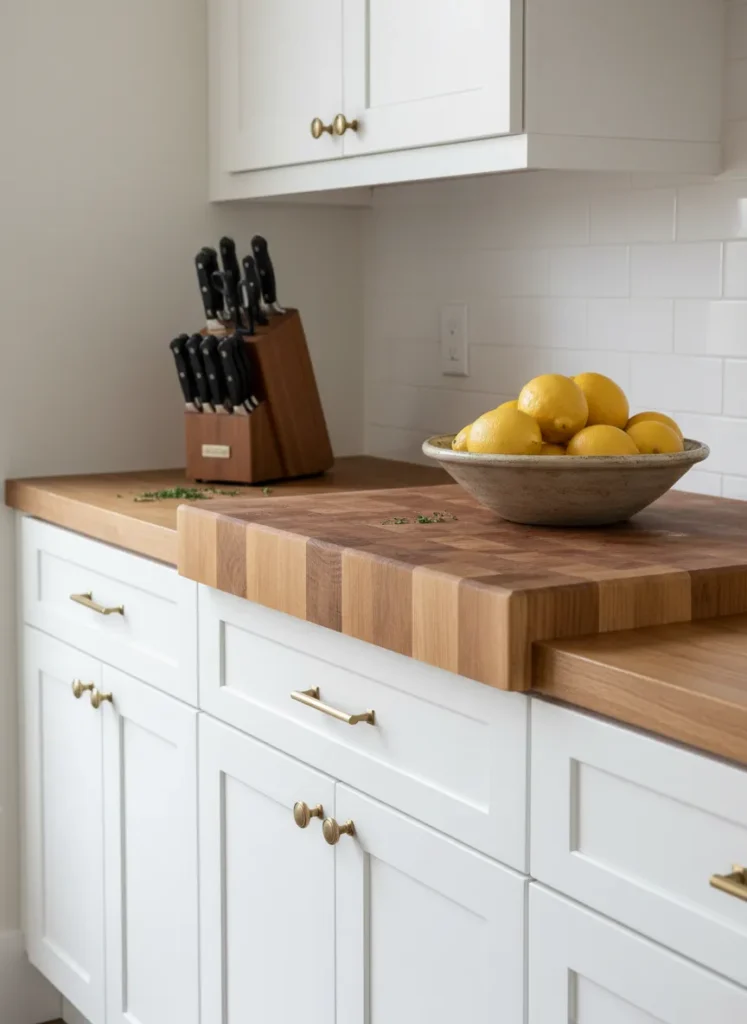
Incorporating a section of butcher block countertop adds intense warmth and utility to the kitchen. You don’t have to use it everywhere; placing it on the island or a dedicated coffee station creates a designated zone with a distinct look. The wood surface is soft and quiet to work on, contrasting with the hardness of stone or quartz.
Butcher block requires some maintenance with oiling, which adds to the ritual of caring for a farmhouse kitchen. It ages beautifully, with knife marks and wear eventually becoming part of its character. This material choice emphasizes the ‘working kitchen’ aspect of the design style.
Sliding Barn Door Pantry
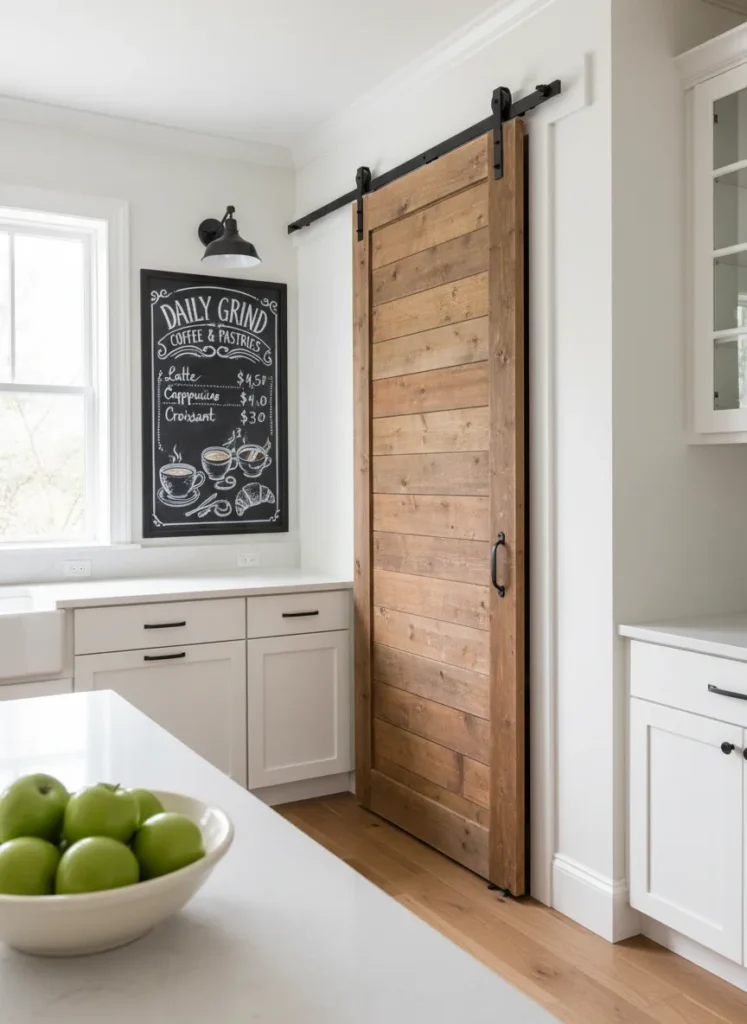
A sliding barn door is perhaps the most literal interpretation of the farmhouse aesthetic, but it remains a functional space-saver. It is an excellent solution for a pantry or laundry room entrance where a swinging door might block traffic. The door itself acts as a large piece of moving art, adding texture and wood tones to the walls.
To keep it modern, choose a door with simple lines rather than overly rustic X-bracing, or paint it a bold color like black or sage green. The exposed metal track adds an industrial hardware element that complements other fixtures in the room. It creates a fun, dramatic entry point to your storage area.
Warm Neutral Color Scheme
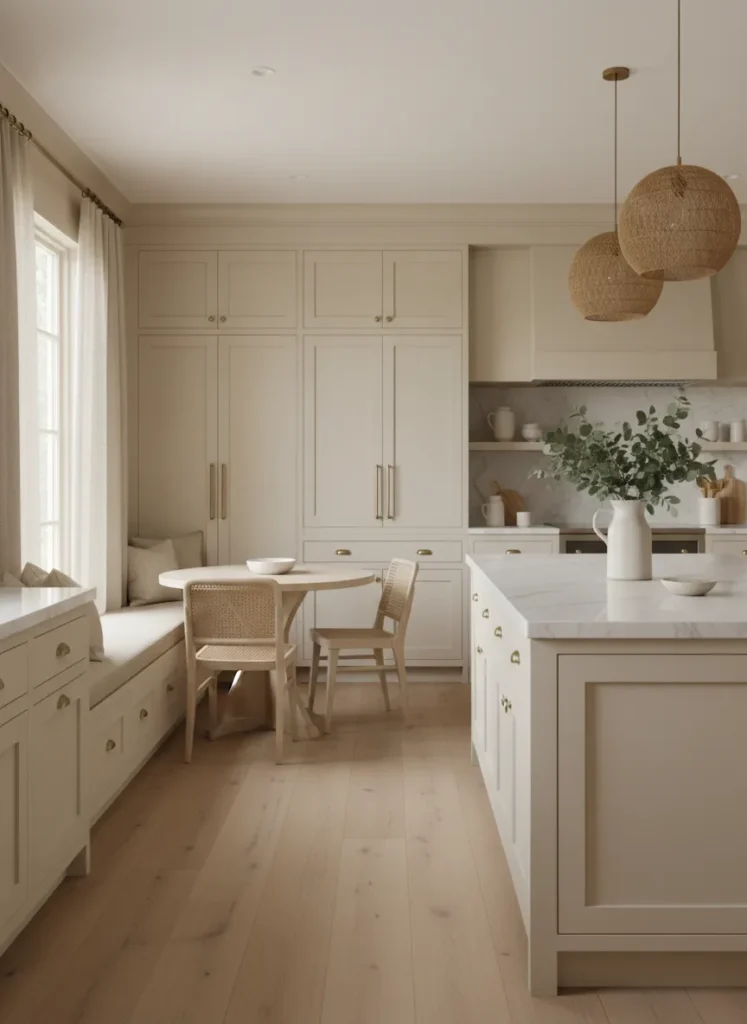
Moving away from stark, sterile whites, a modern farmhouse kitchen often relies on a palette of warm neutrals. Shades like cream, greige (gray-beige), mushroom, and soft taupe create a cozy and inviting envelope. These colors reflect light but feel softer and more organic than pure white.
This monochromatic approach allows textures like wood grain, metal finishes, and stone to take center stage. It creates a seamless flow between the kitchen and adjacent living areas, which is typical in modern open-plan homes. The result is a sophisticated, calming space that feels timeless and elegant.
Conclusion
Balancing rustic charm with modern convenience creates a kitchen that is not only beautiful to look at but a joy to live in. By selectively incorporating these modern farmhouse kitchen ideas, you can build a space that reflects your personal style while maintaining a timeless appeal. Whether you choose to install a reclaimed wood island, update your hardware, or simply add a vintage rug, each element contributes to a warm, welcoming atmosphere. Ultimately, the goal is to design a room where family and friends want to gather, blending the best of the past with the functionality of the present.