
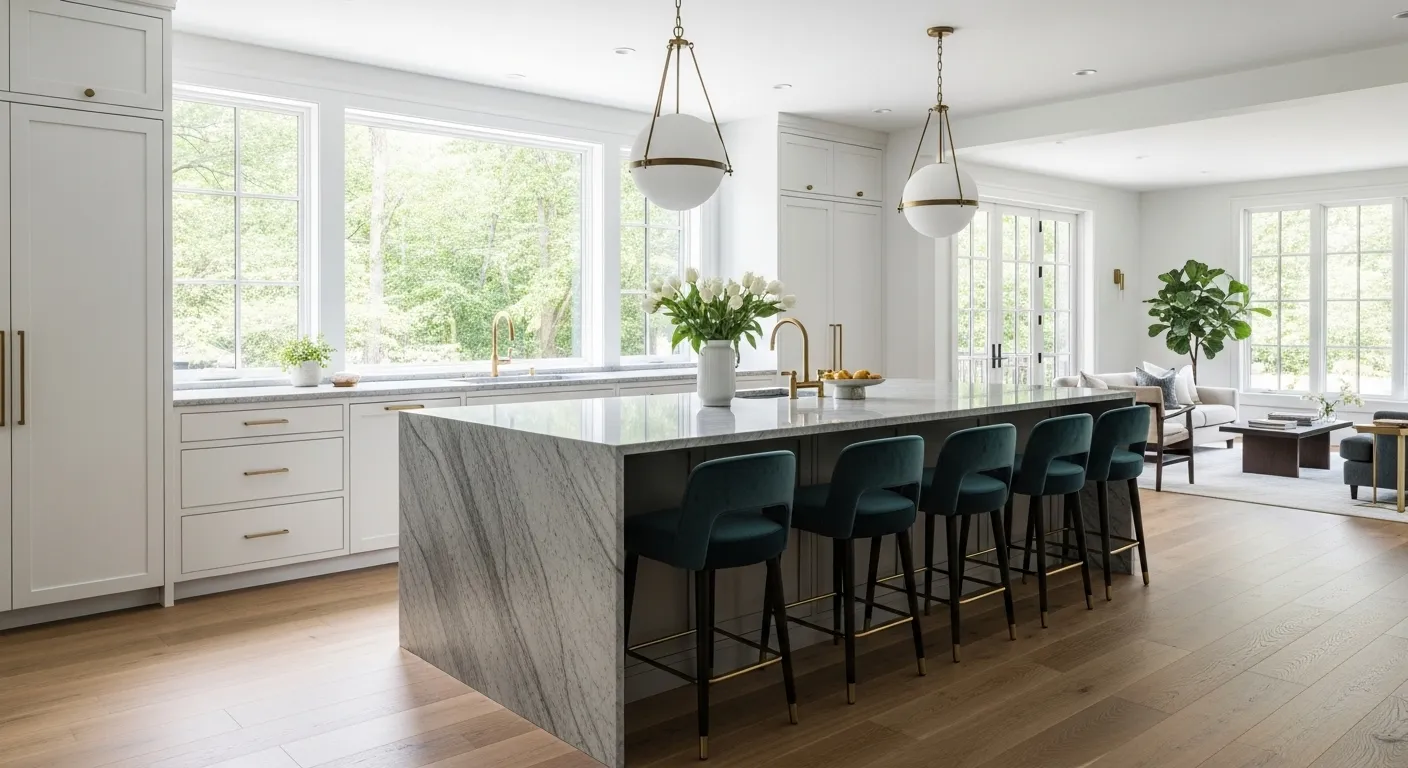
Creating a home that feels spacious and welcoming often starts with the heart of the house, which is why exploring various open kitchen ideas is so popular among modern homeowners. By removing barriers between the cooking area and living spaces, you allow natural light to flood the room and foster a stronger sense of connection with family and guests. Whether you are planning a full renovation or looking for small layout tweaks, designing a kitchen that flows seamlessly into the rest of your home can dramatically improve both the functionality and atmosphere of your living environment.
Central Island with Social Seating
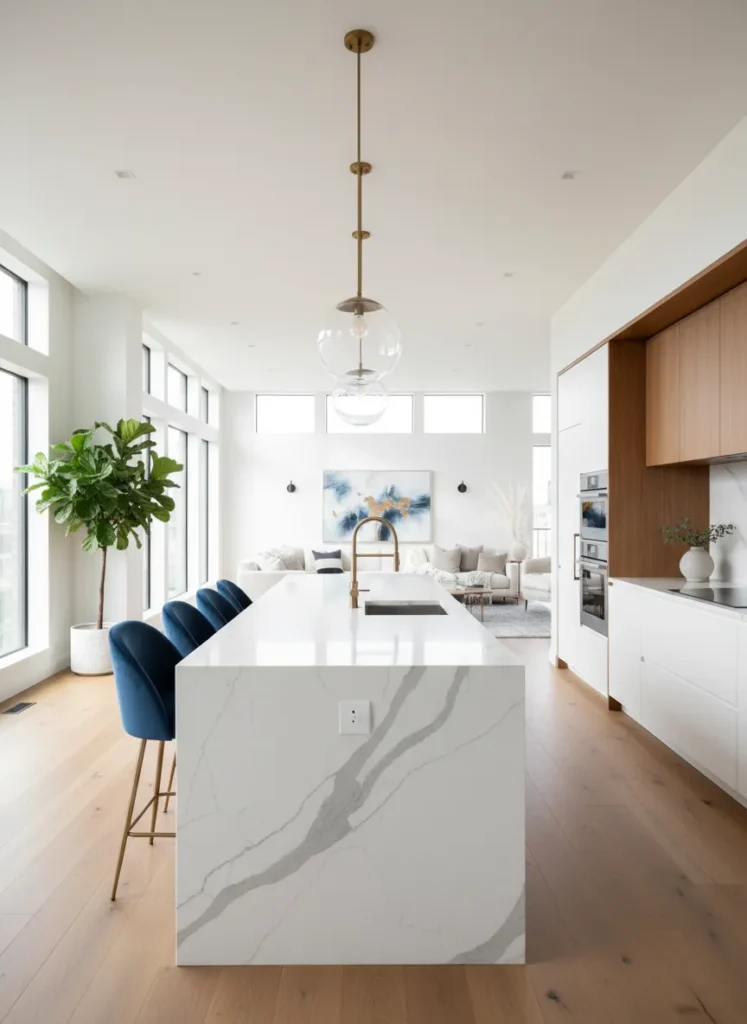
One of the most effective ways to bridge the gap between a kitchen and a living area is by installing a large central island. This serves as a multifunctional anchor that defines the cooking zone without closing it off. By adding comfortable bar stools or seating on the outer side, you create a natural gathering spot where guests can chat with the cook without getting in the way of meal preparation.
This layout encourages social interaction and keeps the conversation flowing while you work. It also provides extra counter space for serving food, acting as a buffet area during parties. The island visually marks where the kitchen ends and the living space begins, maintaining an open feel while offering a subtle sense of structure to the room.
Glass Partition Walls
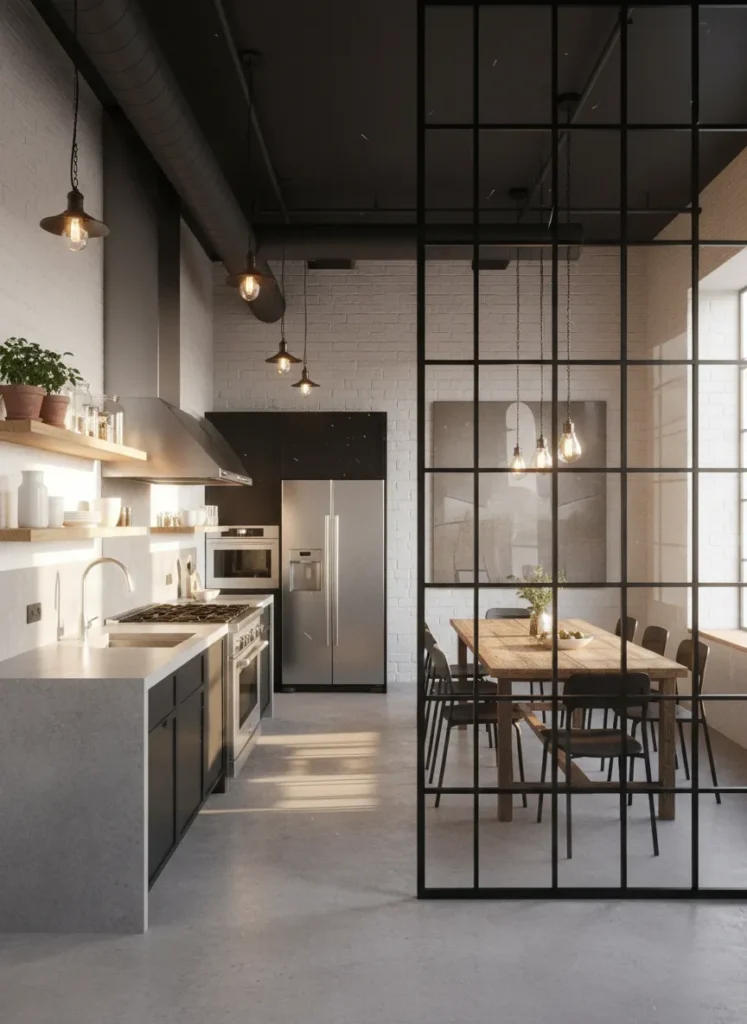
If you want the benefits of an open layout but worry about cooking smells or noise traveling too freely, a glass partition is a brilliant compromise. These transparent walls maintain the visual connection between rooms, ensuring that light travels uninterrupted from one end of the house to the other. The black metal frames often used in these designs add a stylish, modern industrial touch to the interior.
Glass partitions define the kitchen area clearly while keeping the atmosphere airy and expansive. They allow you to keep an eye on children playing in the living room or guests dining at the table while you cook. This solution offers the best of both worlds by combining the spaciousness of open living with the practicality of a separate room.
Unified Flooring Material
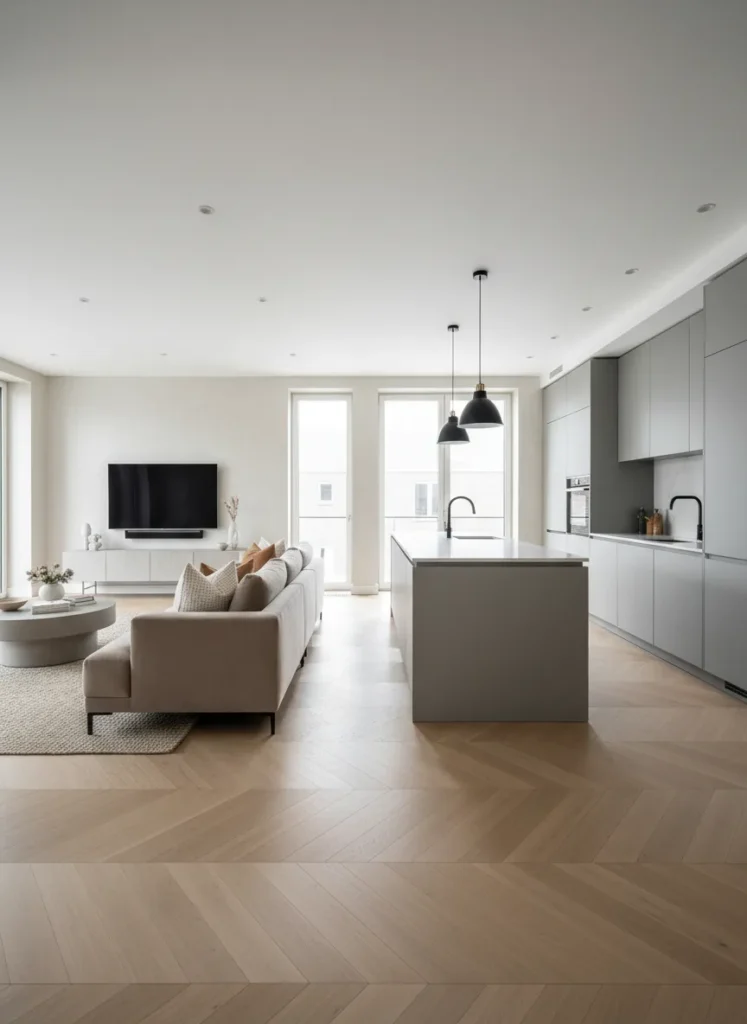
To truly enhance the sense of space in an open layout, consider using the same flooring material across the kitchen, dining, and living areas. When the floor runs continuously without breaks or thresholds, it tricks the eye into perceiving the entire area as one massive room. Light-colored wood or large-format tiles are excellent choices for reflecting light and making the space feel even larger.
Changing flooring materials often creates a visual stop that chops up the space and makes rooms feel smaller. By keeping the ground beneath your feet consistent, you create a harmonious flow that draws people from the entrance right through to the kitchen. This simple design choice is fundamental in creating a cohesive and connected environment.
Skylights Over the Work Zone
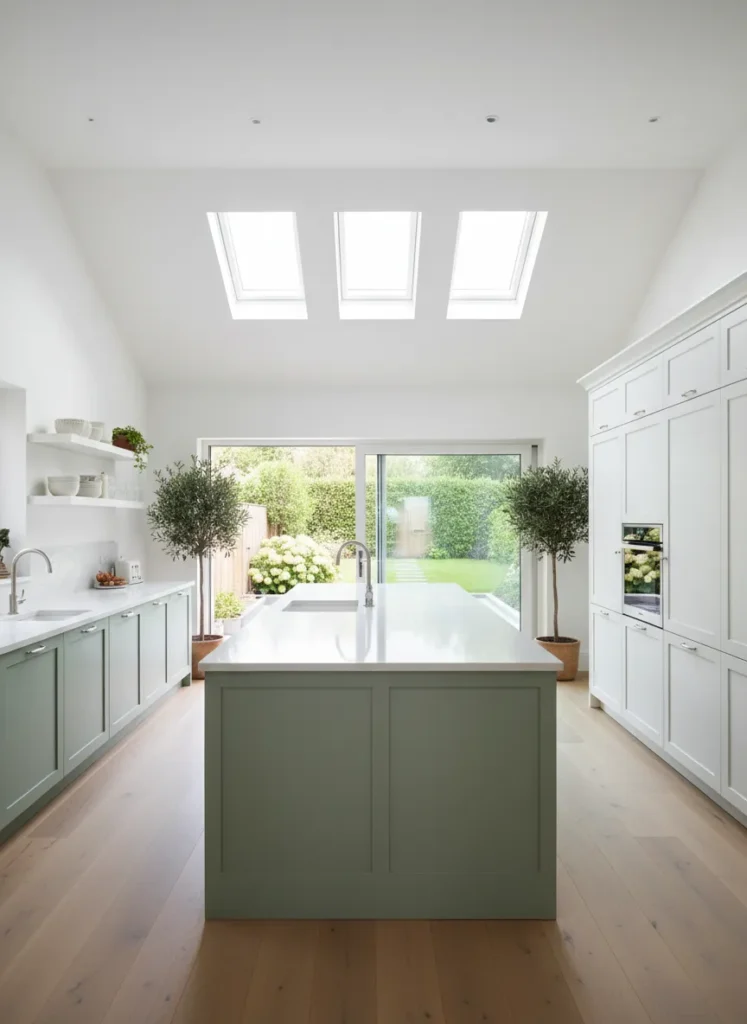
Natural light is a key ingredient in making an open kitchen feel inviting, and skylights are a powerful tool to achieve this. Installing windows in the ceiling directly above the kitchen workspace floods the area with brightness throughout the day. This is particularly useful in open plans where the kitchen might be located further away from the main exterior walls.
Skylights draw the eye upward, highlighting the height of the room and adding an architectural element that feels luxurious. The abundance of vertical light reduces the need for artificial lamps during the day and makes the kitchen feel less like a utility space and more like a central atrium. It creates a cheerful and energetic atmosphere for cooking and socializing.
Minimalist Wall Cabinetry
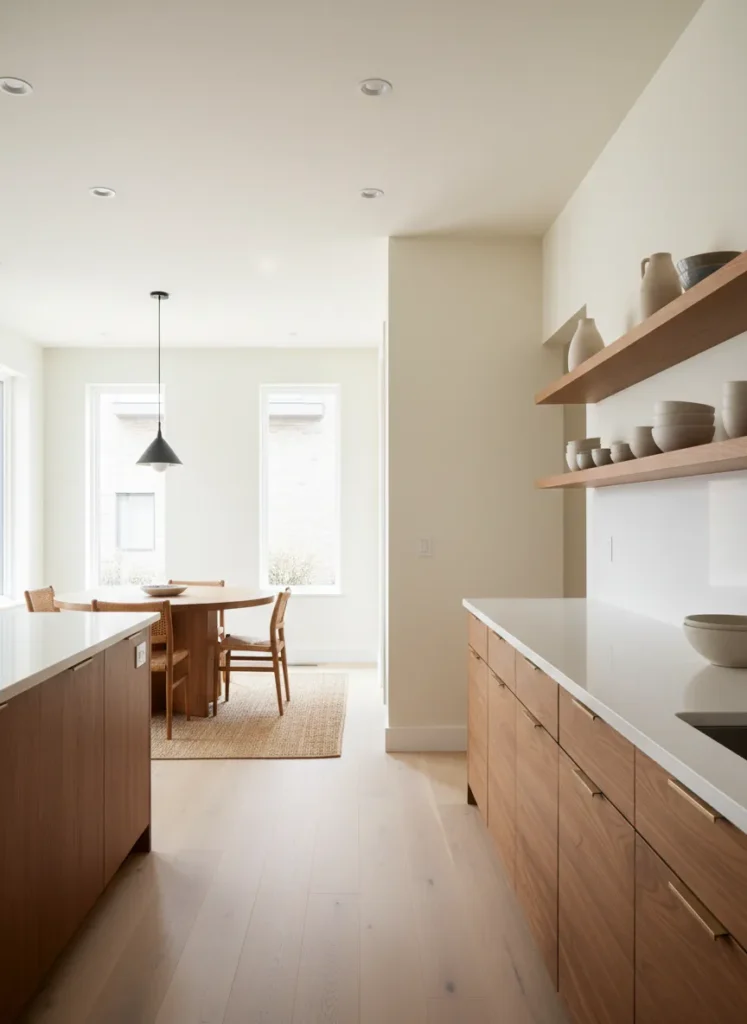
Heavy upper cabinets can sometimes make a kitchen feel boxy and closed in, which works against the goal of an open concept. By removing wall cabinets and opting for lower storage or a pantry wall instead, you open up the visual field significantly. This approach allows for more negative space on the walls, making the ceiling feel higher and the room wider.
Without bulky cupboards at eye level, the line of sight remains uninterrupted, allowing for better connection with adjacent spaces. You can use the free wall space for art or a simple backsplash that reflects light. This minimalist approach reduces visual clutter, contributing to a calm and serene environment that blends effortlessly with a living room.
Zoning with Pendant Lighting
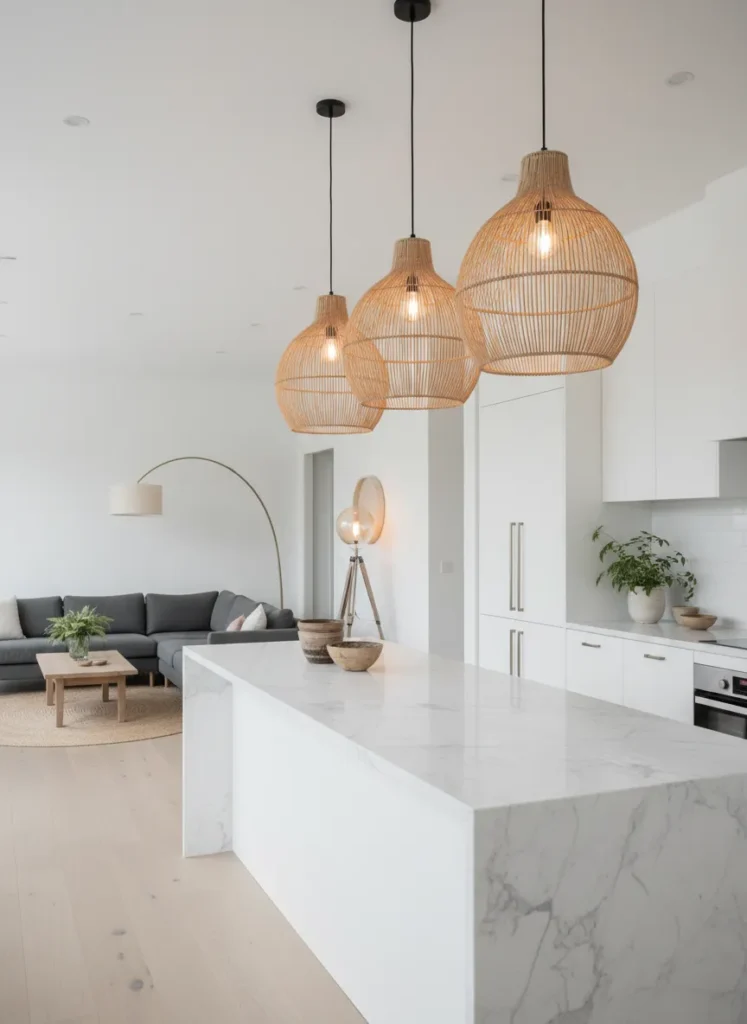
In the absence of walls, lighting becomes one of the most important tools for defining different zones within a large space. Hanging statement pendant lights over a kitchen island or dining table creates a visual anchor that signals where the kitchen area is. These lights act almost like a ceiling for that specific spot, creating a sense of intimacy within the openness.
You can use different styles of lighting to distinguish the kitchen from the living area while keeping a cohesive style. For example, bright task lighting is essential for cooking, while softer, dimmable pendants over the island can set a mood for evening entertaining. This lighting strategy adds depth and character to the room without blocking any views.
Seamless Indoor-Outdoor Flow
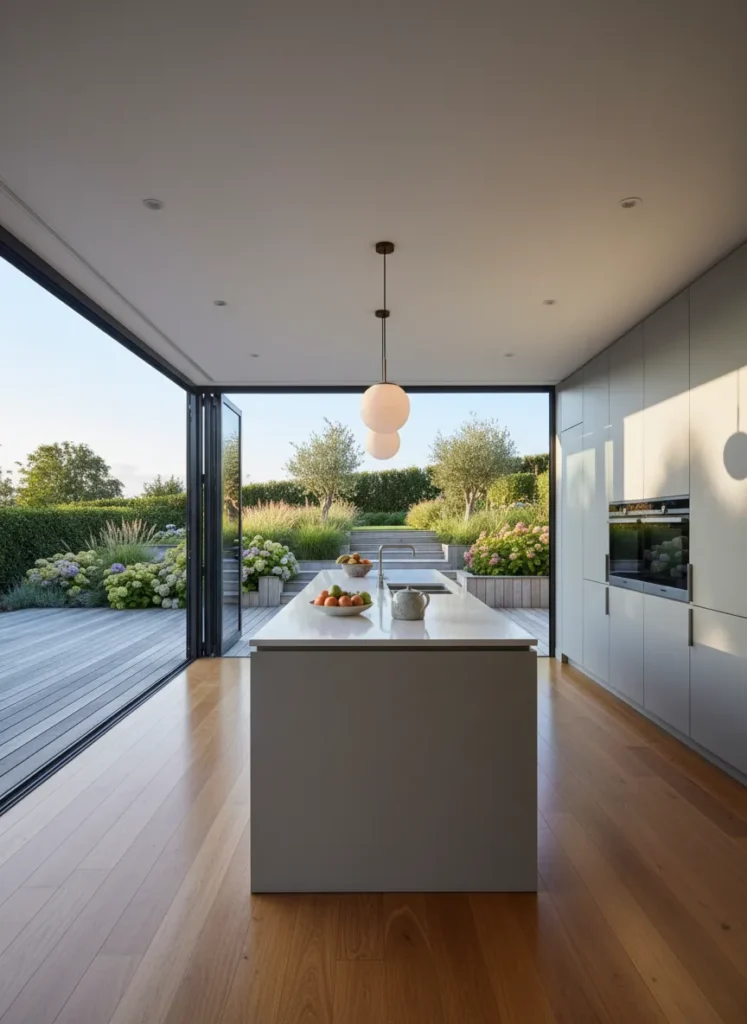
Extending your open kitchen to the outdoors is a fantastic way to maximize light and the feeling of space. Installing large bi-fold or sliding glass doors that open onto a patio or deck effectively doubles your entertaining area during warmer months. This design blurs the boundary between inside and outside, bringing fresh air and nature right into your cooking space.
Even when the doors are closed, the wall of glass acts as a giant window that frames the garden and lets in immense amounts of daylight. This connection to the outdoors makes the kitchen feel less confined and more relaxing. It is perfect for families who want to cook while watching kids play outside or for hosting summer barbecue parties.
Glossy Reflective Surfaces
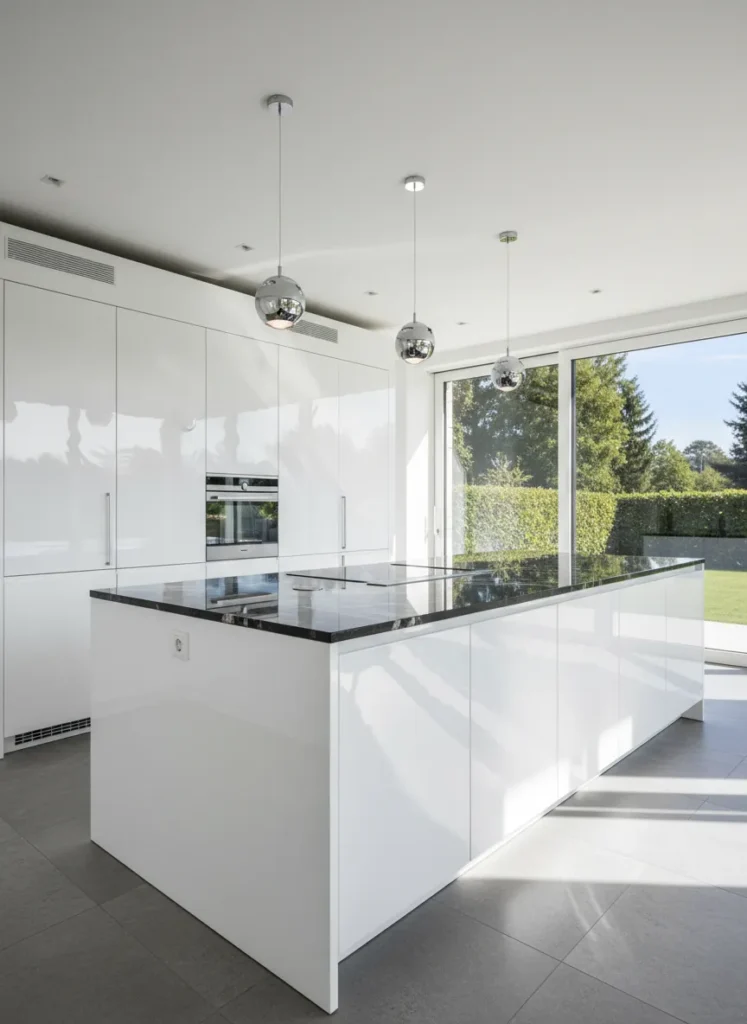
Using high-gloss finishes on cabinets, countertops, or backsplashes is a clever trick to bounce light around an open room. Reflective surfaces act similarly to mirrors, amplifying both natural and artificial light to make the space feel brighter and larger. This is especially effective in smaller open kitchens that might not have direct access to large windows.
The sleek look of glossy cabinetry also fits well with modern living room furniture, helping the kitchen blend in as a stylish feature rather than just a workspace. It creates a polished, sophisticated aesthetic that elevates the entire open plan area. The constant play of light on these surfaces adds movement and life to the interior design.
Airy Open Shelving
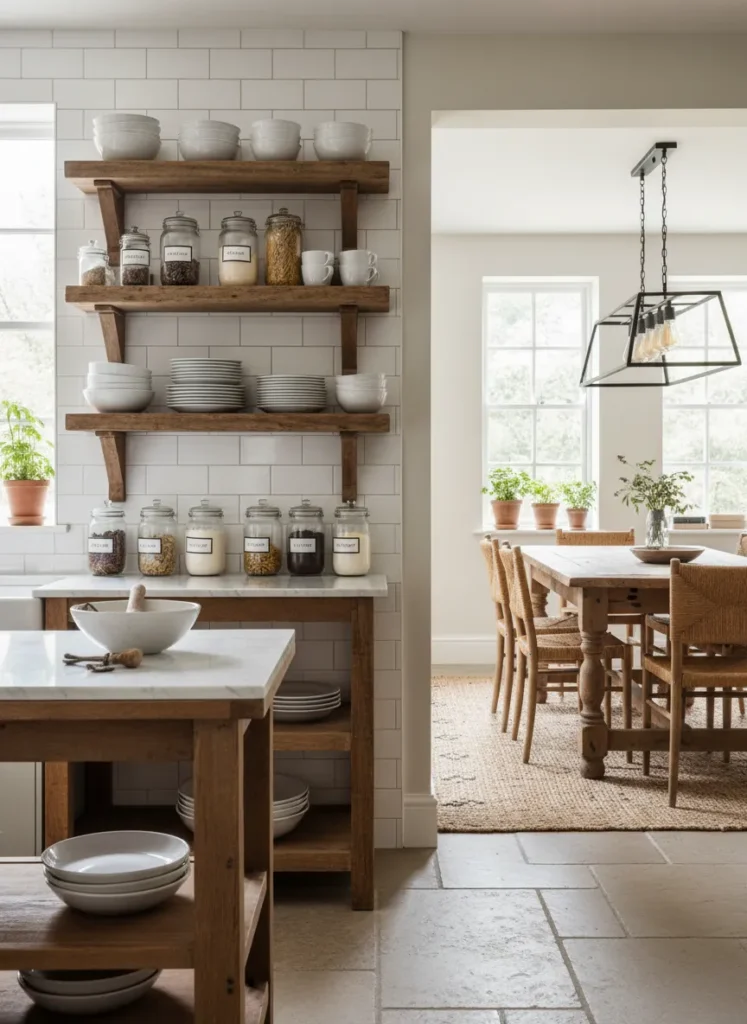
Replacing standard cabinets with open shelving is a great way to maintain an airy and accessible feel in a kitchen. Open shelves prevent the heavy, blocky look of solid doors and allow the eye to travel all the way to the wall, increasing the perceived depth of the room. They offer a place to display beautiful dishware or plants, adding personality to the space.
This design choice encourages you to keep your kitchen organized and clutter-free, which is crucial in an open layout where everything is on display. It creates a casual, lived-in vibe that welcomes guests to help themselves. The openness of the shelves complements the open nature of the floor plan, reinforcing the theme of accessibility and connection.
All-White Color Palette
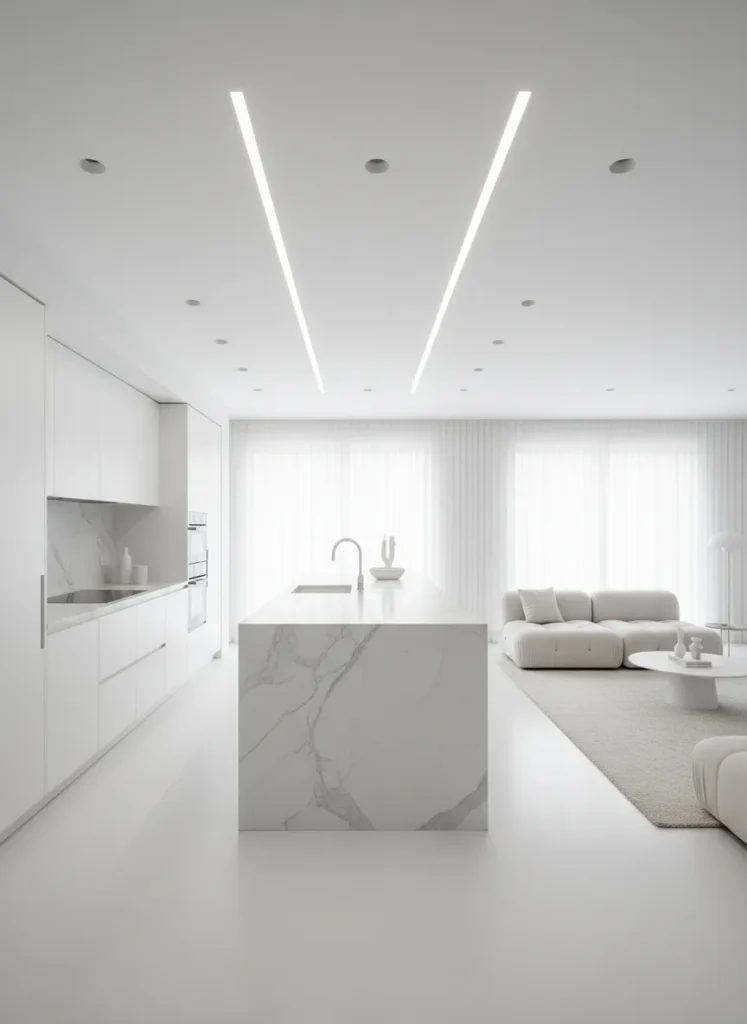
An all-white color scheme is a classic solution for maximizing light and creating a sense of seamlessness. White walls and cabinetry reflect every bit of available light, making even the darkest corners appear bright and cheerful. In an open concept, using white helps the kitchen fade into the background, allowing the furniture and people to become the focal points.
This monochromatic approach blurs the hard lines and edges of the room, making the space feel expansive and clean. It provides a blank canvas that allows you to change accent colors in the living area without worrying about clashing with the kitchen. The result is a timeless, fresh look that feels perpetually spacious and connected.
The Sunken Kitchen
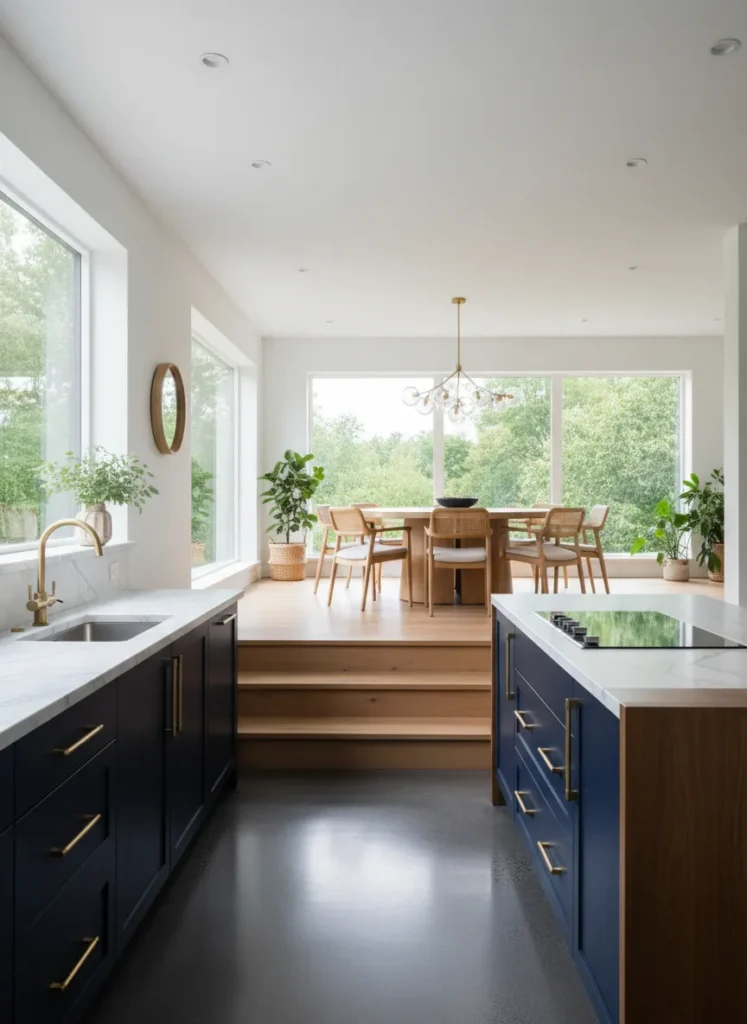
A sunken kitchen creates a distinct zone within an open plan without the need for walls. By lowering the floor of the kitchen area by just a couple of steps, you establish a clear boundary that defines the workspace while keeping the sightlines completely open. This architectural feature adds visual interest and drama to the home layout.
From the living or dining area above, the mess of cooking is often hidden from view by the change in height, yet the cook can still converse easily with everyone else. It creates a cozy, contained feeling for the chef without isolation. This design preserves the volume of the room while offering a clever way to organize the space functionally.
Double-Sided Fireplace Divider
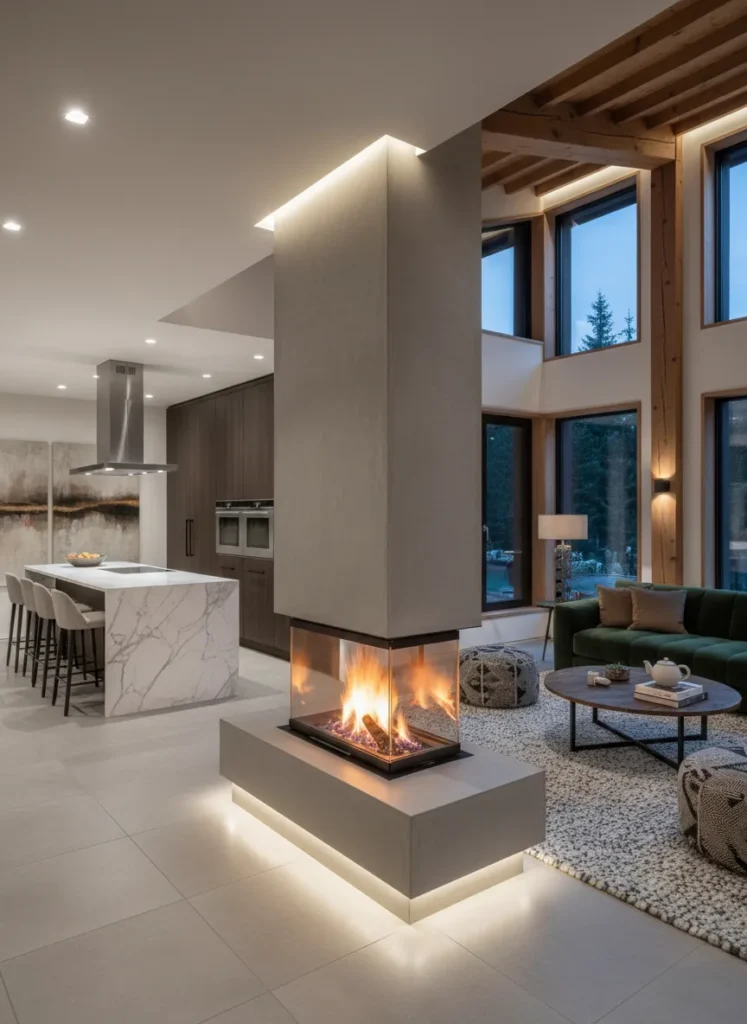
A double-sided fireplace is a stunning focal point that connects the kitchen and living room with warmth and style. Placed in a central partial wall or column, it allows you to enjoy the flickering flames from both the cooking and lounging areas. This feature adds a touch of luxury and creates a cozy atmosphere that permeates the entire open floor plan.
The structure housing the fireplace provides a gentle separation between the zones without blocking the flow of movement or light. It serves as a visual anchor that draws people together, making the large space feel intimate and centered. It is a perfect way to add character and a sense of connection to a modern home.
Integrated Breakfast Nook
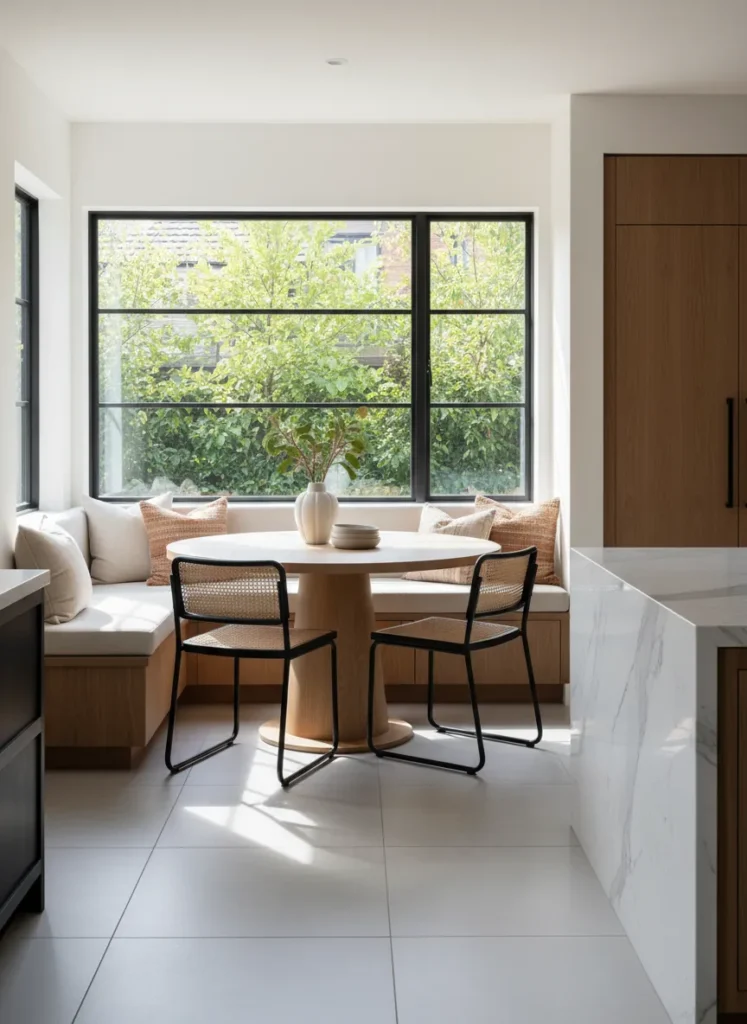
integrating a breakfast nook directly into the kitchen layout is a charming way to enhance the social aspect of the room. By extending countertops or building a bench seat into a corner, you create a casual dining spot that invites family members to linger. This setup is often more comfortable and inviting than a formal dining table.
A nook acts as a bridge between the hard surfaces of the kitchen and the soft furnishings of the living room. It softens the kitchen’s appearance and makes it feel more like a living space. This area becomes a hub for morning coffee, homework, or casual chats, ensuring the kitchen remains the true heart of the home.
Exposed Industrial Beams
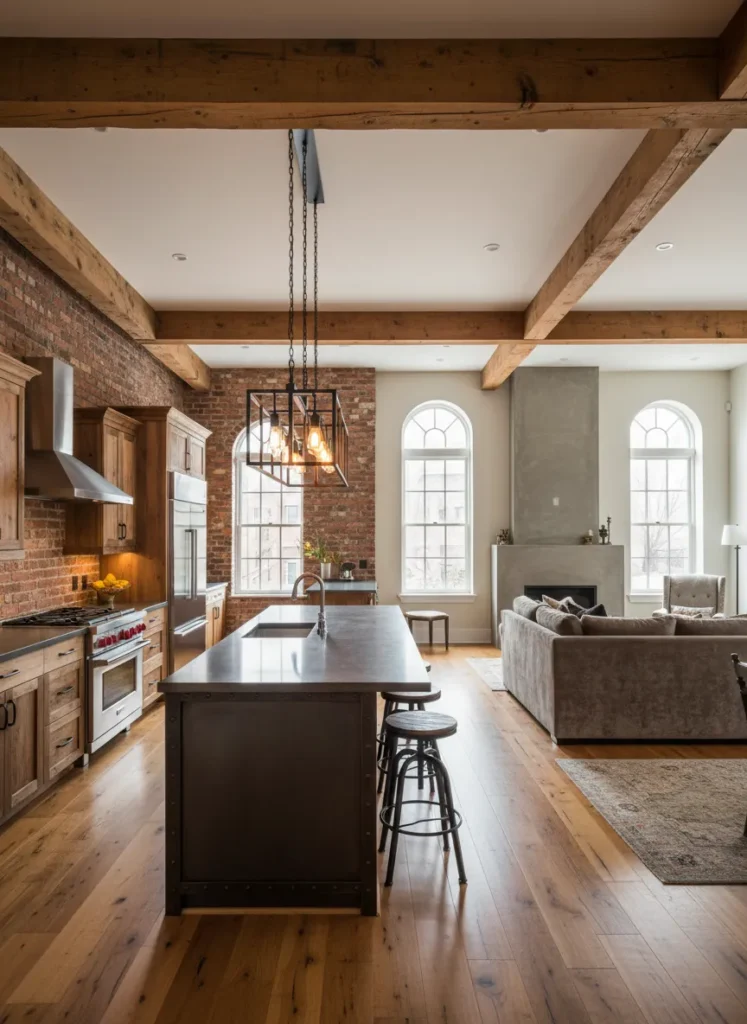
Exposed beams are a fantastic architectural element that can unite a kitchen and living area under one design language. Whether they are original structural wood or added decorative metal, beams draw the eye upward, emphasizing the height and volume of the space. They create a rhythm across the ceiling that guides the eye from one end of the room to the other.
This design feature adds texture and warmth, preventing a large open ceiling from feeling too vast or cold. The beams can help define the cooking zone if arranged specifically over the kitchen, or they can run continuously to unify the zones. They bring a sense of history and character that makes the open plan feel grounded and established.
Half Walls or Pony Walls
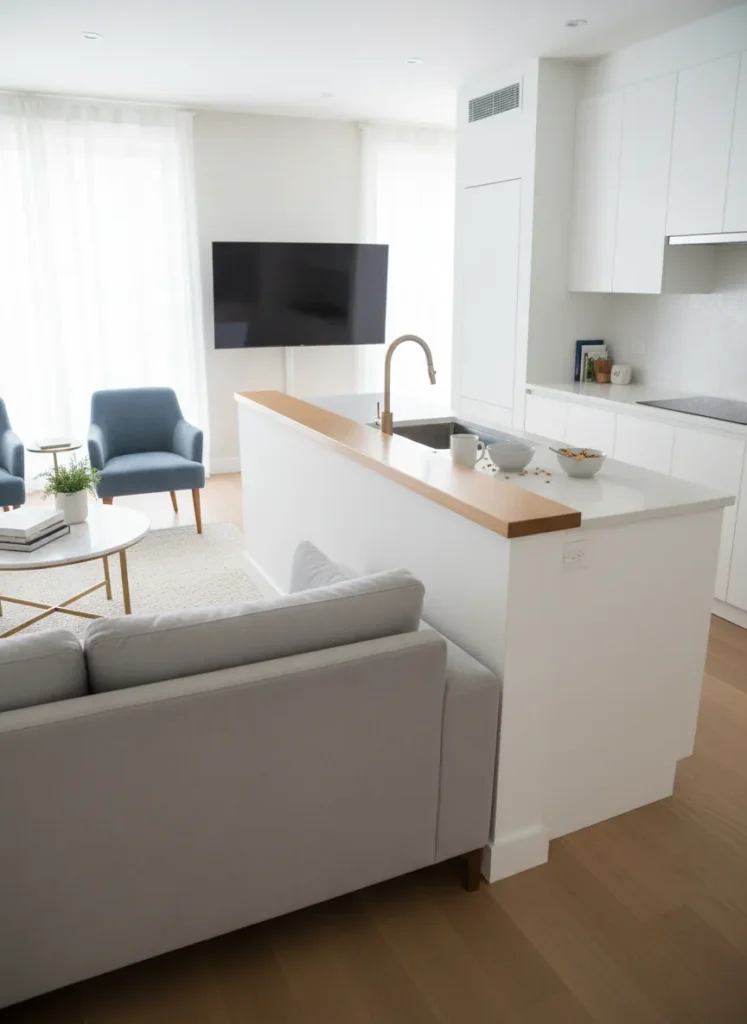
Half walls, often called pony walls, are a practical solution for homeowners who want openness but crave a bit of concealment. These low walls provide a physical barrier that hides lower cabinets, messy countertops, or the sink from the view of guests in the living room. However, because they stop at waist or chest height, they leave the upper visual field completely clear.
This design maintains the flow of conversation and light while offering a visual shield for the clutter that naturally occurs while cooking. It also provides an extra surface for serving food or placing decorative items. It is a smart compromise that keeps the kitchen feeling connected to the home without putting every dirty dish on display.
Mirrored Backsplash
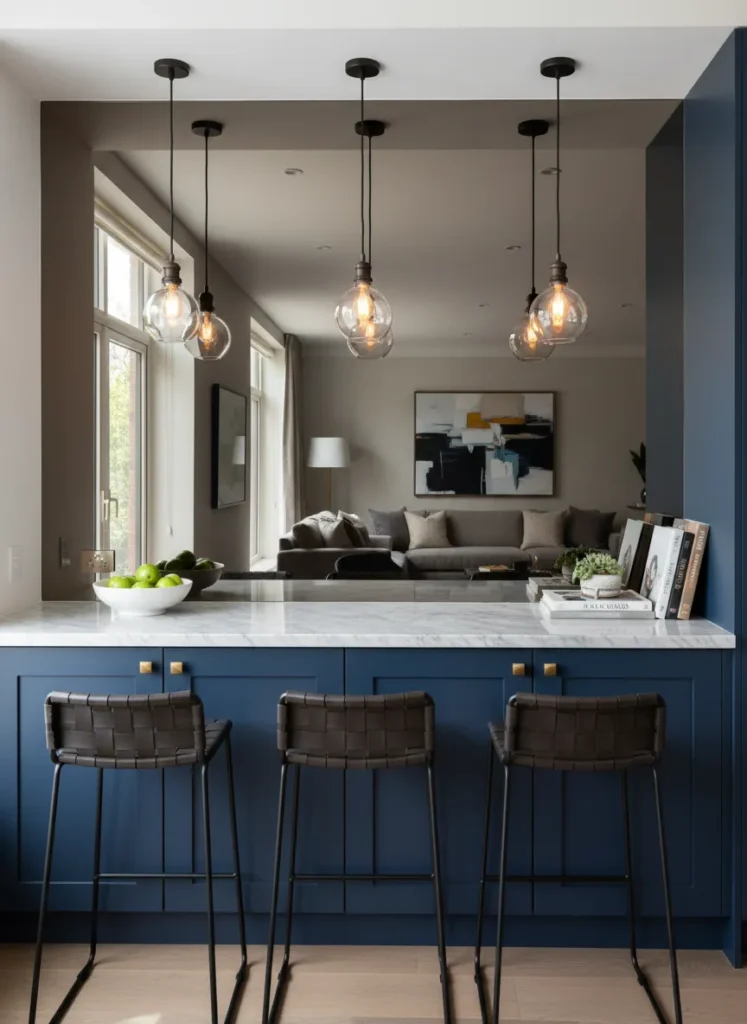
Installing a mirrored backsplash is a sophisticated design trick that instantly doubles the visual depth of a kitchen. By reflecting the room across from it, the mirror makes the kitchen wall seem to disappear, creating the illusion that the space continues indefinitely. This is particularly effective in galley kitchens that have been opened up to a larger room.
The mirror captures natural light from windows in the living area and bounces it back into the kitchen, brightening workspace shadows. It adds a touch of glamour and polish to the design. Furthermore, it allows the cook to see what is happening behind them in the living area without turning around, enhancing the feeling of connection.
Soft Zoning with Rugs
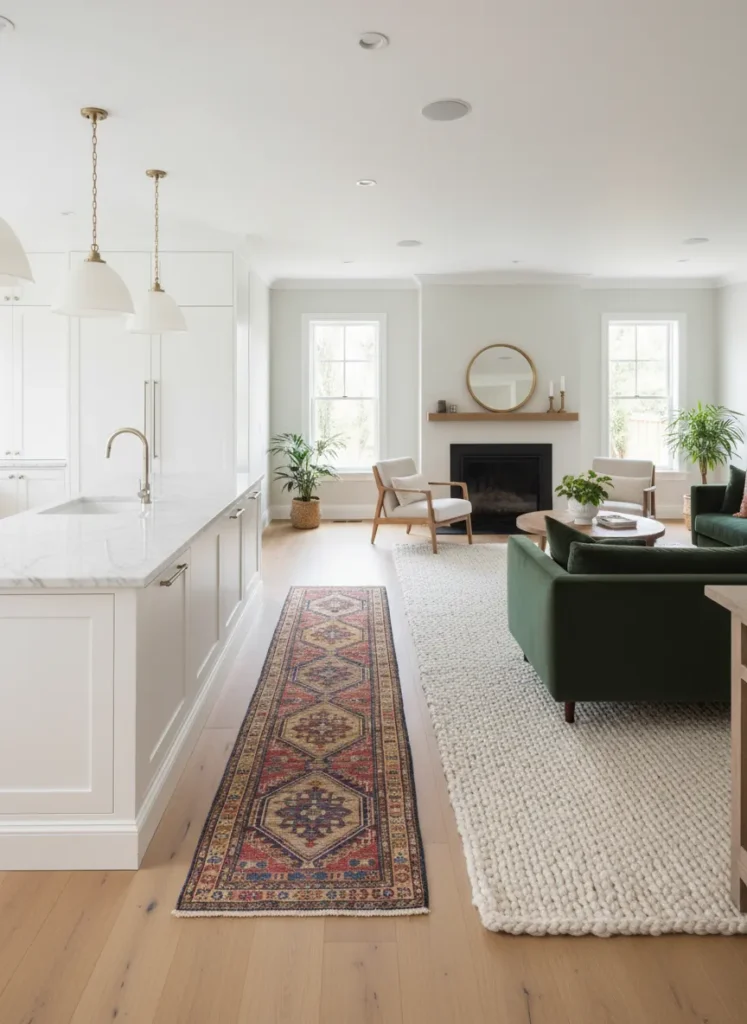
In a room without walls, rugs are essential for creating ‘soft boundaries’ that define where one area ends and another begins. Placing a durable runner in the kitchen and a plush area rug in the living space signals a change in function without blocking any views. This technique adds warmth and texture to the kitchen, which is often dominated by hard, cold surfaces.
Rugs also help with acoustics, absorbing the sounds of clattering pots and pans so they don’t echo loudly into the relaxing areas. They offer an opportunity to introduce color and pattern that ties the kitchen décor to the living room theme. This simple addition makes the open space feel organized, cozy, and intentionally designed.
Natural Wood Accents
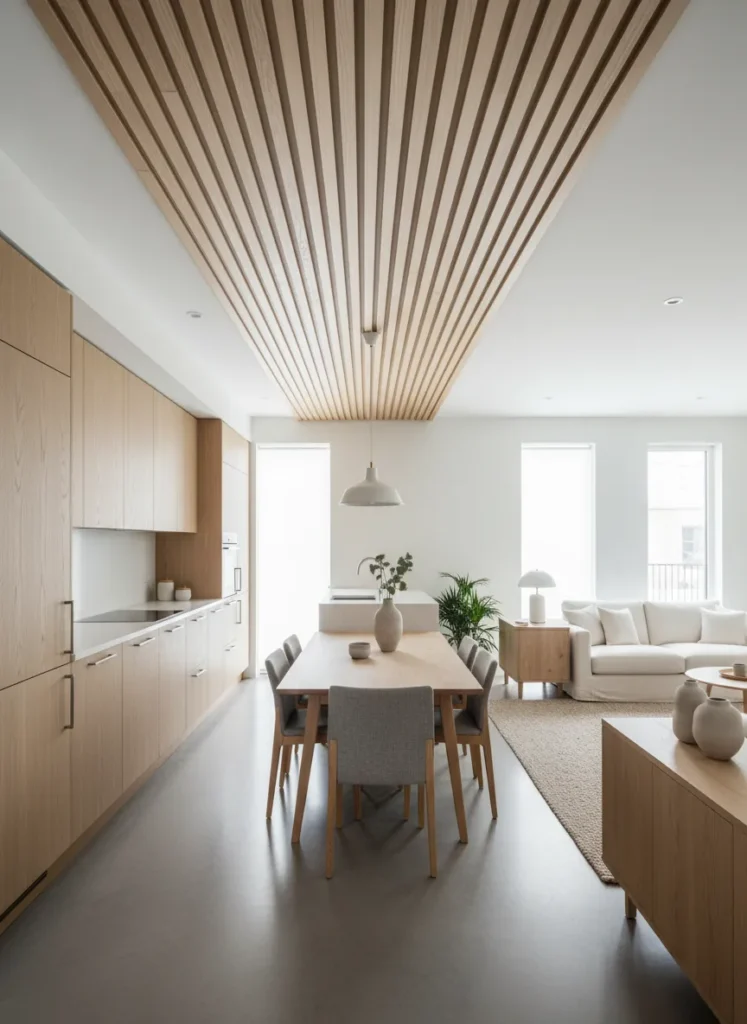
Incorporating natural wood elements is a timeless way to bring warmth to an open kitchen, preventing it from feeling sterile. Whether through cabinetry, ceiling beams, or bar stools, wood adds an organic texture that connects the interior to the natural world. Using the same wood tone in the kitchen and the living area furniture creates a strong visual link between the spaces.
Wood contrasts beautifully with modern materials like stone and steel, creating a balanced and inviting atmosphere. It softens the acoustics of a large open room and makes the space feel grounded. This material choice fosters a welcoming environment where guests feel comfortable gathering, blurring the lines between a utility space and a relaxation zone.
Conclusion
Transforming your culinary space into an open and inviting hub is one of the most rewarding home improvement projects you can undertake. By implementing these design strategies, you can maximize natural light, improve traffic flow, and ensure that the cook is always part of the conversation. We hope these designs inspire you to knock down some walls or simply rearrange your layout to embrace a brighter, more connected lifestyle that brings everyone together.