
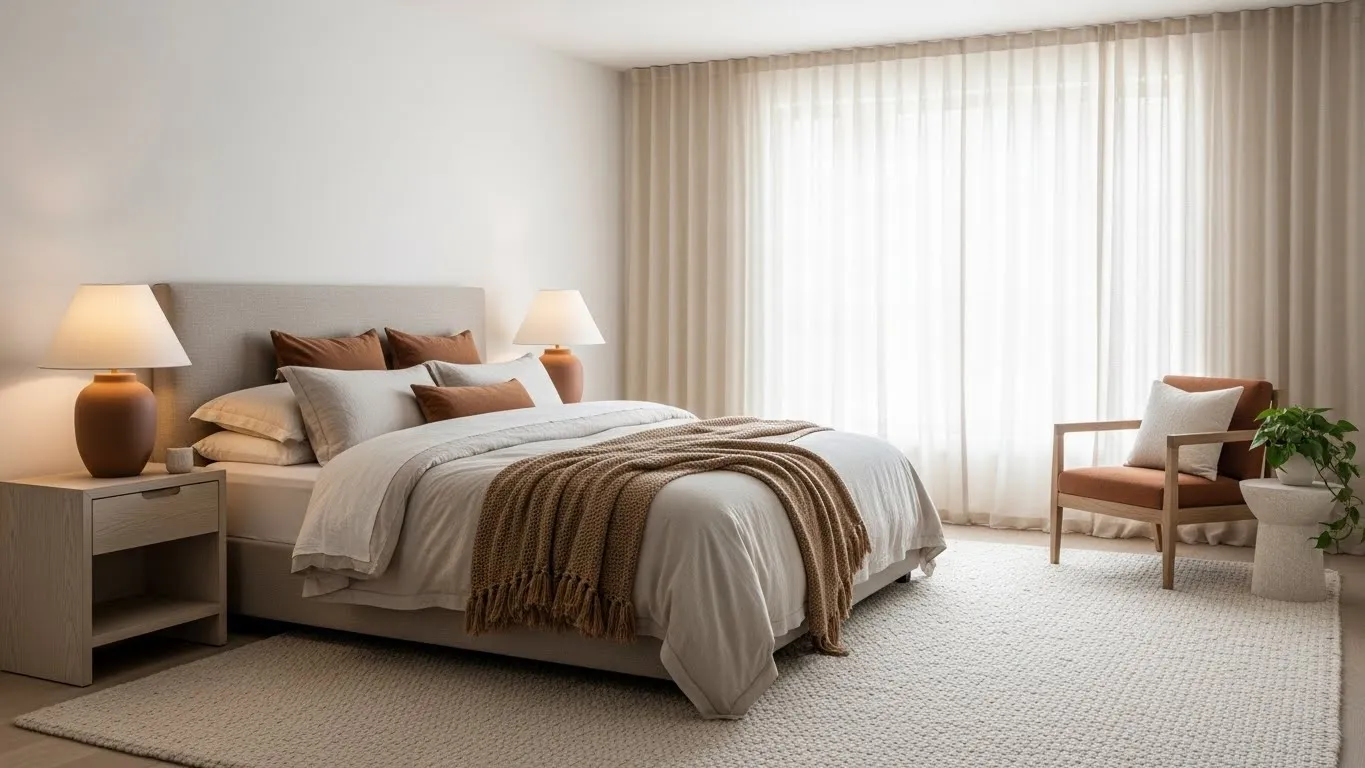
Creating a sanctuary that feels both organized and inviting is easy when you explore japandi bedroom design ideas. This style perfectly merges the rustic minimalism of Japanese interiors with the functional warmth of Scandinavian decor to create a peaceful retreat. By focusing on clean lines, natural materials, and a calming color palette, you can transform your sleeping space into a haven of tranquility that promotes deep rest and relaxation.
Low-Profile Platform Beds
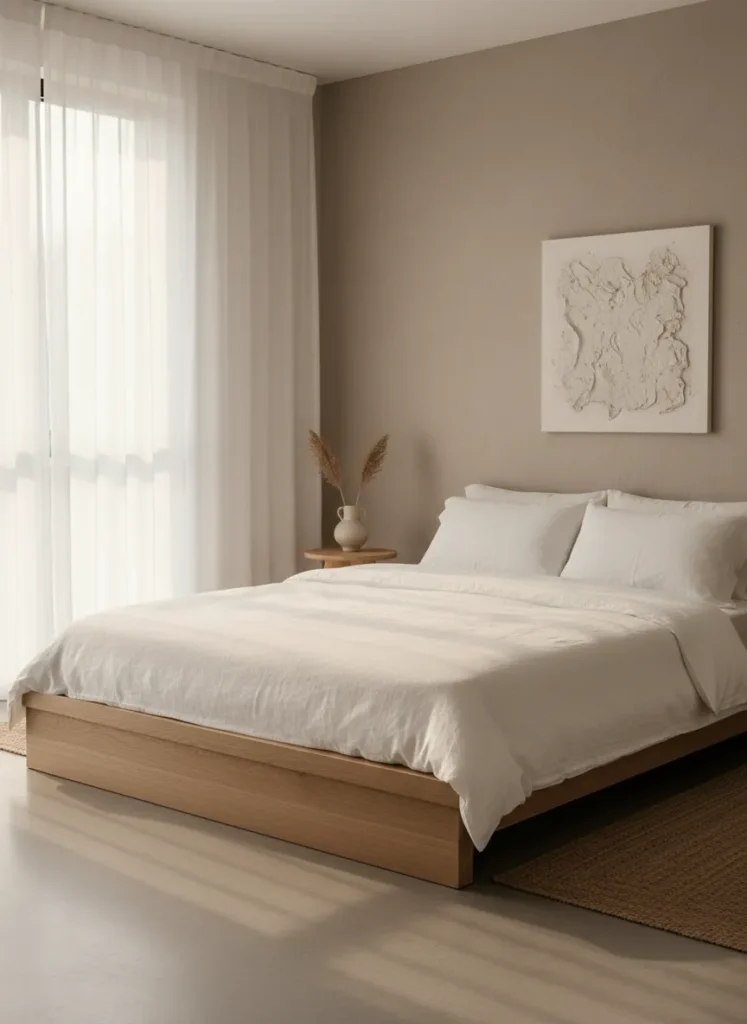
One of the most defining features of this design style is the use of low furniture. A platform bed that sits close to the ground mimics the traditional Japanese floor-sleeping culture while maintaining modern comfort. This design choice creates a sense of spaciousness by leaving more vertical room open, making even small bedrooms feel airier and less cluttered.
Choosing a frame made from light woods like ash or pine helps to keep the visual weight light. When you lower your sleeping area, you automatically ground the energy of the room. This simple adjustment encourages a feeling of stability and calm, which is essential for a restful night of sleep.
Slatted Wood Wall Panels
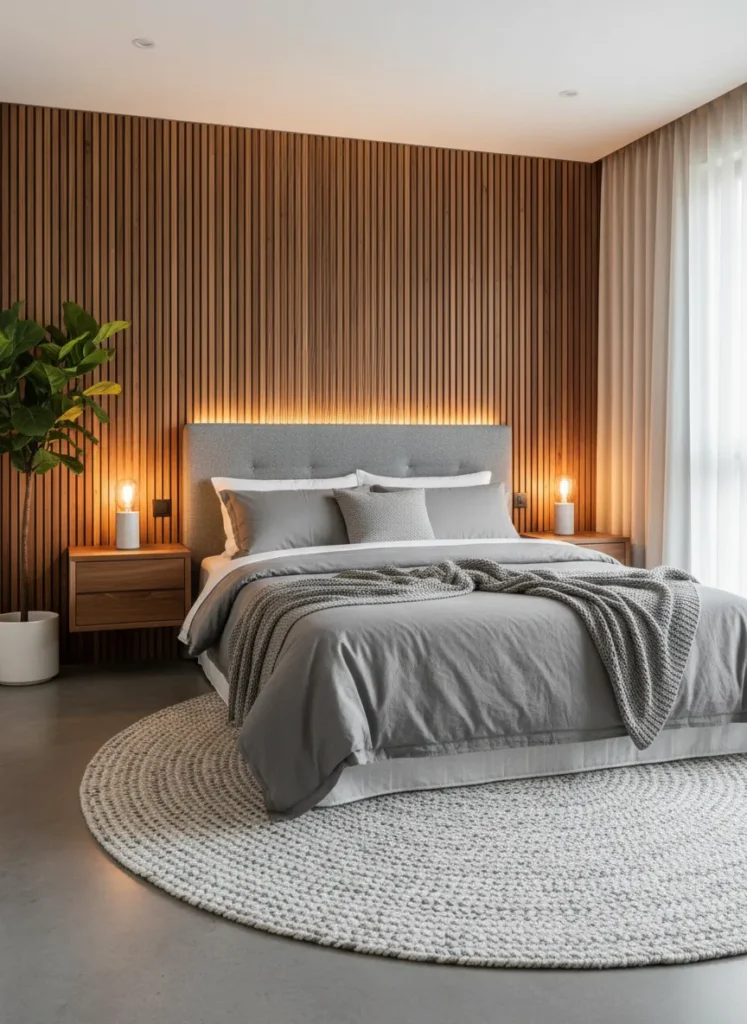
Adding texture to a room without using loud colors can be achieved through wood slat paneling. Installing these vertical slats behind your bed creates an instant focal point that feels architectural and sophisticated. The vertical lines draw the eye upward, giving the illusion of higher ceilings while adding a layer of warmth that plain painted walls often lack.
This element perfectly balances the clean lines of Scandinavian design with the natural textures found in Japanese homes. It also provides a practical solution for sound dampening, making your bedroom quieter. You can leave the wood natural or stain it in a dark espresso shade for a more dramatic and moody effect.
Warm Neutral Color Palette
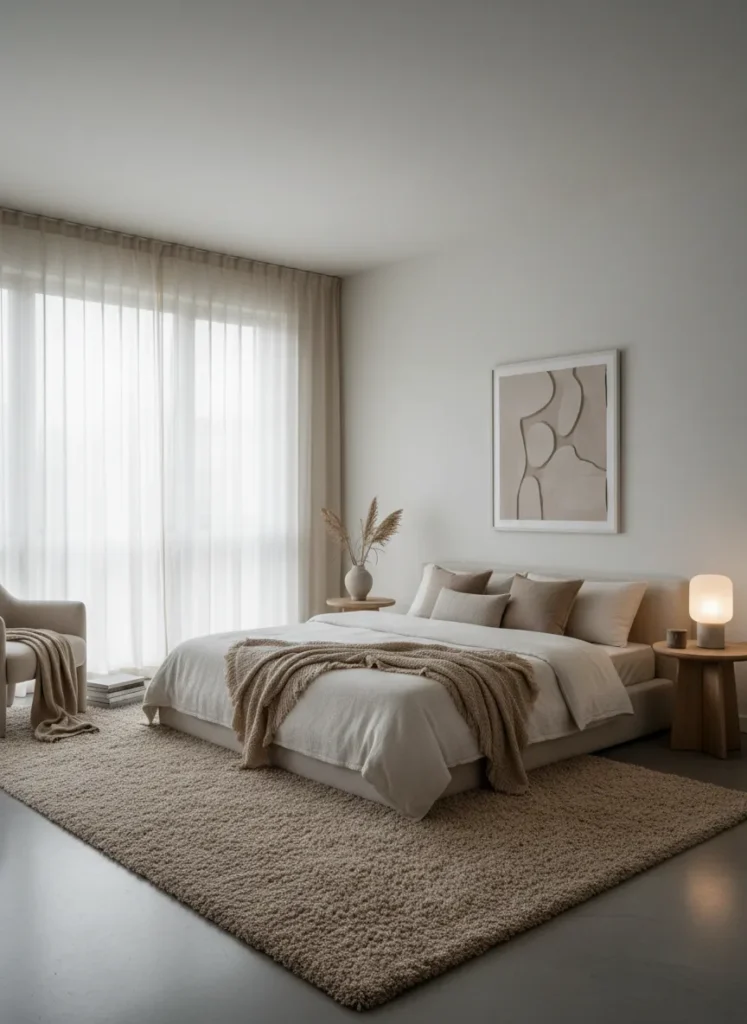
The foundation of any Japandi space is a calming color scheme that avoids harsh contrasts. Instead of stark clinical whites, opt for softer shades like oatmeal, cream, stone grey, and mushroom. These warm neutrals create a cocoon-like atmosphere that feels safe and enclosing without being dark or heavy.
Using a monochromatic palette allows you to layer different textures without the room feeling chaotic. The subtle variations in tone add depth and interest while maintaining a unified look. This approach ensures that your mind is not overstimulated by bright colors when you are trying to wind down for the evening.
Paper Lantern Lighting
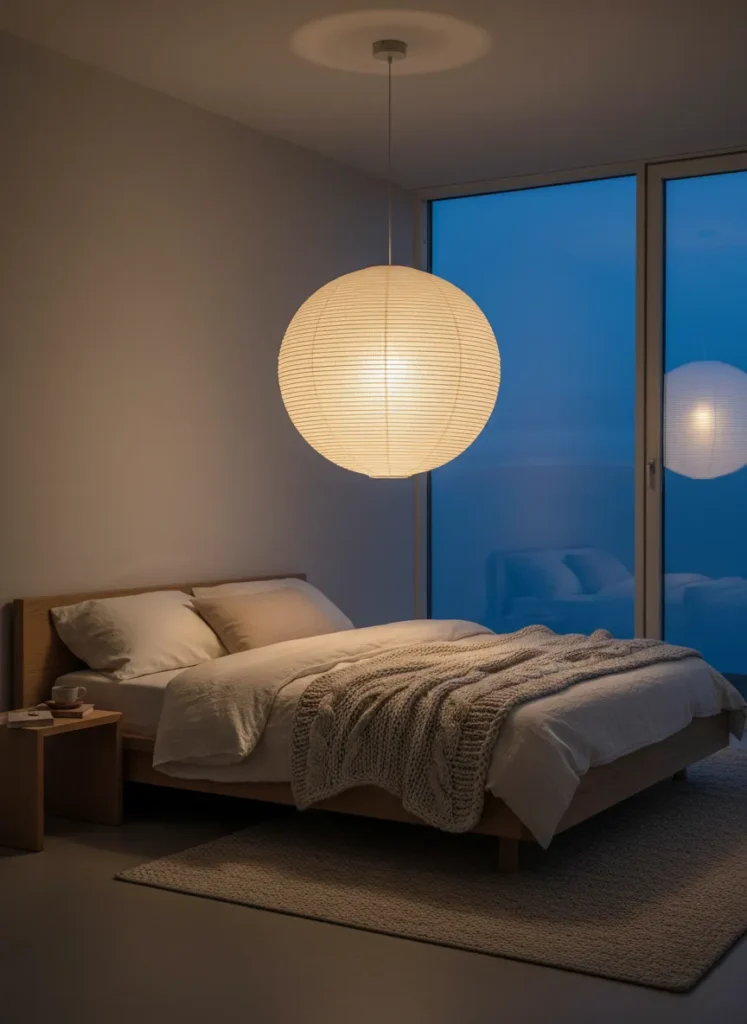
Lighting plays a crucial role in setting the mood, and nothing says Japandi quite like a paper lantern. Inspired by traditional Japanese design, these light fixtures diffuse light evenly, eliminating harsh shadows and creating a soft, ethereal glow. The organic shape breaks up the straight lines of modern furniture, adding a touch of softness to the room.
Hang a large pendant light centrally over the bed or use smaller paper lamps on your nightstands. The delicate texture of the paper adds a visual fragility that contrasts beautifully with solid wood furniture. This type of lighting mimics natural light, which is far more soothing to the eyes than direct, bright bulbs.
Natural Linen Bedding

Embracing the beauty of imperfection is key to this aesthetic, and washed linen bedding is the perfect way to do it. Linen has a naturally crumpled look that feels relaxed and lived-in, capturing the essence of hygge comfort. It is breathable and cool to the touch, making it practical as well as stylish.
Stick to solid earth tones like terra cotta, sage, or slate grey to keep the look grounded. The tactile quality of linen adds a layer of sensory richness to the room. Unlike crisp cotton which demands ironing, linen looks best when it is a little messy, inviting you to dive in and relax without worrying about wrinkles.
Floating Nightstands
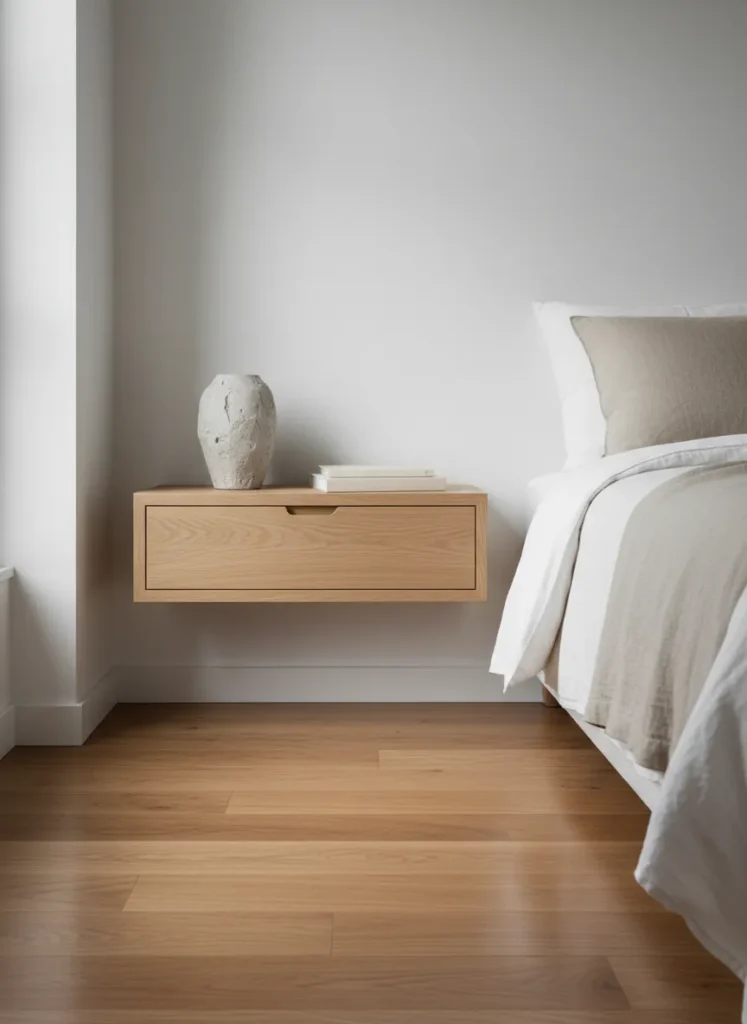
To maintain a clutter-free and minimalist environment, consider installing floating nightstands. By keeping the floor underneath visible, you increase the perception of floor space, making the room feel larger. This design is strictly functional, providing just enough space for a book, a glass of water, and a lamp.
The absence of legs simplifies the visual landscape of the room, reducing visual noise. It also makes cleaning the floors much easier, which aligns with the practical side of Scandinavian design. Choose wood that matches your bed frame to create a cohesive and seamless look throughout the sleeping area.
Statement Indoor Trees
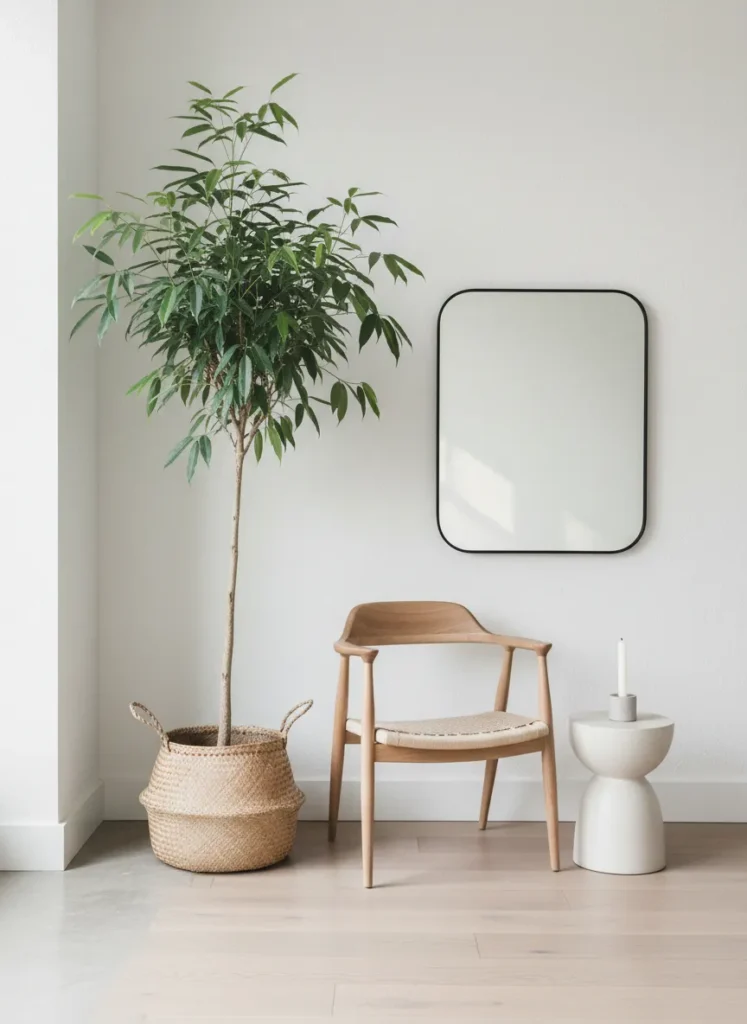
Bringing the outdoors in is a fundamental principle of both design philosophies. A single, large indoor tree, such as an olive tree or a ficus, acts as a living sculpture in the room. The vibrant green leaves provide a refreshing pop of color against the neutral backdrop, breathing life into the space.
Place the plant in a simple ceramic pot or a woven basket to add texture. Unlike a collection of many small plants which can look cluttered, one large statement plant maintains the minimalist vibe. It connects you to nature, which is known to lower stress levels and improve air quality in your sleeping environment.
Textured Wool Rugs
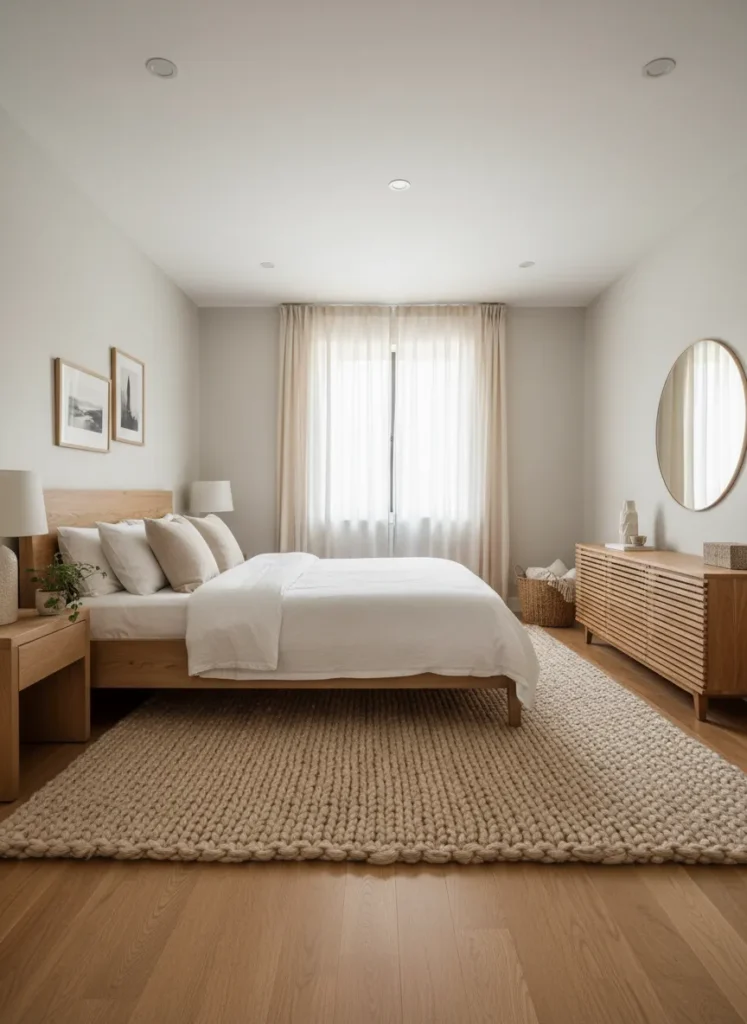
While the floors in this style are often bare wood, adding a large area rug brings in the necessary Scandinavian warmth. Look for rugs made from natural materials like wool or a wool-blend that feature a chunky loop or subtle geometric texture. The rug should be large enough to extend beyond the sides of the bed.
This addition provides a soft landing for your feet in the morning, enhancing the sense of comfort. A rug in a light neutral shade helps to anchor the bed and define the sleeping zone within the room. It softens the acoustics of the space, preventing echoes and creating a quieter, more intimate atmosphere.
Wabi-Sabi Ceramics
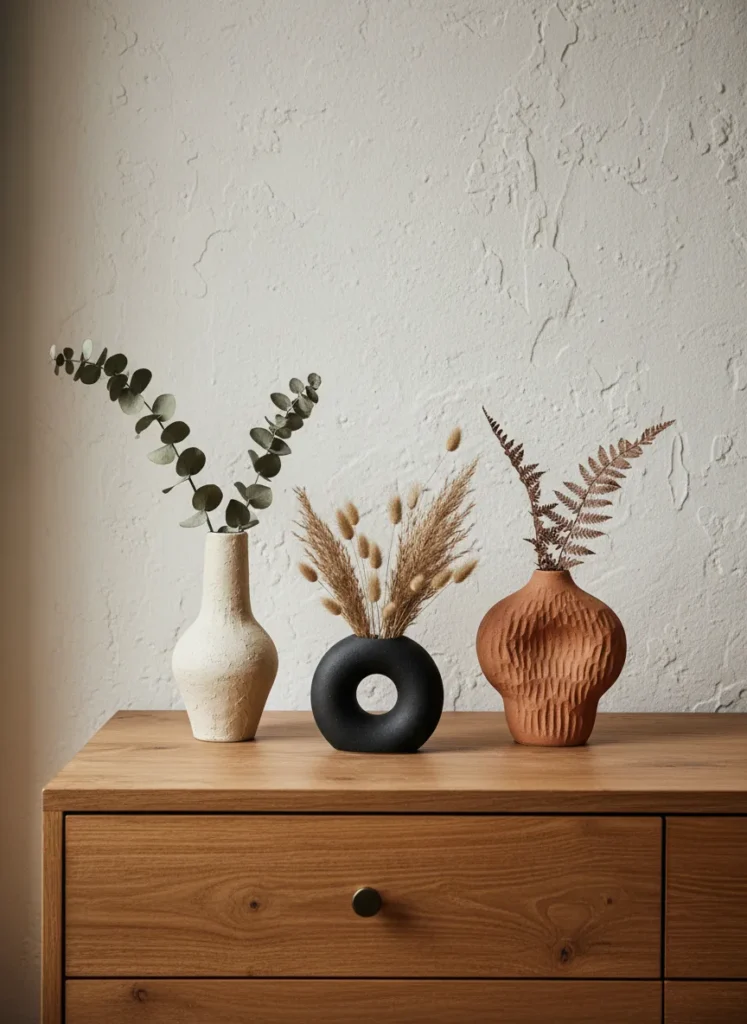
Wabi-sabi is the Japanese concept of finding beauty in imperfection and transience. Incorporate this by decorating with handmade ceramics that feature organic shapes, rough textures, or uneven glazes. A few carefully selected vases or bowls can serve as functional art pieces on a dresser or shelf.
Fill these vessels with dried branches or simple stems rather than elaborate floral bouquets. The muted colors and raw finishes of the pottery contrast beautifully with smooth furniture surfaces. This decor choice tells a story of craftsmanship and authenticity, preventing the minimalist room from feeling sterile or mass-produced.
Shoji Screen Elements
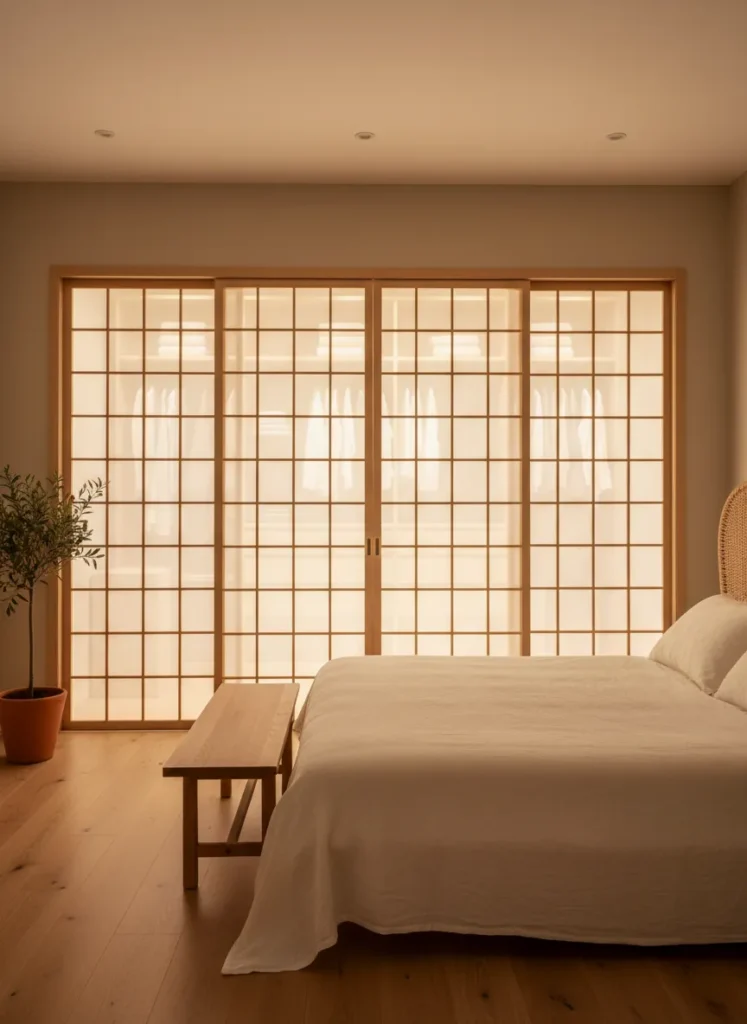
Traditional Japanese shoji screens are iconic, and they can be adapted for modern bedrooms as room dividers or closet doors. The combination of a wooden grid frame and translucent paper allows light to pass through while maintaining privacy. This creates a soft, diffused light quality that is very calming.
Using these screens instead of heavy solid doors keeps the room feeling open and fluid. They are excellent for hiding a wardrobe or a workspace, allowing you to physically slide away the clutter when it is time to sleep. The geometric grid pattern adds a sense of order and structure to the design.
Muted Green Accents
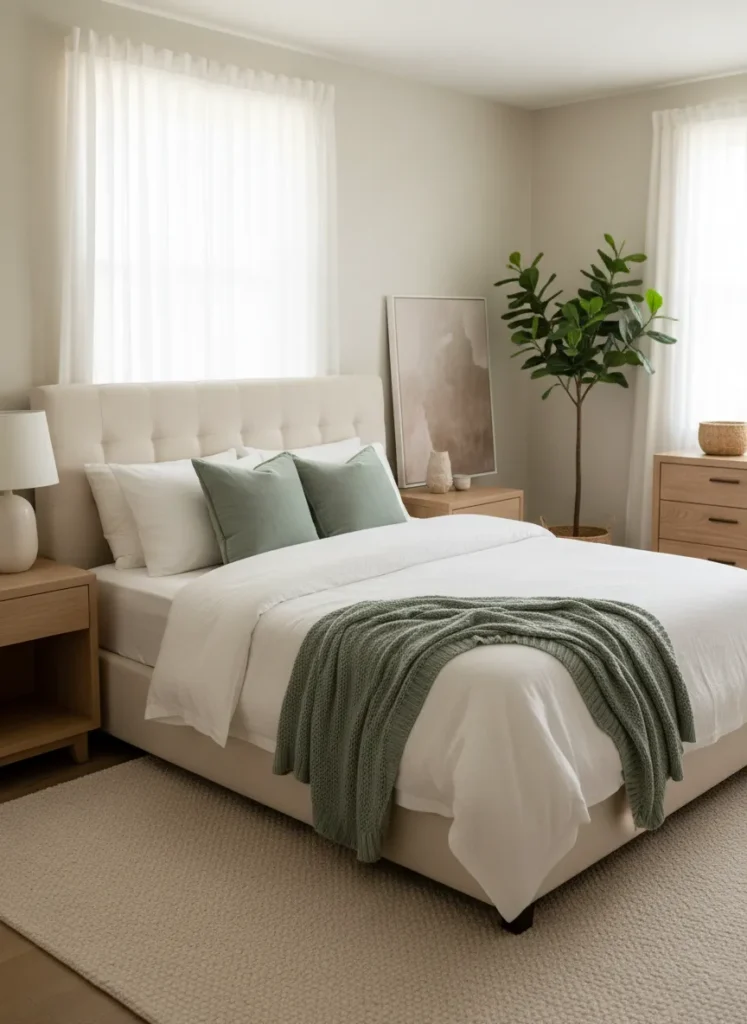
If you want to introduce color, muted greens are the best choice for this style as they represent nature and tranquility. Shades like sage, moss, or eucalyptus blend seamlessly with wood tones and neutral fabrics. You can introduce this color through throw pillows, a blanket, or even a painted accent wall.
Green is known to be the most restful color for the human eye, making it ideal for a bedroom. It bridges the gap between the warm wood tones and the cool grey or white walls. By keeping the saturation low, the color remains a background element that supports the overall zen atmosphere rather than dominating it.
Boucle Furniture
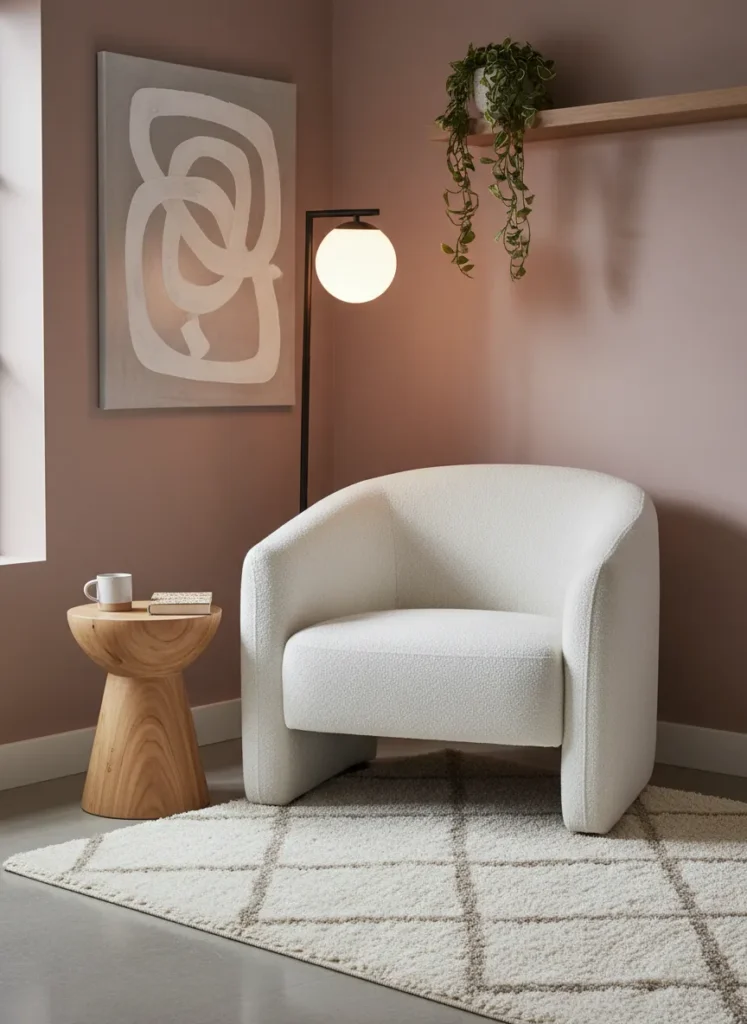
Boucle fabric, with its looped yarn and nubby texture, is a favorite in Scandinavian interiors for its extreme coziness. Adding a boucle armchair or bench to your bedroom introduces a soft, tactile element that invites relaxation. The creamy white color usually associated with boucle fits perfectly into the neutral palette.
The curves often found in boucle furniture pieces soften the straight lines of the architecture and wooden furniture. It creates a visual balance between hard and soft surfaces. Even a small boucle ottoman can add a significant amount of warmth and luxury to a minimalist space.
Minimalist Abstract Art
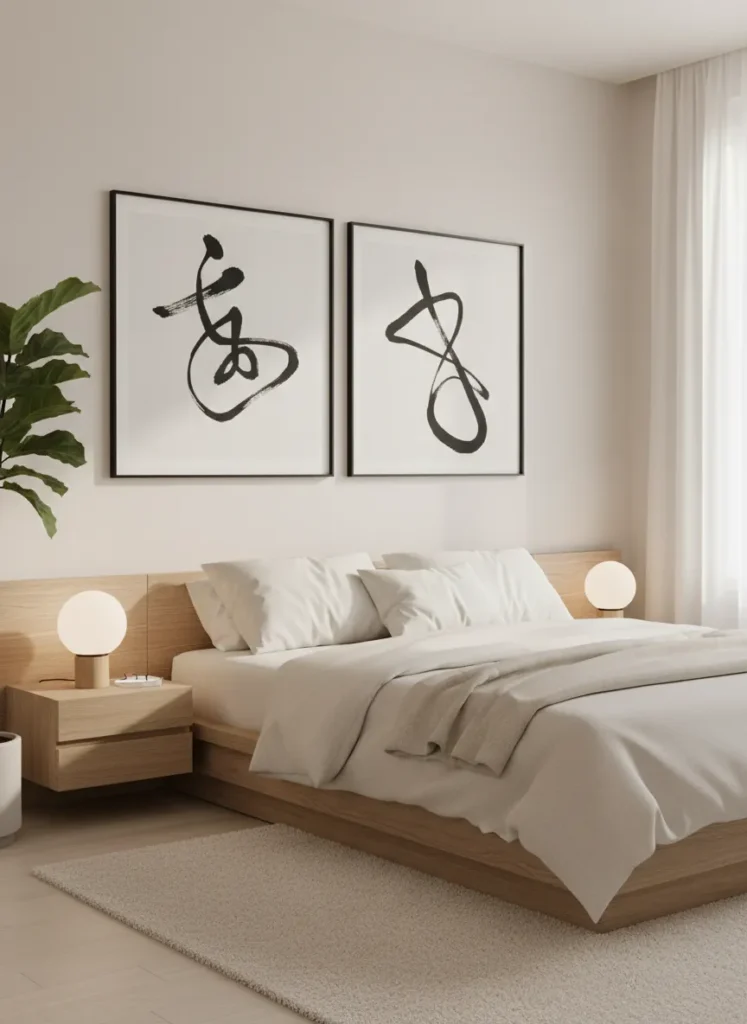
Wall decor in a Japandi bedroom should be intentional and sparse. Large-scale abstract art with simple forms or black ink brush strokes works best. The goal is to have something that is contemplative and simple, rather than a busy image that demands too much attention.
Choose frames in natural wood or thin black metal to keep the look clean. Leaving plenty of negative space on the wall around the art is just as important as the art itself. This breathing room for the eyes contributes to the overall sense of calm and helps the room feel less cluttered.
Rattan and Cane Details
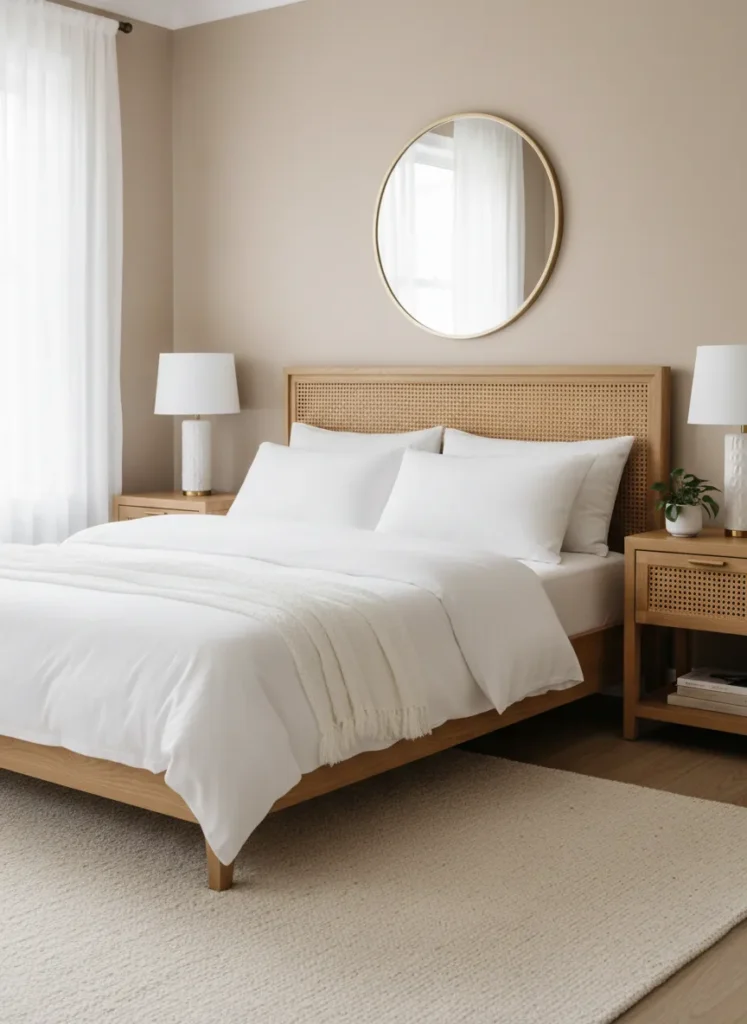
Cane webbing and rattan are natural materials that add lightness and texture to furniture. A bed frame or wardrobe doors with cane inserts allow air and light to flow through, preventing large furniture pieces from feeling heavy or boxy. The golden tone of the material adds warmth to the room.
This detail nods to the craftsmanship valued in both Japanese and Scandinavian cultures. It creates a relaxed, slightly bohemian feel while staying within the boundaries of minimalism. The intricate woven pattern provides a subtle decoration that doesn’t overwhelm the simplicity of the space.
Floor-to-Ceiling Sheer Curtains
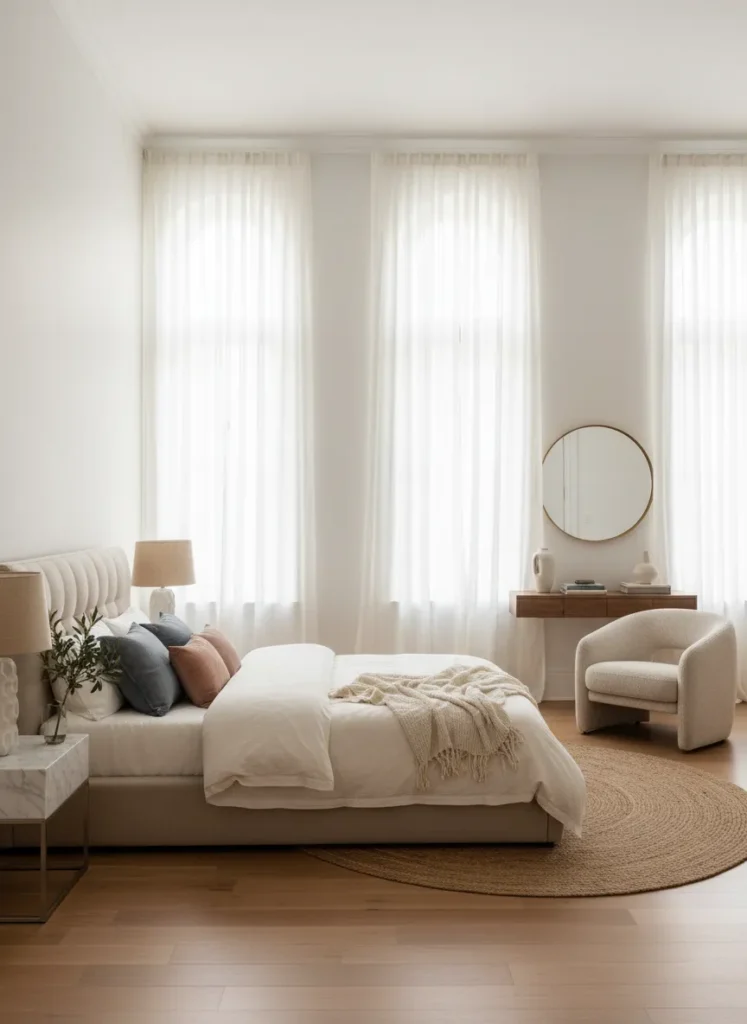
To maximize natural light while maintaining privacy, opt for sheer, floor-to-ceiling curtains. Hanging curtains from the very top of the wall draws the eye upward and makes the room feel taller and grander. The sheer fabric filters harsh sunlight, filling the room with a gentle, flattering haze.
Allowing the fabric to pool slightly on the floor adds a touch of romantic casualness. Avoid heavy, patterned drapes that block out the world; the goal is to feel connected to the daylight cycles. Ideally, choose a fabric color that closely matches your wall color to create a seamless, uninterrupted boundary.
Hidden Storage Solutions
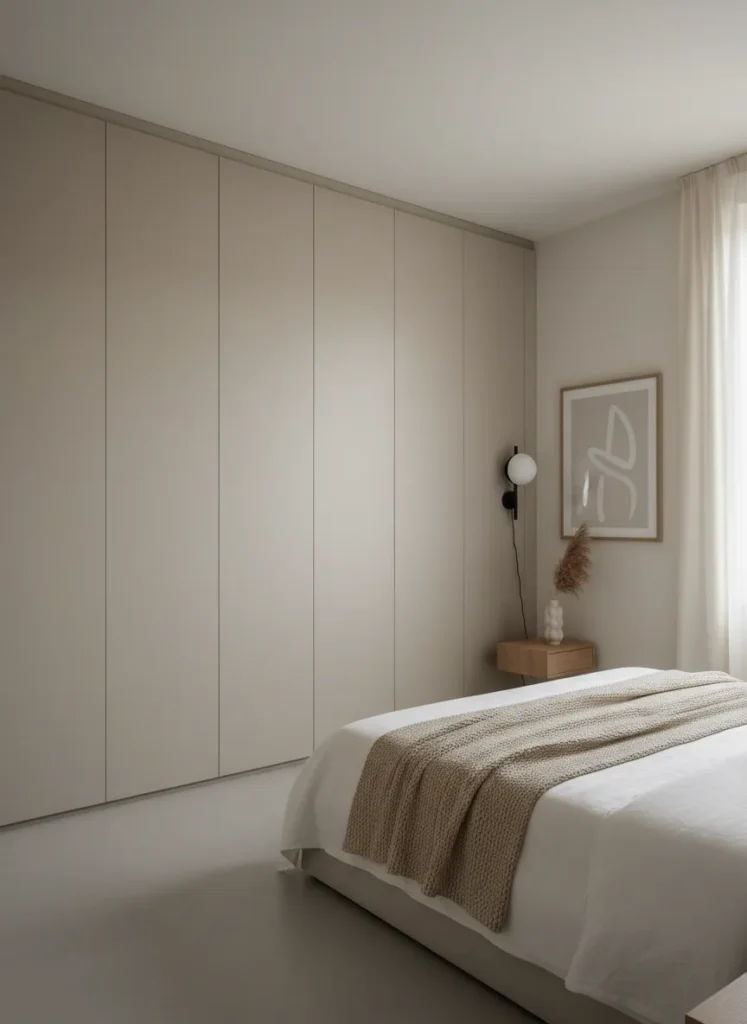
A true Japandi bedroom must be free of clutter, which makes smart storage essential. Built-in wardrobes with flat, handle-less doors allow you to hide away clothing and belongings completely. When closed, these storage units should look like part of the wall, maintaining the clean architectural lines.
By removing visual clutter, you remove mental clutter, allowing for better rest. Use under-bed storage drawers or beautiful woven baskets for items that don’t have a place in the closet. Everything should have a dedicated home so that surfaces remain clear and the energy in the room stays stagnant and peaceful.
Conclusion
Embracing these japandi bedroom design ideas allows you to curate a space that is not only visually stunning but also deeply restorative. By balancing the warmth of Scandi comfort with the Zen simplicity of Japanese tradition, you create a timeless environment. Start with a few small changes, like clearing the clutter or upgrading your bedding, and watch how your bedroom transforms into a sanctuary of peace.